
Is a Refrigerant Leak Dangerous? What Every Homeowner Needs to Know
Is a Refrigerant Leak Dangerous? What Every Homeowner Needs to Know
If you've noticed your air conditioner isn't cooling like it used to, or you've detected a strange smell near your HVAC system, you might be dealing with a refrigerant leak. But is a refrigerant leak dangerous? The short answer is yes—refrigerant leaks pose serious health risks, environmental hazards, and can cause expensive damage to your AC unit. In this guide, we'll explain everything you need to know about refrigerant leak dangers and what to do if you suspect one in your home.
What Is Refrigerant and Why Does It Matter?
Refrigerant is the chemical substance that flows through your air conditioning system to absorb heat from inside your home and release it outside. Without adequate refrigerant, your AC can't cool your home effectively.
Modern HVAC systems typically use R-410A refrigerant, which replaced the older R-22 (commonly called Freon) that was phased out due to environmental concerns. While R-410A is considered less harmful to the ozone layer, it's not without dangers when it leaks into your living space.
Your AC system is designed to be a closed loop—the refrigerant should never need to be "topped off" unless there's a leak. If your HVAC technician tells you that you need more refrigerant, it's a clear sign that you have a leak that needs to be addressed.
The Health Dangers of Refrigerant Leaks
Short-Term Exposure Symptoms
When refrigerant leaks into your home, it can cause a range of health symptoms depending on the concentration and duration of exposure. Here are the most common refrigerant leak symptoms you might experience:
- Headaches and dizziness - Often the first signs of exposure
- Nausea and vomiting - Can occur within minutes of breathing refrigerant
- Difficulty breathing - Refrigerant displaces oxygen in enclosed spaces
- Coughing and throat irritation - The chemical can irritate your respiratory system
- Eye and skin irritation - Direct contact or exposure can cause redness and burning
- Fatigue and weakness - You may feel unusually tired or lightheaded
These symptoms typically appear when you're near the leak for an extended period, especially in poorly ventilated areas.
Severe Refrigerant Poisoning
In high concentrations or with prolonged exposure, refrigerant poisoning becomes much more dangerous. Severe symptoms include:
- Irregular heartbeat - Refrigerant can affect your cardiovascular system
- Seizures - In cases of significant exposure
- Loss of consciousness - Can happen quickly in enclosed spaces with poor ventilation
- Difficulty breathing or respiratory failure - Refrigerant displaces oxygen, leading to asphyxiation
- Fluid buildup in the lungs - A serious medical emergency
Can a refrigerant leak kill you? Unfortunately, yes. In extreme cases where someone is exposed to high concentrations of refrigerant in a confined space with poor ventilation, it can be fatal. This is why immediate action is crucial if you suspect a leak.
How Long Does It Take to Get Sick From a Refrigerant Leak?
The timeline for refrigerant leak health effects varies based on several factors:
- Small leaks in well-ventilated areas - You might not notice symptoms for hours or even days
- Moderate leaks in enclosed spaces - Symptoms can appear within 30 minutes to 2 hours
- Large leaks in confined areas - You could experience severe symptoms within minutes
If you notice any symptoms of a refrigerant leak, don't wait to see if they get worse—take action immediately.
Who Is Most at Risk?
Children and Babies
Children are particularly vulnerable to refrigerant exposure because:
- They breathe more rapidly than adults, inhaling more contaminated air
- Their smaller body size means lower doses have greater effects
- They spend more time playing on the floor where heavier-than-air refrigerant settles
- Their developing respiratory systems are more sensitive to chemical irritants
Pets
Your furry family members face similar risks. Dogs and cats are closer to the ground where refrigerant concentrations are highest. Is a refrigerant leak dangerous to pets? Absolutely. Watch for signs like:
- Excessive drooling or vomiting
- Difficulty breathing or rapid breathing
- Lethargy or unusual behavior
- Lack of coordination
Elderly and Those With Respiratory Conditions
People with asthma, COPD, or other respiratory issues may experience more severe reactions to refrigerant exposure. The elderly, who may already have compromised respiratory or cardiovascular systems, are also at increased risk.
Can You Smell a Refrigerant Leak?
This is one of the most common questions homeowners ask, and the answer can be confusing. Pure refrigerant is actually odorless and colorless. However, many people report a sweet, chemical smell or an ether-like odor near a leak. This smell often comes from:
- Additives mixed with the refrigerant
- Oils and other substances in the AC system
- The refrigerant reacting with moisture in the air
The problem is that you can't rely on smell alone to detect a refrigerant leak. By the time you notice an odor, you may have already been exposed. This is why it's important to recognize other warning signs beyond smell.
Refrigerant Leak vs. Carbon Monoxide: Know the Difference
Many homeowners confuse refrigerant leaks with carbon monoxide leaks because both can cause similar symptoms like headaches, dizziness, and nausea. However, there are important differences:
Carbon Monoxide:
- Produced by fuel-burning appliances (furnaces, water heaters, stoves)
- Completely odorless
- Detectable with CO detectors
- Symptoms include cherry-red lips and skin
Refrigerant Leak:
- Comes from air conditioning systems and refrigerators
- May have a sweet or chemical smell (but often odorless)
- NOT detectable with standard CO detectors
- Symptoms include throat and eye irritation
Will a refrigerant leak show up on a carbon monoxide detector? No. You need specialized equipment to detect refrigerant leaks. If you suspect either type of leak, evacuate immediately and call professionals.
Environmental Impact of Refrigerant Leaks
Beyond the immediate health risks, refrigerant leaks pose serious environmental dangers:
Greenhouse Gas Emissions
Refrigerants are potent greenhouse gases. R-410A has a global warming potential (GWP) that's about 2,000 times greater than carbon dioxide. Even small leaks contribute significantly to climate change when multiplied across millions of HVAC systems.
Ozone Layer Depletion
While newer refrigerants like R-410A don't damage the ozone layer, older R-22 Freon does. If you have an older AC system that still uses R-22, a leak doesn't just harm your health—it contributes to ozone depletion, which increases everyone's exposure to harmful UV radiation.
The EPA has strict regulations about refrigerant handling for these reasons, and licensed HVAC technicians must follow specific procedures when working with these chemicals.
How Refrigerant Leaks Damage Your AC System
Is it safe to run AC with a refrigerant leak? No, and here's why continuing to operate your air conditioner with low refrigerant can cause serious damage:
Compressor Failure
Your compressor is the heart of your AC system and one of the most expensive components to replace. When refrigerant levels are low:
- The compressor has to work much harder to circulate refrigerant
- It can overheat due to inadequate cooling
- Eventually, it can seize up completely, requiring replacement
A new compressor can cost $1,500 to $2,500 or more, depending on your system size.
Frozen Evaporator Coils
When your system is low on refrigerant, the evaporator coils can freeze over. This happens because:
- Low refrigerant pressure causes the coils to become too cold
- Moisture in the air freezes on the coils
- Ice buildup prevents proper heat exchange
Frozen coils reduce efficiency and can damage other components when ice melts and drips into areas not designed for water exposure.
Higher Energy Bills
A system with a refrigerant leak has to run longer to achieve the same cooling. This means:
- Your AC runs almost continuously on hot days
- Energy consumption increases by 20-50%
- Monthly electric bills can spike dramatically
- The system wears out faster due to constant operation
Reduced Cooling Capacity
Even before major components fail, you'll notice your home isn't cooling properly:
- Rooms stay warm even with the thermostat set low
- The air from vents feels lukewarm instead of cold
- Hot spots develop throughout your home
- Humidity levels increase because the AC can't dehumidify effectively
Common Signs of a Refrigerant Leak
Beyond health symptoms, your AC system will show warning signs of a refrigerant leak:
Hissing or Bubbling Sounds
If you hear a hissing sound near your AC unit (indoor or outdoor), it could be refrigerant escaping through a hole or crack in the refrigerant lines. A bubbling sound might indicate a larger leak or refrigerant mixing with moisture.
Ice Buildup on Refrigerant Lines or Coils
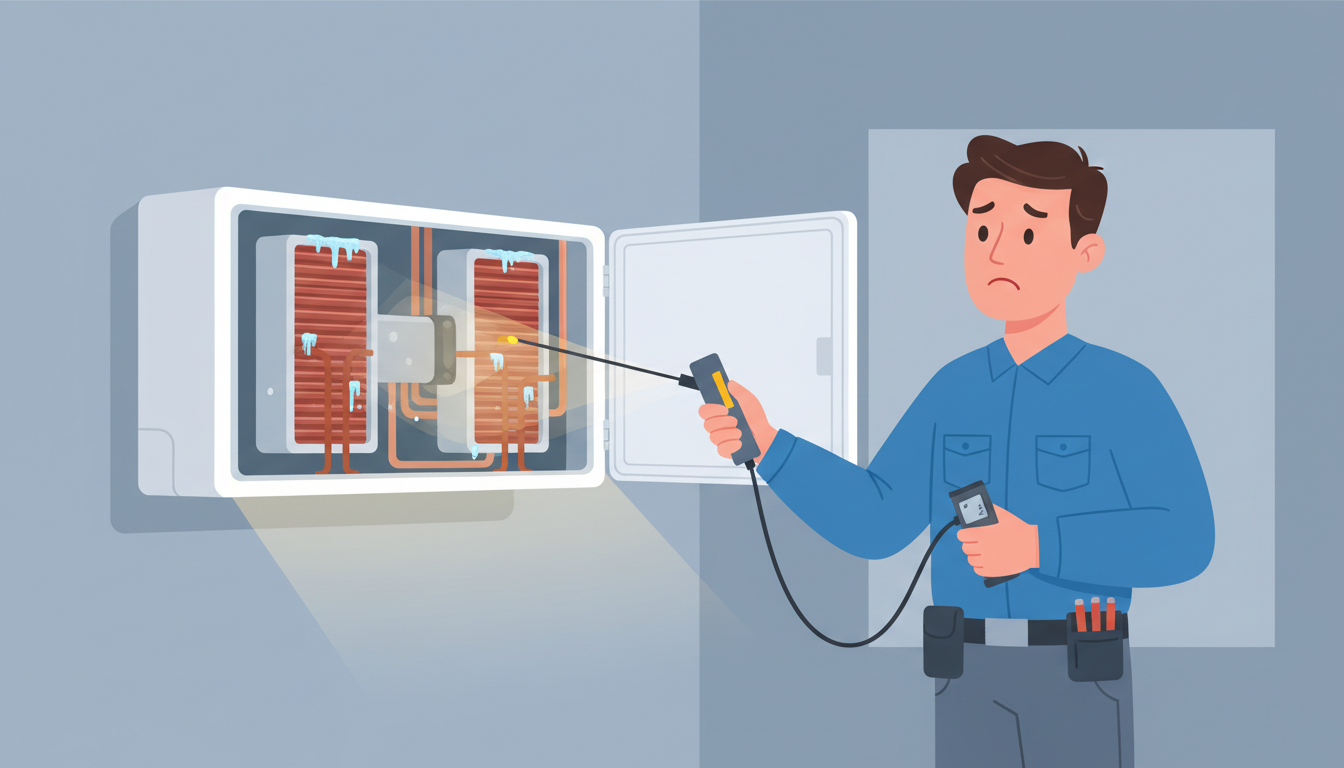
Check your indoor AC unit (usually in a closet, attic, or basement). If you see ice or frost on the copper refrigerant lines or the evaporator coils, this strongly suggests low refrigerant levels.
Warm Air From Vents
If your thermostat is set to cool but the air coming from your vents is warm or only slightly cool, your system probably doesn't have enough refrigerant to transfer heat effectively.
AC Runs Constantly
When your air conditioner runs all day without reaching the set temperature, it's struggling to cool your home—often because refrigerant levels are too low.
Higher Electric Bills
An unexplained spike in your electricity usage, especially during cooling season, can indicate your AC is working overtime due to a refrigerant leak.
If you notice any of these signs, schedule an inspection with a professional HVAC technician right away. Learn more about what refrigerant leak repair usually involves to understand the process.
What to Do If You Suspect a Refrigerant Leak
1. Evacuate the Area Immediately
If you or anyone in your home experiences symptoms like dizziness, difficulty breathing, or nausea:
- Get everyone, including pets, outside into fresh air
- Don't try to locate the source of the leak
- Move to a well-ventilated area
2. Turn Off Your AC System
Shut off your air conditioning system at the thermostat and the circuit breaker if you can do so safely. This stops additional refrigerant from leaking into your home.
3. Open Windows and Ventilate
If it's safe to do so without prolonged exposure, open windows and doors to increase ventilation. This helps disperse any refrigerant that has accumulated indoors.
4. Seek Medical Attention If Needed
If anyone experiences severe symptoms—difficulty breathing, chest pain, irregular heartbeat, or loss of consciousness—call 911 immediately. For milder symptoms that persist after getting fresh air, contact your doctor or a poison control center.
5. Call a Licensed HVAC Professional
Never attempt to repair a refrigerant leak yourself. Only EPA-certified HVAC technicians have the training, tools, and legal authorization to handle refrigerants. They will:
- Use electronic leak detectors or UV dye to locate the exact source
- Repair or replace the damaged component
- Properly recover and recycle the remaining refrigerant
- Test the repair to ensure it's sealed
- Recharge your system to the correct refrigerant level
- Check system performance
6. Don't Try DIY Fixes
Can you fix a refrigerant leak yourself? The answer is no, for several important reasons:
- Handling refrigerants without EPA certification is illegal
- You need specialized equipment to detect leaks, recover refrigerant, and properly recharge the system
- Refrigerants must be handled according to environmental regulations
- Improper repairs can make the leak worse or cause additional damage
- You could expose yourself to dangerous refrigerant levels
How Do HVAC Technicians Find Refrigerant Leaks?
Professional leak detection uses several methods:
- Electronic leak detectors - Sensitive instruments that can detect refrigerant in very small concentrations
- UV dye - A fluorescent dye added to the refrigerant that glows under UV light at the leak point
- Bubble solution - Applied to suspected leak areas; bubbles form where refrigerant escapes
- Pressure testing - Pressurizing the system with nitrogen to identify leaks
The leak might be in various locations:
- Evaporator coils (indoor unit)
- Condenser coils (outdoor unit)
- Refrigerant lines (copper tubing connecting components)
- Service valves or fittings
- Compressor seals
How Much Does Refrigerant Leak Repair Cost?
The cost to repair a refrigerant leak varies widely based on several factors:
Leak Detection: $100-$300
- Many companies include this in the total repair cost
Minor Leak Repair: $200-$600
- Simple fixes like tightening fittings or replacing valve cores
Moderate Leak Repair: $600-$1,500
- Replacing damaged refrigerant lines or fixing small coil leaks
Major Leak Repair: $1,500-$3,500+
- Replacing evaporator or condenser coils
- May approach the cost of a new system
Refrigerant Recharge: $100-$500
- Depends on the type and amount of refrigerant needed
- R-22 (Freon) is much more expensive than R-410A
System Replacement: $3,000-$8,000+
- May be more cost-effective than major repairs on older systems
Is a small refrigerant leak dangerous enough to repair immediately? Yes. Even small leaks worsen over time, and the cumulative health and environmental impacts make immediate repair essential.
Is It Safe to Stay in Your House With a Refrigerant Leak?
This depends on the severity of the leak and your home's ventilation, but the safest answer is to avoid prolonged exposure:
Small, slow leaks in well-ventilated homes:
- You can likely stay if you open windows and turn off the AC
- Schedule repair as soon as possible (within 24-48 hours)
- Monitor for any symptoms
Moderate to large leaks:
- Evacuate until repairs are completed
- The concentration of refrigerant can reach dangerous levels quickly
- Risk is especially high for children, pets, and vulnerable individuals
If anyone experiences symptoms:
- Leave immediately
- Don't return until a professional has repaired the leak and ventilated the space
Is it safe to sleep with a refrigerant leak? No. Refrigerant concentrations can build up overnight in bedrooms, especially with doors closed and limited ventilation. Sleep elsewhere until the leak is repaired.
Preventing Refrigerant Leaks
While you can't prevent all leaks, regular maintenance significantly reduces the risk:
Annual HVAC Maintenance
Schedule professional maintenance every spring before cooling season. A technician will:
- Check refrigerant levels
- Inspect coils and refrigerant lines for corrosion or damage
- Test system pressures
- Clean components that could cause leaks
Don't Ignore Warning Signs
Address minor issues before they become major problems:
- Unusual sounds from your AC
- Gradual decline in cooling performance
- Increased energy bills
- Visible corrosion on refrigerant lines
Consider System Age
AC systems typically last 15-20 years. If yours is approaching this age and develops a refrigerant leak:
- The cost of repair may approach replacement cost
- Older systems use R-22, which is expensive and scarce
- Newer systems are more efficient and use environmentally-friendly refrigerants
- A new system may be the better long-term investment
Protect Outdoor Units
Your outdoor condenser unit is vulnerable to damage that can cause leaks:
- Keep the area around it clear of debris
- Trim vegetation back at least 2 feet on all sides
- Don't allow lawn equipment to damage refrigerant lines
- Consider a protective cover or cage in high-traffic areas
Refrigerant Leaks in Apartments and Rentals
If you're a tenant and suspect a refrigerant leak:
- Document everything - Take photos, note dates and symptoms
- Notify your landlord immediately in writing - Email or text creates a record
- Request immediate repair - Emphasize the health and safety hazards
- Understand your rights - Most states require landlords to provide working AC and address health hazards
Can a landlord charge you for a refrigerant leak? Generally no, unless you caused the damage through negligence or misuse. Normal wear and tear, including refrigerant leaks, are typically the landlord's responsibility.
If your landlord doesn't respond promptly:
- Check your local tenant rights laws
- Consider contacting your local housing authority
- Document any health issues caused by the leak
- You may have the right to repair and deduct or break your lease in extreme cases
Does Homeowners Insurance Cover Refrigerant Leak Repair?
Unfortunately, most homeowners insurance policies don't cover refrigerant leak repairs because:
- They're considered maintenance issues rather than sudden, accidental damage
- Insurance typically excludes wear and tear or mechanical breakdown
- HVAC components are expected to need service and eventual replacement
Exceptions where insurance might cover repairs:
- The leak resulted from a covered peril (storm damage, fire, vandalism)
- You have equipment breakdown coverage (an optional add-on)
- The leak caused secondary damage (like water damage from frozen coils)
Always check your specific policy and contact your insurance agent if you're unsure.
Common Myths About Refrigerant Leaks
Myth 1: "Topping Off Refrigerant Is Normal Maintenance"
Truth: Your AC is a closed system. If it needs refrigerant added, you have a leak. Simply adding more refrigerant without fixing the leak is throwing money away and exposing your family to ongoing health risks.
Myth 2: "Small Leaks Aren't Dangerous"
Truth: Even small leaks accumulate refrigerant indoors over time, pose environmental hazards, and allow your system to damage itself. All leaks should be repaired promptly.
Myth 3: "Refrigerant Leaks Will Heal Themselves"
Truth: Holes and cracks in refrigerant lines and coils only get worse over time. Temperature cycling causes metal to expand and contract, making leaks larger.
Myth 4: "You Can Add Refrigerant Yourself"
Truth: Handling refrigerants requires EPA certification. DIY refrigerant kits sold online are often illegal, dangerous, and can damage your system.
Myth 5: "New Refrigerants Are Completely Safe"
Truth: While R-410A is better for the environment than R-22, it's still hazardous to health in high concentrations and is a potent greenhouse gas.
When to Repair vs. Replace Your AC System
If your system has a refrigerant leak, consider these factors:
Repair if:
- Your system is less than 10 years old
- The leak is minor and easily accessible
- The compressor and other major components are in good condition
- Repair costs are less than 50% of replacement cost
Replace if:
- Your system is 15+ years old
- It uses R-22 refrigerant (expensive and being phased out)
- Major components like the compressor or coils need replacement
- Multiple refrigerant leaks have occurred
- Your system is significantly undersized or oversized for your home
- Repair costs exceed 50% of replacement cost
A new, properly-sized system offers better efficiency, reliability, and peace of mind.
Frequently Asked Questions
Can a refrigerant leak make you sick?
Yes. Refrigerant exposure can cause headaches, dizziness, nausea, breathing difficulties, and in severe cases, loss of consciousness or death. The severity depends on the concentration and duration of exposure.
How long does refrigerant stay in the air after a leak?
This varies based on ventilation, the amount leaked, and environmental conditions. In poorly ventilated spaces, refrigerant can remain at dangerous levels for several hours. Opening windows and using fans helps disperse it more quickly.
Can I detect a refrigerant leak with a carbon monoxide detector?
No. Standard CO detectors don't detect refrigerants. You need specialized equipment or a professional HVAC technician to detect refrigerant leaks accurately.
Is R-410A safer than R-22 Freon?
R-410A is safer for the environment because it doesn't deplete the ozone layer. However, both pose similar health risks when leaked indoors. R-410A is actually a higher-pressure refrigerant, which can make leaks more noticeable but potentially more severe.
How often should I have my AC checked for refrigerant leaks?
Annual maintenance is recommended for all homeowners. Your HVAC technician should check refrigerant levels and inspect for leaks during this service. If you notice any warning signs between maintenance visits, schedule an inspection immediately.
The Bottom Line: Don't Ignore Refrigerant Leaks
So, is a refrigerant leak dangerous? Absolutely. Refrigerant leaks threaten your health, harm the environment, damage your AC system, and increase your energy costs. The good news is that professional HVAC technicians can detect and repair most leaks effectively.
If you notice any signs of a refrigerant leak—strange odors, poor cooling, ice buildup, unusual sounds, or health symptoms—don't wait. Turn off your system, ventilate your home, and call a licensed HVAC professional immediately.
Remember, your family's safety is worth more than the cost of repairs. By addressing refrigerant leaks promptly and maintaining your system properly, you'll protect your health, save money on energy bills, and extend the life of your air conditioning system.
Need help with a refrigerant leak or other HVAC concerns? Don't risk your health or your system—contact Quick HVAC Fix today for fast, professional service you can trust.