
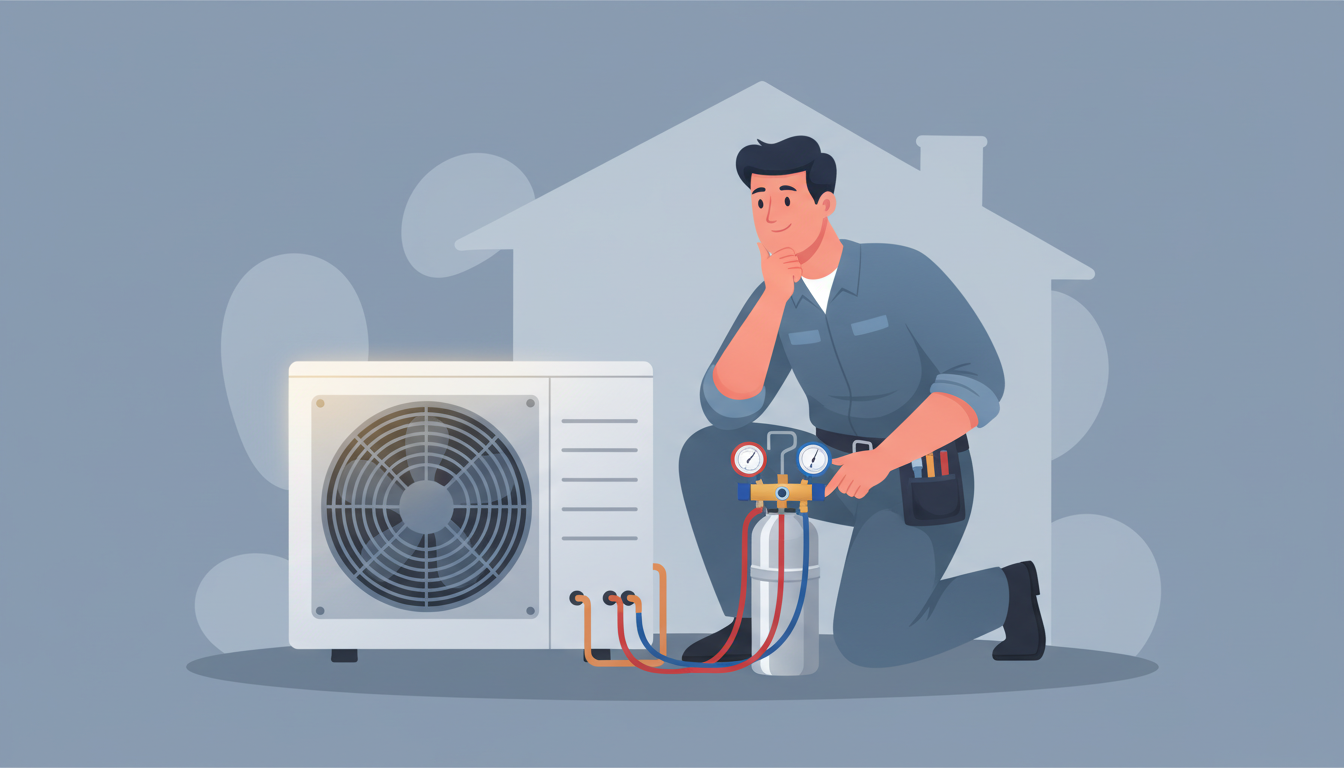
Why Refrigerant Prices Affect Your HVAC Repair Costs
Why Refrigerant Prices Affect Your HVAC Repair Costs
If you've recently called an HVAC technician for a cooling problem, you might have experienced sticker shock when you saw the refrigerant charges on your bill. What used to be a routine, affordable fix now costs hundreds—or even thousands—of dollars. You're not alone in wondering why refrigerant prices have skyrocketed and how they impact your overall HVAC repair costs.
The truth is, refrigerant prices don't just affect what you pay for a simple recharge. They influence everything from routine maintenance to whether you should repair or replace your entire system. Understanding these cost factors helps you make smarter decisions about your home's cooling system and avoid overpaying for repairs.
The Real Reason Refrigerant Costs So Much
Refrigerant prices have increased dramatically over the past few years, and it's not because HVAC companies are trying to gouge you. Several factors are driving these price increases, and most of them are out of your contractor's control.
EPA Regulations and Phase-Outs
The Environmental Protection Agency (EPA) has mandated the phase-out of certain refrigerants that damage the ozone layer or contribute significantly to global warming. The most well-known example is R-22 (commonly called Freon), which was completely banned from production and import in the United States in 2020.
When a refrigerant gets phased out, the remaining supply becomes increasingly scarce. Basic economics tells us that when supply drops and demand stays the same, prices go up. Way up.
R-22 used to cost around $10-20 per pound. Today, if you can even find it, you'll pay anywhere from $100 to $250 per pound installed. That's more than a 1,000% increase in some markets.
The 2025 Refrigerant Transition
If you think the R-22 phase-out was disruptive, there's another major change happening right now. The EPA is phasing down R-410A, which became the standard replacement for R-22 in residential air conditioning systems. Under the American Innovation and Manufacturing (AIM) Act, manufacturers are transitioning to newer refrigerants like R-32 and R-454B, which have lower Global Warming Potential (GWP).
This transition is creating another supply crunch. R-410A prices are climbing as production decreases, while the newer refrigerants cost more due to limited availability and the specialized equipment needed to handle them. Some homeowners report refrigerant costs increasing by 600% in certain markets.
Limited Supply and Manufacturing Bottlenecks
The rapid shift to new refrigerants hasn't given manufacturers enough time to ramp up production to meet demand. This creates supply shortages that drive prices even higher. When your AC breaks down on a 95-degree day and you need refrigerant immediately, you're competing with thousands of other homeowners for a limited supply.
Additionally, refrigerant isn't something you can just order online and add yourself. It requires EPA certification to purchase and handle, which limits the supply chain to licensed professionals.
Breaking Down the True Cost of Refrigerant Repairs
When you get a bill for refrigerant service, you're not just paying for the refrigerant itself. Several cost factors contribute to your final price.
Material Costs vs. Labor Costs
The refrigerant itself is just one part of your bill. Here's what typically goes into a refrigerant-related repair:
Refrigerant material costs vary by type:
- R-22: $100-250 per pound (if available)
- R-410A: $40-90 per pound
- R-32: $275+ per pound
- R-454B: $200-300 per pound
Most residential systems require 2-4 pounds of refrigerant per ton of cooling capacity. A typical 3-ton system could need 6-12 pounds for a complete recharge.
Labor costs include:
- Diagnostic time: $50-150 per hour
- Leak detection: $100-300
- Recovery of old refrigerant (required by law): $50-150
- Actual recharge service: $100-300
- Leak repair (if found): $200-1,500 depending on location
When you add these costs together, a refrigerant leak repair can easily run $500-2,000 or more.
Why Leak Detection Matters for Your Wallet
Here's something many homeowners don't realize: if your system needs refrigerant, it has a leak. HVAC systems are sealed units. They don't "use up" refrigerant the way a car uses gas. If your refrigerant level is low, something is wrong.
This is where costs can spiral out of control. An unethical contractor might simply recharge your system without finding and fixing the leak. You'll get cool air for a few weeks or months, then you'll need another recharge. And another. And another.
Each time, you're paying for expensive refrigerant that's just going to leak out again. Over the course of a year, this can cost you thousands of dollars in repeated recharges.
A reputable contractor will always perform leak detection before adding refrigerant. Yes, this adds to your upfront cost, but it saves you money in the long run. For more information on recognizing leak symptoms early, check out our guide on refrigerant leak symptoms every homeowner should recognize.
How System Age Affects Refrigerant Costs
If you have an older system that uses R-22, you're facing a difficult decision every time you need refrigerant. Because R-22 is no longer manufactured, the price keeps climbing while the availability keeps shrinking.
For systems 10+ years old using R-22, many HVAC professionals recommend replacement rather than repair. Here's why: if you need 8 pounds of R-22 at $200 per pound, that's $1,600 just for the refrigerant. Add in labor, leak detection, and repair, and you could easily spend $2,500-4,000 on a system that might only last another 2-3 years.
That same money could be a significant down payment on a new, energy-efficient system that uses modern refrigerants and could last 15-20 years. For help deciding whether to repair or replace, see our comprehensive HVAC repair guide.
Why You Can't Just Add Refrigerant Yourself
With refrigerant prices so high, many homeowners wonder if they can save money by doing it themselves. The short answer is no—and here's why you shouldn't try.
Legal Requirements
Since 1992, the EPA has required certification to purchase and handle refrigerants. This isn't just a formality. Refrigerants are powerful greenhouse gases, and improper handling can cause environmental damage and serious health risks.
If you're caught purchasing or using refrigerant without proper certification, you can face fines of up to $37,500 per day per violation.
Safety Concerns
Refrigerants are under high pressure and can cause severe frostbite on contact with skin. They can also displace oxygen in enclosed spaces, leading to suffocation. Without proper training and equipment, DIY refrigerant work is genuinely dangerous.
The Problem with "Quick Fix" Refrigerant
Some auto parts stores sell small cans of refrigerant marketed for home AC use. These products are problematic for several reasons:
- They often contain sealants that can damage your system
- They won't fix the underlying leak
- They can void your system's warranty
- They make it harder for professionals to properly diagnose and repair your system later
If you use these products, you might save $50 now but create a $2,000 problem down the road.
How to Protect Yourself from Refrigerant Pricing Scams
Unfortunately, the high cost of refrigerant has created opportunities for dishonest contractors to overcharge or perform unnecessary work. Here's how to protect yourself.
Warning Signs of Refrigerant Scams
Watch out for contractors who:
- Recommend adding refrigerant without performing leak detection
- Can't explain why your system needs refrigerant
- Refuse to show you pricing per pound
- Suggest "topping off" your refrigerant as routine maintenance
- Claim refrigerant needs to be changed regularly like oil
These are all red flags. For more detailed information on avoiding bad advice, read our article on how to spot bad advice about HVAC refrigerant online.
Questions to Ask Your HVAC Contractor
Before agreeing to any refrigerant work, ask:
- "Why does my system need refrigerant?" (The answer should involve a leak)
- "What type of refrigerant does my system use, and how much does it cost per pound?"
- "How much refrigerant will you add, and how did you calculate that amount?"
- "What leak detection methods will you use?"
- "Can you show me the leak, and what will it cost to repair it?"
- "Will you provide an itemized estimate showing refrigerant costs separately from labor?"
Honest contractors will welcome these questions and provide clear, detailed answers.
Get Multiple Quotes
Refrigerant prices can vary significantly between contractors, not because of the refrigerant itself (wholesale prices are fairly consistent), but because of different labor rates, diagnostic fees, and markups.
Getting 2-3 quotes helps you understand the fair market rate in your area and identify contractors who are significantly overcharging. Just make sure you're comparing apples to apples—a quote that includes proper leak detection and repair will cost more upfront than a simple recharge, but it's the better value.
Regional and Seasonal Price Variations
Refrigerant costs aren't the same everywhere or all year long. Understanding these variations can help you time your repairs strategically—when possible.
Regional Pricing Differences
Refrigerant prices tend to be higher in:
- Areas with high labor costs (major metropolitan areas)
- Regions with extreme heat where demand is highest
- Markets with fewer HVAC contractors (less competition)
The same repair that costs $800 in a mid-sized Midwest city might run $1,500 in New York or Los Angeles.
Seasonal Demand Affects Prices
Like many service industries, HVAC companies get slammed during peak cooling season (typically June through August). When demand is high, some contractors raise their prices, and everyone has less time to shop around.
If your system has a refrigerant leak but is still limping along, scheduling the repair in spring or fall—rather than the middle of summer—can sometimes save you money. You'll also get faster service and more attention from the technician.
Of course, if your system completely fails during a heat wave, you don't have the luxury of waiting. This is why regular maintenance is so important—it often catches refrigerant leaks early when you have more flexibility in scheduling repairs.
Making Smart Decisions About Refrigerant-Related Repairs
When faced with a refrigerant leak and the associated costs, how do you decide the best course of action?
The Repair vs. Replace Calculation
Financial experts often recommend the "50% rule" for HVAC repairs: if the repair cost is more than 50% of the replacement cost and your system is more than halfway through its expected lifespan, replacement usually makes more sense.
For example:
- Your AC is 12 years old (expected lifespan: 15-20 years)
- Repair estimate including refrigerant: $2,200
- New system cost: $4,500
At 2,200 ÷ 4,500 = 49%, you're right at the borderline. Factor in that your old system uses expensive, scarce R-22 refrigerant, and replacement becomes the smarter choice.
When Repair Makes Sense
Repair is typically the right choice when:
- Your system is less than 7 years old
- It uses modern refrigerant (R-410A or newer)
- The leak is accessible and inexpensive to fix
- Your system is otherwise in good condition
- Total repair costs are under $1,000
When Replacement Makes More Sense
Consider replacement when:
- Your system is 10+ years old
- It uses R-22 refrigerant
- You've had multiple refrigerant leaks
- Repair estimates exceed $1,500
- Your energy bills have been climbing
- You're experiencing frequent breakdowns
New systems not only use more affordable, readily available refrigerants—they're also significantly more energy-efficient. The energy savings alone can offset much of the replacement cost over the system's lifetime.
The Future of Refrigerant Costs
What does the future hold for refrigerant pricing? While no one has a crystal ball, we can make some educated predictions.
Short-Term Outlook (2026-2027)
Expect continued price volatility as the industry transitions to new refrigerants. R-410A prices will likely continue rising as production decreases. The newer refrigerants (R-32, R-454B) may see prices drop slightly as production scales up, but they'll remain more expensive than R-410A was in its heyday.
Long-Term Trends
Over the next 5-10 years, refrigerant prices should stabilize as:
- Manufacturing capacity catches up with demand
- More technicians become certified for new refrigerants
- Competition increases in the refrigerant market
- Technology improves, making production more efficient
However, they're unlikely to return to the low prices of the past. Environmental regulations are here to stay, and more eco-friendly refrigerants simply cost more to produce.
What This Means for Homeowners
If you're planning to replace your HVAC system in the next few years, don't necessarily wait for prices to come down. The savings from improved energy efficiency with a new system can start immediately, and putting off replacement means continuing to pay high repair costs for your aging unit.
Frequently Asked Questions
Why does my AC need refrigerant if it worked fine last year?
Your AC system is sealed and shouldn't lose refrigerant under normal operation. If you need refrigerant added, you have a leak somewhere in the system. Common leak points include the coils, line sets, or connection points. A professional should locate and repair the leak, not just add more refrigerant.
How long does refrigerant last in an AC unit?
Indefinitely, if your system has no leaks. Refrigerant doesn't get "used up" like fuel. It circulates in a closed loop, changing from liquid to gas and back again. If your refrigerant level is low, something is wrong with your system.
Can I use a different refrigerant type to save money?
No. Each refrigerant requires specific system pressures, oil types, and component specifications. Using the wrong refrigerant can damage your compressor, void your warranty, and create safety hazards. Some refrigerants are chemically incompatible and will cause system failure. Always use the refrigerant specified by your manufacturer.
Are refrigerant prices the same at all HVAC companies?
The wholesale cost of refrigerant is fairly consistent, but companies charge different amounts based on their overhead, labor rates, and markup policies. Prices can vary by 20-40% between contractors in the same area. This is why getting multiple quotes is important—just make sure they all include the same services (leak detection, repair, proper recovery of old refrigerant, etc.).
What's the difference between a refrigerant recharge and a refrigerant leak repair?
A recharge simply adds refrigerant to your system without fixing the underlying problem. A leak repair identifies where refrigerant is escaping, fixes that leak, and then recharges the system to the proper level. Always insist on leak detection and repair, not just a recharge. A recharge without repair is throwing money away.
Take Control of Your HVAC Repair Costs
Understanding why refrigerant prices affect HVAC repair costs puts you in a much stronger position when dealing with contractors. You'll know which questions to ask, which red flags to watch for, and when repair makes sense versus replacement.
The key takeaways:
- Refrigerant prices have skyrocketed due to EPA regulations and phase-outs
- Never accept a simple "recharge" without leak detection and repair
- System age and refrigerant type heavily influence whether repair or replacement makes sense
- Get multiple quotes and ask detailed questions about costs
- Regular maintenance catches small leaks before they become expensive emergencies
If you're facing an HVAC repair decision, don't let high refrigerant costs catch you off guard. Arm yourself with knowledge, work with reputable contractors, and make the choice that's best for your home and budget. Your cooling comfort—and your wallet—will thank you.
Need help with your HVAC system? Our team specializes in honest diagnostics and transparent pricing. We'll never recommend refrigerant service unless your system truly needs it, and we'll always show you the leak before we fix it.