Why HVAC Replacement Sometimes Solves More Than the Main Repair Problem
Why HVAC Replacement Sometimes Solves More Than the Main Repair Problem
You've called the HVAC technician again. Your air conditioner stopped cooling, and you're bracing yourself for another expensive repair. But what if I told you that replacing your entire system might actually solve problems you didn't even know you had? It sounds counterintuitive, but hvac replacement solves multiple problems that go far beyond just fixing that broken compressor or leaky coil.
Here's the truth most homeowners discover too late: when you replace an aging HVAC system, you're not just fixing one broken part. You're eliminating years of accumulated inefficiencies, upgrading outdated technology, and solving comfort issues that have been frustrating you for months or even years.
The Hidden Problems Lurking in Your Old HVAC System
When your HVAC system breaks down, the immediate problem is obvious—no heat, no cool air, or strange noises. But aging systems accumulate problems like a snowball rolling downhill. Each issue compounds the next.
Cascade Effect: Why One Failure Signals More to Come
Your HVAC system isn't just one component—it's a complex network of parts working together. When one major component fails in an older system, it's rarely an isolated incident.
Think of it like an old car. When the transmission goes, you might also notice the brakes are worn, the engine mounts are failing, and the suspension squeaks. These aren't coincidences—they're all aging together.
In HVAC systems, the same principle applies:
- A failing compressor often indicates the entire refrigerant circuit is stressed
- Worn blower motors signal that the electrical system is deteriorating
- Cracked heat exchangers suggest the furnace has endured years of thermal stress
- Refrigerant leaks point to corroded coils throughout the system
When you opt for replacement instead of patching that one failing component, you eliminate all these ticking time bombs at once. No more waiting for the next breakdown. No more surprise emergency service calls at 2 AM.
The Unexpected Benefits of HVAC Replacement
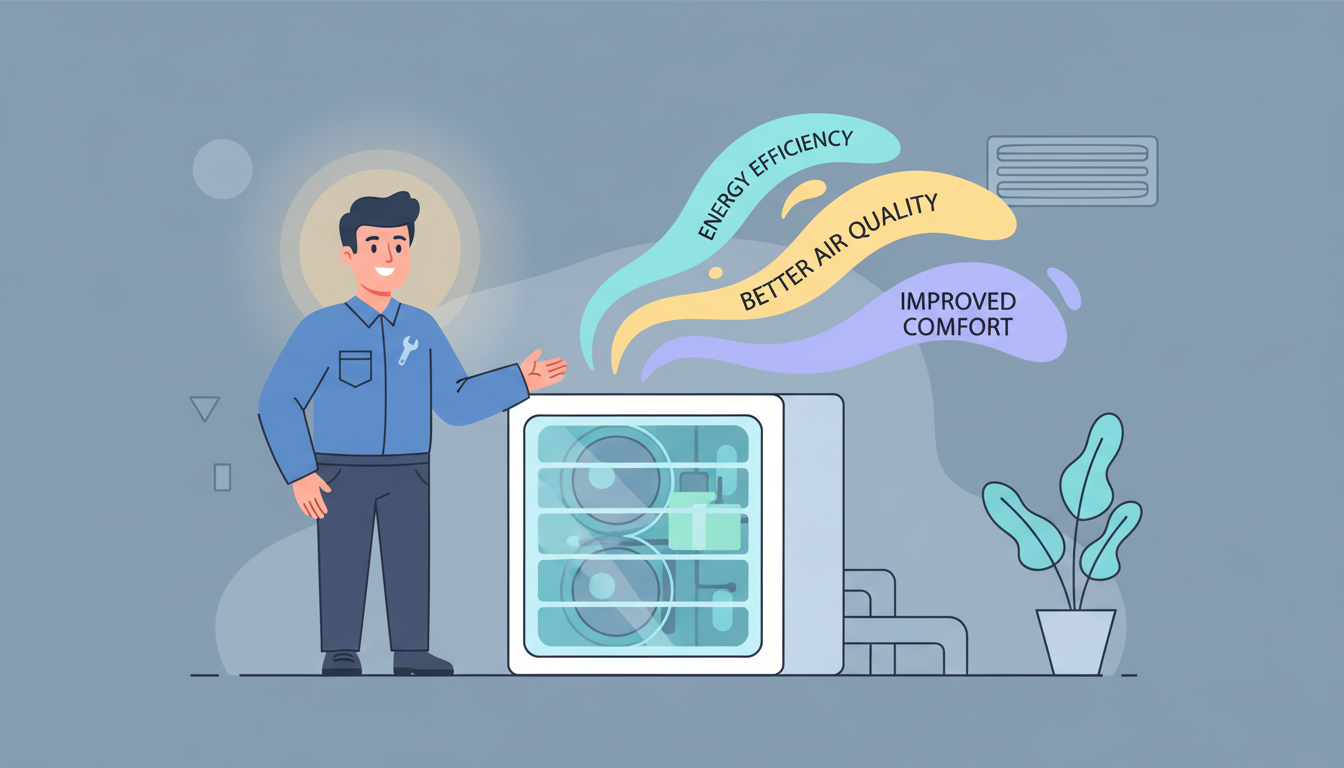
Here's where replacement really shines—it solves problems you might not have even connected to your HVAC system. Let's explore the hidden benefits new hvac system installations deliver.
1. Dramatic Air Quality Improvements
Your old system might be cooling or heating your home, but what's it doing to the air you breathe?
Modern HVAC systems feature:
- Hospital-grade multi-stage filtration that captures up to 99.9% of airborne particles
- UV light purification that kills bacteria, viruses, and mold spores
- Advanced humidity control that prevents mold growth and respiratory irritation
- Tighter seals and modern ductwork that prevent dust and contaminants from entering your air supply
Many homeowners report fewer allergies, better sleep, and reduced respiratory issues after replacement. These aren't minor perks—they're life-changing improvements that comprehensive HVAC repair alone can't deliver.
2. Noise Reduction You Can Actually Hear (or Can't Hear)
Remember when you first installed your old system and barely noticed it running? Years of wear create noise through:
- Worn bearings in blower motors
- Loose components vibrating during operation
- Compressors running at single, loud speeds
- Aging ductwork expanding and contracting
Modern variable-speed systems operate so quietly that many homeowners forget they're running. The difference is startling—no more rattling, clanking, or whooshing sounds interrupting your sleep or conversations.
3. End to Uneven Temperatures and Hot/Cold Spots
That bedroom that's always too hot in summer? The basement that stays freezing in winter? These comfort problems often aren't fixable with repairs to your old system.
Replacement opens the door to:
- Zoning technology that lets you control temperatures room-by-room
- Variable-capacity equipment that adjusts output precisely to your needs
- Properly sized systems matched to your home's actual load requirements
- Modern ductwork design that delivers airflow evenly throughout your home
These capabilities simply don't exist in systems over 10-15 years old. Replacement doesn't just fix your broken AC—it transforms your entire home comfort experience.
4. Energy Bills That Finally Make Sense
Here's a problem most homeowners don't realize they have: their "working" HVAC system is wasting hundreds of dollars every year.
Even if your old system technically heats and cools, it's likely operating at 50-60% of its original efficiency. Modern systems with high SEER ratings (16-20+) and AFUE ratings (95-98%) can reduce energy bills by 30-40% compared to systems from the early 2000s.
That's not marketing hype—that's physics. Technology has advanced significantly. What seemed efficient in 2005 is now considered wasteful by today's standards.
A homeowner replacing a 15-year-old system with a modern high-efficiency model might see:
- $800-1,200 annual savings on cooling costs
- $600-900 annual savings on heating costs
- Payback on the replacement investment in 5-7 years
- Continued savings for the next 15-20 years
5. Smart Technology and Modern Controls
Your old thermostat has one job: turn the system on when it gets too hot or cold. Modern smart thermostats and system controls offer capabilities that make your old system look primitive:
- Learning algorithms that adapt to your schedule automatically
- Remote access via smartphone apps for control from anywhere
- Detailed energy tracking showing exactly when and why your system runs
- Predictive maintenance alerts that warn you of potential issues before they become emergencies
- Integration with home automation systems for whole-home efficiency
When you choose HVAC replacement over repeated repairs, you're gaining technology that didn't exist when your old system was installed.
The Peace of Mind Factor: Often Overlooked, Always Valuable
Let's talk about something that doesn't show up on spreadsheets: the psychological burden of an unreliable HVAC system.
Reduced Stress and Mental Load
How many times have you thought:
- "I hope the AC doesn't quit during the heat wave next week"
- "Should I get this fixed before it fails completely?"
- "How much is this going to cost me this time?"
These worries create real stress. They affect your sleep, your budget planning, and your overall peace of mind.
Replacement eliminates this burden entirely. With a new system and comprehensive warranty coverage, you can stop worrying and start enjoying consistent comfort.
Fewer Emergency Service Calls
Emergency HVAC repairs cost 50-100% more than scheduled maintenance. When your old system fails on a 95-degree Saturday or a freezing Sunday night, you're at the mercy of premium emergency rates.
New systems rarely fail unexpectedly during their first decade. Modern diagnostics and quality components mean problems can be predicted and addressed during routine maintenance—not as middle-of-the-night emergencies.
Improved Home Value and Marketability
Planning to sell your home in the next 5-10 years? A new HVAC system is one of the top home improvements that buyers value.
Potential buyers see:
- No immediate replacement expense
- Modern efficiency lowering future utility costs
- Warranty coverage transferring to them
- One less negotiation point in the home inspection
Real estate professionals consistently report that homes with newer HVAC systems sell faster and for higher prices than comparable homes with aging equipment.
When Does Replacement Make the Most Sense?
Not every situation calls for replacement, but certain scenarios make it the clear winner for solving multiple problems simultaneously.
Your System Has Multiple Issues
If your technician is listing several problems—not just one—replacement becomes economically smart. Fixing the compressor, replacing the evaporator coil, and repairing the blower motor individually might cost more than a complete replacement.
More importantly, even after those repairs, you still have an old system with other components approaching failure.
You're Experiencing Recurring Problems
Three or more repairs in three years signals a system in decline. Each repair patches one problem but leaves dozens of other aging components untouched.
This is where the simple repair vs replace checklist becomes invaluable. When repairs become routine, replacement becomes preventive.
Your Energy Bills Keep Rising
If your usage hasn't changed but your bills keep climbing, your system is losing efficiency. This problem won't improve with repairs—it's the fundamental limitation of aging equipment.
Replacement addresses the root cause: worn components, outdated technology, and design limitations from an earlier era.
You Have Comfort Complaints Throughout Your Home
Uneven temperatures, poor humidity control, and inadequate airflow rarely get better with repairs. These are system-level problems requiring system-level solutions.
Modern zoning, variable-speed technology, and proper sizing solve these issues permanently.
Your System Uses R-22 Refrigerant
If your AC uses R-22 (Freon), you're on borrowed time. This refrigerant was phased out in 2020, and remaining supplies are expensive and dwindling.
Repairing a leak in an R-22 system might cost $1,500-2,500 for refrigerant alone—money spent on an obsolete system that can't be serviced affordably in the future.
Understanding the Full Cost Picture
When comparing repair versus replacement, most homeowners only look at the immediate invoice. But the true cost story is more complex.
The Hidden Costs of Repeated Repairs
Consider these accumulating expenses:
- Service call fees: $75-150 per visit
- Lost work time waiting for technicians
- Emergency repair premiums: 50-100% markup
- Inefficient operation between repairs
- Shortened lifespan of repeatedly-stressed components
A homeowner might spend $500 here, $800 there, and $1,200 on another repair over three years—totaling $2,500+ while still owning an unreliable system.
The Comprehensive Value of Replacement
Compare that to replacement, which delivers:
- Fixed, predictable cost with financing options
- 10-20 year warranty on parts and labor
- 30-40% energy savings starting immediately
- Elimination of all aging components
- Modern features and capabilities
- Increased home value
When you account for energy savings, avoided future repairs, and improved comfort, replacement often costs less over a 5-10 year timeline.
What Modern HVAC Technology Brings to the Table
The gap between old and new HVAC technology is wider than most homeowners realize. Here's what you're missing with that 15-year-old system.
Variable-Speed Everything
Old systems run at one speed: full blast. They're either 100% on or completely off.
Modern variable-speed systems adjust output from 25% to 100%, matching your exact needs. This means:
- Precise temperature control within 0.5 degrees
- Continuous, gentle airflow instead of blasts and stops
- Dramatic energy savings by avoiding constant cycling
- Better humidity removal in cooling mode
- Quieter operation at lower speeds
Two-Stage and Modulating Performance
Today's best furnaces and heat pumps don't just turn on—they modulate output continuously based on demand.
In mild weather, they operate at low capacity, saving energy and maintaining comfort. When temperatures plunge, they ramp up to full capacity. Your old single-stage system can't make these adjustments.
Advanced Diagnostics and Self-Monitoring
Modern systems monitor themselves constantly, tracking:
- Operating pressures and temperatures
- Electrical current draw
- Cycle times and frequency
- Airflow volumes
- Filter condition
When something starts trending toward failure, the system alerts your technician during routine maintenance—preventing breakdowns instead of reacting to them.
Integration and Communication
Today's HVAC components communicate with each other and with your home's systems:
- Thermostats that optimize based on humidity, not just temperature
- Air handlers that adjust speed based on ductwork pressure
- Heat pumps that coordinate with backup heat sources efficiently
- Indoor air quality devices that activate based on detected contaminants
This level of coordination makes your entire system smarter and more efficient than the sum of its parts.
FAQ: Common Questions About HVAC Replacement Benefits
How much better is a new HVAC system compared to repairing my old one?
Modern HVAC systems are 30-50% more efficient than systems from 15+ years ago. Beyond efficiency, new systems offer variable-speed operation, smart controls, better air filtration, and significantly quieter operation—benefits that repairs to old equipment simply cannot deliver.
Will replacing my HVAC system really improve my indoor air quality?
Absolutely. New HVAC systems include advanced filtration that captures particles as small as 0.3 microns, UV purification options that kill airborne pathogens, and better humidity control that prevents mold and bacteria growth. Many homeowners report fewer allergies and respiratory issues after upgrading.
How long will a new HVAC system last compared to continuing repairs on my old one?
A properly maintained new HVAC system typically lasts 15-20 years with minimal issues for the first 10 years. In contrast, a 15-year-old system needing frequent repairs might limp along for 2-5 more years with declining performance and increasing costs.
Does HVAC replacement really solve noise problems?
Yes. Modern variable-speed systems operate at sound levels 50-70% lower than older single-speed equipment. Homeowners consistently report that noise reduction is one of the most pleasant surprises after replacement—many don't even realize how loud their old system was until it's gone.
What problems can't be fixed by repairing my existing system?
Repairs can't upgrade your system's fundamental efficiency, add variable-speed capability, enable zoning, integrate smart technology, improve basic airflow design, or replace aging ductwork. These system-level improvements require replacement, not component repairs.
Making the Right Decision for Your Home
The question isn't just "should I repair or replace?" It's "am I solving one problem or many?"
Why replacement sometimes solves more than the main repair problem comes down to this: your HVAC system is an interconnected whole, not a collection of independent parts. When age and wear accumulate across the system, replacement doesn't just fix what's broken today—it eliminates what will break tomorrow, next month, and next year.
Consider replacement when:
- Your system is 12+ years old and needs a major repair
- You've had multiple repairs in recent years
- Your energy bills keep rising despite consistent usage
- You have ongoing comfort problems (uneven temperatures, humidity issues, poor airflow)
- You want modern features like smart controls and zoning
- You're tired of worrying about the next breakdown
The benefits of replacing your HVAC system extend far beyond the immediate repair. You're investing in:
- Consistent, reliable comfort for the next 15-20 years
- Energy savings that compound month after month
- Healthier indoor air quality for your family
- Peace of mind knowing you won't face emergency breakdowns
- Modern technology that makes your home more comfortable and efficient
- Increased home value and marketability
Yes, replacement costs more upfront than a single repair. But when that replacement solves five, ten, or fifteen problems simultaneously—including ones you didn't even know you had—it becomes the smartest investment you can make in your home comfort.
Ready to Explore Your Options?
If you're facing repeated HVAC problems or wondering whether repair or replacement makes more sense for your situation, don't wait for the next breakdown to force your decision.
Get a professional assessment of your system's condition, learn about modern HVAC technology that could transform your home comfort, and discover how replacement might solve more problems than you realized you had.
Your comfort, your budget, and your peace of mind are worth a comprehensive solution—not just another temporary patch.