
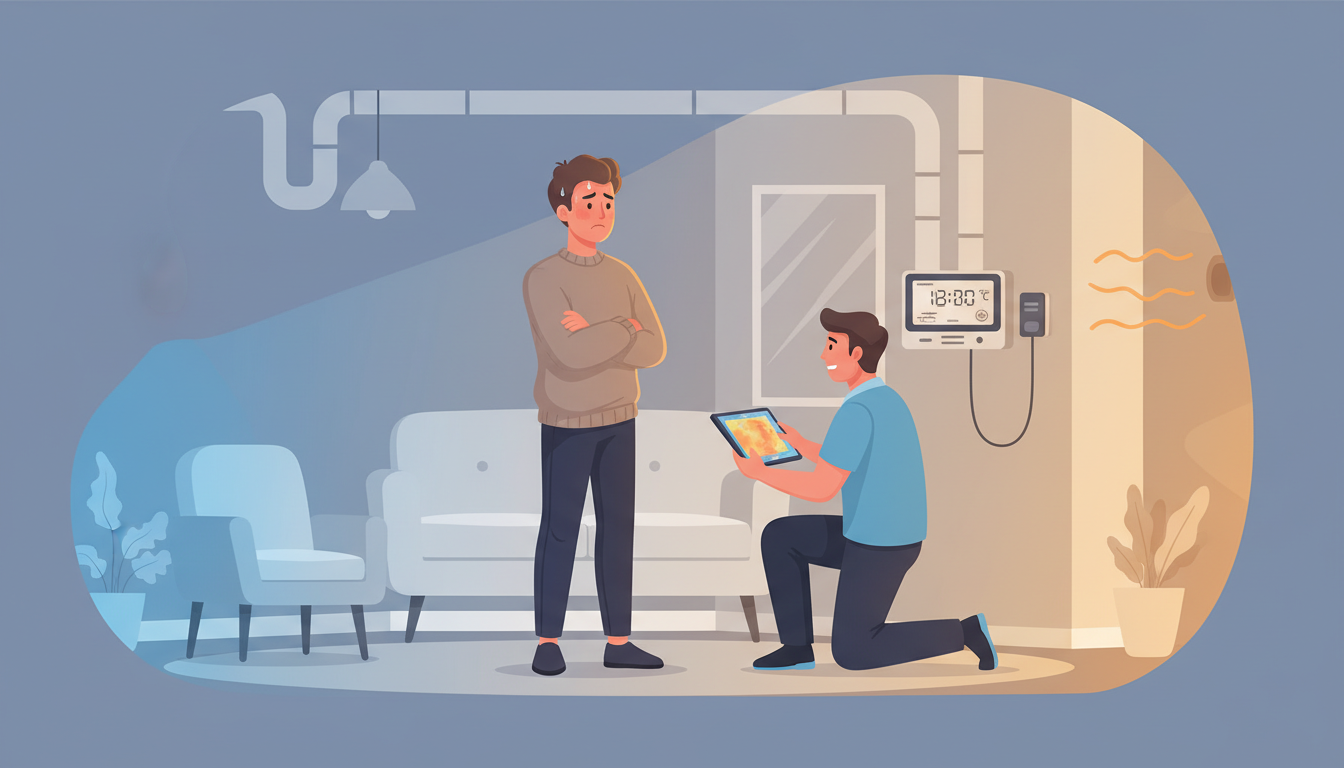
Why Some Rooms Never Feel Comfortable (No Matter What You Try)
Why Some Rooms Never Feel Comfortable (No Matter What You Try)
You've got the AC cranked up in summer or the heat blasting in winter, but that one room in your house? Still uncomfortable. Too hot, too cold, too stuffy, or just... off. You're not alone, and you're not imagining it. When some rooms never feel comfortable despite a working HVAC system, there are specific, fixable reasons why.
Let's figure out what's making your rooms uncomfortable and, more importantly, how to fix it.
What Does "Uncomfortable" Really Mean?
Before we dive into solutions, let's talk about what makes a room truly uncomfortable. It's not always just about temperature.
Temperature is only part of the equation. A room can be the "right" temperature on the thermostat but still feel uncomfortable because of:
- Humidity levels that are too high (sticky, muggy) or too low (dry, irritating)
- Stuffy or stale air from poor ventilation
- Drafts from windows, doors, or poorly sealed areas
- Hot or cold spots within the same room
- Inconsistent temperatures throughout the day
When we talk about why some rooms never feel comfortable, we're really talking about a failure of your HVAC system to create consistent thermal comfort. And that comfort depends on proper temperature, humidity control, air circulation, and air quality all working together.
Common Reasons Why Some Rooms Never Feel Comfortable
Let's break down the most common culprits behind uncomfortable rooms in your house.
1. Poor Airflow and Blocked Vents
This is the number one reason for uncomfortable rooms, and it's often the easiest to fix.
What's happening: Your HVAC system might be working perfectly, but if conditioned air can't reach a room or can't circulate properly once it gets there, that room will never feel right.
Common airflow problems include:
- Closed or partially closed vents - Someone shut the vent thinking it would "redirect" air elsewhere (it doesn't work that way)
- Blocked supply vents - Furniture, curtains, or rugs covering floor or wall registers
- Blocked return vents - Even more problematic than blocked supply vents; return vents need clear access to pull air back to your system
- Dirty air filters - A clogged filter restricts airflow throughout your entire system
- Closed interior doors - Shutting bedroom or office doors without proper return paths traps air and creates pressure imbalances
The fix: Walk through your home and check every vent. Make sure supply registers are fully open and unobstructed. Ensure return vents have at least 6-12 inches of clearance. Change your air filter every 1-3 months. If you keep doors closed, consider undercutting them or installing transfer grilles.
For more on diagnosing airflow issues, check out our guide on weak airflow from vents.
2. Ductwork Problems
Your ducts are the highways that deliver conditioned air throughout your home. When those highways have problems, certain rooms never get what they need.
What's happening: Ducts can leak, collapse, disconnect, or simply be designed poorly.
Common ductwork issues:
- Leaky ducts - Up to 30% of conditioned air can escape through gaps, holes, or disconnected joints, especially in attics or crawlspaces
- Undersized ducts - If your ducts are too small for the room they serve, they physically can't deliver enough air
- Long duct runs - Rooms far from the air handler lose temperature along the way, especially if ducts run through unconditioned spaces
- Uninsulated ducts - Ducts in hot attics or cold crawlspaces gain or lose significant heat before air reaches its destination
- Crushed or kinked flexible ducts - Reduces airflow dramatically
The fix: Have an HVAC professional perform a duct inspection and pressure test. Sealing ductwork typically costs $300-1,500 and can dramatically improve comfort. Insulating ducts in unconditioned spaces is also a smart investment.
3. Inadequate Insulation
Think of insulation as your home's thermal barrier. Without it, uncomfortable rooms are almost guaranteed.
What's happening: Rooms with poor insulation gain heat quickly in summer and lose it rapidly in winter. Your HVAC system has to work overtime just to keep up, and it usually can't.
Problem areas:
- Attic insulation - If your bonus room or upstairs bedrooms are always hot, check attic insulation levels
- Exterior walls - Older homes often have minimal wall insulation
- Rim joists - Often overlooked but major sources of heat loss
- Knee walls - In Cape Cod-style homes, knee walls behind storage areas frequently lack insulation
- Windows - Single-pane windows or old, drafty windows lose massive amounts of conditioned air
The fix: Start with the attic—it's the biggest bang for your buck. Most homes should have R-38 to R-60 in the attic. Add insulation if you're below that. For walls, blown-in insulation can be added through small holes that are then patched. Window upgrades are pricier but make a huge difference, especially for rooms with lots of sun exposure.
4. Thermostat Placement Issues
Your thermostat is the brain of your HVAC system. If it's in the wrong spot, it's making decisions based on bad information.
What's happening: The thermostat only knows the temperature where it's located. If it's in a hallway that stays comfortable, it'll shut off your system even though your master bedroom is still sweltering.
Common thermostat problems:
- Located in naturally cool spots - Near exterior doors, in shaded hallways, or on interior walls far from problem areas
- Exposed to direct sunlight - Makes the thermostat think it's warmer than it really is
- Near heat sources - Lamps, TVs, appliances, or even busy kitchens skew readings
- In rarely-used rooms - Thermostats in dining rooms or formal living rooms don't represent where you actually live
The fix: Moving a thermostat costs $150-300 and can solve comfort problems instantly. Alternatively, install a smart thermostat with remote sensors so multiple rooms influence the system's decisions. Modern systems can use temperature readings from multiple locations to create balanced comfort.
5. HVAC System Sizing Issues
Bigger is not better when it comes to HVAC equipment.
What's happening: An oversized system cools or heats too quickly, cycling on and off before properly conditioning all rooms. An undersized system runs constantly but never catches up.
How sizing goes wrong:
- Oversized systems - Short-cycle, fail to dehumidify properly, and create temperature swings
- Undersized systems - Some rooms (usually furthest from the unit) never quite reach the target temperature
- One system serving too many square feet - Added rooms or finished basements without upgrading HVAC capacity
- Poor Manual J calculation - Some contractors still use rules of thumb ("one ton per 500 sq ft") instead of proper load calculations
The fix: If your system is oversized, you may need a replacement or major modifications. If undersized, a supplemental system (like a ductless mini-split) can handle problem areas without replacing everything. For new installations, always insist on a proper Manual J load calculation.
6. Multi-Level Home Challenges
Heat rises. Physics isn't negotiable.
What's happening: In two-story homes, upstairs rooms naturally become hotter in summer and can be perfect downstairs but freezing upstairs in winter.
The challenge:
- Hot air naturally migrates upward
- Upstairs often has more sun exposure through roof and windows
- Single thermostat typically placed on the main level
- Longer duct runs to upper levels
The fix: Multi-level homes benefit enormously from zoned HVAC systems. Zoning uses multiple thermostats and motorized dampers in your ductwork to independently control different areas. If your upstairs is always uncomfortable, a zone system or supplemental mini-split for upper levels is worth every penny.
You can also use simpler solutions like ceiling fans (pushing air down in winter, pulling it up in summer), closing upstairs vents slightly in summer, or installing a smart vent system.
7. Sun Exposure and Window Issues
The sun is incredibly powerful. South and west-facing rooms absorb massive amounts of solar heat.
What's happening: Direct sunlight streaming through windows can add thousands of BTUs of heat to a room. Your HVAC system may not be sized to overcome that much heat gain.
Problem scenarios:
- Large windows facing south or west - Maximum sun exposure, especially in summer afternoons
- Skylights - Beautiful, but can turn rooms into greenhouses
- Insufficient window treatments - No blinds, curtains, or sun-blocking options
- Single-pane or low-quality windows - Little protection from outdoor temperatures
The fix: Start with window treatments. Cellular shades, blackout curtains, or solar screens can block 60-90% of heat gain. For long-term solutions, upgrade to double-pane, low-E windows with proper coatings for your climate. External shading (awnings, trees, pergolas) is even more effective.
8. Insufficient Return Air
Supply vents push air into rooms, but return vents pull it back. You need both working properly.
What's happening: Without adequate return air pathways, rooms become pressurized. Air can't enter because it has nowhere to go. The result? Poor circulation and uncomfortable temperatures.
Common return air problems:
- Not enough return vents - Many homes have just one central return, forcing air to travel under doors to get back to the system
- Closed bedroom doors - Shuts off return pathways entirely
- Return vents too small - Can't handle the volume of air being supplied
- Blocked returns - Furniture pushed against return grilles
The fix: Add return vents to problem rooms (costs $300-600 per vent). Alternatively, undercut doors by 1 inch or install transfer grilles. Some homeowners install jump ducts—short duct sections that connect rooms to hallways above doorways.
9. Home Additions and Renovations
Did you finish a basement, convert a garage, or add a bonus room? Your HVAC system might not have kept up.
What's happening: Your HVAC system was sized for your original home. Adding conditioned space without upgrading HVAC capacity means the system is now undersized.
Common scenarios:
- Finished basements - Often have minimal or no ductwork
- Converted garages - Typically uninsulated with no HVAC infrastructure
- Bonus rooms over garages - Notoriously difficult to heat and cool
- Sunrooms and enclosed porches - Maximum glass equals maximum heat gain/loss
The fix: For additions, installing a separate ductless mini-split system is often more cost-effective than extending your existing ductwork and upgrading your central system. It gives you independent control and doesn't strain your main system.
Quick DIY Checks Before Calling an HVAC Tech
Before spending money on professional help, try these troubleshooting steps:
Check every vent in your home
- Are supply vents fully open?
- Are any vents blocked by furniture or curtains?
- Are return vents clear with good airflow?
Replace your air filter
- A $5 filter might solve a $500 problem
Test interior door undercuts
- Close bedroom doors and check for air gaps underneath
- You should see at least 1/2 to 1 inch of clearance
Look for duct issues in visible areas
- Check basement or attic for disconnected or crushed ducts
- Look for obvious gaps or holes in ductwork
Verify your thermostat location
- Is it in direct sunlight or near heat sources?
- Does it reflect where you actually spend time?
Inspect window seals and weatherstripping
- Look for obvious drafts, gaps, or damaged seals
- Check for condensation between window panes (sign of seal failure)
If none of these reveal the problem, it's time to call a professional.
When to Call an HVAC Professional
Some comfort issues require expertise and specialized equipment:
- Duct sealing and insulation - Requires access to crawlspaces, attics, and specialized materials
- System sizing problems - Needs proper load calculations and potentially equipment replacement
- Zoning system installation - Involves motorized dampers, multiple thermostats, and controls
- Refrigerant issues - Legally requires a licensed technician
- Major ductwork modifications - Adding or rerouting ducts, installing returns
A good HVAC contractor will:
- Perform a thorough assessment of your entire system
- Use diagnostic tools like infrared cameras and duct pressure tests
- Provide multiple solution options at different price points
- Explain exactly why certain rooms are uncomfortable
For a complete overview of what to expect, see our HVAC repair guide.
Solutions at Every Budget Level
Free to $50: DIY Quick Fixes
- Change air filters regularly
- Clear blocked vents and returns
- Adjust vent dampers to balance airflow
- Add window treatments or close curtains during peak sun
- Use weatherstripping on doors and windows
- Close unused rooms to redirect conditioned air
$100 to $1,000: Minor Upgrades
- Smart thermostat with remote sensors ($150-300)
- Duct sealing in accessible areas ($300-800)
- Add insulation to attic ($500-1,500 for DIY materials)
- Register booster fans for problem rooms ($30-80 each)
- Window films or cellular shades ($200-600)
- Undercut doors or add transfer grilles ($50-200 per door)
$1,000 to $5,000: Major Improvements
- Professional duct sealing and insulation ($1,000-2,500)
- Add return vents to problem rooms ($300-600 each)
- Ductless mini-split for a single problem room ($2,000-4,000)
- New windows for one room ($1,500-4,000)
- Air balancing service with damper installation ($800-2,000)
$5,000+: Whole-System Solutions
- Full zoning system installation ($3,000-8,000)
- Complete ductwork replacement ($5,000-10,000)
- HVAC system upgrade with proper sizing ($5,000-15,000)
- Multiple mini-split zones ($4,000-10,000)
- Whole-home insulation and air sealing ($4,000-12,000)
The right solution depends on your specific situation. Many homeowners find that mid-range improvements (like duct sealing, added return vents, and a smart thermostat) solve 80% of comfort problems at 20% of the cost of a complete system replacement.
What About Rooms That Are Sometimes Comfortable?
If your problem room feels fine sometimes but uncomfortable other times, consider these factors:
Time-of-day variations - Rooms with windows facing east are hot in mornings, west-facing rooms heat up in afternoons. This is normal but solvable with window treatments or zoning.
Seasonal differences - A room that's perfect in spring might be miserable in summer. This suggests your system is borderline adequate and needs help during extreme weather.
Occupancy differences - Rooms feel warmer when people are in them (we generate heat). Home offices and bedrooms often need slightly more cooling capacity than living rooms.
Weather-dependent comfort - If rooms are only uncomfortable on the hottest or coldest days, your system might be undersized or nearing capacity.
For rooms that are comfortable sometimes, start with lower-cost fixes: window treatments, smart vents, or portable fans for circulation. You may not need major system work.
Special Considerations for Specific Room Types
Master Bedrooms
Often the furthest from the HVAC system and used primarily at night when you want it coolest. Consider:
- Ceiling fan for air circulation
- Smart vent or register booster
- Blackout curtains to prevent morning heat
- Remote thermostat sensor to prioritize bedroom comfort
Home Offices
Electronics generate significant heat, and you're stuck there all day. Solutions include:
- Additional return vent for better air exchange
- Portable air purifier for air quality
- Desk fan for personal comfort
- Consider a mini-split if you work from home full-time
Bonus Rooms Above Garages
These are notoriously difficult due to location and often minimal insulation. Best approaches:
- Insulate garage ceiling thoroughly
- Add dedicated mini-split system
- Ensure adequate supply and return vents
- Address air sealing around garage door
Basements
Naturally cool, which is great in summer but problematic in winter. May also have humidity issues. Focus on:
- Dehumidification if basement feels damp or musty
- Adequate return air to prevent stuffiness
- Supplemental heating if converting to living space
- Proper insulation of rim joists
Frequently Asked Questions
Why is my master bedroom always hot even when the AC is running?
Master bedrooms are typically the furthest room from the HVAC system, at the end of long duct runs. Combine that with west-facing windows, doors that are often closed, and inadequate return air, and you've got a perfect storm for discomfort. Start by checking for blocked vents, ensuring doors have proper undercuts, adding window treatments, and considering a smart thermostat with a remote sensor in the bedroom.
Can closing vents in unused rooms help cool other rooms?
No, and it often makes things worse. Closing vents increases pressure in your ductwork, forces air through leaks, reduces system efficiency, and can damage your HVAC equipment. Modern HVAC systems are designed as balanced systems. If you want to redirect air, use a zoning system with proper motorized dampers, not closed vents.
How much does it cost to fix uneven temperatures in a house?
It depends entirely on the cause. Simple fixes like changing filters, clearing vents, or adding weatherstripping cost under $100. Mid-range solutions like duct sealing or adding return vents run $500-2,000. Major fixes like zoning systems or ductless mini-splits cost $3,000-8,000. Start with an HVAC assessment ($100-200) to identify the specific problem before committing to expensive solutions.
Will a bigger AC unit fix my uncomfortable rooms?
Usually no. In fact, oversized AC units often make comfort worse by short-cycling—running in brief bursts that cool some rooms quickly while leaving others behind. Proper system sizing based on a Manual J load calculation is critical. If certain rooms are uncomfortable, the solution is usually better air distribution (ductwork, zoning, additional returns) rather than more cooling capacity.
Why does my upstairs never cool off in summer?
Heat rises, and your upstairs also has more sun exposure through the roof and upper-floor windows. Long duct runs lose cooling along the way. If you have a single-zone system with the thermostat downstairs, it shuts off when the main level is comfortable, leaving upstairs hot. Solutions include a zoned system, ductless mini-split for upper floors, better attic insulation, or a separate thermostat with remote sensors prioritizing upstairs comfort. Learn more about why some rooms won't cool.
The Bottom Line
When some rooms in your house never feel comfortable, it's frustrating, but it's also solvable. The vast majority of comfort problems come down to these core issues:
- Airflow problems - Blocked vents, closed doors, or inadequate returns
- Ductwork deficiencies - Leaks, poor design, or insufficient insulation
- Distribution issues - Poor air balancing or lack of zoning
- Insulation gaps - Heat gain and loss overwhelming your HVAC system
- System limitations - Improper sizing or capacity constraints
Start with the simple, free checks. Make sure air can actually reach and circulate through your uncomfortable rooms. If those don't solve it, invest in an HVAC assessment from a qualified professional. The right diagnosis leads to the right solution, and that solution is almost always less expensive than living with discomfort or replacing your entire system.
Your home should be your comfortable refuge. With the right approach, every room can feel just right—no matter the season.
Struggling with uncomfortable rooms? Get expert help diagnosing and fixing HVAC comfort issues in your home.