How Superheat and Subcooling Help Diagnose AC Problems
How Superheat and Subcooling Help Diagnose AC Problems
Is your air conditioner not cooling like it used to? Before you spend hundreds or even thousands on repairs, understanding how HVAC technicians use superheat and subcooling measurements can save you money and help you make informed decisions about your AC system. These two critical measurements tell technicians exactly what's happening inside your air conditioner, helping them diagnose problems accurately the first time.
What Are Superheat and Subcooling?
When your AC stops cooling properly, the problem often involves refrigerant—the special fluid that absorbs heat from your home. But here's the thing: adding more refrigerant isn't always the answer. Sometimes your system has too much refrigerant, sometimes too little, and sometimes the amount is fine but something else is wrong.
That's where superheat and subcooling come in. These measurements act like a diagnostic blood test for your AC system, revealing exactly what's happening inside.
Understanding Superheat in Simple Terms
Superheat measures how hot the refrigerant vapor gets after it completely evaporates. Think of it like boiling water on your stove. Once water reaches 212°F, it starts turning into steam. If you keep heating that steam, it gets hotter than 212°F—that extra heat above the boiling point is superheat.
In your AC system, superheat tells technicians what's happening in the evaporator coil (the indoor part that cools your air). The measurement reveals whether you have the right amount of refrigerant flowing through this critical component.
Understanding Subcooling Explained
Subcooling measures how much the refrigerant cools down after it turns from gas back into liquid. Using our water analogy again, imagine steam condensing back into water. If you cool that water below its condensation temperature, that extra cooling is subcooling.
Subcooling tells technicians what's happening in the condenser coil (the outdoor unit). This measurement shows whether refrigerant is backing up in the system or flowing properly through the entire refrigeration cycle.
Why Superheat and Subcooling Matter for AC Diagnosis
Your HVAC technician can't see inside your AC system's refrigerant lines. These measurements give them "x-ray vision" to diagnose problems without guesswork. Here's why this matters to you:
Accurate Diagnosis Saves You Money
Before superheat and subcooling became standard practice, many technicians would simply add refrigerant to any AC that wasn't cooling well. This approach often made problems worse and cost homeowners unnecessary money. A proper diagnosis using these measurements ensures you only pay for repairs you actually need.
Protects Your Compressor
Your AC's compressor is the most expensive component—often costing $1,500-$2,500 to replace. Incorrect refrigerant charge can damage or destroy your compressor. High superheat means not enough liquid refrigerant is returning to protect the compressor from overheating. Low superheat can cause "slugging," where liquid refrigerant floods back and physically damages the compressor's internal components.
Proper superheat and subcooling readings keep your compressor running safely and extend your system's lifespan.
Improves Energy Efficiency
When refrigerant charge is off—even slightly—your AC works harder to cool your home. This means higher electric bills every month you run the system. Studies show that being just 10% undercharged can reduce your AC's efficiency by 20%. Over a cooling season, that's real money on your utility bill.
Identifies the Real Problem
Not every cooling problem is a refrigerant issue. Superheat and subcooling readings help technicians distinguish between:
- Low refrigerant charge (from leaks)
- Overcharged systems
- Dirty coils restricting airflow
- Failed expansion valves
- Blocked refrigerant lines
- Compressor problems
This diagnostic precision means you get the right repair, not just a Band-Aid fix.
How HVAC Technicians Measure Superheat and Subcooling
Understanding the measurement process helps you know what to expect when a technician services your system. Both measurements require specialized tools and knowledge.
The Tools Technicians Use
Professional HVAC technicians use two main tools:
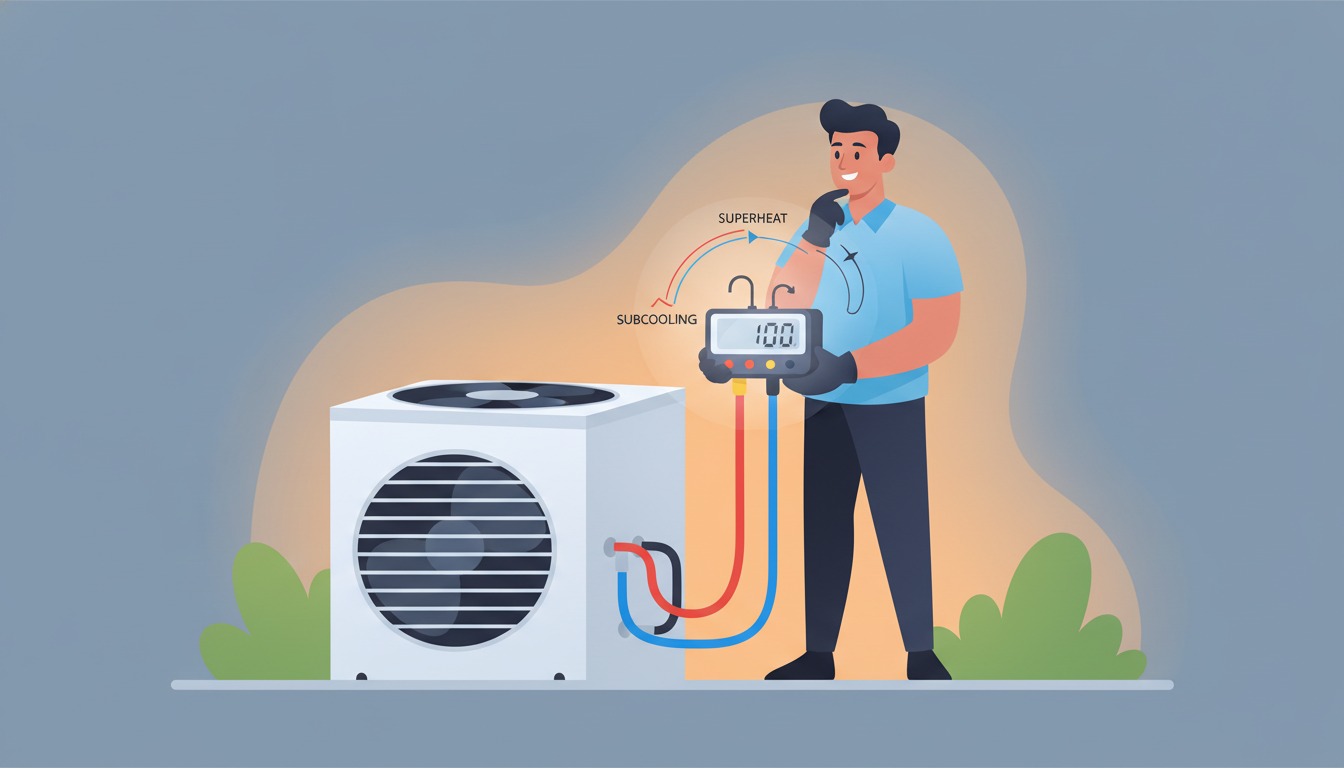
Manifold Gauges: These measure refrigerant pressure in PSI (pounds per square inch). The gauges connect to service ports on your AC's refrigerant lines—one for high pressure (liquid line) and one for low pressure (suction line).
Digital Thermometers: Technicians clamp temperature probes onto refrigerant lines to get accurate surface temperatures. Modern wireless thermometers make this process faster and more accurate than older methods.
Some technicians use advanced digital manifold systems that calculate superheat and subcooling automatically, reducing human error.
How to Calculate Superheat
Here's the process technicians follow:
- Measure suction line pressure using the low-pressure gauge
- Convert pressure to saturation temperature using a pressure-temperature (PT) chart specific to your refrigerant type
- Measure actual suction line temperature with a temperature probe
- Calculate superheat: Actual Temperature - Saturation Temperature = Superheat
For example, if the saturation temperature is 45°F and the actual line temperature is 55°F, the superheat is 10°F—within the normal range for most systems.
How to Calculate Subcooling
The subcooling process is similar but uses different connection points:
- Measure liquid line pressure using the high-pressure gauge
- Convert to saturation temperature using the PT chart
- Measure actual liquid line temperature near the outdoor unit
- Calculate subcooling: Saturation Temperature - Actual Temperature = Subcooling
If saturation temperature is 110°F and the actual line reads 98°F, subcooling is 12°F—a healthy reading for most TXV systems.
Understanding Normal Superheat and Subcooling Ranges
What's "normal" depends on your specific system type and operating conditions, but here are general guidelines:
Target Superheat Ranges
For fixed orifice or piston systems: 8-15°F superheat is typical, with the exact target depending on indoor and outdoor temperatures. Hotter outdoor conditions generally require lower superheat readings.
For TXV (thermostatic expansion valve) systems: Superheat is typically tighter, around 8-12°F, because the TXV automatically adjusts refrigerant flow.
Target Subcooling Ranges
For TXV systems: 10-18°F subcooling is normal, with most manufacturers specifying exact targets (often 10-15°F).
For fixed orifice systems: Subcooling readings vary more widely with conditions, so technicians primarily use superheat for these systems.
Important: Always refer to your specific AC manufacturer's specifications. These are printed on the equipment data plate or in the installation manual.
What Superheat and Subcooling Readings Tell Your Technician
Different combinations of superheat and subcooling point to specific problems. Here's what technicians look for:
High Superheat + Low Subcooling = Low Refrigerant Charge
This is the classic signature of a refrigerant leak. When refrigerant is low:
- High superheat (15-25°F or more) shows the evaporator isn't getting enough refrigerant—vapor heats up too much
- Low subcooling (0-5°F) indicates not enough liquid in the condenser
What this means for you: Your system has a leak that needs repair before adding refrigerant. Simply adding refrigerant without fixing the leak is throwing money away—it'll just leak out again.
Symptoms you might notice: Weak cooling, AC runs constantly, ice on indoor coil (in severe cases), higher electric bills.
Low Superheat + High Subcooling = Overcharged System
Too much refrigerant causes the opposite pattern:
- Low superheat (0-5°F) means too much refrigerant in the evaporator—potentially flooding back to the compressor
- High subcooling (18-25°F or more) shows excess refrigerant backing up in the condenser
What this means for you: A previous technician likely added too much refrigerant, or the system was overcharged during installation. The technician needs to recover (remove) excess refrigerant.
Symptoms you might notice: Poor cooling despite running, high head pressure readings, potential compressor damage over time.
High Superheat + High Subcooling = Restricted Flow
When both readings are high, refrigerant isn't flowing properly:
- Points to a clogged filter-drier, kinked line, or failed expansion valve
- The restriction acts like a thumb over a garden hose, creating pressure backup
What this means for you: You need a component replacement or repair, not refrigerant adjustment.
Symptoms you might notice: Little to no cooling, system runs but doesn't cool, outdoor unit very hot.
Low Superheat + Low Subcooling = Possible TXV Failure
When both readings are low, the expansion valve may be stuck open:
- Too much refrigerant flowing into the evaporator (low superheat)
- Not enough staying in the condenser (low subcooling)
What this means for you: The TXV (thermostatic expansion valve) likely needs replacement—a moderate repair cost but essential for proper operation.
Symptoms you might notice: Inconsistent cooling, system short-cycling, ice buildup on lines.
The Difference Between TXV and Fixed Orifice Systems
Your AC uses one of two types of metering devices to control refrigerant flow, and this affects how technicians diagnose your system:
TXV (Thermostatic Expansion Valve) Systems
TXVs automatically adjust refrigerant flow based on conditions. They're common in newer, higher-efficiency systems. For TXV systems:
- Technicians primarily use subcooling for charging
- Target subcooling is usually manufacturer-specified (10-15°F typical)
- Superheat should be in range but isn't the primary charging method
- These systems maintain better efficiency across varying conditions
Fixed Orifice (Piston) Systems
Fixed orifices are simple, non-adjusting metering devices—common in older or builder-grade systems. For these systems:
- Technicians primarily use superheat for charging
- Target superheat varies with indoor/outdoor temperatures
- Requires superheat charging charts for accuracy
- More sensitive to outdoor temperature changes
Why this matters: If a technician doesn't know which system type you have, they might use the wrong diagnostic method and misdiagnose your problem. A good technician always checks the equipment data plate first.
Common AC Problems Diagnosed with Superheat and Subcooling
Let's look at real-world scenarios where these measurements save the day:
Problem: AC Not Cooling Despite "Full" Refrigerant
A homeowner calls saying their AC isn't cooling. A quick technician might just add refrigerant and leave. A professional checks superheat and subcooling first.
Findings: Normal superheat (10°F), high subcooling (22°F)
Diagnosis: System is actually overcharged—adding more would make it worse. The technician removes excess refrigerant, restoring proper cooling.
Problem: Ice Forming on Indoor Coil
Ice on your evaporator coil can have multiple causes. Superheat and subcooling narrow it down.
Low superheat (2°F) + Normal subcooling: Likely a failed TXV flooding the evaporator
High superheat (20°F) + Low subcooling: Refrigerant leak causing low charge
Normal readings but ice present: Probably an airflow issue—dirty filter, blocked vents, or blower problem
Problem: System Runs But Doesn't Cool
When your AC runs but your home stays warm, measurements reveal the cause.
Very high superheat (30°F+) + Very low subcooling: Severe refrigerant undercharge—major leak present
High superheat + High subcooling: Blocked expansion device or restriction in refrigerant line
Normal readings: Not a refrigerant problem—check for airflow issues, thermostat problems, or ductwork leaks
When to Check Superheat and Subcooling
These measurements should be part of regular HVAC maintenance, not just emergency repairs:
During Annual AC Tune-Ups
A complete AC tune-up should always include superheat and subcooling checks. This catches small problems before they become expensive emergencies. Finding a slow leak early prevents compressor damage and saves refrigerant costs.
After Any Refrigerant Work
Anytime a technician adds or removes refrigerant, they should verify the charge with these measurements. Guessing or "topping off" without measuring is unprofessional and often creates new problems.
When You Notice Cooling Problems
If your AC isn't cooling like normal, these measurements help diagnose the issue quickly. The sooner you catch refrigerant problems, the less expensive the repair—and the less likely you'll face compressor failure.
After Refrigerant Leak Repairs
Once a technician fixes a refrigerant leak, they need to verify proper charge. Many refrigerant leak symptoms return if the system isn't charged correctly after repair.
Can Homeowners Check Superheat and Subcooling?
Technically yes, but realistically no—and here's why:
Why DIY Isn't Recommended
EPA regulations: Handling refrigerant requires EPA Section 608 certification. Working with refrigerant without certification is illegal and can result in fines up to $37,500.
Equipment cost: Quality manifold gauges and accurate thermometers cost $200-$500+. For a one-time check, it's not cost-effective.
Refrigerant-specific knowledge: Each refrigerant type (R-410A, R-22, R-32) has different pressure-temperature relationships. Using the wrong chart gives wrong results.
Safety concerns: Refrigerant under pressure can cause frostbite, and working with electrical components while checking a running system is dangerous without proper training.
Interpretation complexity: Knowing what readings mean requires understanding system types, ambient conditions, and manufacturer specifications.
What You Can Do Instead
While you shouldn't attempt refrigerant diagnostics yourself, you can:
- Monitor your AC's performance: Note weak cooling, ice buildup, or constant running
- Check for obvious leaks: Look for oily residue around refrigerant connections (but don't touch)
- Maintain good airflow: Change filters monthly, keep outdoor unit clear
- Schedule annual maintenance: Professional checks catch problems early
- Ask questions: When a technician services your system, ask them to explain the superheat and subcooling readings
What to Expect During a Professional Diagnosis
When you call an HVAC company for cooling problems, here's what should happen:
Initial Assessment
The technician should:
- Ask about symptoms and when they started
- Check your thermostat settings
- Inspect air filters and indoor airflow
- Look at the outdoor unit condition
- Listen for unusual sounds
Refrigerant Testing Process
For refrigerant diagnosis, expect:
- The technician connects manifold gauges to service ports
- They attach temperature probes to refrigerant lines
- They run the system for 10-15 minutes to stabilize
- They record pressure and temperature readings
- They calculate superheat and subcooling
- They compare results to manufacturer specifications
Red flag: If a technician wants to add refrigerant without taking these measurements, find a different company.
Getting a Clear Explanation
A professional technician should:
- Show you the actual readings
- Explain what they mean in plain language
- Identify the specific problem
- Provide repair options with costs
- Answer your questions patiently
Don't be afraid to ask, "What are my superheat and subcooling readings?" A confident professional will gladly explain.
Cost Implications of Refrigerant Problems
Understanding what's wrong helps you budget for repairs:
Diagnostic Service Call
Expect to pay $75-$150 for a diagnostic visit where the technician checks superheat, subcooling, and overall system operation. Many companies waive this fee if you proceed with repairs.
Refrigerant Recharge
If you have a minor leak and need refrigerant:
- R-410A refrigerant: $50-$150 per pound, with most systems holding 6-15 pounds
- R-22 refrigerant (older systems): $100-$300+ per pound due to phaseout
- Labor for recovery and recharge: $150-$300
Total for simple recharge: $300-$800 depending on refrigerant type and amount
Leak Detection and Repair
If superheat and subcooling reveal a leak:
- Leak detection service: $150-$400 (sometimes included with diagnostic)
- Minor leak repair: $200-$500 for accessible connections
- Evaporator coil leak: $1,000-$2,500 (major repair)
- Condenser coil leak: $1,200-$2,800 (often better to replace unit if old)
TXV or Expansion Device Replacement
When superheat and subcooling point to expansion valve failure:
- TXV replacement: $300-$700 including labor
- Fixed orifice replacement: $200-$400 (simpler component)
When Replacement Makes More Sense
If your AC is over 12-15 years old and facing expensive refrigerant repairs, replacement might be more cost-effective—especially if you have an R-22 air conditioner since R-22 refrigerant costs continue rising.
Preventing Refrigerant Problems
While you can't prevent all refrigerant issues, you can reduce the risk:
Annual Professional Maintenance
A yearly tune-up with superheat and subcooling checks catches problems early. This typically costs $80-$150 but prevents expensive emergency repairs.
Maintain Good Airflow
Many refrigerant-related problems start with airflow issues:
- Change filters every 30-60 days during cooling season
- Keep vents open and unblocked throughout your home
- Clean outdoor unit coils annually to prevent restrictions
- Trim vegetation at least 2 feet away from outdoor unit
Poor airflow can cause low superheat readings that mimic refrigerant problems, leading to misdiagnosis.
Address Small Issues Promptly
If you notice weak cooling or ice buildup, call for service quickly. Small refrigerant leaks become big leaks. Minor TXV problems lead to compressor damage. Early intervention saves money.
Choose Quality Installation
Improper installation causes many refrigerant problems. When installing a new AC:
- Hire licensed, insured contractors with good reviews
- Verify proper sizing for your home's cooling load
- Ensure proper evacuation before refrigerant charge
- Demand proper charging using superheat and subcooling, not just weight
Frequently Asked Questions
What is superheat in AC systems?
Superheat is the temperature of refrigerant vapor above its boiling point (saturation temperature). It tells technicians whether the evaporator coil has the right amount of refrigerant. Normal superheat ranges from 8-15°F depending on system type.
What does subcooling measure in HVAC?
Subcooling measures how much the refrigerant cools below its condensation temperature after becoming liquid. It indicates refrigerant levels in the condenser and is especially important for diagnosing TXV systems. Target subcooling is typically 10-15°F.
How do you know if your AC is overcharged or undercharged?
Undercharged: High superheat (15°F+) and low subcooling (below 5°F) indicate low refrigerant, usually from a leak.
Overcharged: Low superheat (below 5°F) and high subcooling (above 18°F) mean too much refrigerant in the system.
Only a professional with proper gauges can measure this accurately.
Can low refrigerant damage my AC compressor?
Yes, absolutely. Low refrigerant causes high superheat, meaning not enough cool refrigerant returns to cool the compressor. This can overheat and destroy the compressor—the most expensive component in your AC system. High superheat readings are an early warning sign.
Why do technicians use both superheat and subcooling?
Each measurement reveals different information. Superheat shows what's happening in the evaporator (indoor coil), while subcooling shows condenser (outdoor unit) performance. Together, they create a complete diagnostic picture that identifies specific problems like leaks, overcharge, or mechanical failures.
How much does it cost to fix refrigerant charge issues?
Costs vary widely:
- Simple recharge (minor leak): $300-$800
- Leak repair + recharge: $500-$1,500
- Coil replacement (major leak): $1,000-$2,800
- TXV replacement: $300-$700
The exact cost depends on refrigerant type, leak location, and labor rates in your area.
Should superheat and subcooling be checked every year?
Yes, annual checks during routine maintenance catch small problems before they become expensive emergencies. These measurements verify your system's refrigerant charge remains correct and help detect slow leaks early.
What's the difference between TXV and piston for refrigerant diagnosis?
TXV systems: Technicians primarily use subcooling measurements to diagnose and charge the system (target: 10-15°F).
Piston/fixed orifice systems: Superheat is the primary diagnostic tool (target: 8-15°F depending on conditions).
Using the wrong measurement method for your system type leads to misdiagnosis.
Get Professional AC Diagnosis Today
Understanding superheat and subcooling helps you make informed decisions about your AC system. These measurements are the foundation of accurate refrigerant diagnosis—protecting your investment, preventing expensive compressor damage, and ensuring your system runs efficiently.
When your AC isn't cooling properly, don't settle for guesswork or "top-off" service. Demand proper superheat and subcooling diagnosis from a qualified HVAC technician. This professional approach saves money, extends your system's life, and gives you peace of mind that repairs are done right the first time.
If you're experiencing cooling problems or it's time for your annual maintenance, contact a licensed HVAC professional who uses modern diagnostic tools and follows industry best practices. Your comfort—and your wallet—will thank you.