What a Technician Checks During Central AC Repair: Complete Inspection Guide
What a Technician Checks During Central AC Repair: Complete Inspection Guide
When your central air conditioning system stops working properly, knowing what a technician checks during central AC repair can help you understand the process and set realistic expectations. A professional AC technician follows a systematic inspection procedure to diagnose problems accurately and recommend the right repairs. Whether you're dealing with weak airflow, warm air, or a complete system breakdown, understanding the repair inspection process helps you make informed decisions about your cooling system.
Initial System Assessment and Safety Check
Before diving into specific components, your HVAC technician performs a comprehensive initial assessment of your central AC system. This crucial first step helps identify obvious problems and ensures safe working conditions.
Thermostat Functionality
The technician starts by checking your thermostat settings and operation. They verify that your thermostat is correctly set to cooling mode, the temperature setting is appropriate, and the system responds when adjusted. Modern digital and smart thermostats also require battery checks and calibration verification. A malfunctioning thermostat can mimic more serious problems, so this quick check often saves time and money.
Power Supply and Circuit Breakers
Electrical issues cause many AC failures. Your technician inspects the circuit breaker panel to ensure the AC breaker hasn't tripped and checks the disconnect box near your outdoor condenser unit. They also verify that all safety switches are functioning properly and that your system is receiving adequate power at the correct voltage.
Visual Inspection for Obvious Damage
A walk-around inspection reveals visible problems like physical damage to the outdoor unit, disconnected wires, pest damage to insulation or wiring, and signs of water leaks or refrigerant stains. These obvious issues guide the technician's diagnostic approach and help prioritize repairs.
Electrical System Diagnosis
Electrical problems account for a significant portion of central AC repairs. Your technician uses specialized diagnostic tools to thoroughly evaluate your system's electrical components.
Voltage and Amperage Testing
Using a digital multimeter, the technician measures voltage at multiple points throughout your system. They check that your compressor, condenser fan motor, and blower motor are all receiving proper voltage. Amperage draw testing reveals whether components are working efficiently or struggling due to mechanical issues. A motor drawing too many amps often indicates bearing failure or other internal damage.
Capacitor Inspection and Testing
Capacitors provide the electrical boost needed to start your compressor and fan motors. Technicians test both start and run capacitors using specialized meters. Failed capacitors are one of the most common AC repair issues, especially in hot climates where they work overtime. Signs of capacitor failure include a bulging appearance, oil leaks, or burn marks on the component.
Contactor and Relay Examination
The contactor acts as an electrical switch that energizes your compressor and condenser fan. Technicians inspect contactors for pitting, burning, or wear on the contact points. They also test the electromagnetic coil that pulls the contacts together. Worn contactors can cause hard starting, frequent cycling, or complete system failure.
Control Board Assessment
Modern air conditioners rely on sophisticated control boards to manage system operation. Your technician checks for blown fuses, burnt connections, or error codes displayed on the board. They verify that all control wires are properly connected and that the board is sending appropriate signals to system components.
Refrigerant System Evaluation
The refrigerant system is the heart of your air conditioner. Proper refrigerant charge and system integrity are essential for cooling performance and energy efficiency.
Refrigerant Pressure Readings
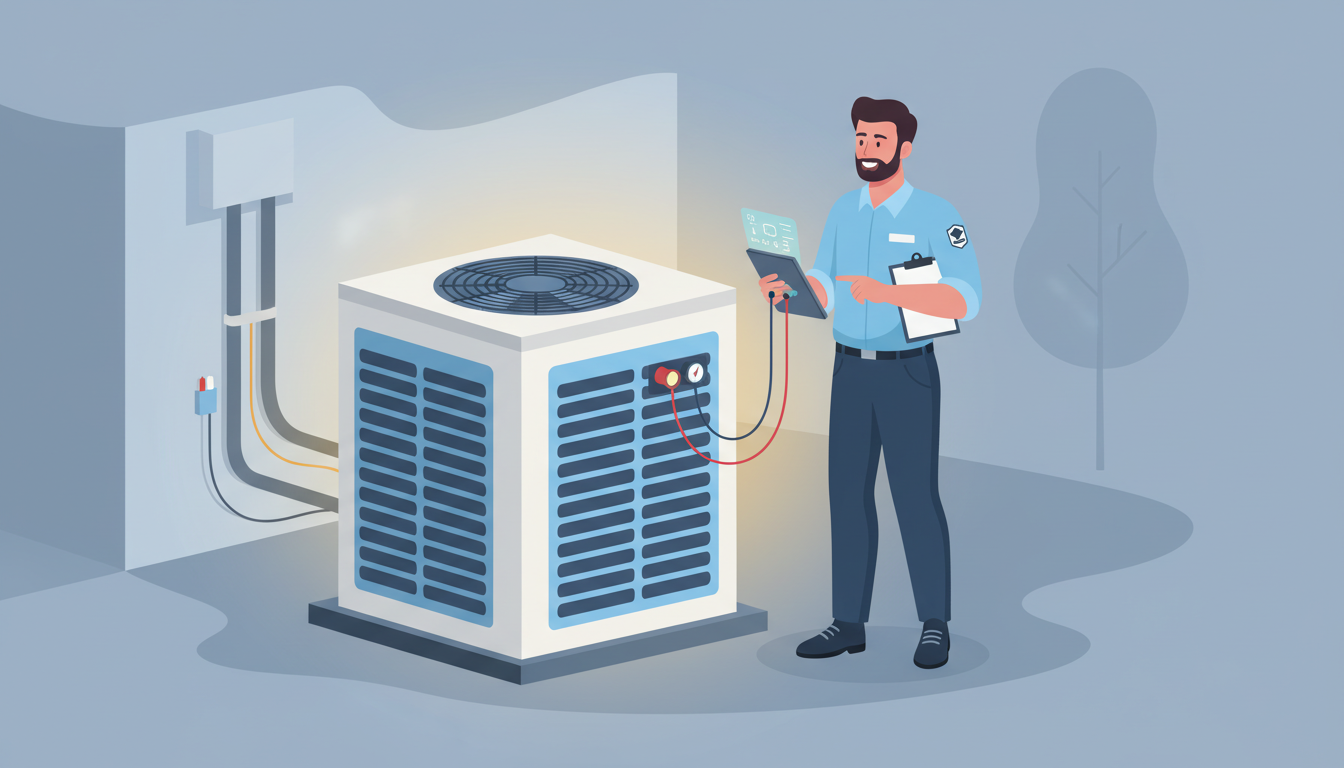
Technicians connect manifold gauges to your system's service ports to measure both high-side (discharge) and low-side (suction) pressures. These readings, compared against manufacturer specifications for your specific model and outdoor temperature, reveal whether your system has the correct refrigerant charge. Low pressure indicates a leak, while high pressure can signal restricted airflow or an overcharged system.
Superheat and Subcooling Measurements
Professional diagnostics go beyond simple pressure readings. Technicians calculate superheat (the temperature increase of refrigerant vapor after leaving the evaporator coil) and subcooling (the temperature decrease of liquid refrigerant after leaving the condenser coil). These precise measurements determine whether your system is properly charged and identify specific problems like restricted metering devices or inadequate airflow.
Refrigerant Leak Detection
If pressure readings indicate low refrigerant, your technician uses electronic leak detectors or ultraviolet dye to locate leaks. Common leak locations include brazed joints, service port valves, coil connections, and corroded areas on the coils themselves. Federal regulations require technicians to repair leaks before simply adding refrigerant, making leak detection a critical part of proper AC repair.
Compressor Performance Check
The compressor is your system's most expensive component, so technicians carefully evaluate its condition. They listen for unusual noises like grinding, rattling, or screeching, measure the temperature differential across the compressor, and verify that pressure readings indicate proper pumping action. Compressor failure often necessitates deciding between major repair and full system replacement.
Airflow and Indoor Component Inspection
Proper airflow through your system is essential for cooling performance, efficiency, and preventing frozen coils. Your technician thoroughly evaluates all components that affect air movement.
Air Filter Condition
Clogged air filters are the number one cause of preventable AC problems. Your technician removes and inspects your filter for dirt accumulation, proper size and installation, and appropriate MERV rating for your system. Many repair calls end with a simple filter replacement, though neglected filters can cause secondary damage requiring additional repairs.
Evaporator Coil Examination
Located inside your air handler, the evaporator coil absorbs heat from your indoor air. Technicians inspect this coil for dirt buildup that reduces heat transfer efficiency, ice formation indicating restricted airflow or low refrigerant, coil fin damage that impedes airflow, and signs of refrigerant leaks. Dirty evaporator coils significantly reduce cooling capacity and energy efficiency. If you're experiencing issues with warm air from your central AC system, a dirty or damaged evaporator coil might be the culprit.
Blower Motor and Fan Assembly
The blower motor circulates conditioned air throughout your home. Your technician checks the motor for proper speed operation (especially on variable-speed systems), unusual noises or vibration, bearing condition and lubrication needs, and proper amperage draw. They also inspect the blower wheel for dirt accumulation and balance issues that reduce efficiency and create noise.
Ductwork Assessment
While not always included in basic repair calls, duct inspection often reveals problems affecting system performance. Technicians look for disconnected or damaged ducts, significant air leaks at joints and seams, inadequate insulation in unconditioned spaces, and restricted or crushed flex duct. Duct problems can waste 20-30% of your cooling energy and create uncomfortable hot and cold spots in your home.
Outdoor Condenser Unit Inspection
Your outdoor condenser unit releases the heat absorbed from inside your home. This exposed equipment faces harsh weather conditions and requires thorough inspection during repairs.
Condenser Coil Condition
The condenser coil must efficiently transfer heat to outdoor air. Technicians examine the coil for dirt, leaves, and debris blocking airflow, bent or damaged fins, corrosion or refrigerant leaks, and proper clearance around the unit. A dirty condenser coil forces your compressor to work harder, increases energy consumption, and can lead to compressor failure.
Condenser Fan Motor and Blade
The condenser fan pulls outdoor air across the coil to remove heat. Your technician tests the fan motor for proper operation and amperage, checks for bearing wear or seized bearings, inspects the fan blade for damage or imbalance, and verifies that the fan capacitor is functioning correctly. A failed condenser fan causes high head pressure and can trigger safety shutdowns or damage your compressor.
Unit Level and Mounting
A level unit is important for proper refrigerant flow and compressor oil return. Technicians verify that the concrete pad hasn't settled or shifted, the unit is properly secured to its mounting, and there's no damage to the unit base or frame. They also check that vegetation or debris hasn't accumulated around the unit, restricting airflow.
Condensate Drainage System
Your AC system removes moisture from indoor air, and this condensation must drain properly to prevent water damage and maintain indoor air quality.
Drain Pan Inspection
Technicians inspect the primary and secondary drain pans for cracks, rust, or damage, standing water indicating drainage problems, signs of algae or bacterial growth, and proper installation and sealing. Cracked drain pans can cause significant water damage to ceilings, walls, and flooring.
Drain Line Condition
The condensate drain line carries water away from your indoor unit. Your technician checks for clogs or slow drainage, proper slope for gravity drainage, disconnected or damaged drain pipes, and functioning safety float switches that shut down the system if the drain backs up. Clogged drain lines are a common problem, especially in humid climates.
Condensate Pump Operation
If your system uses a condensate pump (common when the drain can't flow by gravity), the technician tests the pump for proper operation, checks the reservoir level switch, inspects the discharge line for clogs, and verifies that the pump is properly wired. A failed condensate pump can flood your mechanical room or trigger a safety shutdown.
Safety Controls and Limit Switches
Modern AC systems include multiple safety devices that protect equipment and prevent dangerous conditions. Technicians verify that all safety controls function correctly.
High and Low Pressure Switches
These switches shut down your compressor if refrigerant pressure goes too high or too low, preventing compressor damage. Your technician tests these switches to ensure they trip at correct pressures and reset properly once the problem is resolved.
Flame Rollout and Limit Switches (Combined Systems)
If your air handler is part of a combination furnace/AC system, technicians check furnace safety controls even during AC repairs. These include high-limit switches that prevent overheating and flame rollout switches that detect combustion problems. These safety devices protect your home from fire hazards and carbon monoxide risks.
Disconnect and Emergency Shutoffs
Technicians verify that your system's disconnect box functions properly, emergency shutoff switches are accessible and operational, and all safety lockouts are appropriately set. Proper safety controls are essential for both equipment protection and homeowner safety.
Diagnostic Tools Technicians Use
Professional AC repair requires specialized tools that go far beyond basic hand tools. Understanding what technicians use helps you appreciate the expertise involved in proper diagnosis.
Electronic Testing Equipment
Digital multimeters measure voltage, amperage, and resistance, capacitor testers assess capacitor health, infrared thermometers take non-contact temperature readings, and clamp-on ammeters measure current draw without disconnecting wires. These tools provide objective data that guides repair decisions.
Refrigeration-Specific Tools
Manifold gauge sets measure system pressures, electronic scales weigh refrigerant charge precisely, electronic leak detectors sense refrigerant molecules in parts-per-million, and psychrometers measure indoor humidity levels. Professional refrigeration work requires EPA certification and specialized equipment.
Airflow Measurement Devices
Technicians use anemometers to measure air velocity at registers, manometers to measure static pressure in ductwork, and thermometers to calculate temperature split across the evaporator coil. Proper airflow is critical for system performance, yet it's often overlooked in quick repair calls.
System Performance Testing
After diagnosing and addressing specific problems, technicians perform system-wide performance tests to verify proper operation.
Temperature Differential Measurement
Technicians measure the temperature difference between return air entering the evaporator coil and supply air leaving it. Properly functioning systems typically show a 15-22°F temperature split, though this varies based on humidity levels and system design. Inadequate temperature differential indicates airflow problems, refrigerant issues, or compressor performance problems.
Cycle Timing and Staging
Your technician observes how your system cycles on and off, measuring run time between cycles. Excessively short cycles (short cycling) indicate oversizing, electrical issues, or refrigerant problems. Two-stage and variable-capacity systems require verification of proper staging operation to ensure efficiency.
Overall System Efficiency Check
Professional technicians evaluate your system's overall performance by comparing actual cooling capacity to rated capacity, measuring total energy consumption, assessing air distribution throughout your home, and checking humidity control performance. This comprehensive assessment helps determine whether repairs are cost-effective or if replacement makes more financial sense.
What to Expect During Your Repair Visit
Understanding the typical AC repair process helps you prepare for the technician's visit and communicate effectively about your system's problems.
Diagnostic Fee and Repair Estimates
Most HVAC companies charge a diagnostic fee (typically $75-200) to send a technician to your home. This fee covers the time and expertise required to properly diagnose your system's problems. Once diagnosis is complete, the technician provides a detailed repair estimate including parts, labor, and any necessary materials. Many companies waive or credit the diagnostic fee if you proceed with recommended repairs.
Typical Repair Timeline
Simple repairs like capacitor or contactor replacement often take 30 minutes to an hour. More complex repairs involving refrigerant leak detection and repair, blower motor or fan motor replacement, or control board replacement may take 2-4 hours. Major repairs like compressor replacement can require a full day or multiple visits. Your technician should provide realistic time estimates based on your specific situation.
When to Consider Replacement vs. Repair
If your system is over 12-15 years old, requiring a major expensive repair, or has needed frequent recent repairs, replacement may be more cost-effective than repair. The "$5,000 rule" suggests that if repair cost multiplied by system age exceeds $5,000, replacement is usually the better choice. For example, a $400 repair on a 10-year-old system (4,000) favors repair, while a $600 repair on a 12-year-old system (7,200) suggests replacement. For more guidance on making repair decisions, check out our comprehensive HVAC repair guide.
Common Central AC Problems and How Technicians Identify Them
Certain problems show up repeatedly in central AC repairs. Understanding these common issues helps you recognize problems early and describe symptoms accurately to your technician.
Refrigerant Leaks
Symptoms include gradually declining cooling performance, ice formation on indoor or outdoor coils, and hissing sounds near refrigerant lines. Technicians diagnose leaks through pressure testing, electronic leak detection, and visual inspection of coils and connections. Refrigerant leaks require repair before recharging—simply adding refrigerant without fixing the leak is both illegal and ineffective.
Compressor Failure
Warning signs include loud grinding or squealing noises, circuit breaker trips when the AC tries to start, and warm air from vents despite the system running. Technicians test compressors by measuring amp draw, checking start capacitors and winding resistance, listening with a mechanic's stethoscope, and verifying proper oil return. Compressor replacement is expensive, often costing $1,200-2,500, which makes it a critical decision point between repair and full system replacement.
Frozen Evaporator Coils
Ice on your indoor coil results from restricted airflow (dirty filters, blocked vents, failed blower) or low refrigerant charge. Technicians diagnose frozen coils by first allowing the ice to melt completely, checking and replacing air filters, measuring airflow across the coil, testing refrigerant pressures once thawed, and investigating duct restrictions. Never chip ice off coils—let it melt naturally to avoid damaging the delicate aluminum fins.
Electrical Control Failures
Faulty electrical components cause erratic operation, frequent cycling, or complete system failure. Technicians systematically test capacitors, contactors, relays, control boards, transformers, and wiring connections. Electrical problems require methodical troubleshooting since multiple components interact in complex ways. For detailed steps on addressing these issues, see our central AC repair guide.
Preparing for Your AC Repair Appointment
You can help your technician diagnose problems more efficiently by preparing some information before their arrival.
Document Your System's Symptoms
Note when the problem started, whether it's constant or intermittent, any unusual sounds, smells, or performance changes, and what you've already tried to fix it. The more detailed information you provide, the faster your technician can narrow down possible causes.
Provide System Access
Ensure your technician can easily reach your indoor air handler (often in attics, closets, or basements), outdoor condenser unit, thermostat, and electrical panel. Clear away storage items, move vehicles blocking outdoor unit access, and contain pets that might interfere with the work.
Gather System Documentation
If available, provide your system's model and serial numbers, previous repair records and maintenance history, warranty information, and recent utility bills showing energy consumption patterns. This information helps technicians understand your system's service history and identify patterns.
Frequently Asked Questions
How long does a typical AC repair diagnosis take?
Most diagnostic visits take 45 minutes to 2 hours, depending on your system's complexity and the nature of the problem. Simple issues like tripped breakers or dirty filters are diagnosed quickly, while intermittent electrical problems or complex refrigerant issues require more extensive testing. Professional technicians don't rush diagnosis—proper testing ensures accurate problem identification and prevents misdiagnosis.
Should I get a second opinion on expensive AC repairs?
For major repairs costing over $1,000 or recommendations to replace your entire system, a second opinion is often worthwhile. However, for common repairs like capacitors, contactors, or routine refrigerant service, multiple opinions rarely change the diagnosis. Choose licensed, insured technicians with good reviews for second opinions, and understand that you'll typically pay another diagnostic fee.
Can I fix any AC problems myself?
Homeowners can safely handle some maintenance tasks like replacing air filters, cleaning condenser coil fins with a garden hose, clearing vegetation around the outdoor unit, and ensuring registers aren't blocked. However, repairs involving electrical components, refrigerant, or internal system parts should always be handled by licensed professionals. Working with refrigerant requires EPA certification, and electrical work carries serious shock and fire risks.
What's the difference between AC repair and AC maintenance?
AC repair addresses specific problems that prevent your system from working properly—it's reactive and necessary when something breaks. AC maintenance is preventive service performed when your system is working to keep it running efficiently and prevent future breakdowns. Regular maintenance often catches minor issues before they become expensive repairs. Most manufacturers recommend professional maintenance annually before cooling season begins.
How can I avoid expensive AC repairs?
Regular professional maintenance is the best prevention, typically costing $80-150 annually while preventing much more expensive repairs. Also, change air filters every 1-3 months, keep the outdoor unit clear of debris and vegetation, address small problems promptly before they damage other components, and replace aging systems before catastrophic failure occurs. Catching problems early almost always costs less than waiting until complete system failure.
Conclusion
Understanding what a technician checks during central AC repair helps you make informed decisions about your cooling system and recognize when professional service is necessary. Professional AC technicians follow systematic diagnostic procedures using specialized tools to accurately identify problems and recommend appropriate repairs. From electrical testing and refrigerant system evaluation to airflow measurement and safety control verification, comprehensive inspection ensures your repair addresses the root cause rather than just symptoms.
When your central AC isn't performing properly, don't delay calling a qualified technician. Small problems often escalate into major failures if left unaddressed, and summer breakdowns leave you uncomfortable during the hottest weather. Regular professional maintenance combined with prompt attention to problems keeps your system running efficiently for years. Whether you need a quick repair or are evaluating a major system issue, understanding the inspection process helps you work effectively with your HVAC professional to restore your comfort quickly and cost-effectively.