
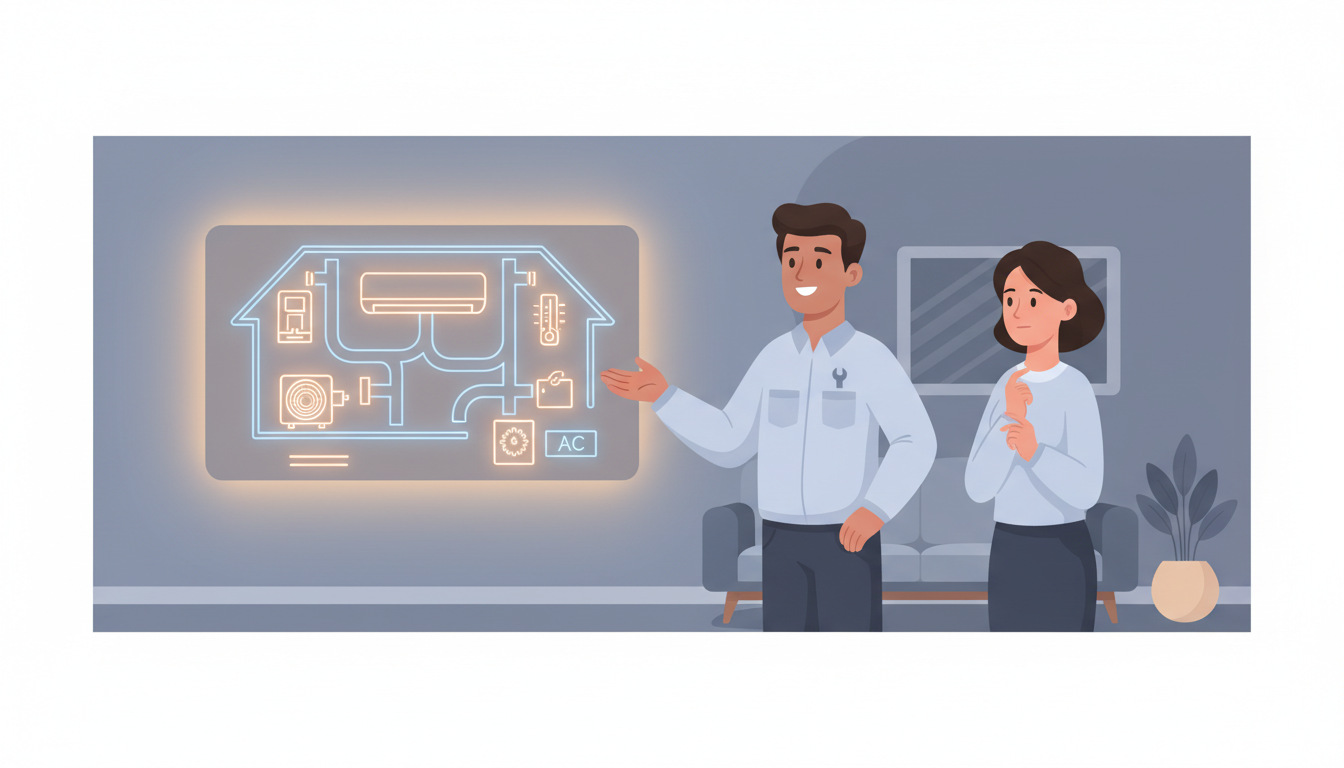
How to Tell Whether an HVAC Company Understands Whole-Home Comfort
How to Tell Whether an HVAC Company Understands Whole-Home Comfort
You've probably met with HVAC contractors who walked through your home, took a few measurements, and gave you a quote for a new system. But did they ask about the cold bedroom upstairs? Did they inquire about the humidity issues in your basement? Did they want to know about your comfort preferences, or did they just talk about equipment brands and prices?
The difference between a contractor who sells equipment and one who understands whole-home comfort can mean the difference between a house that's technically "heated and cooled" and a home where every room feels just right, year-round. Here's how to identify HVAC companies that truly get it.
They Start by Asking Questions — Not Selling Equipment
The first sign that an HVAC company understands whole-home comfort is what they do when they walk into your home. Companies that truly prioritize comfort start by asking detailed questions about your current experience.
A comfort-focused contractor will ask:
- Are there any rooms that get too warm or too cold?
- Does your home feel muggy in the summer or dry in the winter?
- Do you hear loud noises when your system runs?
- Are certain areas of your home uncomfortable at different times of day?
- What temperature do you prefer during the day versus nighttime?
These aren't just nice-to-know details — they're essential information that shapes system design. If a contractor jumps straight to equipment recommendations without understanding your specific comfort concerns, that's a red flag. Your comfort preferences and current problems should drive the solution, not the other way around.
They Perform Proper Load Calculations
Here's something most homeowners don't know: the most common mistake in HVAC installation is incorrect system sizing. An oversized system short-cycles, failing to remove humidity and wasting energy. An undersized system runs constantly and never quite reaches your target temperature.
A company that understands whole-home comfort will always perform a Manual J load calculation. This industry-standard calculation takes into account:
- Your home's square footage and ceiling height
- Insulation levels in walls, attics, and floors
- Window sizes, types, and orientations
- Air infiltration and ductwork condition
- Local climate data
- Number of occupants and heat-generating appliances
The calculation tells the contractor exactly how much heating and cooling capacity your home needs. If a contractor estimates system size based solely on your home's square footage or "what was there before," they're guessing — and that guess can cost you thousands in wasted energy and years of discomfort.
According to industry experts, proper system sizing directly impacts your comfort, efficiency, and the longevity of your equipment. Don't be afraid to ask if they'll perform a Manual J calculation. Reputable contractors will gladly explain their process.
They Discuss System Design, Not Just Brand Names
Many contractors focus almost exclusively on which brand or model you should buy. While equipment quality matters, an HVAC company that truly understands whole-home comfort knows that system design is just as important as the equipment itself.
Ductwork Assessment
Your ductwork is the highway system that delivers conditioned air throughout your home. Even the most efficient HVAC system can't maintain whole-home comfort if the ductwork is poorly designed, leaky, or improperly sized.
A knowledgeable contractor will:
- Inspect your existing ductwork for leaks and damage
- Measure duct sizes to ensure proper airflow
- Check for adequate return air in each zone
- Assess insulation levels in unconditioned spaces
- Recommend ductwork modifications if necessary
If they never mention ductwork during the evaluation, that's a warning sign. Ductwork design directly affects temperature consistency, energy efficiency, and comfort in every room of your home.
Airflow and Distribution
Whole-home comfort isn't just about the right temperature — it's about consistent temperature distribution. Companies that understand this will discuss:
- Static pressure testing to identify airflow restrictions
- Proper register placement for balanced air distribution
- Return air grilles sized and located correctly
- Airflow balancing to eliminate hot and cold spots
When you're dealing with urgent HVAC problems, understanding these system design elements becomes even more critical. Sometimes what seems like an equipment failure is actually a design issue that needs to be addressed.
They Address Humidity Control
Temperature is only half the comfort equation. Humidity plays a massive role in how comfortable your home feels, yet many contractors never bring it up.
A contractor who understands whole-home comfort will ask about humidity issues and discuss solutions:
Summer Humidity
If your home feels sticky or muggy during cooling season, you need more than just lower temperatures. The contractor should discuss:
- Proper system sizing (oversized systems don't dehumidify well)
- Variable-speed or two-stage equipment that runs longer cycles to remove moisture
- Whole-home dehumidification for persistent problems
Winter Dryness
Low humidity in winter causes dry skin, static electricity, and respiratory discomfort. A comfort-focused contractor will recommend:
- Whole-home humidifiers integrated with your HVAC system
- Proper sizing based on your home's volume and air exchange rate
Humidity control is a key indicator that a company thinks holistically about comfort, not just heating and cooling.
They Recommend Appropriate System Staging
Not all HVAC systems operate the same way. Single-stage systems are either fully on or fully off, like a light switch. Multi-stage and variable-speed systems can operate at different capacity levels, providing more precise comfort control.
An HVAC company that understands whole-home comfort will explain the differences:
Single-Stage Systems
- Run at 100% capacity whenever operating
- Less expensive upfront
- Less precise temperature control
- Higher humidity levels during cooling
Two-Stage Systems
- Can run at approximately 65% or 100% capacity
- Better humidity control
- More consistent temperatures
- Quieter operation at low stage
Variable-Speed Systems
- Adjust capacity continuously from 40% to 100%
- Best humidity control
- Most consistent comfort
- Lowest operating costs
- Quietest operation
The right choice depends on your budget, comfort priorities, and climate. A knowledgeable contractor will present options and explain the comfort benefits of each approach — not just push the most expensive option or the one with the highest profit margin.
They Talk About Indoor Air Quality
Whole-home comfort extends beyond temperature and humidity. The quality of the air you breathe affects your health, comfort, and how your home feels.
Companies that understand comprehensive comfort will discuss:
- Mechanical ventilation to bring in fresh outdoor air
- Air filtration options beyond basic 1-inch filters
- UV lights for biological contaminants
- Air purifiers for allergens and particles
- Duct sealing to prevent introducing contaminated air from unconditioned spaces
When choosing an HVAC repair company you can trust, their willingness to address indoor air quality is a strong indicator of their holistic approach to comfort.
They Consider Zoning Solutions
Not everyone in your home has the same comfort preferences. Your teenager might like a cooler bedroom, while you prefer warmth. Upper floors get more heat gain from the sun. Finished basements stay cooler naturally.
A contractor who understands whole-home comfort will recommend zoning solutions when appropriate:
Traditional Zoning Systems
- Multiple thermostats controlling different areas
- Motorized dampers in ductwork
- Independent temperature control for each zone
- Ideal for multi-story homes or rooms with unique needs
Ductless Mini-Split Systems
- Individual air handlers for specific rooms
- No ductwork required
- Ideal for additions, converted garages, or problem areas
- Extremely efficient for targeted comfort
Zoning isn't necessary for every home, but a contractor who never mentions it may not be thinking creatively about your comfort challenges.
They Discuss Noise Levels and System Location
Comfort isn't just about temperature — it's also about peace and quiet. A loud HVAC system disrupts sleep, conversations, and relaxation.
HVAC companies focused on whole-home comfort will:
- Ask if noise from your current system bothers you
- Recommend variable-speed equipment for quieter operation
- Suggest vibration isolation and sound-dampening solutions
- Consider equipment location relative to bedrooms and living areas
- Discuss sound ratings (measured in decibels) of different equipment options
If they never ask whether noise is a concern, they're missing an important comfort factor.
They Explain System Commissioning
Even a perfectly designed system won't deliver whole-home comfort if it's not properly commissioned during installation. System commissioning means testing and adjusting the system to ensure it performs as designed.
A quality contractor will explain their commissioning process:
- Verifying refrigerant charge is precisely correct
- Testing airflow at each register
- Balancing the system to deliver design airflow to each room
- Checking static pressure to ensure the blower isn't working too hard
- Programming thermostats correctly for your equipment
- Testing all safety controls and operational sequences
Commissioning is where design becomes reality. Contractors who skip this step (or don't mention it) may be focused on speed rather than quality and comfort.
They Offer a Comprehensive Evaluation Report
After evaluating your home, a contractor who understands whole-home comfort should provide a detailed written evaluation, not just a price quote.
This report should include:
- Current system assessment and condition
- Specific comfort issues identified
- Load calculation summary
- Recommended system size and type
- Ductwork modifications needed
- Expected performance and efficiency
- Multiple options at different price points
- Clear explanation of what's included in the installation
This documentation shows they've done their homework and are making recommendations based on analysis, not hunches. It also gives you something concrete to compare when getting multiple quotes.
They Discuss Long-Term Maintenance
Whole-home comfort doesn't end when installation is complete. Even the best-designed system needs regular maintenance to maintain performance.
A contractor focused on long-term comfort will:
- Recommend a maintenance schedule (typically twice-yearly)
- Explain what's included in maintenance visits
- Offer maintenance agreements or plans
- Discuss filter replacement schedules
- Provide guidance on thermostat operation for optimal comfort
Companies that only want to sell you equipment and disappear aren't thinking about your long-term comfort. Regular maintenance is essential for maintaining the comfort, efficiency, and longevity promised during installation.
For comprehensive guidance on maintaining your system and addressing issues before they become emergencies, check out our complete HVAC repair guide.
They Listen More Than They Talk
Here's perhaps the most telling sign: a contractor who understands whole-home comfort will spend more time listening to you than talking about themselves.
They'll take notes about your comfort concerns. They'll ask follow-up questions to understand the root causes of problems. They'll acknowledge your budget constraints while explaining comfort options at different price points.
Contractors who dominate the conversation, dismiss your concerns, or push a single solution are focused on making a sale — not solving your comfort challenges.
Red Flags to Watch For
Just as important as knowing the positive signs is recognizing the warning signals that a contractor doesn't truly understand whole-home comfort:
- No load calculation — sizing based on square footage alone
- Same-size replacement — recommending the same size as your old system without analysis
- Equipment-only focus — no discussion of ductwork, airflow, or humidity
- Pressure tactics — "this price is only good today" or similar urgency
- Vague answers — can't explain their reasoning or process
- No written proposal — verbal quotes only
- Dismissing your concerns — telling you your comfort problems are "normal" or "can't be fixed"
Trust your instincts. If something feels off, it probably is.
Frequently Asked Questions
How long should an HVAC home evaluation take?
A thorough evaluation for whole-home comfort typically takes 1-2 hours. The contractor needs time to inspect your current system, measure your home, assess ductwork, and discuss your comfort concerns. If a contractor provides a quote in 15 minutes, they're estimating, not evaluating.
Should I get multiple quotes before choosing an HVAC company?
Yes, getting 2-3 quotes helps you compare approaches, pricing, and communication styles. But don't just compare prices — compare the quality of the evaluation and the thoroughness of the proposals. The cheapest quote often comes from contractors who skip important steps.
What certifications should I look for in an HVAC contractor?
Look for NATE (North American Technician Excellence) certification, which demonstrates technical competency. Contractors certified by equipment manufacturers (like Trane Comfort Specialists) have additional training on specific systems. Proper state licensing and insurance are also essential.
Is whole-home comfort more expensive than standard installation?
The evaluation process doesn't cost more, but addressing comfort properly may require additional components like ductwork modifications, zoning systems, or advanced equipment. However, the long-term benefits — lower energy bills, better comfort, and longer equipment life — typically offset the initial investment.
Can I improve whole-home comfort without replacing my entire system?
Sometimes. Depending on your system's age and condition, improvements like duct sealing, adding zones, installing a whole-home dehumidifier, or upgrading to a programmable thermostat can significantly improve comfort. A good contractor will present all viable options, not just full replacement.
Conclusion: Comfort Is a System, Not Just Equipment
The most important thing to understand about whole-home comfort is that it's not about buying the most expensive equipment or the most popular brand. It's about finding a contractor who understands that comfort comes from a properly designed, correctly sized, and expertly installed system.
Look for HVAC companies that ask questions before offering solutions, perform proper load calculations, discuss system design and ductwork, address humidity and indoor air quality, and take the time to understand your specific comfort needs.
Your home should be your comfort zone, with consistent temperatures, appropriate humidity levels, good air quality, and quiet operation in every room. Don't settle for a contractor who can't deliver that level of comprehensive comfort.
Ready to find an HVAC company that truly understands whole-home comfort? Start by asking the questions we've outlined here. The answers will tell you everything you need to know about whether they're the right partner for your comfort needs.