How to Tell If Your Thermostat or HVAC System Is the Problem
How to Tell If Your Thermostat or HVAC System Is the Problem
Is your home too hot in summer or too cold in winter? When your heating and cooling system isn't working properly, figuring out whether the thermostat or HVAC system is the culprit can save you time and money. Understanding how to tell if your thermostat or HVAC is the problem helps you avoid unnecessary service calls and gets your comfort back on track faster.
In this guide, you'll learn the clear signs that point to a faulty thermostat versus actual HVAC system problems, plus simple troubleshooting steps you can do yourself before calling a professional.
Understanding the Difference: Thermostat vs HVAC System
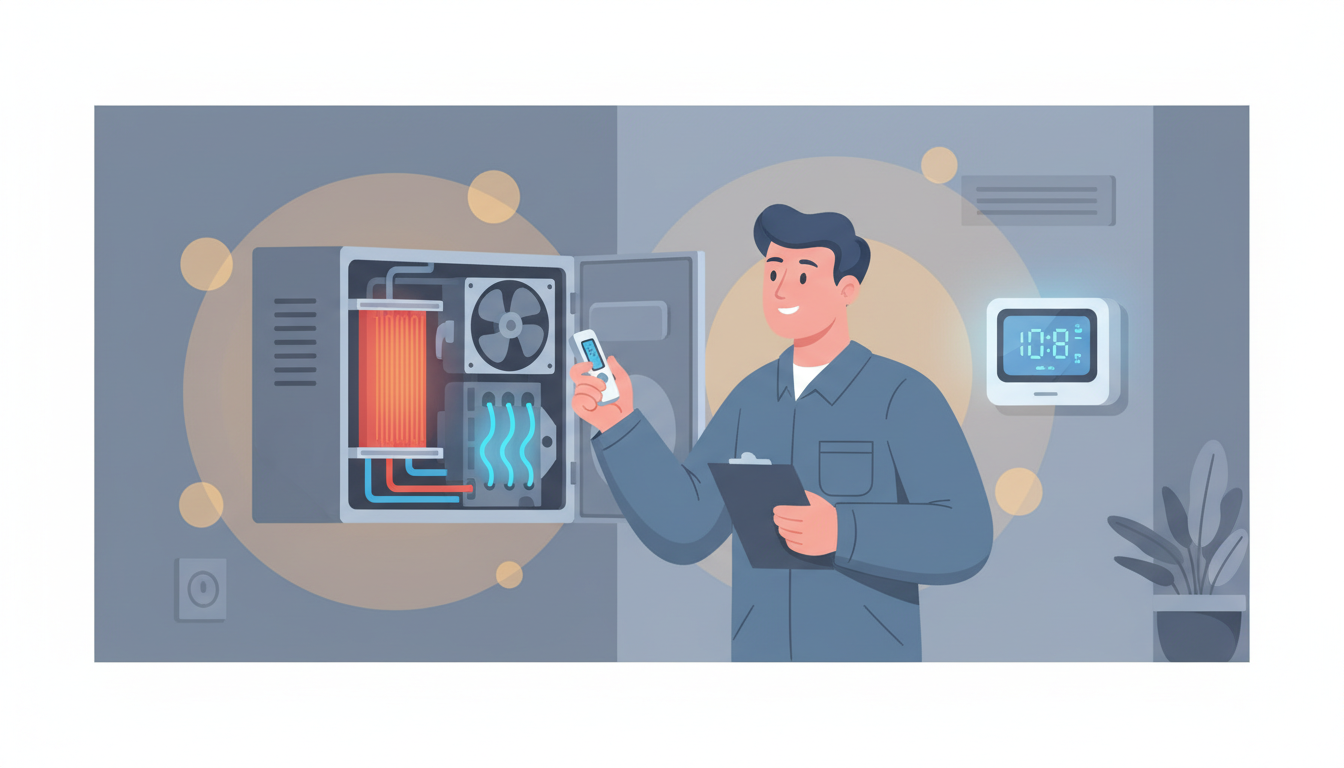
Your thermostat acts as the command center for your heating and cooling system. It reads the temperature in your home and tells your HVAC unit when to turn on or off. When something goes wrong, the problem could be with the messenger (thermostat) or the worker (HVAC system itself).
The thermostat includes the display, temperature sensor, wiring connections, and control circuit board. The HVAC system includes your furnace or air conditioner, air handler, compressor, condenser, refrigerant lines, and ductwork.
Knowing which component has failed determines whether you need a simple thermostat replacement or more extensive HVAC repair.
Quick Diagnostic Test: Start Here First
Before diving into specific symptoms, try this simple test to narrow down the problem:
- Check the thermostat display - Is it blank or lit up? A blank screen often points to a thermostat issue.
- Adjust the temperature setting - Set it 5 degrees higher (for heat) or lower (for cooling) than the current room temperature.
- Listen for the click - You should hear a small click from the thermostat when it engages.
- Wait and listen - Within 30-60 seconds, you should hear your HVAC system start up.
If you hear the click but the system doesn't start, the problem likely lies with your HVAC equipment. If there's no click and nothing happens, your thermostat is probably the issue.
Signs Your Thermostat Is the Problem
Blank or Unresponsive Display
When your thermostat screen is completely blank, this is almost always a thermostat problem, not an HVAC issue. Common causes include:
- Dead batteries - If you have a battery-powered thermostat, replace the batteries first
- Tripped circuit breaker - Check your electrical panel for a tripped breaker
- Loose wiring connections - Wires may have come loose from the terminal screws
- Failed thermostat - The control board inside may have burned out
A hardwired thermostat that won't power on typically indicates wiring problems or a blown fuse in the HVAC system.
Thermostat Not Responding to Temperature Changes
If you adjust your thermostat settings but nothing happens, you're likely dealing with bad thermostat symptoms. The temperature sensor inside may have failed, or the thermostat can't communicate with your HVAC unit.
Try this test: Set your thermostat to the extreme - if it's summer, set it to 60°F. If it's winter, set it to 85°F. Wait five minutes. If your system still doesn't respond, the thermostat has likely failed.
Incorrect Temperature Readings
When your thermostat displays 72°F but your home feels like 65°F or 78°F, the temperature sensor has lost accuracy. This common problem occurs as thermostats age.
Use a separate thermometer placed near your thermostat. If the readings differ by more than 2-3 degrees, your thermostat needs calibration or replacement. Modern digital thermostats typically can't be calibrated and must be replaced when this happens.
Thermostat Turns System On and Off Too Frequently
Short cycling - when your HVAC system turns on and off every few minutes - can indicate a thermostat problem. The faulty sensor incorrectly reads the temperature and sends rapid on/off signals.
However, short cycling can also signal HVAC problems like refrigerant leaks or a failing compressor, so this symptom requires careful diagnosis.
Lost or Erased Thermostat Settings
If your programmable thermostat keeps forgetting your schedule or resets to default settings, the internal memory or backup battery has failed. This is a clear sign your thermostat is broken and needs replacement.
Smart thermostats that lose Wi-Fi connection repeatedly or crash frequently also indicate it's time for an upgrade.
How to Test Your Thermostat Without Removing It
You can perform several diagnostic tests without taking your thermostat off the wall:
Battery Test: Replace the batteries even if the display is working. Weak batteries cause erratic behavior before the screen goes blank.
Setting Test: Switch between heating and cooling modes. Your system should respond within a minute. Try different fan settings (auto, on, circulate). The fan should run independently when set to "on."
Temperature Test: Set the temperature 10 degrees away from current conditions. Listen for the thermostat relay to click and the system to start.
Wiring Visual Check: Remove the thermostat cover (leave it mounted) and look for loose wires, corrosion, or dust buildup on the connections.
If these tests reveal problems, you've identified a thermostat issue. If everything tests fine but your system still won't work properly, the problem lies with your HVAC equipment.
Signs Your HVAC System Is the Problem
System Won't Start Despite Thermostat Working
If your thermostat clicks, displays correctly, and seems to function normally, but your heating or cooling system won't start, you have an HVAC problem.
Check these common HVAC issues:
- Circuit breaker tripped - HVAC systems have dedicated breakers, often a double breaker
- Emergency shutoff switch - Someone may have accidentally turned off the power switch near your furnace or air handler
- Dirty air filter - A completely clogged filter can prevent the system from starting
- Blown fuse - The low-voltage fuse on the HVAC control board may have blown
For help with these types of issues, check out our comprehensive HVAC repair guide.
HVAC Runs But Won't Heat or Cool Properly
When your thermostat works fine and your system runs, but your home temperature won't reach the set point, the problem is definitely with your HVAC equipment:
For cooling issues:
- Low refrigerant (indicating a leak)
- Frozen evaporator coil
- Failed compressor
- Dirty condenser coils blocking heat release
- Blocked or leaky ductwork
For heating issues:
- Pilot light out (gas furnaces)
- Ignition failure (gas or oil furnaces)
- Failed heating element (electric furnaces)
- Heat pump reversing valve stuck
- Insufficient gas pressure
If your HVAC system ignores thermostat settings entirely, the communication between these components has broken down, which could be wiring or control board failure.
Strange Noises From the HVAC Unit
Unusual sounds coming from your furnace, air conditioner, or air handler indicate mechanical problems:
- Grinding or squealing - Worn bearings in the blower motor
- Banging or clanking - Loose or broken internal components
- Hissing - Refrigerant leak or ductwork air leak
- Clicking or buzzing - Electrical relay problems or failing capacitor
These noises have nothing to do with your thermostat. They signal HVAC system problems that need professional attention.
System Runs Continuously Without Cycling Off
If your air conditioner or furnace runs nonstop without turning off, this could be either thermostat or HVAC related:
Thermostat causes:
- Stuck relay - The thermostat contacts are welded together
- Wrong fan setting - Fan set to "on" instead of "auto"
- Thermostat miscalibrated - Thinks target temperature is never reached
HVAC causes:
- Undersized system - Unit can't keep up with heating or cooling demand
- Refrigerant leak - System runs constantly trying to cool but can't
- Extreme outdoor temperatures - System struggles during heat waves or cold snaps
- Severe ductwork leaks - Conditioned air escapes before reaching living spaces
Thermostat Wiring Problems: The Hidden Culprit
Sometimes the problem isn't the thermostat or the HVAC system, but the wiring that connects them. Wiring issues can create confusing symptoms that seem to point in both directions.
Common wiring problems include:
- Loose connections - Vibration over time can loosen terminal screws
- Corroded wires - Moisture exposure causes copper corrosion
- Damaged wire insulation - Wires touching each other create shorts
- Wrong wire installed - Incorrect gauge wire can't carry enough current
- Stretched or broken wires - Physical damage during renovations
If you're comfortable working with low-voltage wiring, turn off power at the breaker and check that all thermostat wires are firmly connected to their terminals. Each wire should be stripped about 1/4 inch and wrapped clockwise under its terminal screw.
If wires look corroded or damaged, this repair requires an HVAC technician who can trace the wire run and replace damaged sections.
When to Replace Your Thermostat
Even if your thermostat still works, replacement might make sense in these situations:
Age: Thermostats typically last 10-15 years. If yours is approaching this age and showing any symptoms, replacement is more cost-effective than repair.
Incompatibility: Older thermostats may not work properly with new high-efficiency HVAC systems. If you recently upgraded your furnace or air conditioner, your old thermostat might not support new features like variable-speed operation or two-stage heating.
Upgrade opportunity: Modern programmable and smart thermostats can reduce energy bills by 10-23% compared to basic models. Features like learning schedules, smartphone control, and detailed energy reports provide value beyond just temperature control.
Repeated failures: If you've had your thermostat repaired or replaced batteries multiple times in a short period, it's time for a new one.
For more details on thermostat issues, visit our guide on thermostat not working.
How Much Does Thermostat Replacement Cost?
Understanding the cost difference between thermostat and HVAC repairs helps you make informed decisions:
Thermostat replacement costs:
- Basic programmable thermostat: $50-$150 (DIY installation)
- Mid-range smart thermostat: $150-$300 plus $100-$200 installation
- Premium smart thermostat: $250-$500 plus $150-$300 installation
HVAC repair costs (by comparison):
- Blower motor replacement: $400-$800
- Compressor replacement: $1,500-$2,500
- Refrigerant recharge: $200-$600
- Complete HVAC system replacement: $5,000-$12,000+
As you can see, even if you're unsure whether your thermostat is the problem, replacing it first is a relatively inexpensive diagnostic step that often solves the issue.
Can I Replace My Thermostat Myself?
Replacing a thermostat is one of the easier DIY HVAC projects if you're reasonably handy and comfortable with basic electrical work.
DIY thermostat replacement is safe and feasible when:
- You're replacing a thermostat with a similar model (mechanical with mechanical, digital with digital)
- Your wiring is in good condition with clearly labeled wires
- You can follow manufacturer instructions carefully
- Your HVAC system uses standard low-voltage (24V) wiring
Call a professional for thermostat installation when:
- You're upgrading from a basic thermostat to a smart thermostat with your HVAC system
- Your wiring is old, corroded, or confusing
- You have a high-voltage line-voltage thermostat (uncommon but used in some baseboard heating)
- You need additional wiring run for C-wire (common wire) to power smart thermostats
- You're uncertain about any step of the process
Improper thermostat installation can damage the thermostat, your HVAC system, or create safety hazards. When in doubt, hire a professional.
When to Call an HVAC Technician
Some situations require professional diagnosis and repair:
Call immediately for these emergency issues:
- Gas smell near your furnace
- Burning smell from vents or HVAC equipment
- Carbon monoxide detector alarming
- Water leaking from indoor unit
- Ice forming on air conditioner in summer
- Complete heating failure in winter (below 40°F outdoor temperature)
Schedule service soon for these problems:
- System won't start after you've tried troubleshooting steps
- Strange noises that persist
- Frequent cycling on and off
- Steadily increasing energy bills without explanation
- Rooms with dramatically different temperatures
- Poor air quality or excessive dust
An experienced HVAC technician has specialized tools to diagnose problems accurately: manifold gauges to check refrigerant levels, multimeters to test electrical components, and combustion analyzers to assess furnace efficiency.
Preventive Maintenance to Avoid Problems
Regular maintenance helps prevent both thermostat and HVAC problems:
Monthly:
- Replace or clean air filters (every 1-3 months depending on type)
- Check thermostat display for error messages
- Test heating and cooling modes
Seasonally:
- Schedule professional HVAC tune-ups (spring for AC, fall for heating)
- Clean area around outdoor condenser unit
- Check battery level in battery-powered thermostats
- Update smart thermostat software
Annually:
- Deep clean condenser and evaporator coils
- Inspect ductwork for leaks
- Test carbon monoxide and smoke detectors
- Review and optimize thermostat schedule for current habits
Professional maintenance catches small problems before they become expensive failures. Most HVAC companies offer maintenance plans that include priority service and discounts on repairs.
Frequently Asked Questions
How can I tell if my thermostat is bad?
The most common signs include a blank display, unresponsive controls, incorrect temperature readings that differ from a separate thermometer by more than 2-3 degrees, and lost programming. Try replacing batteries first, then test by setting the temperature to an extreme and listening for the relay click and system response.
What would cause an HVAC system not to turn on?
Common causes include tripped circuit breakers, blown fuses, dirty air filters restricting airflow, disconnected emergency shutoff switches, failed capacitors, or dead compressors. If your thermostat functions normally but the system won't start, the problem is with your HVAC equipment, not the thermostat.
Can a bad thermostat cause my AC not to cool?
A faulty thermostat can prevent your AC from turning on at all, but if your air conditioner runs without cooling your home, the problem is almost certainly with the AC unit itself - typically low refrigerant, frozen coils, failed compressor, or blocked airflow. The thermostat only sends on/off signals; it doesn't affect cooling performance once the system is running.
How do I reset my thermostat?
Most digital thermostats have a reset procedure: locate the reset button (often in the battery compartment or behind the faceplate), hold it for 5-10 seconds until the display clears, then reprogram your settings. Some models reset by removing batteries or cutting power for 30 seconds. Check your specific model's manual, as procedures vary.
Should I fix the thermostat or HVAC system first?
Start with the thermostat if you see clear thermostat symptoms (blank display, unresponsive controls, incorrect readings). Thermostat replacement is inexpensive compared to HVAC repairs. If the thermostat tests normal but your system still malfunctions, then investigate HVAC problems. This diagnostic approach saves money by ruling out the cheaper component first.
Conclusion: Taking the Next Step
Figuring out how to tell if your thermostat or HVAC is the problem doesn't have to be overwhelming. Start with the simple diagnostic test outlined at the beginning of this guide, then work through the specific symptoms you're experiencing.
In many cases, a faulty thermostat is the culprit - and that's good news since replacement is affordable and often DIY-friendly. When HVAC system problems are responsible, early detection through proper diagnosis prevents minor issues from becoming major expenses.
Remember that your comfort and safety come first. When you're uncertain about the cause or uncomfortable performing troubleshooting steps, calling a qualified HVAC professional is always the right choice. They have the expertise and tools to diagnose problems accurately and repair them safely.
Take action today to restore your home's comfort. Whether that means replacing a thermostat, scheduling professional service, or simply changing an air filter, each step brings you closer to a properly functioning heating and cooling system.