Thermostat Says Cooling On But Nothing Happens? Here's Why
Thermostat Says Cooling On But Nothing Happens? Here's Why
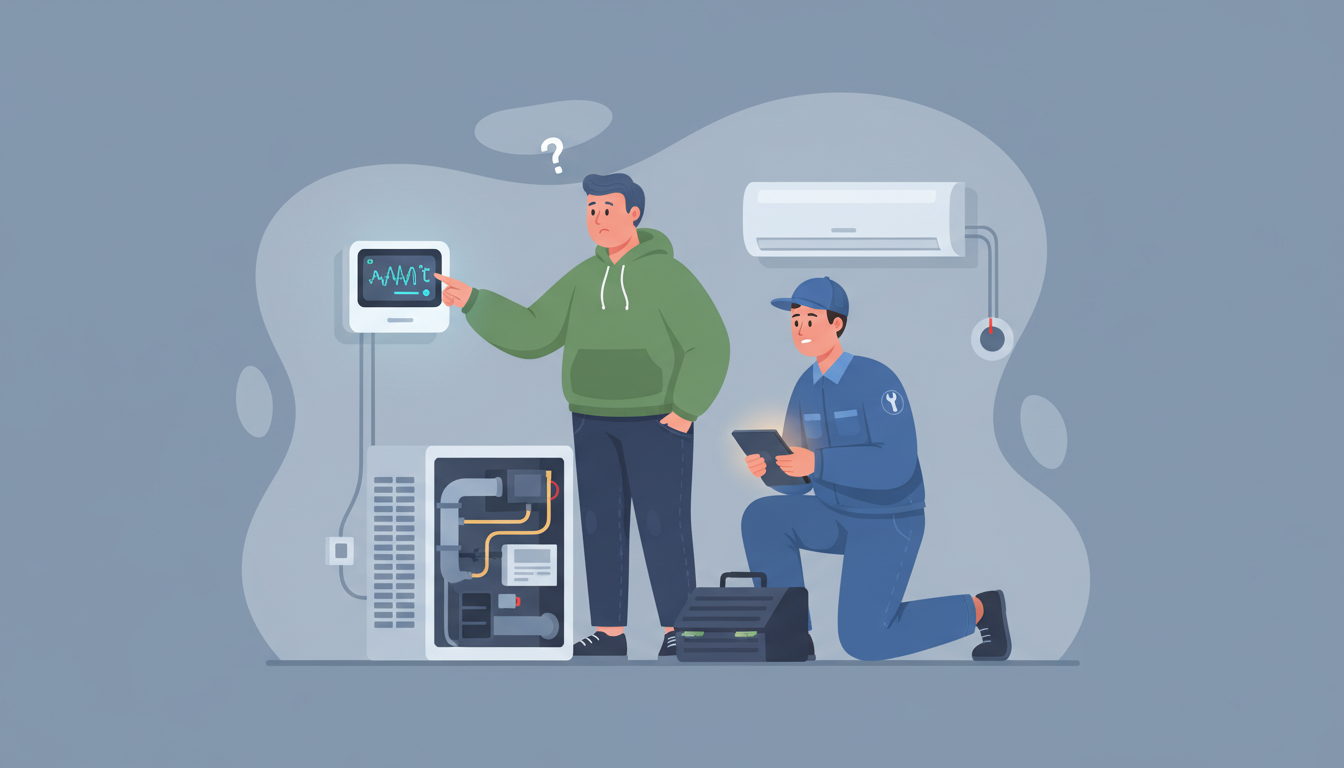
You've set your thermostat to cooling mode on a hot day, and the display says "Cooling On" or "Cool On," but nothing is happening. No cool air, no fan noise, no relief from the heat. If your thermostat says cooling on but nothing happens, you're dealing with one of the most frustrating HVAC problems homeowners face—especially during the hottest days of summer.
Don't panic. This issue is more common than you might think, and many causes have simple fixes you can handle yourself. In this guide, we'll walk you through exactly what's happening when your AC won't respond to your thermostat, the most common reasons why, and step-by-step solutions to get your cooling system running again.
What Does "Cooling On" or "Cool On" Mean on Your Thermostat?
When your thermostat display shows "Cooling On" or "Cool On," it means your thermostat has sent a signal to your air conditioning system telling it to start cooling. This message indicates that your thermostat is working correctly and has detected that the current temperature is above your set point.
However, seeing this message doesn't guarantee your AC will immediately spring into action. Modern thermostats have built-in safety features, and your cooling system has multiple components that all need to work together. When your thermostat is set to cool but the AC is not turning on, something in that chain of communication or equipment has failed.
The Time Delay Feature
Many homeowners don't realize that most digital thermostats include a built-in time delay, typically lasting 3-5 minutes. This delay protects your compressor from "short cycling"—turning on and off too frequently, which can damage the equipment and shorten its lifespan.
If you've just changed your thermostat setting or if your system recently turned off, wait at least 5 minutes before assuming something is wrong. During this delay period, you might see "Cool On" flashing or displayed steadily, but your AC won't start yet. This is completely normal.
However, if 10-15 minutes pass and your thermostat says cool on but no air is coming from your vents, you have a real problem that needs troubleshooting.
Common Reasons Your Thermostat Says Cooling On But Nothing Happens
Let's explore the most common culprits behind this frustrating issue, starting with the simplest fixes and moving toward problems that require professional help.
1. Incorrect Thermostat Settings
Before diving into complex troubleshooting, verify your basic thermostat settings. It sounds simple, but incorrect settings cause many service calls that could have been avoided.
Check these settings:
- Mode: Make sure your thermostat is set to "Cool" mode, not "Off" or "Heat"
- Fan setting: Set the fan to "Auto" rather than "On"—when set to "On," the fan runs continuously even without cooling
- Temperature: Ensure your set temperature is at least 3-5 degrees below the current room temperature
- Schedule/Hold: Check if a schedule or hold setting is overriding your desired temperature
If you have a smart thermostat like Nest, Ecobee, or Honeywell, also check for any eco-mode settings or learning features that might be adjusting your settings automatically.
2. Dead or Low Thermostat Batteries
Many thermostats use batteries as a backup power source or primary power for wireless models. When batteries run low, your thermostat display might work, but it won't have enough power to send signals to your AC system.
How to check and fix:
- Look for a low battery indicator on your thermostat display
- Replace batteries even if no warning appears—try fresh batteries as a troubleshooting step
- Most thermostats use AA or AAA batteries
- After replacing batteries, wait 5 minutes for the system to reset
Some thermostats are hardwired and don't use batteries at all, but many modern programmable and smart thermostats do rely on battery power for full functionality.
3. Tripped Circuit Breaker or Blown Fuse
Your air conditioning system requires significant electrical power. Circuit breakers protect your home's electrical system by automatically shutting off power when they detect an overload or short circuit.
When your AC is not responding to the thermostat, the circuit breaker may have tripped, cutting power to your outdoor condenser unit or indoor air handler.
How to check and fix:
- Locate your home's electrical panel (breaker box)
- Look for any breakers in the "off" position or in the middle position between on and off
- Find the breaker labeled for your AC or HVAC system—there may be two breakers, one for the indoor unit and one for the outdoor unit
- Switch any tripped breaker fully to the "off" position, then back to "on"
- If the breaker trips again immediately, you have a serious electrical problem—don't keep resetting it, and call a professional
Additionally, many outdoor AC units have a separate disconnect switch near the condenser unit. Make sure this switch is in the "on" position.
4. Dirty or Clogged Air Filter
A dirty air filter is one of the most common reasons for AC problems and one of the easiest to fix. When your air filter becomes clogged with dust, pet hair, and debris, it restricts airflow to your system.
This restriction causes several problems:
- Your system works harder but cools less effectively
- Safety switches may shut down your AC to prevent damage
- Your evaporator coil can freeze, blocking all airflow
- Your blower motor may overheat and shut off
How to check and fix:
- Locate your air filter (usually near your air handler or in return air vents)
- Remove the filter and hold it up to light—if you can't see through it, it's too dirty
- Replace disposable filters or clean reusable filters according to manufacturer instructions
- Check filters every 30 days and replace every 1-3 months depending on usage
If your AC still doesn't work after replacing a very dirty filter, your evaporator coil may be frozen. Turn off your AC, switch your thermostat fan to "on" (not auto), and let it run for several hours to thaw the coil. You can learn more about air conditioning maintenance and troubleshooting in our comprehensive HVAC repair guide.
5. Frozen Evaporator Coil
When your evaporator coil freezes, your thermostat displays cool on but the AC won't start producing cold air. Ice on the coil blocks airflow and prevents heat exchange, essentially shutting down your cooling system even though the thermostat is calling for cooling.
Common causes of a frozen evaporator coil:
- Dirty air filter (restricts airflow)
- Low refrigerant levels
- Blocked return air vents
- Dirty evaporator coil
- Blower motor problems
- Running AC when outdoor temperatures are below 60°F
How to check and fix:
- Turn off your AC system completely at the thermostat
- Check your indoor air handler—look for ice buildup on the copper lines or around the coil
- Let the system thaw completely (this can take 4-8 hours)
- Change your air filter
- Check that all return vents are open and unblocked
- Once thawed, turn your system back on
If the coil freezes again, you likely have a refrigerant leak or other issue requiring professional repair.
6. Clogged Condensate Drain Line
Your air conditioner produces condensation as it removes humidity from your indoor air. This water normally drains away through a condensate line. When this line becomes clogged with algae, mold, or debris, water backs up and triggers a safety switch that shuts down your AC to prevent water damage.
Signs of a clogged condensate drain:
- Water pooling around your indoor air handler
- Musty odors near your AC
- Your AC runs briefly then shuts off
- Your thermostat is in cooling mode but the compressor is not running
How to check and fix:
- Locate your condensate drain line (usually a PVC pipe near your indoor unit)
- Check the drain pan under your air handler for standing water
- If the pan is full, your drain is likely clogged
- Turn off your AC and remove standing water with a wet/dry vacuum or towels
- Pour a cup of distilled vinegar or condensate pan tablets into the drain line to prevent future clogs
- Use a wet/dry vacuum on the outdoor end of the drain line to clear clogs
Many modern AC systems have a float switch in the condensate pan. When water level rises too high, this safety switch automatically shuts down your system. Once you clear the drain and remove standing water, your AC should work normally again. For more details on central AC problems, check out our central AC repair guide.
7. Failed Capacitor
Your AC capacitor stores electrical energy and provides the initial "boost" needed to start your compressor and fan motors. When the capacitor fails, your thermostat says cooling on but nothing happens because your compressor or outdoor fan can't start.
Capacitors are one of the most common AC component failures, especially in older systems or in hot climates where AC runs frequently.
Signs of a failed capacitor:
- Your outdoor unit hums but doesn't start
- The compressor tries to start but quickly shuts off
- The outdoor fan doesn't spin
- Your AC worked fine last season but won't start this year
- You hear a clicking sound from your outdoor unit
How to check:
Checking a capacitor requires electrical knowledge and can be dangerous. Capacitors store electrical charge even when power is off, and touching terminals can result in serious injury or death.
If you suspect a failed capacitor, your best option is to call an HVAC technician. Capacitor replacement typically costs $150-$400 and can be completed in less than an hour.
8. Faulty Thermostat Wiring
Your thermostat connects to your HVAC system through low-voltage wiring. These wires carry signals that tell your equipment when to turn on and off. If wiring is loose, damaged, or incorrectly connected, your AC unit won't respond when the thermostat is set to cool.
Key thermostat wires for cooling:
- Y-wire (yellow): Controls your compressor
- G-wire (green): Controls your fan
- R-wire or Rc-wire (red): Provides power
- C-wire (blue or black): Common wire for continuous power (especially important for smart thermostats)
How to check:
- Turn off power to your HVAC system at the breaker
- Remove your thermostat from the wall plate
- Check that all wires are firmly connected to their terminals
- Look for any frayed, damaged, or corroded wires
- If you recently installed a new thermostat, verify wires are connected to the correct terminals
If you're not comfortable working with thermostat wiring, or if you see damaged wires, call an HVAC professional. Incorrect wiring can damage your equipment.
9. Compressor Problems
Your compressor is the heart of your air conditioning system. It pressurizes refrigerant and pumps it through your system to transfer heat from inside your home to the outdoors. When the compressor fails, your entire cooling system fails.
Signs of compressor problems:
- Your outdoor unit is completely silent (no humming, no fan)
- The outdoor fan runs but the compressor doesn't
- Your circuit breaker trips repeatedly when AC tries to start
- You hear loud banging, screeching, or grinding from your outdoor unit
Compressor problems are serious and expensive. Compressor replacement can cost $1,500-$2,500, and in many cases, replacing the entire outdoor unit or whole system makes more financial sense.
If you suspect compressor failure, get professional diagnosis before making repair decisions.
10. Low Refrigerant or Refrigerant Leak
Refrigerant is the chemical that absorbs heat from your indoor air and releases it outdoors. Your AC system is a sealed system—refrigerant doesn't get "used up" during normal operation. If your refrigerant level is low, you have a leak.
Signs of low refrigerant:
- Your AC runs but barely cools
- Ice on your outdoor unit refrigerant lines
- Hissing or bubbling sounds from your AC
- Your AC runs constantly but never reaches the set temperature
- High humidity levels even when AC is running
Low refrigerant is both a performance problem and an environmental issue. Modern refrigerants are regulated, and DIY refrigerant handling is illegal without proper certification.
If you suspect a refrigerant problem, call an HVAC technician. They'll locate and repair the leak, then properly recharge your system. This typically costs $200-$1,500 depending on leak location and refrigerant type. You can find more information about why your AC isn't reaching the thermostat setting.
Step-by-Step Troubleshooting: What to Do When Your Thermostat Says Cooling On But Nothing Happens
Follow these steps in order to diagnose and potentially fix your AC problem:
Step 1: Wait 5-10 minutes. Your system may be in delay mode. Be patient and see if it starts on its own.
Step 2: Check your thermostat settings. Verify mode (Cool), fan setting (Auto), and that your set temperature is significantly below room temperature.
Step 3: Replace thermostat batteries. Even if there's no low battery warning, try fresh batteries.
Step 4: Check your air filter. Replace if dirty. This fixes many AC problems.
Step 5: Check circuit breakers. Look for tripped breakers in your electrical panel and check the outdoor disconnect switch.
Step 6: Inspect for ice. Look at your indoor unit and outdoor refrigerant lines for ice buildup. If you see ice, turn off your AC and let it thaw for several hours.
Step 7: Check condensate drain. Look for standing water around your indoor unit. Clear any clogs in the drain line.
Step 8: Listen to your outdoor unit. Go outside and listen carefully. If you hear humming but no fan spinning, you likely have a capacitor problem. If completely silent, you may have electrical or compressor issues.
Step 9: Check thermostat wiring. If you're comfortable doing so, verify all wires are connected properly.
Step 10: Call a professional. If none of these steps resolve the issue, you need professional diagnosis and repair.
When to Call an HVAC Professional
While many thermostat and AC problems have simple DIY fixes, some situations require professional expertise. Call an HVAC technician when:
- Your circuit breaker trips repeatedly when you try to run your AC
- You smell burning, see smoke, or hear unusual sounds (grinding, screeching, banging)
- Your troubleshooting efforts don't resolve the problem after trying all basic fixes
- You see ice that returns after thawing
- Your system is older than 10-15 years and experiencing frequent problems
- You're not comfortable working with electrical components
- You suspect refrigerant leaks or compressor problems
- Your AC stopped working suddenly during extreme heat (this is an emergency)
Most HVAC professionals charge $75-$200 for a diagnostic visit. This fee is usually applied toward repair costs if you approve the work.
How Much Does It Cost to Fix a Non-Responsive AC?
Repair costs vary widely depending on the problem:
- Thermostat replacement: $100-$300 for standard models, $200-$500 for smart thermostats
- Capacitor replacement: $150-$400
- Contactor replacement: $150-$400
- Refrigerant recharge (with leak repair): $200-$1,500
- Blower motor replacement: $400-$1,500
- Compressor replacement: $1,500-$2,500
- Full AC unit replacement: $3,000-$7,000+
Many issues like dirty filters, tripped breakers, dead batteries, and clogged drains cost nothing to fix if you handle them yourself.
Preventing Future AC Problems
Regular maintenance dramatically reduces the likelihood of your thermostat saying cooling on but nothing happening. Follow these preventive measures:
Monthly:
- Check and change your air filter as needed
- Keep outdoor unit clear of debris, leaves, and vegetation (maintain 2-foot clearance)
- Check for ice buildup or unusual sounds
Seasonally:
- Schedule professional AC tune-up before cooling season begins
- Clean evaporator and condenser coils
- Check refrigerant levels
- Test capacitors and electrical connections
- Verify thermostat accuracy and calibration
Annually:
- Full HVAC inspection by a licensed professional
- Clean condensate drain line
- Inspect ductwork for leaks
- Replace thermostat batteries
Professional maintenance costs $80-$150 per visit but prevents costly emergency repairs and extends your system's lifespan by years.
Frequently Asked Questions
How long should I wait when my thermostat says cooling on?
Wait at least 5 minutes, but give your system up to 10 minutes before concluding something is wrong. Most modern thermostats include a time delay to protect the compressor from short cycling. If nothing happens after 10-15 minutes, begin troubleshooting.
Can a bad thermostat cause the AC not to turn on?
Yes, but it's less common than people think. If your thermostat display is working and showing "Cooling On," the thermostat itself is likely fine—the problem is usually with your AC equipment, power supply, or connections. However, faulty thermostat wiring or a failing thermostat can prevent signals from reaching your AC system.
Why does my thermostat say cool on but no air comes out?
This usually means your thermostat successfully sent a signal to your AC, but the AC equipment isn't responding. Common causes include dirty air filters, tripped circuit breakers, failed capacitors, low refrigerant, clogged condensate drains, or compressor problems. Follow the troubleshooting steps in this article to identify the specific cause.
Is it dangerous to keep trying to run my AC when nothing happens?
Repeatedly attempting to start a malfunctioning AC can sometimes worsen the problem, especially if you have electrical issues or a failing compressor. If your circuit breaker trips more than once, stop trying to run your AC and call a professional. Otherwise, the basic troubleshooting steps in this guide are safe for homeowners to attempt.
How much does it cost to fix an AC that won't turn on?
It depends entirely on the cause. Simple fixes like changing an air filter, replacing batteries, or resetting a breaker cost nothing. Professional repairs range from $150 (capacitor replacement) to $2,500+ (compressor replacement). Many common issues fall in the $200-$500 range. Always get a diagnosis and written estimate before approving expensive repairs.
Get Your Cooling System Running Again
When your thermostat says cooling on but nothing happens, it's frustrating—but now you have the knowledge to diagnose and potentially fix the problem yourself. Start with the simplest solutions: wait for the delay period, check your settings, replace batteries, check your air filter, and verify your circuit breakers.
Many homeowners successfully resolve these issues without professional help. However, don't hesitate to call an HVAC technician for problems involving electrical components, refrigerant, or expensive equipment like compressors. The cost of professional diagnosis is small compared to the cost of misdiagnosed repairs or damaged equipment.
Regular maintenance is your best defense against AC failures. By keeping filters clean, condensate lines clear, and scheduling annual professional tune-ups, you'll catch small problems before they become big ones—and you'll stay cool all summer long.
Need professional help with your AC system? Don't let a small problem become a major repair. Contact a qualified HVAC technician today to get your cooling system back to peak performance.