
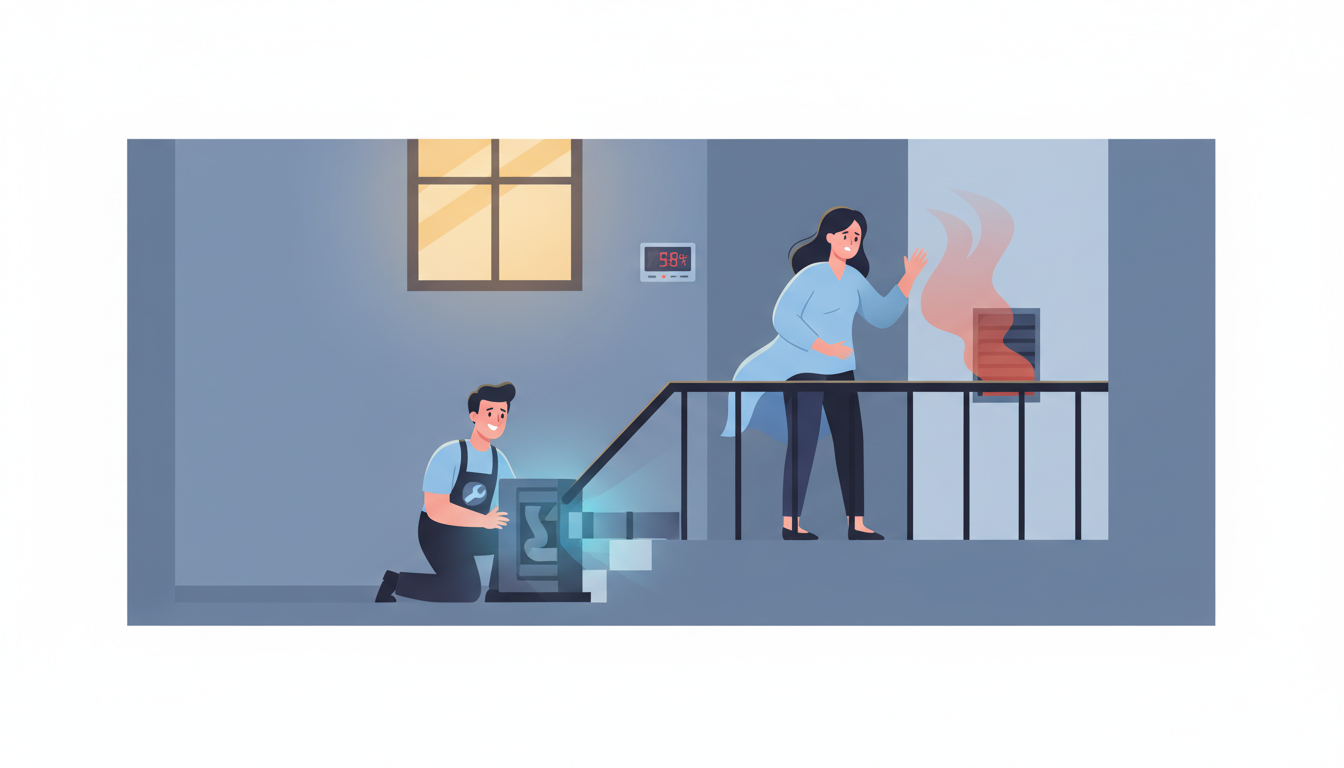
Why Is My Upstairs So Hot Even With the AC Running?
Why Is My Upstairs So Hot Even With the AC Running?
If you've ever walked upstairs on a summer day and felt like you just stepped into a sauna, you're not alone. It's frustrating when your AC is running full blast, your energy bills are climbing, yet your upstairs still feels like an oven while the downstairs is perfectly comfortable. The good news? This problem is common, fixable, and usually has multiple solutions depending on your budget and home setup.
Let's explore exactly why your upstairs gets so hot even with the AC running, and more importantly, what you can do about it.
The Science Behind Why Upstairs Gets Hotter
Before we dive into solutions, it helps to understand what's happening in your home.
Heat Rises—It's Basic Physics
The most fundamental reason your upstairs is hotter is simple thermodynamics: hot air rises and cold air sinks. This natural process, called thermal stratification, means warm air constantly migrates upward throughout your home. Your AC produces cool air that settles on the first floor, while heat accumulates on the second floor. Even if your HVAC system is working perfectly, you're fighting against physics.
Your Roof and Attic Are Heat Magnets
Your roof absorbs massive amounts of heat from direct sunlight—asphalt shingles can reach temperatures of 140-180°F on a hot summer day. That heat radiates down into your attic, which then transfers warmth to your upstairs rooms through the ceiling. If your attic isn't properly ventilated or insulated, it essentially becomes a heat storage chamber sitting right above your living space.
Ductwork Problems Create Uneven Cooling
Most homes have ductwork that runs through unconditioned spaces like attics or crawl spaces. If these ducts are poorly insulated, leaking, or improperly designed, cool air loses its chill before reaching upstairs rooms. Even a small leak in your ductwork can waste 20-30% of your conditioned air. Additionally, longer duct runs to upstairs rooms mean more opportunities for air to warm up before it arrives.
Common Causes: Why Your AC Isn't Cooling Upstairs
Now that you understand the physics, let's identify the specific culprits that might be making your upstairs too hot.
Your AC System Is Undersized
One of the most common problems is an air conditioning system that simply doesn't have enough capacity (measured in BTUs) to cool your entire home adequately. If your AC was sized for a smaller home, or if you've added square footage without upgrading your system, it may struggle to keep up on hot days. Signs your AC is undersized include:
- The system runs constantly without reaching the set temperature
- Upstairs feels hot even when the AC runs all day
- Your system is more than 15 years old and may not meet current cooling demands
Single-Zone System Trying to Do a Two-Zone Job
Most homes have a single thermostat controlling the entire house. This "single-zone" setup means your AC cycles off when the downstairs (where the thermostat is located) reaches the target temperature—even if your upstairs is still sweltering. The system doesn't know your upstairs bedrooms are 5-10 degrees warmer because it can't measure them.
Inadequate or Missing Insulation
Poor insulation in your attic or walls allows heat to transfer into your upstairs rooms easily. If your home was built before modern energy codes, it may have minimal insulation. Even newer homes sometimes have gaps in insulation around recessed lights, plumbing penetrations, or wall intersections that create thermal bridges.
Closed or Blocked Vents
Sometimes the problem is simpler than you think. Check if upstairs vents are fully open and not blocked by furniture, curtains, or rugs. Also verify that your downstairs vents aren't wide open while upstairs vents are partially closed—this directs more cool air downstairs and starves the upper floor.
Dirty Air Filters and Maintenance Issues
A clogged air filter restricts airflow throughout your entire HVAC system, reducing efficiency and making it harder to cool distant rooms like those upstairs. Similarly, a dirty evaporator coil or low refrigerant levels can significantly impact your central AC's cooling performance.
Poor Window Treatments and Solar Heat Gain
Large windows on your second floor, especially those facing south or west, allow tremendous solar heat gain during afternoon hours. Without proper window coverings, your rooms can heat up significantly despite your AC's best efforts.
How to Diagnose the Problem Yourself
Before calling a professional, you can do some basic detective work to identify the issue.
Check Temperature Differences: Use a thermometer to measure the temperature in several upstairs and downstairs rooms. A difference of 2-3 degrees is normal, but 5+ degrees indicates a problem that needs addressing.
Inspect Your Vents: Walk around and check that all upstairs supply vents are fully open and blowing air strongly. Weak airflow from upstairs vents suggests ductwork issues or damper problems.
Examine Your Attic: If safely accessible, check your attic's insulation depth (should be 10-14 inches in most climates) and look for signs of ductwork damage, disconnections, or poor insulation around ducts.
Monitor AC Runtime: If your AC runs constantly on hot days without satisfying the thermostat, you likely have an undersized system or significant efficiency problems.
Test the Damper Balance: If your system has manual dampers in the ductwork, try partially closing first-floor dampers (about 50%) to redirect more airflow upstairs and see if it helps balance temperatures.
Quick Fixes You Can Try Today
These solutions require minimal investment and can provide immediate relief.
Adjust Your Thermostat Fan Setting
Switch your thermostat fan from "AUTO" to "ON." This keeps the blower running continuously, even when the AC isn't actively cooling, which helps circulate air and balance temperatures between floors. While this uses slightly more energy, it's often worth it for improved comfort.
Close or Partially Close Downstairs Vents
Strategically closing 30-50% of your first-floor vents forces more conditioned air upstairs. Start by partially closing vents in rooms you use less frequently, like formal dining rooms or guest bedrooms. Monitor the results over a few days—overdoing this can cause problems with airflow balance.
Add Window Treatments
Install blackout curtains, cellular shades, or reflective window film on west- and south-facing upstairs windows. Closing these during peak sun hours (roughly 1-5 PM) can dramatically reduce heat gain. This simple step can reduce room temperatures by 5-10 degrees.
Use Fans Strategically
Ceiling fans create a wind-chill effect that makes rooms feel 4-6 degrees cooler without actually lowering the temperature. Set fans to rotate counterclockwise in summer to push air downward. Box fans placed in windows can exhaust hot air at night when outside temperatures drop.
Change Your Air Filter
Replace your air filter if it hasn't been changed in the last 1-3 months. A clean filter improves airflow throughout your system, helping cool air reach upstairs rooms more effectively. This is the cheapest and easiest maintenance task that often makes a noticeable difference.
Install an Attic Fan
An attic exhaust fan or whole-house fan can remove trapped hot air from your attic space, reducing the heat load on your upstairs. Solar-powered attic fans are an energy-efficient option that can lower attic temperatures by 20-40 degrees.
Medium-Term Solutions for Better Cooling
If quick fixes aren't enough, these more involved solutions offer substantial improvements.
Seal and Insulate Ductwork
Professional duct sealing can recover lost cooling capacity by preventing conditioned air from escaping before it reaches upstairs rooms. HVAC technicians use mastic sealant or specialized tape to close leaks, then add insulation around ducts running through hot spaces. This typically costs $1,000-2,500 but can improve upstairs cooling by 20-30%.
Upgrade Attic Insulation
Boosting your attic insulation to R-38 or R-49 (depending on your climate zone) creates a thermal barrier that keeps heat from radiating down into living spaces. Professional installation costs $1,500-3,500 for most homes but delivers long-term comfort and energy savings.
Install a Programmable or Smart Thermostat
While this won't solve underlying issues, a smart thermostat can help by running the fan longer, adjusting temperature setpoints throughout the day, and providing insights into your system's performance. Some models even support remote sensors that can monitor upstairs temperatures.
Add Return Vents Upstairs
Many homes lack adequate return air vents on the second floor. Without sufficient returns, cool air can't circulate properly—it gets pushed upstairs but has no path back to the air handler. Adding return vents costs $300-800 per vent but significantly improves airflow balance.
Long-Term Solutions: Fixing the Problem Permanently
For persistent issues, these comprehensive solutions offer the most effective results.
Install a Zoning System
HVAC zoning divides your home into separate temperature zones, each with its own thermostat. Motorized dampers in your ductwork open and close to direct airflow where it's needed. This means your upstairs can call for cooling independently of your downstairs. A typical two-zone system costs $2,500-5,500 installed but solves the fundamental problem of trying to cool different floors with one thermostat.
Zoning is ideal if you have an otherwise functional AC system that's appropriately sized—you're just fighting temperature imbalances between floors.
Add a Ductless Mini-Split System
A ductless mini-split provides dedicated cooling to specific upstairs rooms without requiring extensive ductwork modifications. These highly efficient systems consist of an outdoor compressor and one or more indoor air handlers mounted on walls or ceilings. They're perfect for targeting problem areas like master bedrooms or home offices.
Single-zone mini-splits cost $2,000-5,000 installed and offer independent temperature control plus excellent energy efficiency. Many homeowners use them to supplement their existing central AC rather than replacing it entirely.
Replace Your Undersized AC System
If your current system is more than 12-15 years old and undersized for your home, replacement might be the best long-term solution. Modern air conditioners are significantly more efficient than older models (up to 50% more efficient), and proper sizing ensures adequate cooling for your entire home.
Professional load calculations determine the right size—typically 2.5-5 tons for most two-story homes. Replacement costs range from $5,000-12,000 depending on system size, efficiency rating, and your location. While expensive, a properly sized system eliminates the root cause of inadequate upstairs cooling.
Consider a Two-Stage or Variable-Speed AC
When replacing your system, consider upgrading to a two-stage or variable-speed air conditioner. These systems run at lower speeds most of the time, cycling longer and removing more humidity while distributing air more evenly. The extended run times help balance temperatures between floors better than traditional single-stage units that cycle on and off frequently.
Special Considerations: Why Some Rooms Are Worse Than Others
If you notice that your master bedroom is hotter than other upstairs rooms, or one specific area feels unbearable, several factors might be at play.
Room Position and Sun Exposure
Rooms on the west or south side of your home receive intense afternoon sun, while north-facing rooms stay cooler. Corner rooms with windows on two walls absorb more heat than interior rooms.
Distance From Air Handler
The farthest room from your air handler receives cool air last and often has the weakest airflow. Long duct runs create more opportunities for air to warm up and pressure to drop.
Ductwork Design Flaws
Sometimes specific rooms have undersized ducts, too many bends, or crushed flexible ductwork that restricts airflow. An HVAC professional can use airflow measurements to identify these problems.
When to Call a Professional
While some fixes are DIY-friendly, certain situations require professional expertise:
- Your AC runs constantly but can't reach the set temperature
- You notice weak airflow from upstairs vents despite open dampers
- Your energy bills have increased significantly without explanation
- You suspect ductwork leaks or damage in your attic or walls
- Your system is more than 15 years old and struggling to keep up
- You're ready to invest in zoning or system replacement
A qualified HVAC technician can perform a thorough inspection, conduct load calculations to determine if your system is properly sized, and recommend solutions tailored to your specific home and budget.
Cost Breakdown: Budgeting Your Solution
Understanding costs helps you prioritize solutions:
Budget-Friendly ($0-500):
- Window treatments and fans: $100-300
- Air filter replacement and vent adjustments: $20-50
- DIY duct sealing (accessible areas): $50-150
- Attic fan installation: $200-500
Mid-Range ($500-3,000):
- Professional duct sealing and insulation: $1,000-2,500
- Attic insulation upgrade: $1,500-3,500
- Smart thermostat with remote sensors: $200-500
- Additional return vents: $300-800 each
Comprehensive Solutions ($2,500-12,000+):
- HVAC zoning system: $2,500-5,500
- Ductless mini-split (single zone): $2,000-5,000
- AC system replacement: $5,000-12,000
- Combination zoning + new AC: $8,000-15,000
Preventing Future Problems
Once you've solved your hot upstairs problem, maintain your comfort with these preventive measures:
Regular Maintenance: Change air filters every 1-3 months, schedule annual HVAC tune-ups, and clean vents and registers seasonally.
Seasonal Adjustments: Adjust dampers between heating and cooling seasons to optimize airflow for each mode. Close upstairs dampers slightly in winter, open them in summer.
Monitor Performance: Pay attention to temperature differences between floors. If they start increasing, address small issues before they become big problems.
Energy Efficiency Upgrades: Seal air leaks around windows and doors, add weatherstripping, and maintain proper attic ventilation to reduce your cooling load.
The Bottom Line: Upstairs Doesn't Have to Be Hot
A sweltering upstairs is frustrating, but it's rarely a problem without solutions. Start with the quick, inexpensive fixes—adjusting vents, adding window treatments, and optimizing fan settings. If those don't provide enough relief, move to professional solutions like duct sealing, insulation upgrades, or zoning systems.
The right solution depends on your specific situation, budget, and long-term plans for your home. A properly balanced HVAC system shouldn't leave you with a 10-degree temperature difference between floors. With the right combination of improvements, your upstairs can be just as comfortable as your downstairs—without breaking the bank on energy costs.
If you're dealing with AC cooling issues in specific rooms, the same diagnostic approach applies: identify the root cause, try simple fixes first, then invest in comprehensive solutions if needed.
Frequently Asked Questions
Why is my upstairs so hot even with the AC running?
Your upstairs is hot because heat naturally rises, your roof absorbs intense solar heat that radiates into upper floors, and most homes have single-zone cooling systems that only measure temperature downstairs. Ductwork losses, poor insulation, and undersized AC systems compound the problem. The solution typically involves improving airflow balance, adding insulation, or installing a zoning system.
How can I make my upstairs cooler?
Start with simple fixes: partially close downstairs vents to redirect airflow upstairs, add blackout curtains to reduce solar heat gain, use ceiling fans to improve air circulation, and switch your thermostat fan to "ON" mode. For persistent problems, consider professional duct sealing, attic insulation upgrades, or installing a zoning system or ductless mini-split.
Is it normal for upstairs to be hotter than downstairs?
A temperature difference of 2-3 degrees between floors is normal and expected due to heat rising naturally. However, if your upstairs is 5-10+ degrees hotter than downstairs, you have a problem that needs addressing—usually related to inadequate airflow, poor insulation, or an undersized cooling system.
Should I close downstairs vents to cool upstairs?
Partially closing downstairs vents (about 30-50% in rooms you use less) can help redirect more cool air upstairs and balance temperatures. However, don't close too many vents or close them completely—this can create excessive pressure in your ductwork and reduce overall system efficiency. Start with a few vents and monitor the results.
How much does it cost to fix a hot upstairs?
Costs range dramatically based on the solution: DIY fixes like window treatments and fan adjustments cost under $500, professional duct sealing and insulation upgrades run $1,000-3,500, zoning systems cost $2,500-5,500, and complete AC replacement ranges from $5,000-12,000. Most homes see significant improvement with mid-range solutions in the $1,500-4,000 range.