Should You Use Portable Heaters or Window Units While Waiting for Repair?
Should You Use Portable Heaters or Window Units While Waiting for Repair?
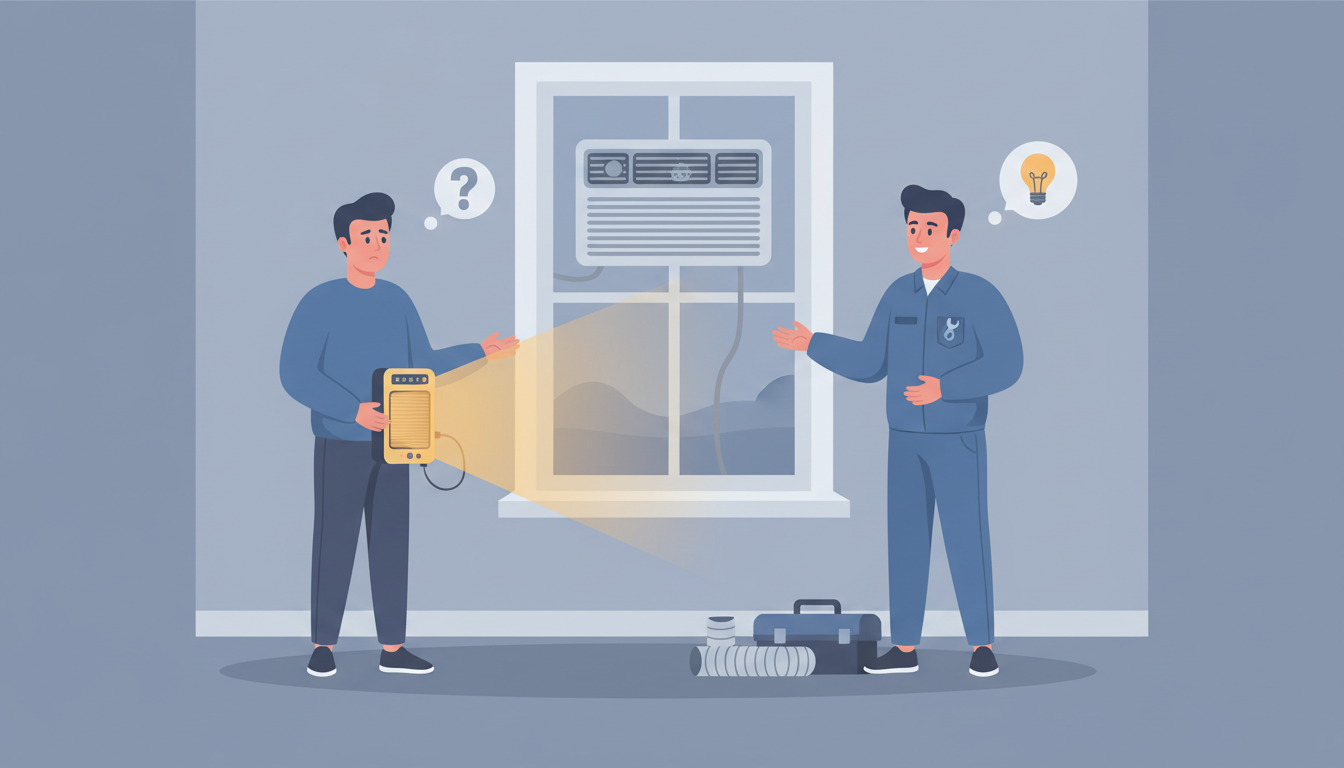
Your HVAC system just broke down at the worst possible time. Whether it's a freezing winter night or a sweltering summer afternoon, you're facing uncomfortable temperatures until the repair technician arrives. The big question on your mind: should you use portable heaters or window units while waiting for repair?
The short answer is yes—both portable heaters and window units can serve as safe, effective temporary heating or cooling solutions during an HVAC emergency. However, choosing between them depends on several factors including your specific situation, budget, safety considerations, and how long you'll need the temporary solution.
In this guide, we'll help you make the right choice for your home and family.
Understanding Your Temporary Heating and Cooling Options
When your central HVAC system fails, you have two main options for temporary climate control: portable heaters (for heating) and window AC units (for cooling). Some window units also offer heating capabilities through heat pump technology or electric resistance heating.
Portable Heaters: Types and Benefits
Portable space heaters come in several varieties, each with distinct advantages:
Ceramic Heaters use ceramic plates and aluminum baffles to heat quickly and efficiently. They're lightweight, affordable, and ideal for small to medium rooms. Most include safety features like tip-over protection and overheat shutoff.
Oil-Filled Radiators provide gentle, consistent heat that continues even after you turn them off. They're silent, energy-efficient for extended use, and great for bedrooms or nurseries where quiet operation matters.
Infrared Heaters warm objects and people directly rather than heating the air. They provide instant warmth, work well in drafty spaces, and won't dry out the air in your home.
Fan-Forced Heaters use a fan to distribute heat quickly throughout a room. They're best for rapidly warming up cold spaces but can be noisy during operation.
Window Units: Heating and Cooling Capabilities
Window air conditioning units primarily provide cooling, but many modern models offer heating functions too:
Window Heat Pumps can both cool and heat your space by reversing the refrigeration cycle. They're more energy-efficient than resistance heating and can handle moderate temperature drops.
Window Units with Electric Heating combine air conditioning with built-in electric resistance heating elements. They're versatile but consume more electricity when heating compared to heat pumps.
Cooling-Only Window AC Units provide relief during hot weather when your central air conditioning fails. They're widely available, easy to install, and effective for single-room cooling.
Portable Heaters vs Window Units: Making the Right Choice
Choosing between portable heaters and window units while waiting for repair depends on your specific needs. Let's break down the key factors.
Season and Temperature Needs
Your climate control needs determine which option makes sense:
Winter Heating Emergency: Portable space heaters are your best bet when the furnace breaks down. They're immediately available (you might already own one), require no installation, and can be moved between rooms as needed. For whole-home heating needs, consider using multiple portable heaters in the rooms you use most.
Summer Cooling Emergency: Window AC units are the clear choice when your central air conditioning fails during hot weather. They provide significant cooling power and can make a single room comfortable even in extreme heat.
Shoulder Seasons (Spring/Fall): If temperatures are mild, a single portable heater or window unit might suffice. Understanding when your HVAC system isn't working properly can help you decide whether temporary solutions are necessary or if you can wait comfortably for repairs.
Room Size and Heating/Cooling Capacity
Matching your temporary unit to your room size is critical for comfort and efficiency.
BTU Requirements for Heating:
- Small rooms (100-150 sq ft): 5,000 BTU (approximately 1,500 watts)
- Medium rooms (150-250 sq ft): 6,000-8,000 BTU (1,500-2,000 watts)
- Large rooms (250-400 sq ft): 10,000+ BTU (3,000+ watts)
BTU Requirements for Cooling:
- Small rooms (150-250 sq ft): 5,000-6,000 BTU window AC
- Medium rooms (250-400 sq ft): 7,000-10,000 BTU window AC
- Large rooms (400-650 sq ft): 12,000-15,000 BTU window AC
Portable heaters typically max out at 1,500 watts (5,100 BTU) due to standard household circuit limitations. This makes them suitable for individual rooms but not whole-home heating.
Installation and Setup Considerations
Portable Heaters win on convenience:
- Plug and play—no installation required
- Move easily between rooms
- No permanent modifications to your home
- Can use immediately upon purchase
Window Units require more effort:
- Must be installed in a suitable window
- Need proper support (especially for heavier models)
- Require weatherstripping to prevent air leaks
- Take 30-60 minutes to install properly
If you're only waiting a few days for emergency HVAC repair, the installation hassle of window units may not be worth it. However, if repairs will take a week or more, proper installation pays off in comfort and efficiency.
Energy Costs: What to Expect
Both options will increase your electricity bill, but by different amounts.
Portable Heater Operating Costs:
- Average 1,500-watt heater running 8 hours: $0.12/kWh × 1.5 kW × 8 hours = $1.44 per day
- Monthly cost if run continuously: approximately $43
- Most efficient: Oil-filled radiators with thermostats
Window Unit Operating Costs:
- Small 5,000 BTU window AC: approximately $0.50-$0.75 per day
- Large 12,000 BTU window AC: approximately $1.50-$2.00 per day
- Window heat pump heating mode: approximately $1.00-$1.50 per day
Your actual costs depend on local electricity rates, outdoor temperatures, insulation quality, and how often the units cycle on and off. Using programmable thermostats or built-in timers can significantly reduce operating costs.
Remember, these temporary solutions are less efficient than your central HVAC system. Don't delay necessary repairs to avoid the temporary cost increase—prolonging the use of portable units costs more in the long run.
Safety Considerations You Can't Ignore
Safety should be your top priority when using any temporary heating or cooling solution.
Portable Heater Safety:
- Keep at least 3 feet of clearance from furniture, curtains, bedding, and other flammable materials
- Never run heaters overnight while sleeping unless they have automatic shutoff features
- Plug directly into wall outlets—never use extension cords
- Place on level, hard surfaces (never on carpets or rugs)
- Never leave unattended when children or pets are present
- Ensure your home has working carbon monoxide detectors (especially important if you're using fuel-burning alternatives)
Window Unit Safety:
- Ensure proper electrical capacity—large units may require dedicated circuits
- Install support brackets to prevent the unit from falling
- Check that windows can securely hold the unit's weight
- Don't overload circuits by running multiple high-wattage appliances
- Keep outdoor portions clear of debris and vegetation
- Install correctly to prevent water damage from condensation
According to the National Fire Protection Association, heating equipment is the second leading cause of home fires. Take safety seriously—no temporary comfort is worth risking your family's safety.
Strategic Placement for Maximum Efficiency
Where you place your temporary heating or cooling unit dramatically affects its performance.
Best Practices for Portable Heaters
Bedroom Heating: Place the heater at least 3 feet from your bed, pointed away from direct contact with bedding. Oil-filled radiators work best for overnight use due to silent operation and safety features.
Living Room Heating: Position heaters in corners or along exterior walls where cold air enters. Use multiple smaller heaters rather than one large unit to distribute heat more evenly.
Bathroom Heating: Only use heaters specifically rated for bathroom use with proper moisture protection. Never place near water sources or where they could fall into bathtubs.
Hallway Strategy: Placing a heater in a central hallway can warm multiple connected rooms, though it's less efficient than heating rooms directly.
Best Practices for Window Units
Window Selection: Choose windows on shaded sides of your home for AC units (reduces workload) and sunny sides for window heat pumps (takes advantage of solar gain).
Room Priority: Install in rooms where you spend the most time—typically bedrooms for sleeping or living areas for daytime use.
Air Circulation: Keep interior doorways open to allow some temperature distribution to adjacent rooms, but don't expect whole-home comfort from a single window unit.
How Long Can You Safely Use Temporary Solutions?
Portable heaters and window units are designed for temporary use, but "temporary" can mean different things.
Short-Term Use (1-7 days): Perfectly safe and reasonable while waiting for repair parts or technician availability. This is the ideal timeframe for temporary solutions.
Medium-Term Use (1-4 weeks): Acceptable if major repairs require ordering specialty parts or scheduling complex work. Monitor units daily for any issues and be vigilant about safety.
Long-Term Use (1+ months): Not recommended as a permanent solution. If your repair timeline extends beyond a month, seriously consider whether your HVAC system needs replacement rather than repair. Check out our comprehensive HVAC repair guide to understand your options.
Extended use of portable solutions costs significantly more in electricity bills than running an efficient central HVAC system. Additionally, prolonged reliance increases safety risks and wear on the temporary units themselves.
Multi-Room Strategies for Larger Homes
If you have a larger home, one portable heater or window unit won't keep everyone comfortable.
Zoned Approach: Focus on maintaining comfort in essential areas:
- Bedrooms during sleeping hours
- Main living spaces during daytime
- Close doors to unused rooms to conserve energy
Multiple Units: For homes over 1,500 square feet, plan on using 2-3 portable heaters or window units. Space them strategically rather than clustering them in one area.
Circuit Considerations: Standard household circuits handle 15-20 amps. A 1,500-watt heater draws 12.5 amps, leaving little room for other devices. Distribute units across different circuits to prevent tripping breakers.
Communication with Your HVAC Technician: Understanding your repair timeline helps you plan. If repairs will take more than a few days, ask your technician about temporary solutions they recommend for your specific home size and layout.
Rent vs Buy: What Makes Financial Sense?
If you don't own portable heaters or window units, should you buy or rent while waiting for repair?
Buy if:
- Repairs will take more than 1-2 weeks
- You want backup options for future HVAC emergencies
- You can find affordable units ($30-$100 for basic portable heaters)
- You have storage space for off-season equipment
Rent if:
- Repairs will be completed within days
- You need commercial-grade temporary climate control
- You don't want to deal with storage
- You need specialized high-capacity units
Many equipment rental companies offer portable heaters and AC units. Daily rental rates typically range from $15-$40 depending on unit size, while purchase prices for basic units start around $30 for small heaters and $150-$300 for window AC units.
When Temporary Solutions Aren't Enough
Sometimes, portable heaters or window units simply can't keep your home comfortable enough.
Extreme Weather: If temperatures drop below 20°F or rise above 100°F, temporary solutions may struggle to maintain safe indoor temperatures, especially in poorly insulated homes.
Health Concerns: Elderly family members, infants, or people with health conditions may need professionally maintained climate control. Don't compromise their safety—consider temporary relocation if necessary.
System Beyond Repair: If your HVAC technician recommends full system replacement, your temporary solutions might need to last weeks. In this case, explore expedited installation options or even temporary rental of larger capacity equipment.
Preparing for Future HVAC Emergencies
Once your HVAC system is repaired, take steps to prepare for potential future emergencies:
Invest in Backup Options: Keep at least one portable heater and one fan (or window unit) in storage for emergencies.
Regular Maintenance: Schedule annual HVAC inspections to catch problems before they cause complete system failure. Preventive maintenance is always cheaper than emergency repairs.
Emergency Fund: Set aside funds specifically for HVAC emergencies so you're not scrambling financially when breakdowns occur.
Know Your Technician: Establish a relationship with a reliable HVAC service provider before emergencies happen. Quick response times matter when comfort and safety are at stake.
Frequently Asked Questions
Can I run a portable heater and window unit on the same circuit?
No, you should never run these high-wattage appliances on the same circuit. Each draws significant amperage and combined use will likely trip your circuit breaker. A standard 1,500-watt heater uses about 12.5 amps on a typical 120-volt circuit, leaving minimal capacity for other devices.
How much will my electric bill increase using temporary heating or cooling?
Expect an increase of $30-$100 per month depending on how many units you're running and for how long. A single 1,500-watt portable heater running 8 hours daily costs approximately $43 per month at average electricity rates. Larger window AC units or multiple portable heaters will cost more.
Are portable heaters safe to leave on overnight?
Only use portable heaters overnight if they have automatic shutoff features, tip-over protection, and overheat protection. Oil-filled radiators are the safest option for overnight use. Never sleep with heaters near bedding, and always place them on hard, level surfaces away from foot traffic.
Can window AC units effectively heat my home in winter?
Window units with heat pump technology can heat effectively in mild winter conditions (above 40°F outdoor temperature). Below that, efficiency drops significantly and electric resistance heating becomes necessary, which is expensive to operate. They're not a substitute for proper furnace heating in cold climates.
Should I turn off my broken HVAC system completely?
Yes, in most cases you should turn off a malfunctioning HVAC system to prevent further damage, safety hazards, or increased energy waste. Consult your HVAC technician for specific guidance based on the type of failure you're experiencing.
Take Action: Get Your HVAC System Fixed
While portable heaters and window units can keep you comfortable temporarily, they're no substitute for a properly functioning HVAC system. They cost more to operate, provide less consistent comfort, and require constant attention to safety concerns.
Don't let a temporary solution become a permanent problem. Schedule your HVAC repair as soon as possible to restore efficient, safe, whole-home comfort. Your energy bills, comfort level, and peace of mind will all improve once your central system is running properly again.
Remember: temporary heating and cooling solutions are exactly that—temporary. Use them wisely, follow safety guidelines carefully, and prioritize getting your HVAC system repaired by a qualified technician.
Need help deciding whether to repair or replace your HVAC system? Check out our comprehensive HVAC repair guide for expert advice on making the right choice for your home and budget.