
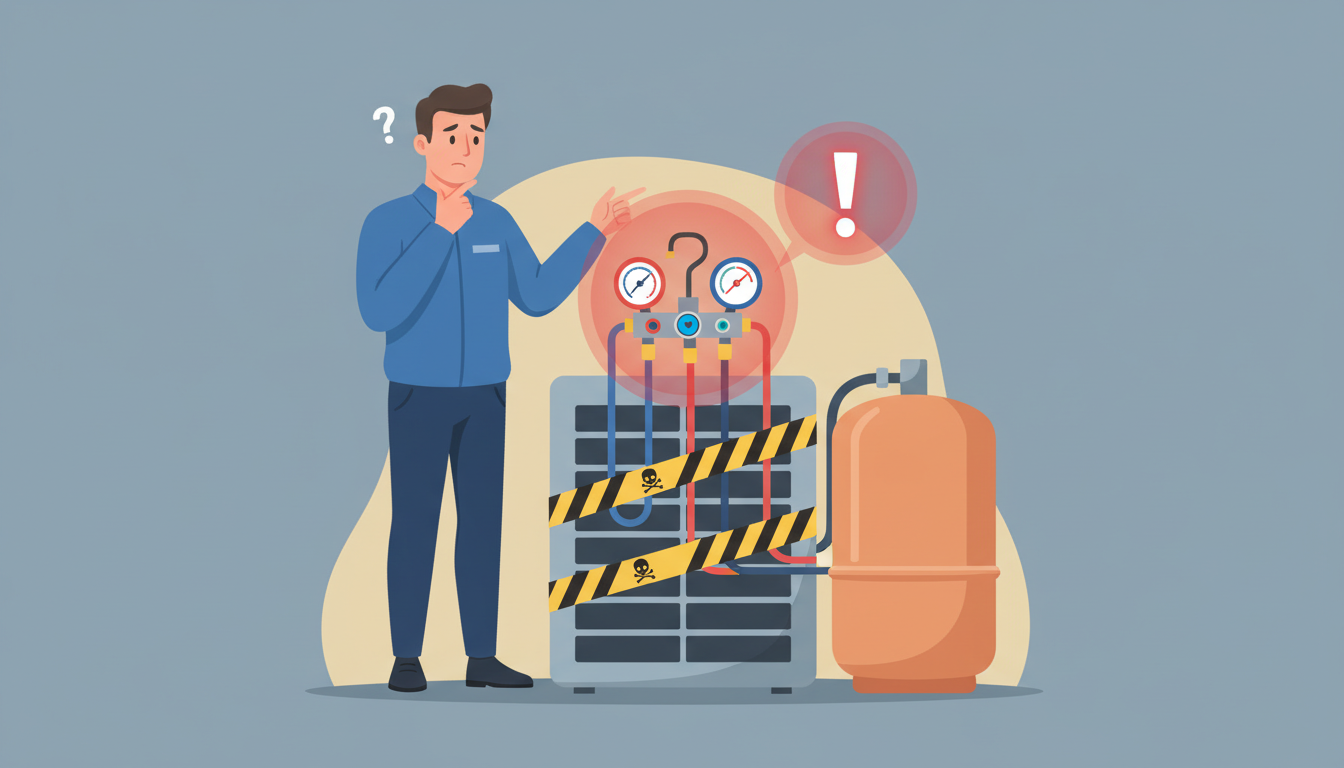
Why Venting Refrigerant Is Illegal and Could Cost You Thousands
Why Venting Refrigerant Is Illegal and Could Cost You Thousands
If you've ever wondered whether it's okay to release refrigerant from your air conditioner into the air, the answer is a definitive no. Venting refrigerant is not just bad for the environment—it's a federal crime that can result in fines up to $44,539 per day. Whether you're a homeowner considering DIY AC repairs or simply curious about refrigerant regulations, understanding why this practice is illegal could save you from serious legal and financial trouble.
What Does "Venting Refrigerant" Actually Mean?
Venting refrigerant refers to the intentional release of refrigerant gases into the atmosphere. This happens when someone opens a valve, cuts a refrigerant line, or otherwise allows the refrigerant to escape without proper recovery equipment.
Some people mistakenly believe that releasing "just a little bit" of refrigerant during repairs won't cause harm. Others think that if their AC system is old or broken, it's acceptable to vent the refrigerant rather than paying for professional recovery. Both assumptions are wrong—and illegal.
Your air conditioning system works in a closed loop, meaning refrigerant should never need to be "released" during normal operation or service. When HVAC technicians work on your system, they use specialized recovery equipment to capture and recycle the refrigerant rather than letting it escape into the air.
The Federal Law: Why Is Venting Refrigerant Illegal?
The prohibition on venting refrigerant comes from the Clean Air Act, specifically Section 608 of the Environmental Protection Agency (EPA) regulations. This law makes it illegal to intentionally release ozone-depleting substances or their substitutes while maintaining, servicing, repairing, or disposing of air conditioning and refrigeration equipment.
What Refrigerants Are Covered?
The law covers virtually all refrigerants used in residential and commercial HVAC systems, including:
- Older refrigerants: R-22 (Freon), R-12, and other CFCs and HCFCs
- Modern refrigerants: R-410A, R-134a, and other HFC substitutes
- Newer alternatives: R-32 and other low-GWP refrigerants
Even though R-22 production was banned in 2020, it's still illegal to vent it. The same rules apply to the newer "environmentally friendly" alternatives—they may be better than older refrigerants, but releasing them into the atmosphere is still prohibited.
Limited Exceptions
The EPA does allow for "de minimis" releases—tiny amounts that escape despite best efforts during refrigerant recovery and recycling. These are unavoidable trace amounts, not intentional venting. If you're deliberately opening a valve to let refrigerant escape, you're breaking the law.
The Penalties: What Happens If You Vent Refrigerant?
The financial consequences of venting refrigerant are severe, and the EPA doesn't take these violations lightly.
Civil Penalties
For each violation, the EPA can impose civil fines of up to $44,539 per day. That's not a typo—the penalty is calculated daily, meaning ongoing violations can quickly accumulate astronomical fines.
Consider this: if an HVAC company routinely vents refrigerant from multiple systems over several weeks, they could face fines in the hundreds of thousands or even millions of dollars.
Criminal Penalties
In cases of willful or repeated violations, criminal charges may apply. Criminal penalties can include:
- Fines up to $1,000,000 for corporations
- Fines up to $250,000 for individuals
- Imprisonment for up to five years
Real-World Examples
These aren't just theoretical penalties. In 2019, an HVAC company in California was fined over $100,000 for illegally venting refrigerants during equipment servicing. The EPA regularly prosecutes both companies and individuals who violate refrigerant regulations.
Even homeowners aren't exempt. While the EPA typically focuses enforcement efforts on businesses and technicians, homeowners who intentionally vent refrigerant can also face penalties, especially if the violation is reported or causes significant environmental harm.
Environmental Dangers: Why Refrigerant Venting Is Unsafe
The legal penalties exist for good reason—venting refrigerant causes serious environmental damage that affects everyone on the planet.
Ozone Layer Depletion
Older refrigerants like R-22 contain chlorine and bromine atoms that destroy ozone molecules in the stratosphere. The ozone layer protects all life on Earth by absorbing harmful ultraviolet radiation from the sun.
When you vent refrigerant containing these chemicals, they rise into the upper atmosphere where they can destroy ozone for years or even decades. One chlorine atom can destroy over 100,000 ozone molecules before it finally breaks down.
Without adequate ozone protection, we face increased risks of:
- Skin cancer and cataracts
- Damage to crops and marine ecosystems
- Disruption of the global food chain
The Montreal Protocol, an international treaty, mandated the phase-out of ozone-depleting refrigerants precisely because of these dangers. Venting these substances undermines decades of environmental progress.
Global Warming Impact
Even newer refrigerants that don't deplete ozone still contribute to climate change. Many refrigerants are potent greenhouse gases with global warming potential (GWP) thousands of times greater than carbon dioxide.
For example:
- R-410A has a GWP of 2,088 (over 2,000 times more potent than CO2)
- R-134a has a GWP of 1,430
- R-22 has a GWP of 1,810
When you vent just one pound of R-410A, the climate impact is equivalent to releasing over a ton of carbon dioxide into the atmosphere. A typical residential air conditioner contains 6-12 pounds of refrigerant—venting a single system can have the same climate impact as driving a car for thousands of miles.
Long Atmospheric Lifetime
Refrigerants don't just disappear after being released. Many persist in the atmosphere for decades:
- R-22 remains in the atmosphere for approximately 12 years
- R-410A persists for 16-20 years
- Some older CFCs can last over 100 years
This means the refrigerant you vent today will continue harming the environment for years to come, long after you've forgotten about that DIY repair attempt.
Health and Safety Risks of Venting Refrigerant
Beyond environmental concerns, venting refrigerant poses immediate health and safety risks, especially in enclosed spaces.
Asphyxiation Hazard
Refrigerants are heavier than air and can displace oxygen in poorly ventilated areas. If you vent refrigerant in a basement, crawl space, or other confined area, you risk creating an oxygen-deficient atmosphere that can cause:
- Dizziness and disorientation
- Loss of consciousness
- Asphyxiation in severe cases
Toxic Decomposition
When refrigerant comes into contact with open flames or extremely hot surfaces (like a compressor), it can decompose into toxic substances including:
- Phosgene gas (a chemical warfare agent)
- Hydrochloric acid
- Hydrofluoric acid
These decomposition products can cause severe respiratory damage, chemical burns, and other serious health effects.
Skin and Eye Contact
Direct contact with refrigerant can cause:
- Frostbite from rapid evaporative cooling
- Chemical burns
- Eye damage
This is why professional HVAC technicians wear protective equipment when handling refrigerants.
Why Professional Refrigerant Recovery Matters
The law requires that refrigerant be properly recovered, not vented, for good reasons. Here's what professional recovery involves.
EPA Certification Requirements
Only technicians with EPA Section 608 certification can legally purchase, handle, and recover refrigerants. This certification ensures technicians understand:
- Proper recovery procedures
- Environmental regulations
- Safety protocols
- Equipment operation
If someone offers to service your air conditioner without EPA certification, they're not legally qualified to handle refrigerants—and any refrigerant they release, whether intentionally or through incompetence, violates federal law.
Recovery Equipment
Professional technicians use specialized recovery machines that capture refrigerant from your system and store it in approved cylinders. The refrigerant can then be:
- Recycled: Cleaned and filtered for reuse in the same system
- Reclaimed: Sent to a certified reclaimer who purifies it to meet industry standards for reuse in any system
- Properly disposed: If the refrigerant is contaminated beyond recovery, it must be destroyed according to EPA regulations
This equipment represents a significant investment for HVAC companies, but it's required by law and essential for environmental protection.
Recovery Standards
The EPA sets strict standards for how much refrigerant must be recovered from a system before disposal or major repairs. For most air conditioning systems, technicians must recover at least 90% of the refrigerant charge. Systems manufactured before November 15, 1993, have slightly lower requirements (80%), but the principle remains the same—virtually all refrigerant must be captured, not vented.
Common Myths About Venting Refrigerant
Let's address some dangerous misconceptions that lead people to break the law.
Myth 1: "It's Just a Little Bit—It Won't Matter"
Every pound of refrigerant released causes environmental harm. There's no "safe" amount to vent. The cumulative effect of millions of people thinking "just a little bit won't hurt" is exactly why we have the ozone hole and accelerating climate change.
Myth 2: "My System Is Old, So the Refrigerant Doesn't Count"
The age of your system doesn't matter. In fact, older systems often contain R-22, which is particularly harmful to the ozone layer. Venting R-22 is actually worse for the environment than venting newer refrigerants—and it's just as illegal.
Myth 3: "I'm Just a Homeowner, Not a Professional—The Law Doesn't Apply to Me"
The Clean Air Act applies to everyone, not just HVAC professionals. While enforcement typically focuses on businesses and technicians, homeowners who intentionally vent refrigerant are breaking the same federal law and can face the same penalties.
Myth 4: "New Refrigerants Are Safe to Release"
While newer refrigerants like R-410A don't deplete the ozone layer, they're still powerful greenhouse gases with climate impacts thousands of times greater than carbon dioxide. The law prohibits venting these substances precisely because they're not safe to release.
Myth 5: "Recovery Is Too Expensive—I'll Just Vent It"
The cost of professional refrigerant recovery is minimal compared to the potential fines for illegal venting. Most HVAC companies include recovery as a standard part of their service. The few dollars you might save by venting refrigerant yourself aren't worth the risk of fines that start at over $40,000.
What Homeowners Need to Know
If you're experiencing problems with your air conditioning system, here's what you should—and shouldn't—do.
Never Attempt DIY Refrigerant Work
Even if you're handy with home repairs, refrigerant work should always be left to certified professionals. Here's why:
- You can't legally purchase refrigerant without EPA certification
- You don't have the required recovery equipment
- You could face substantial fines for venting refrigerant
- You risk damaging your system or creating safety hazards
- You may void your equipment warranty
If you notice signs of refrigerant leak symptoms homeowners should recognize, such as reduced cooling performance, ice buildup on the refrigerant lines, or hissing sounds, contact a licensed HVAC technician immediately.
Choose a Certified HVAC Technician
When hiring an HVAC professional, verify they have proper EPA Section 608 certification. A reputable technician should:
- Willingly show you their certification card
- Use refrigerant recovery equipment on every service call
- Never suggest venting refrigerant as a shortcut
- Provide documentation of refrigerant recovered or added
If a technician suggests venting refrigerant or claims it's "no big deal," find someone else. They're asking you to be complicit in a federal crime.
Understand Your System's Refrigerant Needs
Your air conditioner operates in a closed loop—if it's low on refrigerant, you have a leak. Refrigerant doesn't get "used up" during normal operation. When a technician adds refrigerant without finding and fixing the leak, they're setting you up for recurring problems and potentially masking refrigerant problems that start with airflow problems.
A proper HVAC repair guide approach involves:
- Diagnosing the root cause of low refrigerant
- Repairing any leaks
- Recovering remaining refrigerant
- Evacuating the system to remove air and moisture
- Recharging with the correct amount of refrigerant
Plan for Equipment Replacement
If you have an older system using R-22, consider planning for replacement rather than continued repairs. R-22 production ended in 2020, making existing supplies increasingly expensive. While it's still legal to service R-22 systems with reclaimed refrigerant, the costs will only increase as supplies diminish.
Modern systems using R-410A or newer refrigerants are more energy-efficient and better for the environment. They'll also be easier and less expensive to service in the long term.
What If You Witness Illegal Venting?
If you see someone venting refrigerant—whether it's an HVAC technician, a junk removal service, or anyone else—you can report it to the EPA.
The EPA maintains a violation reporting system for environmental crimes, including illegal refrigerant release. While you're not required to report violations, doing so helps protect the environment and ensures that companies and individuals who cut corners don't have an unfair advantage over those who follow the law.
Reports can be made anonymously through the EPA's website or by calling their enforcement hotline. The EPA takes these reports seriously and investigates credible allegations of refrigerant venting.
The Bottom Line: Don't Risk It
Venting refrigerant is illegal under federal law, carries penalties up to $44,539 per day, and causes serious environmental harm. Whether you're a homeowner tempted to DIY your AC repairs or considering hiring an uncertified technician to save a few dollars, the risks far outweigh any potential savings.
Professional refrigerant recovery is required by law, protects the environment, and ensures your HVAC system is serviced correctly. When you need air conditioning service, always choose a certified technician who uses proper recovery equipment and follows EPA regulations.
The few minutes and dollars saved by venting refrigerant aren't worth the legal, environmental, and safety consequences. Protect yourself, your family, and the planet by ensuring all refrigerant work is handled legally and professionally.
Frequently Asked Questions
Can I be fined as a homeowner for venting refrigerant?
Yes. While the EPA typically focuses enforcement on businesses and HVAC professionals, homeowners can also face fines for intentionally venting refrigerant. The Clean Air Act applies to everyone, and penalties can reach $44,539 per day for violations.
Is it illegal to vent R-410A, or just older refrigerants like R-22?
It's illegal to vent all refrigerants, including modern alternatives like R-410A. While R-410A doesn't deplete the ozone layer like R-22, it's still a powerful greenhouse gas, and the EPA prohibits its intentional release.
What should I do if my air conditioner is low on refrigerant?
Contact a certified HVAC technician immediately. Low refrigerant indicates a leak that needs professional diagnosis and repair. Never attempt to add refrigerant yourself or allow anyone to vent the remaining refrigerant—both are illegal without proper certification and equipment.
How much does professional refrigerant recovery cost?
Most HVAC companies include refrigerant recovery as part of their standard service charge. The cost is typically minimal—often less than $100—and is far less than the potential fines for illegal venting. Many companies don't charge separately for recovery at all, as it's simply part of proper service procedure.
What happens to recovered refrigerant?
Recovered refrigerant is either recycled for reuse in the same system, sent to a certified reclaimer for purification and resale, or properly destroyed if it's contaminated. None of it should be released into the atmosphere. Your HVAC technician should provide documentation showing what was done with the recovered refrigerant.
Protecting your air conditioning system and the environment requires proper refrigerant handling. When you need HVAC service, always choose certified professionals who follow EPA regulations and use appropriate recovery equipment. Your comfort, your wallet, and the planet will thank you.