
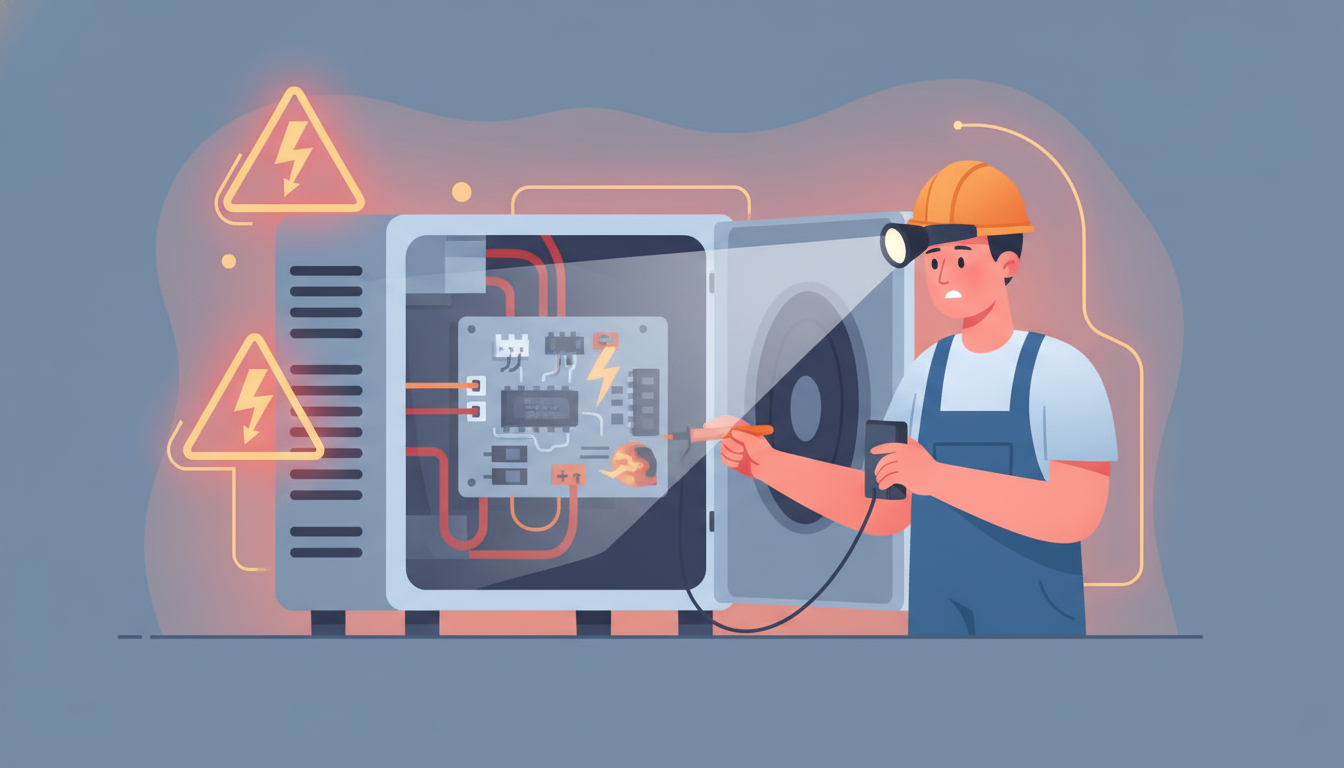
How Voltage Problems Damage HVAC Equipment: Protect Your System
How Voltage Problems Damage HVAC Equipment: Protect Your System
Is your air conditioner struggling to keep up? Does your heat pump frequently trip the circuit breaker? You might be dealing with voltage problems that are silently destroying your HVAC equipment. Understanding how voltage problems damage HVAC equipment can save you thousands of dollars in repairs and prevent unexpected system failures when you need climate control most.
Electrical problems damage HVAC systems more often than most homeowners realize. From subtle voltage fluctuations to dramatic power surges, these issues can shorten your equipment's lifespan, reduce efficiency, and cause catastrophic component failures. Let's explore what you need to know to protect your investment.
What Are Voltage Problems in HVAC Systems?
Your HVAC system needs a steady, consistent electrical supply to function properly. In the United States, residential HVAC equipment typically operates on 240 volts for major components like compressors and 24 volts for control systems.
Voltage problems occur when the electrical supply deviates from these standard requirements. These issues fall into three main categories:
Overvoltage (High Voltage): When voltage exceeds normal levels, even temporarily. Power surges can spike to thousands of volts in milliseconds, instantly frying circuit boards and damaging compressors.
Undervoltage (Low Voltage): When voltage drops below required levels. Brownouts and voltage sags force motors to draw excessive current to compensate, leading to overheating and premature failure.
Voltage Fluctuations: Rapid changes between high and low voltage. These electrical swings create constant stress on sensitive electronics, wearing out components faster than normal operation.
The Real Cost of Electrical Damage to Your HVAC
According to industry data, power surges and voltage irregularities account for nearly 30% of HVAC failures nationwide. The financial impact can be staggering:
- Circuit board replacement: $300-$600
- Capacitor replacement: $100-$400
- Compressor replacement: $1,500-$2,500
- Complete system replacement: $3,500-$7,500
Beyond repair costs, voltage problems reduce your system's efficiency. A struggling HVAC unit can increase your energy bills by 20-40% while delivering inconsistent comfort.
How Low Voltage Air Conditioner Damage Occurs
When voltage drops below your air conditioner's requirements, the compressor motor faces a critical problem. Air conditioners need substantially more power to start the compressor than to keep it running. In low voltage situations, the motor continuously attempts to start but fails each time.
This creates a dangerous cycle:
- The motor draws excessive current trying to overcome the starting load
- The increased current generates extreme heat in the windings
- Repeated failed start attempts cause the motor to overheat
- Eventually, the compressor windings burn out completely
This process can destroy a compressor in hours during sustained brownout conditions. If you notice your AC struggling to start or making clicking sounds without starting, turn it off immediately and call a professional.
Voltage Drop Causing HVAC Problems
Voltage drop differs from brownouts—it's a localized issue within your home's electrical system rather than a utility supply problem. According to National Electrical Code (NEC) standards, voltage drop should never exceed 5% from your electrical panel to your HVAC equipment.
Four primary causes of problematic voltage drop include:
Undersized Conductors: Wires too small for the electrical load create resistance and heat, dropping voltage before it reaches your equipment.
Poor Connections: Loose terminals, corroded connections, or improper wire nuts increase resistance at every connection point. These create cumulative voltage losses and dangerous hot spots.
Long Wire Runs: Distance matters. The farther electricity travels through wire, the more voltage drops along the way. Outdoor units far from the electrical panel are particularly vulnerable.
Higher Than Design Current: When your system draws more amperage than the circuit was designed for, voltage drop increases proportionally.
How Power Surge HVAC Damage Happens
Power surges represent the opposite threat—too much voltage arriving too quickly. These transient voltage spikes can reach thousands of volts and last mere milliseconds, but that's enough to cause devastating damage.
External Surge Sources
Lightning Strikes: Even lightning hitting nearby power lines (not your home directly) sends massive voltage surges through the electrical grid. A single nearby strike can destroy multiple HVAC components simultaneously.
Utility Switching: When power companies switch between grid sections or restore power after outages, the switching process can generate voltage spikes throughout the network.
Transformer Problems: Failing transformers or sudden changes in transformer loads create voltage irregularities that affect entire neighborhoods.
Internal Surge Sources
Many homeowners don't realize that appliances inside their own home create damaging surges:
- Large appliances cycling on and off (refrigerators, water heaters, dryers)
- Electric motors starting (garage door openers, power tools)
- HVAC equipment itself creating feedback surges when shutting down
These internal surges are smaller than lightning strikes but occur dozens of times daily, creating cumulative wear and tear on your system's electronics.
Components Most Vulnerable to Voltage Problems
Modern HVAC systems contain sophisticated electronics that make them more efficient but also more susceptible to electrical damage. Understanding which components face the greatest risk helps you recognize problems early.
Control Boards and Circuit Boards
Your thermostat connects to control boards that manage every aspect of your HVAC system's operation. These boards contain microprocessors, relays, and sensitive circuitry that cannot withstand significant voltage fluctuations.
Overvoltage damage to these boards is often immediate and catastrophic. A single power surge can fry multiple circuits, leaving your system completely non-functional. Control board failure typically requires complete replacement—these components cannot be repaired.
Capacitors
Capacitors store electrical energy and provide the extra boost needed to start motors. They're designed to handle specific voltage ranges, and both overvoltage and undervoltage shorten their lifespan dramatically.
When capacitors fail due to voltage stress, motors lose their starting assistance. You'll notice your system struggling to start, making humming sounds, or failing to turn on at all. Capacitor failure is one of the most common voltage-related problems.
Compressor
The compressor is your HVAC system's most expensive component, and it's highly vulnerable to voltage problems. Can low voltage damage HVAC compressor systems? Absolutely—it's one of the most common causes of premature compressor failure.
Low voltage forces compressors to draw excessive current, creating heat that breaks down internal insulation and lubricants. Over time, the motor windings short circuit or burn out completely. High voltage can cause similar damage through different mechanisms—overvoltage creates insulation breakdown and accelerated wear on mechanical components.
Fan Motors
Both indoor blower motors and outdoor condenser fan motors suffer from voltage irregularities. These motors rely on consistent voltage to maintain proper speed and torque. Voltage fluctuations cause erratic operation, overheating, and bearing damage.
Smart Thermostats and Electronics
Modern smart thermostats and inverter-driven systems contain sophisticated electronics designed for maximum efficiency. These intelligent controls monitor temperature, humidity, and system performance while adjusting operation in real-time.
Unfortunately, this complexity comes with vulnerability. The same microprocessors and sensors that optimize your comfort cannot tolerate voltage swings. Inverter-driven compressors and mini-split systems are particularly sensitive because they rely on precise electronic control rather than simple on/off cycling.
Signs of Electrical Damage to HVAC
Recognizing voltage problems early can prevent minor issues from becoming major failures. Watch for these warning signs:
Frequent Circuit Breaker Tripping: If your HVAC breaker trips repeatedly, it indicates excessive current draw—often caused by voltage problems forcing motors to work harder.
Burning Smell: Any burning odor from your HVAC equipment suggests overheated wiring or components. This is an emergency—turn off your system and call a technician immediately.
Inconsistent Performance: If your system cools or heats unevenly, or if it takes much longer to reach the set temperature, electrical issues may be reducing efficiency.
Strange Sounds: Clicking, buzzing, or humming sounds that don't accompany normal operation can indicate motors struggling with inadequate voltage or damaged components.
Blank or Flickering Thermostat Display: This often signals power supply problems, including low voltage or intermittent connections.
Failed Starts: When your system makes sounds like it's trying to start but never actually kicks on, the compressor likely cannot overcome starting load due to low voltage.
Age-Inappropriate Failures: If components fail well before their expected lifespan (capacitors under 5 years, compressors under 8 years), voltage problems may be accelerating wear.
How to Protect HVAC from Power Surges and Voltage Problems
Prevention is far more cost-effective than repair. A comprehensive protection strategy addresses voltage problems from multiple angles.
Whole-Home Surge Protection
Installing a whole-home surge protector at your main electrical panel provides the first line of defense. These devices intercept major surges from external sources like lightning and utility switching before they reach your appliances.
Professional installation costs $300-$500, which is minimal compared to replacing a $2,000 compressor or $4,000 HVAC system. Whole-home protectors handle surges up to 40,000-80,000 amps, providing protection no single outlet device can match.
Dedicated HVAC Surge Protection
For maximum protection, install a dedicated surge protector specifically for your HVAC equipment. These devices install directly at your outdoor unit and indoor air handler, providing point-of-use protection that catches surges missed by whole-home systems.
Dedicated HVAC surge protectors cost $200-$400 installed and offer additional benefits:
- They respond faster than whole-home systems
- They protect against internal surges generated by other appliances
- They often include indicator lights showing when they've absorbed surges
Voltage Monitoring Systems
Intelligent voltage monitors continuously track your electrical supply and disconnect power when dangerous conditions occur. These devices protect against both overvoltage and undervoltage, addressing threats that surge protectors miss.
Modern voltage monitors measure incoming voltage thousands of times per second. When voltage strays outside safe parameters (typically 198-253 volts for 240V systems), the monitor disconnects power to your HVAC equipment and reconnects automatically once conditions normalize.
This protection costs a few hundred dollars but prevents thousands in damage from brownouts, voltage sags, and sustained overvoltage conditions.
Proper Electrical System Maintenance
Many voltage problems originate in your home's electrical system rather than the utility supply. Regular HVAC maintenance should include electrical system checks:
Annual Inspections: Have a qualified technician inspect all electrical connections, measuring voltage at various points in the system.
Connection Tightening: Electrical connections loosen over time due to thermal cycling. Annual tightening prevents resistance buildup and voltage drop.
Wire Sizing Verification: Ensure your HVAC circuits use appropriately sized conductors per NEC requirements. Undersized wires create voltage drop and safety hazards.
Grounding System Check: Proper grounding protects against surges and ensures safe operation. Verify ground connections are clean, tight, and corrosion-free.
When to Call a Professional
DIY electrical HVAC repairs are risky and potentially dangerous. Call a licensed HVAC technician or electrician if you notice:
- Voltage readings consistently outside 228-252V range (for 240V systems)
- Frequent breaker trips
- Burning smells or visible damage
- Failed start attempts
- Flickering lights when HVAC cycles on
Never attempt voltage testing or electrical repairs without proper training and equipment. High voltage can cause serious injury or death.
What to Do After a Power Surge or Outage
Power outages and surges require specific response steps to protect your equipment:
Step 1: When power fails, turn your thermostat to "OFF" immediately. This prevents the system from attempting to start during the chaotic moments when power returns.
Step 2: Wait 3-5 minutes after power restoration before turning your system back on. This allows voltage to stabilize throughout the grid.
Step 3: Turn your thermostat to "ON" and observe the startup. Listen for unusual sounds and watch for normal operation.
Step 4: If your system won't start, trips the breaker, or operates abnormally, turn it off and schedule professional inspection. Don't repeatedly attempt to restart—this can compound damage.
Step 5: Document the outage date and any system problems that followed. This information helps if you need to file insurance claims or warranty claims.
Special Considerations for Different HVAC Types
Different HVAC systems have varying vulnerability to voltage problems:
Central Air Conditioners: Traditional single-stage systems are relatively robust but still vulnerable at compressor and control board components.
Heat Pumps: Because they operate year-round for both heating and cooling, heat pumps face more voltage exposure than air conditioners. Frequent cycling also means more starting surges.
Mini-Split Systems: These inverter-driven systems are highly efficient but extremely sensitive to voltage fluctuations. The sophisticated electronics require stable power quality.
Smart/Variable-Speed Systems: Modern variable-speed systems optimize efficiency through electronic control but are more vulnerable to voltage irregularities than older mechanical systems.
Newer systems with advanced electronics require more comprehensive voltage protection than older, simpler equipment.
Voltage Problems and Your HVAC Warranty
Understanding warranty coverage for electrical damage can save you significant money:
Most manufacturer warranties explicitly exclude damage from "external causes" including electrical problems. If voltage issues damage your compressor, you'll likely pay for replacement even within the warranty period.
However, labor warranties and extended warranties sometimes cover electrical damage if you can prove proper installation and maintenance. Keep documentation of:
- Surge protector installation receipts
- Annual maintenance records
- Professional electrical inspections
- Voltage testing results
If you experience electrical damage during a widespread utility problem affecting multiple homes, your utility company may bear some responsibility. Document the incident and contact your utility provider to inquire about their damage claim process.
Long-Term Impact of Voltage Fluctuations on HVAC
Even minor voltage fluctuations that don't cause immediate failure create long-term damage. Think of it like repeatedly revving your car engine to the red line—you might not hear immediate problems, but you're dramatically shortening the engine's lifespan.
HVAC systems experiencing frequent voltage swings typically fail 3-5 years earlier than systems with stable power quality. Components designed to last 10-15 years may fail in 5-7 years under electrical stress.
This shortened lifespan means:
- More frequent repair calls
- Higher lifetime operating costs
- Earlier system replacement expenses
- Reduced home comfort reliability
Investing in voltage protection extends your equipment's lifespan, improving your return on investment and reducing long-term costs.
Frequently Asked Questions
How do I know if my voltage is too high or too low?
Purchase an inexpensive multimeter and measure voltage at your outdoor unit's disconnect box while the system is running. For 240V systems, readings should stay between 228-252 volts. For 120V circuits, readings should stay between 114-126 volts. Measurements outside these ranges indicate problems requiring professional attention.
Will a surge protector prevent all electrical damage?
No. Surge protectors guard against overvoltage spikes but cannot protect against brownouts, voltage sags, or sustained undervoltage conditions. Comprehensive protection requires both surge protection and voltage monitoring.
Can I tell if my HVAC has already been damaged by voltage problems?
Sometimes. Signs include frequent capacitor failures, control boards that mysteriously fail, compressors that struggle to start, or systems that fail prematurely. If your HVAC breaker keeps tripping, voltage issues may be the underlying cause. A technician can perform electrical testing to identify hidden damage.
Should I turn off my HVAC during thunderstorms?
If severe storms are forecast, turning off your system at the thermostat and the circuit breaker provides maximum protection. However, this isn't always practical. Quality surge protection allows safe operation during most storms.
How much does professional voltage protection cost?
Whole-home surge protection runs $300-$500 installed. Dedicated HVAC surge protectors cost $200-$400 installed. Voltage monitoring systems range from $250-$600 installed. Total comprehensive protection costs $750-$1,500—far less than replacing damaged equipment.
Conclusion: Protect Your Investment from Voltage Damage
Voltage problems damage HVAC equipment silently and progressively, turning minor electrical irregularities into expensive repairs. From compressor burnout caused by low voltage to circuit board destruction from power surges, electrical issues represent one of the most common—and preventable—causes of HVAC failure.
The good news? Protection is affordable and effective. A few hundred dollars invested in surge protection and voltage monitoring can save thousands in repair costs while extending your system's lifespan by years.
Don't wait for a catastrophic failure to address electrical vulnerabilities. Schedule an electrical inspection with a qualified HVAC technician today. They'll test your voltage levels, check electrical connections, and recommend appropriate protection for your specific system.
Your HVAC system is one of your home's most expensive appliances. Protect it from voltage problems, and it will deliver reliable comfort for decades to come.