
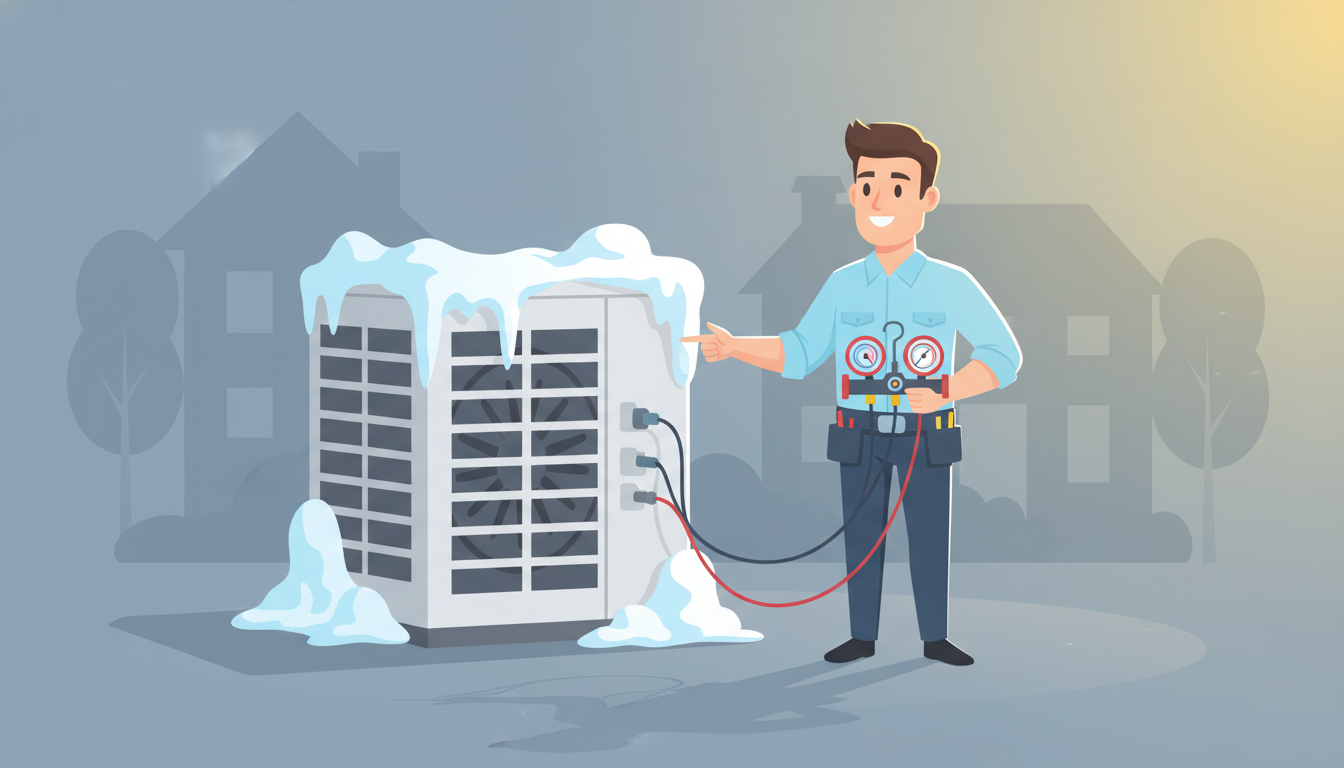
Why Does My AC Freeze Up on Hot Days?
Why Does My AC Freeze Up on Hot Days?
It's a scorching summer day, and you're counting on your air conditioner to keep your home cool—but instead, you notice ice forming on your AC unit. If you're wondering why your AC freezes up on hot days, you're not alone. This frustrating problem seems counterintuitive, but it's actually one of the most common AC issues homeowners face during the hottest months. The good news? Understanding why it happens is the first step toward fixing it and preventing it from happening again.
In this guide, we'll walk you through the main causes of a frozen air conditioner, what you can do about it right now, and how to prevent future freeze-ups. Whether you're dealing with ice on your evaporator coil or a completely frozen unit, we've got you covered.
The Paradox: Why Does My AC Freeze Up When It's Hot Outside?
Here's the thing that confuses most homeowners: your AC is designed to cool your home, so how can it freeze when it's 90°F outside?
The answer lies in how your air conditioning system works. Your AC doesn't create cold air—it removes heat from your indoor air and transfers it outside. This process relies on a delicate balance of airflow, refrigerant pressure, and heat exchange at the evaporator coil.
When this balance gets disrupted, the evaporator coil (located inside your home) can drop below freezing—even when outdoor temperatures are soaring. Here's why hot days actually increase your freeze-up risk:
- Your AC runs longer: On hot days, your system works overtime to keep up with cooling demand, giving problems less time to self-correct
- Higher humidity: Summer heat often comes with humidity, which creates more condensation on your coils
- More stress on components: Extended operation exposes existing issues (like low refrigerant or dirty filters) that might not cause problems during shorter cooling cycles
The hotter it gets, the harder your AC works—and the more likely underlying issues will cause a freeze-up.
How Your AC Works (And Why It Freezes)
To understand why your air conditioner freezing up happens, you need to know the basics of how your cooling system works.
Your AC has two main coils: the evaporator coil (inside) and the condenser coil (outside). The evaporator coil contains cold refrigerant that absorbs heat from your indoor air as your blower fan pushes air across it. This refrigerant then travels to the outdoor condenser coil, where it releases that heat.
For this heat exchange to work properly, three things must happen:
- Adequate airflow over the evaporator coil to transfer heat from your home's air
- Proper refrigerant levels to maintain the right pressure and temperature
- Correct temperature balance so the coil stays cold enough to cool but not so cold it freezes
When any of these elements gets disrupted, ice buildup begins. The moisture in your indoor air condenses on the below-freezing coil and instantly freezes. Over time, this ice layer grows thicker, further restricting airflow and creating a vicious cycle.
Top 7 Reasons Your AC Freezes Up on Hot Days
Let's break down the most common causes of a frozen AC unit. Understanding the root cause is essential for fixing the problem correctly.
1. Dirty or Clogged Air Filter
This is the #1 culprit behind frozen air conditioners—and the easiest to fix yourself.
Your air filter traps dust, pet hair, pollen, and other particles to keep your indoor air clean. But when it gets clogged, it drastically reduces airflow over your evaporator coil. Without enough warm air passing over the coil, the refrigerant inside becomes too cold, and ice formation begins.
Signs your filter is the problem:
- Filter looks visibly dirty or gray
- Reduced airflow from vents
- AC running constantly but not cooling well
- Ice on the refrigerant lines or indoor unit
What to do: Check your air filter immediately. If it's dirty, replace it with a new one. Most filters should be changed every 30-90 days, depending on your household (more often if you have pets or allergies).
2. Low Refrigerant Levels
Refrigerant is the lifeblood of your cooling system. When refrigerant levels drop—usually due to a leak somewhere in the system—the pressure inside your evaporator coil decreases. This pressure drop causes the refrigerant to become much colder than normal, leading to frozen coils even when your AC is working hard on a hot day.
Signs of low refrigerant:
- Ice on the outdoor refrigerant lines
- Hissing or bubbling sounds from the AC
- AC runs constantly but house stays warm
- Higher energy bills despite poor cooling
What to do: Low refrigerant is not a DIY fix. If you suspect a refrigerant leak, turn off your AC and call a professional HVAC technician. They'll locate the leak, repair it, and recharge your system with the correct amount of refrigerant. Simply adding more refrigerant without fixing the leak is a temporary solution that wastes money.
3. Blocked or Closed Return Vents
Your AC needs return vents to pull warm air from your home back into the system for cooling. When these vents get blocked by furniture, curtains, or closed doors, airflow restriction occurs—just like with a dirty filter.
Many homeowners accidentally block return vents when rearranging furniture or close vents in unused rooms thinking they'll save energy. Unfortunately, this disrupts the airflow your system needs and can cause freezing.
What to do:
- Walk through your home and check all return vents (usually larger vents without louvers)
- Move furniture, curtains, or storage items at least 6-12 inches away from vents
- Keep interior doors open to maintain airflow throughout your home
- Never close more than 20% of your vents, even in unused rooms
4. Dirty Evaporator Coil
Over time, dust and grime accumulate on your evaporator coil despite your air filter's best efforts. This buildup acts like insulation, preventing proper heat transfer between your indoor air and the refrigerant. When the coil can't absorb enough heat, its temperature drops below freezing.
Dirty coils are especially problematic during hot weather when your system needs maximum efficiency.
Signs your coil needs cleaning:
- Ice formation on the indoor unit
- Reduced cooling performance
- AC running longer cycles
- Musty odors from vents
What to do: Cleaning evaporator coils requires accessing your indoor AC unit, which typically involves removing panels and working with delicate fins. While DIY is possible for handy homeowners, this is often best left to professionals during routine AC maintenance. Professional HVAC technicians have specialized cleaners and tools that won't damage the coil fins.
5. Malfunctioning Blower Motor or Fan
Your blower motor is responsible for pushing air across the evaporator coil and through your ductwork. If the blower motor fails, runs too slowly, or the fan belt breaks, airflow drops dramatically—and your AC coils freeze.
Blower problems are more common in older systems or units that haven't received regular maintenance.
Signs of blower motor issues:
- Weak airflow from vents
- Strange noises (squealing, grinding, or rattling)
- AC turns on but no air comes out
- Circuit breaker trips when AC runs
What to do: Blower motor problems require professional diagnosis and repair. These motors have multiple speed settings, capacitors, and electrical connections that need expert attention. Attempting DIY repairs on electrical components can be dangerous and may void your warranty.
6. Thermostat Problems
A faulty or improperly set thermostat can cause your AC to run excessively, not cycle properly, or maintain temperatures that promote freezing.
For example, if your thermostat is set too low (below 65-68°F), your evaporator coil may struggle to maintain proper heat exchange, especially during long cooling cycles on hot days. Similarly, a thermostat in the wrong location (near a window, in direct sunlight, or near a heat source) may give false readings.
What to do:
- Set your thermostat to 72-78°F (don't go below 68°F)
- Ensure your thermostat isn't in direct sunlight or near heat sources
- Check that it's set to "AUTO" fan mode, not "ON" (which runs constantly)
- If your thermostat is old or malfunctioning, consider upgrading to a programmable model
7. Oversized Air Conditioner
Here's a problem many homeowners don't know about: an AC unit that's too large for your home can actually cause more problems than one that's too small.
An oversized air conditioner cools your home too quickly, causing it to short-cycle (turn on and off frequently). These short cycles don't allow enough time for proper dehumidification or for the system to reach steady-state operation. The result? The evaporator coil stays too cold for too long, and ice builds up.
Oversized units also cost more to operate and wear out faster due to constant cycling.
Signs your AC might be oversized:
- AC turns on and off every 5-10 minutes
- Home cools quickly but feels humid or clammy
- Frequent ice buildup problems
- High energy bills despite newer equipment
What to do: Unfortunately, the only real fix for an oversized AC is replacement with a properly sized unit. An HVAC professional can perform a load calculation to determine the correct size for your home. In the meantime, managing thermostat settings and ensuring excellent airflow can help minimize freezing.
What to Do Right Now If Your AC Is Frozen
If you discover your air conditioner is frozen, don't panic. Follow these steps to safely defrost your unit and prevent damage:
Step 1: Turn Off Your AC Immediately
Switch your thermostat to "OFF" or turn off the AC at your circuit breaker. Running a frozen AC can cause serious damage to your compressor—one of the most expensive components to replace.
Step 2: Turn On the Fan Only
Set your thermostat to "FAN ONLY" mode. This keeps air circulating through your system, which speeds up the defrosting process without engaging the cooling components.
Step 3: Let It Defrost Completely (1-3 Hours)
Allow your AC to thaw naturally. Depending on how much ice has built up, this can take anywhere from 1 to 3 hours. Don't try to speed up the process by chipping away ice or using heat—you could damage delicate coil fins.
During this time:
- Check and replace your air filter if it's dirty
- Inspect all visible vents for blockages
- Look for any obvious signs of damage or leaks
Step 4: Check for Water Drainage
As your AC defrosts, water will drain through your condensate drain line. Place towels around your indoor unit and check that water is draining properly. If water pools or backs up, your drain line may be clogged—another common cause of AC problems.
Step 5: Try Running Your AC Again
Once everything has thawed and drained, turn your AC back to cooling mode. Set the temperature to a moderate level (72-75°F) and monitor it for 30-60 minutes.
If ice returns quickly: You have an underlying problem that needs professional attention. Don't keep running the AC—contact an HVAC technician right away.
If the AC runs normally: The problem may have been a simple airflow issue (dirty filter, blocked vent). Continue monitoring it over the next few days.
DIY Fixes vs. When to Call a Professional
Not all frozen AC problems require professional help, but some definitely do. Here's how to decide:
DIY Fixes You Can Handle
✅ Changing air filters (every 1-3 months)
✅ Clearing blocked vents (furniture, curtains, etc.)
✅ Adjusting thermostat settings (proper temperature and fan mode)
✅ Cleaning visible debris around outdoor unit
✅ Ensuring interior doors stay open for airflow
These simple maintenance tasks can prevent many freezing problems and keep your AC running efficiently.
When to Call an HVAC Professional
❌ Low refrigerant or suspected leaks - Requires specialized equipment and EPA certification
❌ Dirty evaporator coils - Needs careful cleaning to avoid damage
❌ Blower motor problems - Electrical work that requires expertise
❌ Repeated freezing despite filter changes - Indicates a deeper issue
❌ Refrigerant line damage - Must be repaired and recharged properly
❌ Compressor issues - Expensive component requiring expert diagnosis
Don't risk further damage or void your warranty by attempting complex repairs yourself. Professional HVAC technicians have the tools, training, and experience to diagnose and fix problems correctly the first time.
How Much Does It Cost to Fix a Frozen AC?
The cost to repair a frozen air conditioner varies widely depending on the underlying cause:
Low-cost fixes ($0-$100):
- Replacing air filter: $15-$30 (DIY)
- Clearing blocked vents: Free (DIY)
- Thermostat adjustment: Free (DIY)
Moderate fixes ($100-$500):
- Professional coil cleaning: $100-$300
- Condensate drain line cleaning: $75-$200
- Thermostat replacement: $150-$400
- Blower motor capacitor: $150-$300
Major repairs ($500-$1,500+):
- Refrigerant leak repair + recharge: $500-$1,500
- Blower motor replacement: $400-$600
- Evaporator coil replacement: $1,000-$2,000
- Compressor replacement: $1,500-$2,500
Prevention is always cheaper than repair. Regular maintenance visits ($75-$200 annually) catch small problems before they become expensive emergencies. Many HVAC companies offer service plans that include priority scheduling, discounts on repairs, and annual tune-ups.
How to Prevent Your AC from Freezing Up
The best way to deal with a frozen AC is to prevent it from happening in the first place. Follow these preventive maintenance tips:
Regular Maintenance Schedule
- Change air filters every 30-90 days (monthly if you have pets or allergies)
- Schedule professional HVAC maintenance twice per year (spring and fall)
- Clean around outdoor unit quarterly (remove leaves, grass clippings, debris)
- Check refrigerant lines annually for signs of wear or damage
Airflow Best Practices
- Keep all vents open and unblocked
- Maintain at least 2 feet of clearance around outdoor unit
- Keep interior doors open when AC is running
- Consider upgrading ductwork if your home has airflow issues
Smart Thermostat Habits
- Don't set temperature below 68°F
- Use programmable thermostat to avoid overcooling
- Set fan to "AUTO" rather than "ON"
- Give your AC breaks by using fans to circulate cool air
Watch for Warning Signs
Catch problems early by monitoring your AC for these red flags:
- Reduced cooling performance
- Ice or frost on indoor or outdoor components
- Unusual noises (hissing, grinding, squealing)
- Higher than normal energy bills
- Excessive moisture or water around indoor unit
Address warning signs immediately rather than waiting for a complete freeze-up or breakdown.
The Cost of Ignoring a Frozen AC
You might be tempted to keep running your AC even if you notice some ice buildup, especially during a heat wave. Don't do it. Here's what can happen:
Compressor failure: Your compressor can overheat or suffer mechanical damage trying to pump refrigerant through frozen coils. Compressor replacement can cost $1,500-$2,500 or more.
Cracked or damaged coils: Ice expansion can physically damage the thin coil fins or even crack the coil itself, requiring expensive replacement.
Water damage: As ice melts, it can overwhelm your condensate drain and cause water damage to your home's walls, ceilings, or flooring.
Complete system failure: Repeated freeze-ups stress every component in your system, dramatically shortening its lifespan and potentially requiring full replacement years earlier than necessary.
Higher energy bills: A frozen AC works harder but cools less, wasting energy and driving up your utility costs.
The few hours it takes to properly defrost and diagnose your AC can save you thousands in repair or replacement costs.
Frequently Asked Questions
Why does my AC freeze up when it's so hot outside?
Hot weather actually increases freeze-up risk because your AC runs longer and works harder, exposing underlying problems like restricted airflow or low refrigerant. The evaporator coil inside your home can freeze even when it's 95°F outside if heat exchange is disrupted.
Can I run my AC if it's frozen?
No, you should never run a frozen AC. Turn it off immediately and let it defrost completely. Running frozen equipment can cause severe compressor damage, cracked coils, and other expensive problems.
How long does it take to defrost a frozen AC unit?
Most frozen AC units take 1-3 hours to defrost completely, depending on how much ice has accumulated. Turn the system to "fan only" mode to speed up the process. Don't try to manually remove ice—you could damage the coils.
Will a frozen AC unit fix itself?
No, a frozen AC won't fix itself. While the ice will eventually melt, the underlying cause (dirty filter, low refrigerant, airflow restriction, etc.) will remain. You must identify and fix the root cause, or the freezing will happen again.
Can a dirty air filter really cause my AC to freeze?
Absolutely. A clogged air filter is the #1 cause of frozen air conditioners. It restricts airflow over the evaporator coil, preventing proper heat exchange. The coil becomes too cold, and moisture in the air freezes on contact. Always check your filter first when troubleshooting a frozen AC.
Take Action Before the Heat Becomes Unbearable
Discovering your AC freeze up on hot days is frustrating, but now you understand why it happens and what to do about it. Most freeze-ups result from simple airflow problems you can fix yourself—like changing your filter or clearing blocked vents.
However, if your air conditioner keeps freezing up after addressing basic maintenance, or if you suspect low refrigerant or mechanical problems, don't wait for a complete breakdown. Professional diagnosis and repair now will save you money, stress, and discomfort later.
Stay cool, stay proactive, and keep your AC running smoothly all summer long. Your comfort depends on it.