
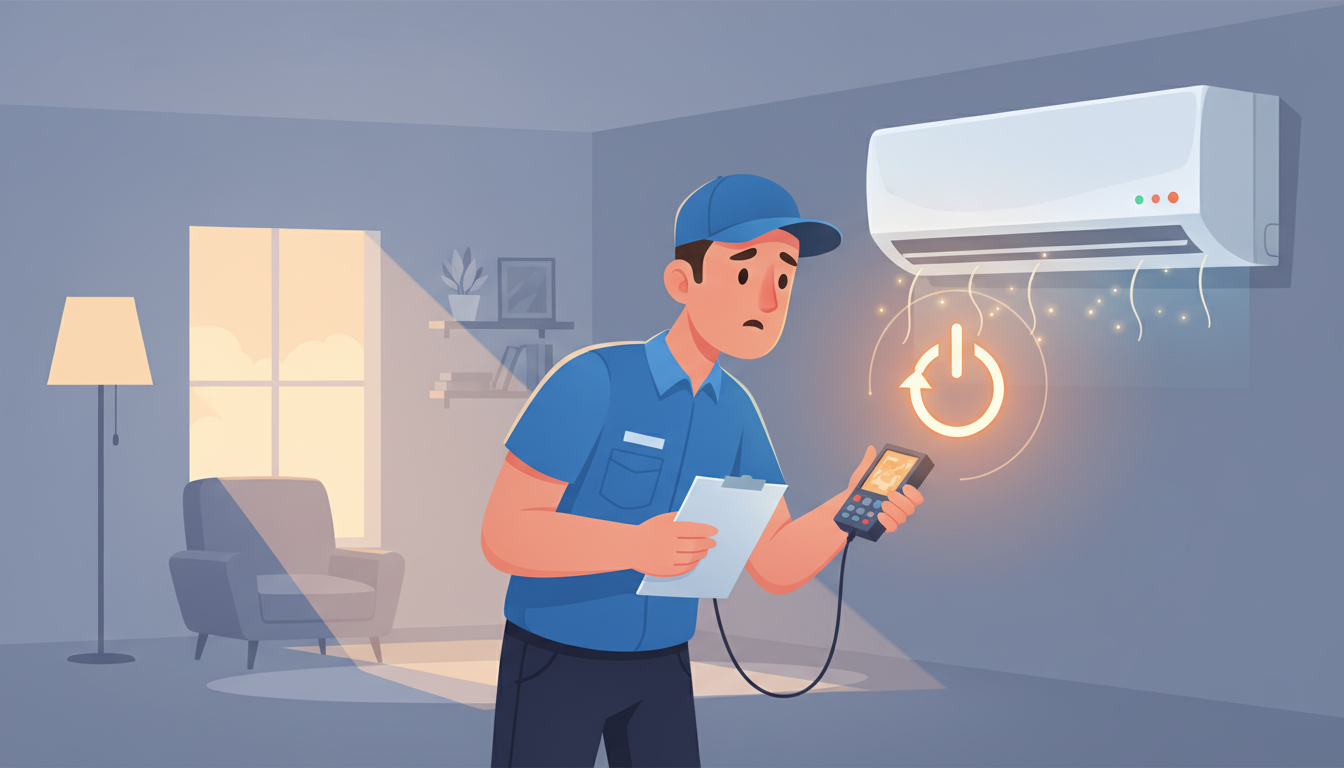
Why Does My AC Keep Restarting Every Few Minutes?
Why Does My AC Keep Restarting Every Few Minutes?
Is your air conditioner playing a frustrating game of on-again, off-again? If your AC keeps restarting every few minutes, you're experiencing what HVAC professionals call "short cycling." This isn't just annoying—it's a warning sign that something's wrong with your cooling system. Short cycling drives up your energy bills, puts excessive wear on your compressor, and can lead to complete system failure if left unaddressed. The good news? Many causes of AC short cycling are fixable, and some you can even troubleshoot yourself.
In this guide, we'll walk you through exactly why your air conditioner keeps turning on and off repeatedly, how to diagnose the problem, and what you can do to fix it before it damages your HVAC system permanently.
What Is AC Short Cycling?
Short cycling occurs when your air conditioner turns on, runs for only a few minutes (typically 2-7 minutes), then shuts off before completing a full cooling cycle. After a brief pause, the system kicks back on and repeats this pattern continuously.
Under normal operation, your AC should run for about 10-20 minutes per cycle, then remain off for a similar period while your home maintains a comfortable temperature. This allows the system to properly dehumidify your air, cool your space evenly, and operate efficiently.
When your AC cycles on and off every few minutes instead, it never reaches optimal performance. The constant starting and stopping is hard on your equipment and signals an underlying issue that needs attention.
Why Short Cycling Is a Serious Problem
You might think frequent cycling just means your AC is working extra hard to keep you cool. Unfortunately, the reality is more concerning:
Higher Energy Bills: Your air conditioner uses the most electricity during startup. When your AC keeps restarting constantly, you're paying for repeated startups throughout the day instead of efficient, steady operation.
Compressor Damage: The compressor is the heart of your AC system—and the most expensive component to replace. Each startup creates stress on the compressor. Short cycling can cause premature compressor failure, leading to repair bills of $1,500 to $3,000 or more.
Reduced Comfort: Short cycles don't run long enough to properly remove humidity from your air. You'll feel clammy and uncomfortable even when the temperature seems right.
Shortened System Lifespan: An AC system that short cycles constantly can fail years before its expected 12-15 year lifespan. You might face a complete system replacement much sooner than necessary.
9 Common Reasons Your AC Keeps Restarting (And How to Fix Them)
Let's diagnose what's causing your air conditioner to cycle on and off so frequently. We've organized these from most common and easiest to fix, to more complex issues requiring professional help.
1. Clogged or Dirty Air Filter
What's happening: A dirty air filter is the #1 cause of AC short cycling. When your filter gets clogged with dust, pet hair, pollen, and debris, it restricts airflow through your system. This causes your evaporator coils to freeze up, triggering safety shutoffs.
Signs this is your problem:
- Filter looks visibly dirty or gray
- Reduced airflow from vents
- Ice formation on indoor unit
- System hasn't had filter changed in 2-3 months
DIY fix: Check your air filter right now. If it's dirty, replace it immediately. Standard 1-inch filters should be changed every 30-60 days during cooling season. High-efficiency filters can last 3-6 months. After replacing the filter, turn off your AC for 30 minutes to let any ice melt, then restart.
Cost: $5-30 for replacement filters
2. Thermostat Placement or Malfunction
What's happening: Your thermostat tells your AC when to turn on and off based on the temperature it reads. If the thermostat is in a bad location—near a window, in direct sunlight, above a heat-producing appliance, or in a drafty area—it gets false temperature readings. It might think your home is cooler than it actually is, causing the AC to shut off prematurely.
A malfunctioning thermostat can also send incorrect signals to your AC system, causing erratic cycling behavior.
Signs this is your problem:
- Thermostat is in direct sunlight or near a window
- Located above an oven, lamp, or heat source
- Different rooms feel much warmer than thermostat reading
- Thermostat display is blank or showing error codes
- Recently replaced batteries but problem persists
DIY fix: Check your thermostat location. If it's in a poor spot (sunny window, above appliances), you may need to relocate it to an interior wall away from heat sources and direct sunlight. Also verify your thermostat is set to "AUTO" not "ON"—the "ON" setting runs the fan continuously which can confuse the system.
Clean your thermostat by removing the cover and gently dusting the interior components. Replace batteries if it's battery-powered.
Professional fix: Thermostat relocation ($150-300) or replacement ($120-500 depending on model)
3. Oversized Air Conditioner
What's happening: An AC unit that's too large for your home cools the space too quickly. The thermostat registers that the target temperature has been reached, shuts the system down, then the temperature rises quickly and triggers another cycle. This rapid on-off pattern is classic short cycling from an oversized system.
Many homeowners think "bigger is better," but an oversized AC creates multiple problems: poor humidity control, uneven cooling, and constant short cycling that damages components.
Signs this is your problem:
- AC was recently replaced with a larger unit
- Your home cools very quickly (under 5 minutes)
- High humidity indoors even when temperature is cool
- Some rooms are freezing while others are warm
- Problem started when you installed new AC
The fix: Unfortunately, you can't "fix" an oversized AC. Your options are to have an HVAC professional add zones to your system (expensive) or replace the unit with properly-sized equipment. Always get a Manual J load calculation before installing a new AC to ensure proper sizing.
Prevention: When replacing your AC, insist on a professional load calculation. Don't just match the tonnage of your old unit.
4. Low Refrigerant or Refrigerant Leak
What's happening: Refrigerant is the chemical that actually cools your air. Your AC system is a closed loop—it doesn't "use up" refrigerant under normal conditions. If refrigerant levels are low, you have a leak somewhere in the system.
Low refrigerant prevents your AC from cooling properly. The system senses it can't reach the target temperature, runs briefly, shuts down, then tries again. This creates the short cycling pattern. Low refrigerant also causes ice buildup on your evaporator coils, which triggers safety shutoffs.
Signs this is your problem:
- Hissing or bubbling sounds from AC unit
- Ice on refrigerant lines or indoor coils
- AC runs but doesn't cool effectively
- Noticeably reduced cooling power
- Higher energy bills despite less cooling
The fix: This requires a professional HVAC technician. They'll locate the leak, repair it, and recharge your system with the correct amount of refrigerant. Never attempt to add refrigerant yourself—it requires specialized equipment and certification.
Cost: $200-1,500 depending on leak location and refrigerant type (R-22 Freon is more expensive and being phased out)
5. Dirty or Blocked Condenser Coils
What's happening: Your outdoor condenser unit releases the heat removed from your home. When the condenser coils get caked with dirt, grass clippings, cottonwood, leaves, or other debris, they can't release heat effectively. Your system overheats and shuts down to protect itself, then restarts when it cools down—creating that frustrating cycle.
Signs this is your problem:
- Outdoor unit looks dirty or has visible debris
- Grass, leaves, or cottonwood buildup on fins
- Unit hasn't been cleaned in over a year
- AC works better after rainstorm (temporarily washes debris)
- Outdoor unit is surrounded by shrubs or blocked airflow
DIY fix: Turn off power to your outdoor unit at the disconnect box. Use a garden hose (not a pressure washer—too powerful) to gently spray the condenser coils from the inside out. Remove any visible debris, leaves, or grass clippings. Clear at least 2 feet of space around the entire unit. Trim back any shrubs or vegetation.
Professional fix: Annual AC maintenance includes condenser coil cleaning with specialized coil cleaner ($80-150 as part of tune-up)
Cost: DIY is free; professional cleaning $80-200
6. Frozen Evaporator Coils
What's happening: Your indoor evaporator coils can freeze for several reasons: restricted airflow (dirty filter), low refrigerant, blocked return vents, or running AC when outdoor temperature is below 60°F. When ice builds up, it blocks airflow and triggers safety switches that shut down your system. As the ice melts, the system restarts, then freezes again—creating short cycling.
Signs this is your problem:
- Ice visible on indoor unit or copper refrigerant lines
- Water pooling around indoor unit
- AC blows warm air
- Reduced airflow from vents
- Strange hissing sounds
DIY fix: Turn off your AC completely. Turn your thermostat fan to "ON" (not auto) to help melt ice faster. Let the system thaw for 2-4 hours. Once thawed, check for a dirty air filter (most common cause) and replace it. Check that all return vents are open and unblocked. If the problem returns, you likely have a refrigerant leak requiring professional service.
Professional fix: If caused by refrigerant leak, see #4 above. If caused by other airflow issues, diagnosis and repair typically $100-400.
7. Compressor Problems
What's happening: The compressor is the component that pressurizes refrigerant and circulates it through your AC system—it's essentially the "engine" of your air conditioner. A failing compressor may overheat and shut down after just a few minutes of operation. As it cools, it attempts to restart, creating short cycling. Compressor failure is often the result of other issues left unaddressed, like dirty coils or low refrigerant.
Signs this is your problem:
- Loud grinding, rattling, or clicking from outdoor unit
- Compressor shuts off after 2-3 minutes
- Circuit breaker trips repeatedly
- Hard starting (compressor struggles to start)
- System is 10+ years old
The fix: Compressor problems require professional diagnosis. Sometimes a failed start capacitor causes compressor issues (cheaper fix). A truly failed compressor often means replacing the entire outdoor unit since compressor replacement costs $1,500-3,000—often more than a new system.
Cost: Capacitor replacement $120-250; compressor replacement $1,500-3,000; new AC system $3,000-7,000
8. Electrical Issues (Breaker, Wiring, or Capacitor)
What's happening: Electrical problems can cause erratic AC behavior. A failing capacitor (which helps start the compressor and fan motors) might prevent proper startup. Loose wiring creates intermittent connections. An undersized or failing circuit breaker might trip under the load of AC startup, shutting the system down.
Signs this is your problem:
- Circuit breaker trips frequently
- AC makes clicking sounds but doesn't start
- Outdoor fan doesn't spin even though compressor runs
- Burning smell from AC or electrical panel
- Lights dim when AC starts up
DIY safety check: Check your electrical panel for tripped breakers. Reset if needed. However, if the breaker trips repeatedly, DO NOT keep resetting it—this indicates a serious electrical problem that needs professional attention immediately.
Professional fix: Electrical issues require an HVAC technician or electrician. Capacitor replacement is common and affordable. Rewiring or breaker replacement is more involved.
Cost: Capacitor $120-250; wiring repairs $150-500; breaker replacement $100-250
9. Clogged Condensate Drain Line
What's happening: As your AC removes humidity from your air, condensation forms on the evaporator coils and drains away through a condensate line. If this drain line gets clogged with algae, mold, or debris, water backs up. Most modern AC systems have a safety float switch that shuts down the system when it detects water backup to prevent flooding damage.
Signs this is your problem:
- Water pooling around indoor unit
- Musty smell near indoor unit
- AC shuts off and won't restart for extended period
- Gurgling sounds from drain line
- Visible mold or algae in drain pan
DIY fix: Locate your condensate drain line (usually a PVC pipe near your indoor unit). Pour a cup of white vinegar or condensate pan treatment tablets down the drain line monthly to prevent clogs. For existing clogs, use a wet/dry vacuum to suction out the clog from the outdoor end of the drain line.
Professional fix: HVAC tech can clear stubborn clogs and install drain line treatment ($80-200)
Cost: DIY using vinegar (under $5); professional service $80-200
How to Troubleshoot AC Short Cycling: A Step-by-Step Guide
Before calling an HVAC technician, try these diagnostic steps:
Step 1: Check your air filter. If it's dirty, replace it and see if the problem resolves. This fixes short cycling 40% of the time.
Step 2: Inspect your outdoor unit. Clear any debris, grass, or leaves blocking the condenser. Ensure 2 feet of clearance around the unit.
Step 3: Check for ice. Look at your indoor unit and refrigerant lines. If you see ice, turn off the AC and let it thaw completely (2-4 hours) before restarting.
Step 4: Verify thermostat settings. Make sure it's set to AUTO mode, not ON. Check that the temperature setting makes sense.
Step 5: Examine thermostat location. Is it in direct sunlight, near a window, or above a heat source? These locations cause false readings.
Step 6: Listen for unusual sounds. Grinding, clicking, or hissing noises indicate mechanical or refrigerant issues requiring professional help.
Step 7: Time your cycles. If your AC runs for less than 7-8 minutes before shutting off, and repeats this pattern consistently, you definitely have short cycling that needs attention.
If these DIY checks don't solve the problem, it's time to call a professional HVAC technician for diagnosis and repair.
When to Call a Professional Immediately
Some AC short cycling situations require urgent professional attention:
- Electrical burning smell: Indicates potential fire hazard. Shut off AC at breaker and call immediately.
- Circuit breaker trips repeatedly: Don't keep resetting—this indicates dangerous electrical issues.
- Water flooding from indoor unit: Can cause serious water damage to your home.
- Loud grinding or metal-on-metal sounds: Suggests mechanical failure that could damage other components.
- Complete system failure: If your AC won't start at all after short cycling, don't wait.
- Ice returns immediately after thawing: Indicates refrigerant leak or serious airflow problem.
For these situations, waiting can turn a $200 repair into a $2,000+ replacement. Getting a professional diagnosis quickly can save you money in the long run.
How Much Does It Cost to Fix AC Short Cycling?
Repair costs vary significantly depending on the root cause:
- Air filter replacement: $5-30 (DIY)
- Thermostat replacement: $120-500
- Condensate drain cleaning: $80-200
- Capacitor replacement: $120-250
- Condenser coil cleaning: $80-150
- Refrigerant leak repair and recharge: $200-1,500
- Compressor replacement: $1,500-3,000
- Full system replacement: $3,000-7,000
Most homeowners spend $150-400 to fix short cycling issues. Regular maintenance prevents many of these problems and costs just $80-150 annually.
Preventing AC Short Cycling: Maintenance Tips
The best fix is prevention. Follow these maintenance steps to avoid short cycling:
Monthly (During Cooling Season):
- Check and replace air filters as needed
- Pour vinegar down condensate drain line
- Clear debris from outdoor unit
Quarterly:
- Inspect outdoor unit for damage or debris buildup
- Check thermostat batteries
- Verify all vents are open and unblocked
Annually (Before Summer):
- Schedule professional AC tune-up and inspection
- Have technician check refrigerant levels
- Professional condenser coil cleaning
- Electrical connection inspection
- Thermostat calibration check
Every 3-5 Years:
- Consider thermostat upgrade if older model
- Evaluate system age and efficiency
Regular professional maintenance catches small problems before they become expensive repairs. A well-maintained AC system rarely experiences short cycling and lasts 12-15 years or longer. For comprehensive guidance on maintaining your entire HVAC system, check out our complete HVAC repair guide.
Understanding Normal AC Cycle Times
To recognize short cycling, you need to know what normal operation looks like:
Normal Cycle Duration: 10-20 minutes of runtime per cycle Normal Cycles Per Hour: 2-3 cycles in hot weather (more frequent on extremely hot days) Normal Off Time: 10-20 minutes between cycles
What's NOT Normal:
- Cycles under 7-8 minutes
- Starting and stopping every 2-5 minutes
- More than 4-5 cycles per hour in moderate weather
- Never reaching the set temperature
If your central AC keeps restarting outside these normal patterns, you have a problem that needs diagnosis. For more specific guidance on central air conditioning issues, our central AC repair guide covers common problems in detail.
The Connection Between Short Cycling and Humidity Control
One often-overlooked consequence of AC short cycling is poor humidity control. Your air conditioner does two jobs: cooling the air and removing humidity. The dehumidification process takes time—moisture condenses on your cold evaporator coils and drips into the drain pan.
When your AC keeps turning on and off every few minutes, it never runs long enough to properly dehumidify your air. You end up with a cool but clammy home that feels uncomfortable despite the right temperature. This is especially noticeable in humid climates.
If your AC seems to run constantly without effectively lowering humidity, the issue might be different from short cycling. Learn more about why your AC might keep running while lowering humidity.
Can I Just Ignore AC Short Cycling?
The short answer: no. Ignoring short cycling will cost you more money in the long run.
Every time your AC starts up, the compressor experiences the most stress and draws the most power. Short cycling means dozens of extra startups every day. This accelerates wear on your compressor—the most expensive component in your system.
What might be a $150 capacitor replacement today could become a $2,500 compressor replacement in six months if you ignore the problem. Even worse, a failed compressor in a 10+ year-old system often means replacing your entire AC unit since repair costs approach new system costs.
Address short cycling as soon as you notice it. Start with the simple fixes (filter, debris clearing) and call a professional if those don't solve the problem.
Frequently Asked Questions About AC Short Cycling
How long should my AC run per cycle?
Under normal conditions, your air conditioner should run for 10-20 minutes per cycle. On extremely hot days (95°F+), it may run for longer periods or even continuously to maintain your set temperature. Cycles shorter than 7-8 minutes indicate short cycling.
Is AC short cycling dangerous?
Short cycling itself isn't immediately dangerous to you or your family, but it is dangerous to your AC system. The constant starting and stopping causes excessive wear on your compressor and other components, leading to premature failure and expensive repairs. It also increases fire risk if caused by electrical issues.
Can a dirty air filter really cause short cycling?
Yes—a clogged air filter is the #1 cause of AC short cycling. When airflow is restricted, your evaporator coils can freeze up. This triggers safety switches that shut down your system. As the ice melts, the AC restarts, then freezes again, creating a short cycling pattern. Always check your filter first.
How much does it cost to fix a short cycling AC?
Simple fixes like filter replacement cost $5-30. Most repairs fall in the $120-400 range (thermostat, capacitor, drain cleaning, condenser cleaning). Refrigerant leaks run $200-1,500. Major repairs like compressor replacement cost $1,500-3,000 or may require full system replacement ($3,000-7,000).
Can I fix AC short cycling myself?
You can fix several causes yourself: replacing dirty air filters, clearing debris from the outdoor unit, checking thermostat settings and placement, cleaning condensate drain lines with vinegar, and ensuring all vents are open. However, issues involving refrigerant, electrical components, or compressor problems require a licensed HVAC technician.
Why does my AC turn on and off every 5 minutes?
AC cycling every 5 minutes is classic short cycling behavior. The most common causes are a dirty air filter restricting airflow, low refrigerant levels, a malfunctioning thermostat, or an oversized AC unit. Start by replacing your filter and clearing debris from your outdoor unit. If that doesn't help, call an HVAC professional for diagnosis.
Does short cycling waste electricity?
Yes, significantly. Your AC uses the most power during startup as the compressor kicks on. Short cycling means dozens of extra startups every day instead of efficient, steady operation. Homeowners with short cycling AC systems often see energy bills increase by 20-30% compared to normal operation.
Take Action Before It's Too Late
Your AC keeps restarting every few minutes for a reason—and that reason needs addressing before it damages your system permanently. Start with the easy DIY fixes: replace your air filter, clear debris from your outdoor unit, and check your thermostat settings and location.
If those simple steps don't solve the problem within 24 hours, don't wait. Call a licensed HVAC technician for professional diagnosis. The $100-150 diagnostic fee can save you thousands in premature system replacement.
Remember: your air conditioner is a significant investment in your home comfort. A little preventive maintenance and quick attention to problems like short cycling will keep it running efficiently for its full 12-15 year lifespan. Don't let a minor issue today become a major expense tomorrow.
Need help now? Contact a qualified HVAC professional in your area for fast diagnosis and repair. Your comfort—and your wallet—will thank you.