
Why Does My AC Only Blow Cold Air Sometimes? 13 Causes & Solutions
Why Does My AC Only Blow Cold Air Sometimes? 13 Causes & Solutions
Have you noticed your air conditioner blowing ice-cold air one minute, then lukewarm air the next? If your AC only blows cold air sometimes, you're dealing with one of the most frustrating home comfort problems. This intermittent cooling issue is different from a complete system failure—and understanding why your AC cools inconsistently can help you solve it faster.
Let's explore the 13 most common reasons why your air conditioner cold air comes and goes, and what you can do about it.
Understanding Intermittent AC Cooling: What's Really Happening?
When your AC only blows cold air sometimes, it means your system is working—just not consistently. This intermittent air conditioning problem can show up in several ways:
- Your AC blows cold then warm throughout the day
- The system cools well in the morning but struggles in the afternoon
- Cold air flows for 10-15 minutes, then warm air takes over
- Some rooms get cold while others stay warm
- The air conditioner stops cooling then starts again on its own
Unlike a complete breakdown, intermittent cooling suggests your AC is battling an underlying issue that affects its performance under certain conditions. The good news? Many of these problems have straightforward solutions.
Simple Issues You Can Check Yourself
Before calling a technician, try these DIY troubleshooting steps. These account for about 40% of intermittent cooling complaints and can save you a service call.
1. Thermostat Set to "ON" Instead of "AUTO"
This is the #1 cause of intermittent cold air complaints.
When your thermostat fan setting is on "ON," the blower runs continuously—even when the compressor isn't cooling the air. This creates a pattern where you get cold air during cooling cycles, then warm (room temperature) air between cycles.
Solution: Switch your thermostat fan setting from "ON" to "AUTO." In AUTO mode, the fan only runs when the system is actively cooling, so you'll only feel cold air.
2. Clogged or Dirty Air Filter
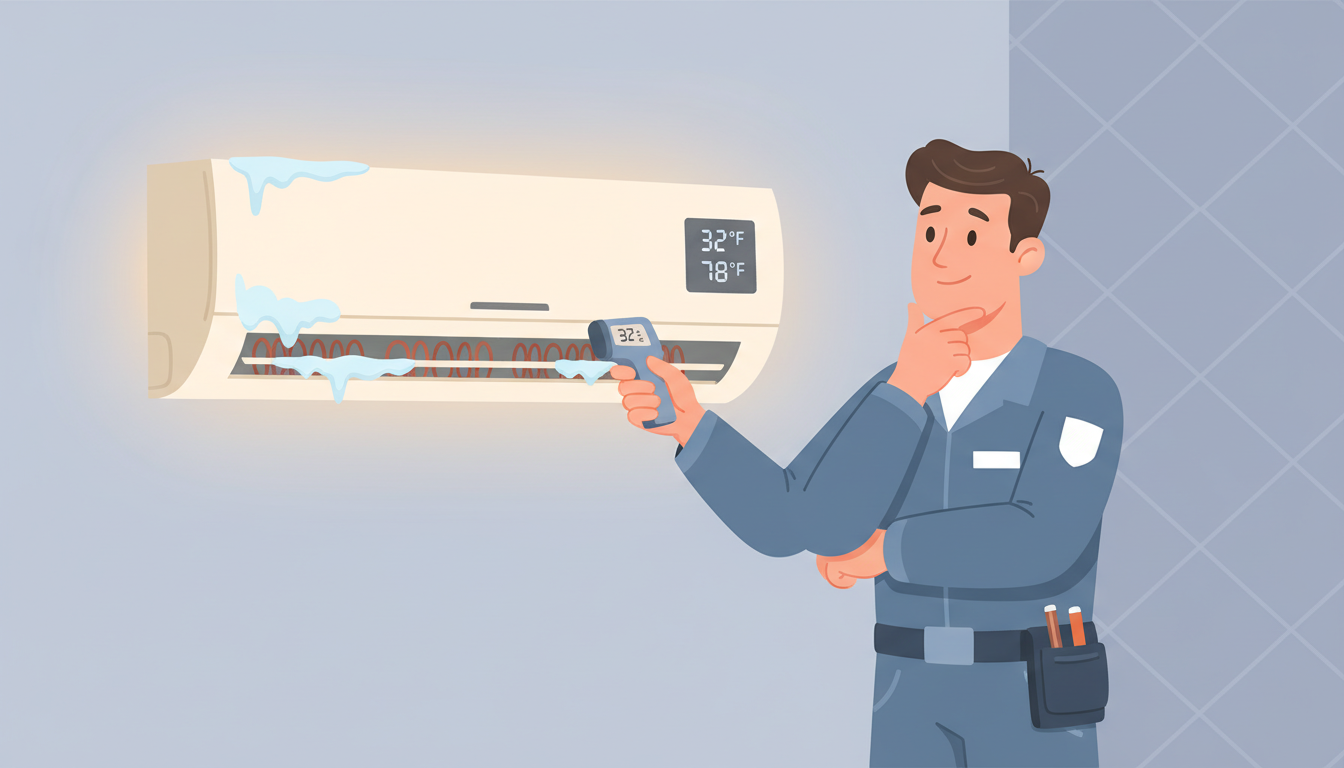
A dirty air filter restricts airflow through your system, which can cause the evaporator coil to freeze. When the coil freezes, your AC can't absorb heat properly—resulting in warm air. As the ice melts, cooling temporarily resumes until the coil freezes again, creating an on-and-off cooling pattern.
Air filters should be changed every 1-3 months depending on usage, pets, and allergies.
Solution: Check your filter right now. If it's gray or clogged with dust, replace it immediately. After replacing the filter, turn off your AC for 2-4 hours to let any ice melt, then restart the system. For comprehensive guidance on maintaining your HVAC system, check out our complete HVAC repair guide.
3. Incorrect Thermostat Placement or Calibration
If your thermostat sits near a heat source (window with direct sunlight, lamp, TV), it can misread the room temperature. The sensor thinks the house is warmer than it actually is, causing the AC to cycle on and off erratically.
Temperature sensor calibration issues can also cause the thermostat to shut off the system prematurely, before your home reaches the set temperature.
Solution: Make sure nothing is blocking your thermostat and that it's not exposed to direct sunlight or heat sources. You can test accuracy by placing a reliable thermometer near the thermostat and comparing readings. If they differ by more than 2-3 degrees, recalibration or replacement may be needed.
4. Closed or Blocked Vents and Registers
Blocked supply vents create pressure imbalances in your ductwork, reducing overall system efficiency. This can cause the system to short cycle or freeze up, leading to inconsistent cooling throughout your home.
Solution: Walk through your house and ensure all vents are open and unobstructed by furniture, curtains, or rugs. Even if you're trying to redirect airflow, closing too many vents does more harm than good.
5. Tripped Circuit Breaker or Loose Electrical Connection
Your AC has two main electrical components: the indoor air handler and the outdoor condenser unit. If the outdoor unit loses power while the indoor unit keeps running, you'll get airflow without cooling—creating the illusion of intermittent problems when it's actually a power issue.
Solution: Check your electrical panel for tripped breakers. If you find one, reset it once. If it trips again immediately, don't keep resetting it—you likely have an electrical fault that needs professional diagnosis.
Issues That Usually Need Professional Repair
If you've checked the simple fixes above and your AC still cools inconsistently, you're likely dealing with one of these more complex problems.
6. Short Cycling: The Hidden Culprit Behind Intermittent Cooling
Short cycling happens when your AC turns on, runs for just a few minutes, then shuts off before completing a full cooling cycle. This creates a pattern where you get brief bursts of cold air followed by warm air, making it seem like your AC only works sometimes.
Common short cycling causes:
- Oversized AC system – A unit that's too powerful for your home cools the area around the thermostat too quickly, causing premature shutdown
- Dirty condenser coils – Reduces heat dissipation, causing the system to overheat and shut down for protection
- Low refrigerant – Changes system pressure dynamics, triggering safety shutoffs
- Faulty thermostat – Incorrect temperature readings lead to premature cycling
Short cycling is hard on your compressor and dramatically increases wear and tear. If you notice your system turning on and off every 5-10 minutes, call an HVAC professional to diagnose the root cause.
7. Low Refrigerant Levels or Refrigerant Leak
Your AC needs a specific amount of refrigerant to cool effectively. When refrigerant levels drop due to a leak, the system struggles to maintain consistent cooling—especially during peak heat hours when demand is highest.
Signs of low refrigerant:
- Ice buildup on the refrigerant line or outdoor unit
- Hissing or bubbling sounds from the AC
- System runs constantly but doesn't cool well
- Cold air in the morning, warm air in the afternoon
Refrigerant doesn't "get used up"—if levels are low, you have a leak. Simply adding refrigerant without fixing the leak is a temporary fix that will fail again.
Solution: Refrigerant work requires EPA certification and specialized equipment. A professional will need to locate the leak, repair it, and recharge the system with the correct amount of refrigerant (typically $200-$600 depending on leak severity).
8. Frozen Evaporator Coil
A frozen evaporator coil is both a cause and symptom of intermittent cooling. When the coil freezes, it can't absorb heat from your home's air. As ice builds up, you'll notice reduced cooling or warm air. When the ice melts (often when the system is off), cooling resumes temporarily.
What causes evaporator coils to freeze:
- Restricted airflow from a dirty filter (see #2 above)
- Low refrigerant levels causing pressure drops
- Dirty evaporator coil blocking heat transfer
- Blower fan problems reducing air circulation
- Running the AC when outdoor temperature drops below 60°F
Solution: Turn off your AC and let the coil thaw completely (2-4 hours). Check and replace your air filter. If the coil freezes again after you restart the system, you need professional diagnosis to identify the underlying cause.
9. Dirty or Blocked Condenser Coils
Your outdoor condenser unit releases the heat absorbed from inside your home. When the condenser coils get caked with dirt, grass clippings, cottonwood seeds, or other debris, heat dissipation becomes inefficient.
During cooler morning hours, a dirty condenser might still work adequately. But when afternoon temperatures soar, the unit can't reject heat fast enough—causing reduced cooling capacity or complete shutdown.
Solution: Turn off power to the outdoor unit at the breaker. Gently spray the coils with a garden hose from the inside out (never use a pressure washer, which can bend the delicate fins). For heavy buildup, hire a professional for chemical coil cleaning ($100-200).
10. Failing Compressor or Compressor Clutch Issues
The compressor is your AC's heart—it pressurizes refrigerant and pumps it through the system. A failing compressor might work when it's cool but struggle or shut down when it heats up from continuous operation.
Signs of compressor problems:
- Hard starting (the system tries to start multiple times)
- Loud grinding, squealing, or clicking noises from the outdoor unit
- The outdoor fan runs but the compressor doesn't kick on
- Intermittent cooling that worsens over weeks
Compressor replacement is expensive ($1,500-$2,500), often making more sense to replace the entire outdoor unit if it's over 10 years old.
Solution: This requires professional diagnosis with specialized gauges and testing equipment. Don't attempt DIY compressor repair.
11. Faulty Capacitor or Electrical Component
Your AC uses capacitors to start and run the compressor and fan motors. When a capacitor begins failing, it might work during cooler parts of the day but fail when components get hot, causing intermittent cooling issues.
Symptoms of capacitor failure:
- Outdoor unit hums but doesn't start
- AC works fine after being off overnight, then fails during the day
- You hear a clicking sound but the compressor won't engage
Solution: Capacitor replacement is a relatively inexpensive repair ($100-250) but involves working with high-voltage components. Always hire a professional rather than attempting this yourself.
12. Undersized AC System for Your Home
If your air conditioner is too small for your home's cooling load, it might keep up during mild weather or cooler morning hours but struggle when temperatures peak. This isn't technically a malfunction—your system is simply working at maximum capacity and can't overcome extreme heat.
As a rule of thumb, you need roughly 20 BTUs of cooling capacity per square foot of living space, adjusted for ceiling height, insulation, window placement, and climate zone.
Solution: Calculate your home's actual cooling needs with an HVAC professional performing a Manual J load calculation. If your system is undersized, you may need a replacement unit with higher BTU capacity ($3,000-$8,000 depending on size and efficiency rating).
13. Damaged or Leaky Ductwork
Leaky ducts can create inconsistent cooling patterns where some rooms get plenty of cold air while others receive little to none. If ducts in your attic or crawlspace have separated, crimped, or developed holes, 20-30% of your conditioned air might be escaping before it reaches your living spaces.
You might notice your AC blows hardly any air in certain rooms while working fine in others—a telltale sign of ductwork problems. For more on diagnosing airflow issues, see our guide on AC blowing hardly any air.
Solution: A professional duct inspection using airflow measurements or thermal imaging can identify leak locations. Duct sealing typically costs $300-$1,000 depending on accessibility and severity, but it can improve efficiency by 20% or more.
Why Your AC Works in the Morning but Not the Afternoon
This is one of the most common intermittent cooling complaints. There are three likely explanations:
Heat load increases throughout the day – Your AC might be adequately sized for morning temperatures (75-80°F outside) but underpowered for afternoon peaks (95-100°F outside). The system works harder as the day progresses, and minor issues that were manageable in the morning become critical by afternoon.
Refrigerant pressure changes with temperature – Low refrigerant that barely suffices in the morning can't handle afternoon heat loads when the pressure differential increases. This is often the first sign of a slow leak.
Compressor overheating – A struggling compressor might work well when cool but overheat and shut down after running for several hours. This creates a pattern where the first few cooling cycles work fine, then performance degrades.
How to Troubleshoot Your Intermittent AC Issue
Follow these steps to narrow down the problem:
Step 1: Change your thermostat fan setting from "ON" to "AUTO" and replace the air filter if it's dirty. Wait 24 hours to see if this resolves the issue.
Step 2: Check for ice buildup on the indoor unit's refrigerant lines or outdoor condenser coils. If you see ice, turn off the AC, let it thaw completely, then restart. If it freezes again within 24 hours, call a professional.
Step 3: Go outside and inspect your condenser unit. Make sure it's free of debris, the fan spins when the system runs, and you can hear the compressor humming. If the fan spins but you don't hear the compressor engage, you likely have an electrical or compressor issue.
Step 4: Note the pattern. Does the problem happen at specific times of day? After the system runs for a certain duration? In specific rooms only? Document these details for your HVAC technician—they'll help with diagnosis.
For issues specific to central air systems, our central AC repair guide provides additional troubleshooting steps and repair timelines.
What to Do About Short Cycling
Since short cycling is the leading cause of intermittent cooling that homeowners overlook, it deserves special attention.
How to identify short cycling: Time your AC's run cycles. A healthy cooling cycle should run 15-20 minutes before shutting off. If your system runs for less than 10 minutes per cycle, you have a short cycling problem.
Immediate steps:
- Clean or replace your air filter
- Check that all vents are open
- Clear debris from around the outdoor unit
- Verify the thermostat is away from heat sources
If short cycling continues after addressing these basics, professional diagnosis is needed to check refrigerant levels, test the compressor, and evaluate system sizing.
When to Call a Professional vs. DIY
Try DIY first if:
- You haven't changed the air filter in over 3 months
- Your thermostat fan is set to "ON"
- You see obvious debris around the outdoor unit
- This is the first time you've noticed the problem
Call a professional if:
- You've tried basic fixes and the problem persists
- You see ice on the refrigerant lines
- You hear unusual noises (grinding, squealing, clicking)
- The outdoor compressor won't start
- The problem has worsened over several days or weeks
- Your system is short cycling (running less than 10 minutes per cycle)
How Much Does AC Repair Cost for Intermittent Cooling?
Repair costs vary widely based on the root cause:
- Thermostat replacement: $150-$300
- Air filter replacement (DIY): $15-$40
- Capacitor replacement: $100-$250
- Refrigerant leak repair and recharge: $200-$1,500
- Evaporator coil cleaning: $150-$400
- Evaporator coil replacement: $600-$1,200
- Compressor replacement: $1,500-$2,500
- Duct sealing: $300-$1,000
- Complete system replacement: $3,000-$8,000
Most intermittent cooling issues fall in the $150-$600 range for professional repair. Get multiple quotes when facing major repairs like compressor replacement.
Should You Turn Off Your AC If It's Not Cooling Properly?
Yes, in most cases. If your AC only blows cold air sometimes and you suspect frozen coils, refrigerant leaks, or compressor issues, continuing to run the system can cause additional damage.
Turn off your AC immediately if:
- You see ice anywhere on the system
- You hear loud grinding or metal-on-metal sounds
- The circuit breaker keeps tripping
- You smell burning or electrical odors
For minor issues like dirty filters or incorrect thermostat settings, it's safe to keep running the system while you implement fixes.
Prevent Intermittent Cooling Problems with Regular Maintenance
Most cases of intermittent air conditioning problems develop gradually and can be prevented with routine maintenance:
Monthly tasks:
- Check and replace air filters as needed
- Inspect outdoor unit for debris or obstructions
- Verify thermostat settings haven't changed
Seasonal tasks (spring and fall):
- Schedule professional maintenance before cooling season
- Clean outdoor condenser coils
- Test system startup and cycling behavior
- Check refrigerant levels and pressures
- Inspect electrical connections and capacitors
- Measure temperature differential across the system
Professional maintenance typically costs $80-150 per visit but catches small problems before they cause intermittent cooling issues. Many HVAC companies offer annual maintenance plans with priority service and discounted repairs.
Understanding Temperature Differential and Cooling Performance
When your AC is working properly, the temperature difference between the air entering your return vents and the air blowing from your supply vents should be 15-20°F. This is called the "temperature differential" or "delta T."
If your air conditioner cools inconsistently, measuring this differential can help diagnose the problem:
- Below 15°F: Low refrigerant, compressor issues, or undersized system
- Above 20°F: Restricted airflow from dirty filter or blocked ducts
- Varies throughout the day: Short cycling, frozen coil, or refrigerant leak
You can measure this yourself with an inexpensive probe thermometer—just compare the temperature at a return vent versus a nearby supply vent while the system runs.
Why Does My AC Cool Some Rooms But Not Others?
If your air conditioner inconsistent temperature affects only certain rooms, the problem likely isn't with your AC unit itself—it's with air distribution:
Ductwork problems – Disconnected or crushed ducts in the attic or crawlspace can starve specific rooms of airflow. This is especially common in older homes or after renovations.
Zoning issues – Homes with multiple zones might have a failed zone damper, preventing cold air from reaching certain areas while others get over-cooled.
Duct design flaws – Rooms farthest from the air handler naturally receive less airflow due to friction losses in long duct runs. This becomes more noticeable as your system ages or when ductwork gets dirty.
Return air imbalance – Insufficient return air vents in large rooms can create pressure issues that prevent proper air circulation.
A professional ductwork inspection can identify these problems and restore balanced cooling throughout your home.
The Role of Outdoor Temperature in Intermittent Cooling
Air conditioners are designed to cool your home to about 20°F below the outdoor temperature. On a 95°F day, a properly functioning AC should maintain 75°F indoors. But when temperatures exceed 100°F, even a healthy system might struggle—especially if it's undersized, low on refrigerant, or fighting other issues.
This explains why your AC might work perfectly during spring and fall but develop intermittent cooling problems during summer heat waves. The extreme outdoor temperature exposes capacity limitations or minor issues that don't show up under normal conditions.
Frequently Asked Questions
Why does my AC blow cold then warm then cold again?
This cycling pattern usually indicates short cycling caused by an oversized system, dirty coils, low refrigerant, or a faulty thermostat. Your AC cools briefly, shuts off prematurely, then restarts before completing a proper cycle. Check your filter first, then call a professional to diagnose the cycling issue.
How do I reset my air conditioner?
Turn off your AC at the thermostat, then flip the breaker for your air conditioner to OFF. Wait 3-5 minutes to let capacitors fully discharge. Flip the breaker back to ON, then turn on your AC at the thermostat. This full reset can clear minor electronic glitches that cause intermittent behavior.
Why does my AC work at night but not during the day?
This almost always indicates an undersized system or low refrigerant. At night, outdoor temperatures drop, reducing the cooling load on your system. The same AC that struggles with 95°F afternoon heat can handle 75°F evening temperatures. Low refrigerant compounds this problem by reducing cooling capacity during peak demand hours.
Can a dirty air filter cause intermittent cooling?
Absolutely. A clogged filter restricts airflow, which can freeze the evaporator coil. The frozen coil blocks cooling, then as it melts, cooling temporarily resumes—creating an intermittent pattern. This is one of the easiest problems to fix yourself.
How long should my AC run per cycle?
A properly sized air conditioner should run for 15-20 minutes per cooling cycle. Cycles shorter than 10 minutes indicate short cycling. Cycles longer than 30 minutes suggest the system is undersized or struggling with another issue like low refrigerant or dirty coils.
Take Action Before Your AC Stops Working Completely
If your AC only blows cold air sometimes, don't wait for it to fail completely. Intermittent cooling issues almost always worsen over time, and continuing to run a struggling system can damage expensive components like the compressor.
Start with the simple fixes: change your filter, verify thermostat settings, and clear debris from the outdoor unit. If the problem persists after addressing these basics, call a licensed HVAC technician to diagnose and repair the underlying issue.
Catching intermittent cooling problems early typically costs $150-$600 to fix. Waiting until the system fails completely can easily run $1,500-$2,500 or more—especially if compressor damage occurs.
Your comfort is too important to gamble on. Take action today to restore consistent, reliable cooling throughout your home.