What to Do if Your AC Stops During a Heat Wave
What to Do if Your AC Stops During a Heat Wave
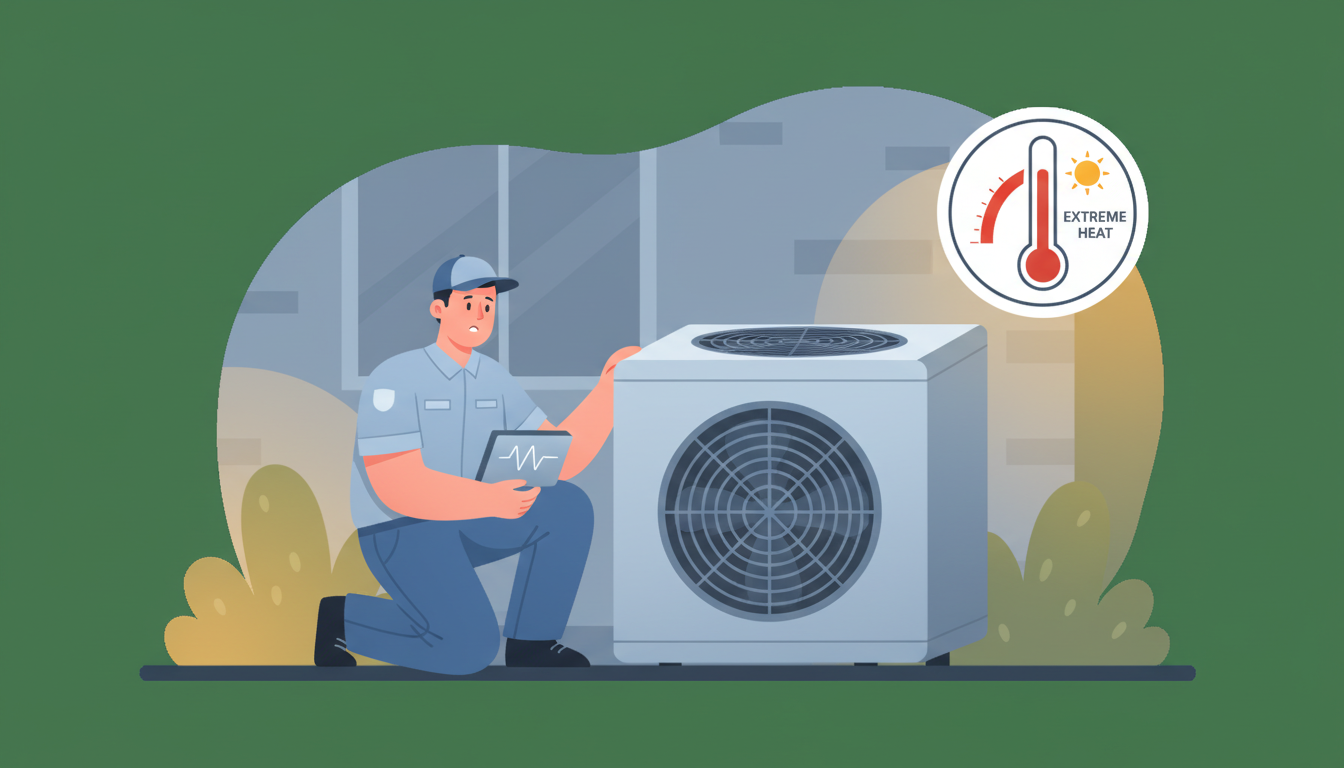
Your air conditioner just died in the middle of a sweltering heat wave. The temperature outside is climbing past 95°F, and your home feels like an oven. Before panic sets in, take a deep breath—there are immediate steps you can take to diagnose the problem, keep your family safe, and get your cooling system back online.
Why AC Systems Fail During Heat Waves
Understanding why your AC stops during a heat wave can help you prevent future breakdowns. When outdoor temperatures soar above 90°F, your air conditioning system works overtime to maintain comfortable indoor temperatures.
During extreme heat, your AC runs continuously without the normal rest periods it gets during milder weather. This constant operation puts enormous strain on every component—from the compressor to the condenser coils. The hotter it gets outside, the harder your system has to work to move heat out of your home.
Here are the most common reasons AC systems fail during heat waves:
System Overload: When your AC runs 24/7 during extreme heat, components overheat and fail. The compressor, which is the heart of your cooling system, is especially vulnerable to heat-related failures.
Frozen Evaporator Coils: Ironically, your AC can freeze up during a heat wave. When airflow is restricted (usually due to a dirty filter), the evaporator coils get too cold and ice forms, blocking the cooling process entirely.
Refrigerant Leaks: High temperatures can worsen existing refrigerant leaks. Low refrigerant levels mean your system can't absorb heat effectively, causing it to run constantly without cooling your home.
Electrical Issues: The increased electrical demand during heat waves can trip circuit breakers or blow fuses. Power surges and brownouts are more common when everyone's AC is running at full capacity.
Dirty Condenser Coils: The outdoor unit needs to release heat efficiently. When condenser coils are covered in dirt, grass clippings, or debris, heat can't escape, and the system shuts down to prevent damage.
Immediate Steps When Your AC Stops Working
When your air conditioner stops during a heat wave, taking the right steps quickly can mean the difference between a simple fix and an expensive repair. Follow this systematic troubleshooting guide before calling for emergency HVAC service.
Check Your Thermostat First
This might seem obvious, but thermostat issues cause at least 30% of "broken" AC calls. Walk over to your thermostat and verify:
- It's set to "COOL" mode (not "OFF" or "HEAT")
- The target temperature is at least 5°F below your current room temperature
- The display is lit up (if it's blank, replace the batteries)
- The fan setting is on "AUTO" (not just "ON")
If you have a smart thermostat, check whether a schedule override or geofencing feature turned off your AC. Some thermostats also have safety features that shut down cooling if they detect a problem.
Inspect Your Circuit Breaker Panel
Electrical issues are the second most common cause of AC failures during heat waves. Head to your home's electrical panel and look for the breaker labeled "AC," "Air Conditioner," or "HVAC."
If the breaker is in the "OFF" position or sitting in the middle (tripped position):
- Turn the breaker completely OFF first
- Wait 30 seconds
- Flip it back to the ON position
- Return to your thermostat and reset it to cooling mode
Important warning: If the breaker trips again within a few minutes, don't keep resetting it. A repeatedly tripping breaker signals a serious electrical problem, short circuit, or compressor failure that requires professional diagnosis. Continuing to reset it could cause electrical fires or permanent damage to your AC system.
Check the Outdoor Disconnect Switch
Many homeowners don't know about the disconnect switch near their outdoor condenser unit. This safety switch looks like a small electrical box mounted on your house's exterior wall near the outdoor unit.
Make sure this switch is in the ON position. It's surprisingly easy for this switch to get accidentally turned off during yard work or when kids are playing outside.
Examine Your Air Filter
A clogged air filter is one of the leading causes of AC failure during extreme heat. When your filter is packed with dust, pet hair, and debris, your system can't pull enough air through, causing the evaporator coils to freeze.
Remove your air filter and hold it up to a light. If you can't see light passing through, it's too dirty and needs immediate replacement. During heat waves when your AC runs constantly, filters get dirty much faster than normal.
Pro tip: During extreme heat events, check your filter weekly and replace it every 2-3 weeks instead of the usual monthly schedule. This simple maintenance step can prevent 90% of heat wave AC failures.
For more detailed guidance on maintaining your HVAC system, check out our comprehensive HVAC repair guide.
Look for Ice on Your Indoor Unit
Open the panel on your indoor air handler (usually in a closet, attic, or basement) and inspect the evaporator coils. If you see ice or frost:
- Turn off your AC immediately at the thermostat
- Switch your thermostat fan to "ON" to help melt the ice
- Let the system thaw completely (this takes 2-4 hours)
- Replace your air filter if it's dirty
- Check all vents in your home to ensure they're open and unblocked
Once everything has thawed, try turning your AC back on. If ice forms again within an hour, you likely have a refrigerant leak or airflow problem that requires professional repair.
Inspect Your Outdoor Condenser Unit
Walk outside to your condenser unit (the large metal box with a fan on top). Look for these common problems:
Clear Debris: Remove leaves, grass clippings, weeds, and trash from around the unit. You need at least 2 feet of clearance on all sides for proper airflow.
Check the Fan: The fan should be spinning when your AC is running. If you hear the unit humming but the fan isn't moving, the fan motor or capacitor has likely failed.
Look for Damage: Check for damaged fins, dents, or signs of animal damage. Bent fins restrict airflow and reduce cooling efficiency.
Verify It's Level: The unit should sit level on its pad. If it's tilted, this could indicate foundation settling that's damaged refrigerant lines.
Important safety note: Never spray your outdoor unit with a hose to clean it while the power is on. This can cause electrical shock or damage components.
Try a Complete System Reset
Sometimes your AC just needs to be rebooted like a computer. Here's how to perform a complete system reset:
- Turn off your AC at the thermostat
- Go to your breaker panel and turn off the AC breaker
- Go outside and turn off the disconnect switch near the outdoor unit
- Wait 5 minutes (this allows capacitors to fully discharge)
- Turn the disconnect switch back on
- Turn the breaker back on
- Wait another 5 minutes
- Turn your thermostat back to cooling mode
This reset process clears any electronic glitches and allows the system's safety mechanisms to reset. Wait at least 15-20 minutes to see if cool air starts flowing from your vents.
When DIY Troubleshooting Isn't Enough
If you've tried all the steps above and your AC still isn't working, it's time to call a professional HVAC technician. Here are clear signs you need emergency AC repair:
- Ice keeps forming after thawing and changing the filter
- The circuit breaker trips repeatedly
- You hear unusual sounds (grinding, squealing, banging)
- You smell burning odors or see smoke
- The outdoor fan doesn't spin even though the unit hums
- No air comes from your vents at all
- Your AC runs but blows warm air constantly
During heat waves, HVAC companies are swamped with emergency calls. Don't wait—get on their schedule immediately. Many companies prioritize calls based on health risks, so mention if you have elderly family members, young children, or anyone with medical conditions in your home.
For specific issues with central air conditioning systems, our central AC repair guide provides additional troubleshooting steps.
Emergency Cooling Strategies While You Wait for Repair
When your AC breaks during a heat wave, waiting for repairs can be dangerous. Indoor temperatures can quickly climb above 90°F, creating serious health risks. Here's how to keep your home as cool as possible without air conditioning.
Create Strategic Airflow with Fans
Fans don't actually lower room temperature—they create a wind chill effect that makes you feel cooler. But strategic fan placement can significantly improve your comfort:
Cross-Ventilation Method: Place one fan in a window on the shaded side of your house blowing inward, and another fan in a window on the opposite side blowing outward. This creates a wind tunnel that pushes hot air out while pulling cooler air in.
Nighttime Cooling: Once outdoor temperatures drop below indoor temps (usually after 9 PM), open windows on opposite sides of your home and use box fans to pull in cool night air. Close everything up before sunrise to trap the cooler air inside.
Ice Fan Hack: Place a large bowl of ice in front of a fan. As the ice melts, the fan will blow cooler, moisturized air. Replace the ice every 2-3 hours for continued relief.
Ceiling Fan Direction: Ensure ceiling fans are rotating counterclockwise (when looking up). This pushes air downward, creating the most cooling effect.
Block Heat from Entering Your Home
During a heat wave without AC, preventing heat gain is just as important as trying to cool down:
Window Management: Close all blinds, curtains, and shades during the day—especially on south and west-facing windows. Blackout curtains can reduce heat gain by up to 33%.
Aluminum Foil Trick: For windows that get direct sunlight, tape aluminum foil (shiny side out) to the glass. This reflects sunlight and dramatically reduces heat transfer.
Turn Off Heat Sources: Avoid using your oven, stove, or dryer during the hottest parts of the day. Even lights and electronics generate heat—turn off anything you're not actively using.
Close Off Rooms: Designate one room as your cooling zone and close the doors to other rooms. It's easier to keep one room bearable than trying to cool your entire home without AC.
Protect Yourself from Heat-Related Illness
When indoor temperatures exceed 85°F, health risks increase rapidly. According to the CDC, heat exhaustion and heat stroke are real dangers during heat waves. Watch for these warning signs:
Heat Exhaustion Symptoms:
- Heavy sweating
- Cold, pale, clammy skin
- Fast, weak pulse
- Nausea or vomiting
- Muscle cramps
- Dizziness or fainting
Heat Stroke Symptoms (call 911 immediately):
- Body temperature above 103°F
- Hot, red, dry, or damp skin
- Fast, strong pulse
- Confusion or losing consciousness
- Severe headache
Staying Safe in Extreme Heat:
- Drink water every 15-20 minutes, even if you're not thirsty
- Avoid alcohol and caffeine—they dehydrate you
- Take cool showers or baths multiple times per day
- Apply cold, wet towels to your neck, wrists, and ankles
- Wear lightweight, light-colored, loose-fitting clothing
- Limit physical activity, especially during peak heat hours (10 AM - 4 PM)
Find Alternative Cooling Locations
If your home becomes dangerously hot (above 90°F indoors), don't try to tough it out. Many communities open cooling centers during heat waves:
Public Cooling Centers: Libraries, community centers, shopping malls, and movie theaters often serve as cooling centers. Call your local government's non-emergency number (311 in many cities) to find the nearest location.
Stay with Friends or Family: If someone you know has working AC, ask if you can spend the hottest hours of the day at their place.
Book a Hotel Room: If temperatures will remain extreme for multiple days and repairs are delayed, the cost of a budget hotel room is worth protecting your family's health.
Work from a Cool Location: If you're working remotely, set up at a coffee shop, library, or co-working space with AC.
Consider Temporary Cooling Solutions
If AC repairs will take several days, temporary cooling equipment might be worth the investment:
Portable Air Conditioners: These units start around $300-500 and can cool a single room effectively. They require venting through a window but are much cheaper than installing window AC units.
Window AC Units: A small window unit (5,000-8,000 BTU) costs $150-300 and can cool a bedroom or living area. Focus on cooling the room where you sleep—getting adequate rest is critical during heat waves.
Evaporative Coolers: Also called "swamp coolers," these work well in dry climates (under 50% humidity) but aren't effective in humid areas. They cost $100-200 and use much less electricity than traditional AC.
If you've noticed your AC losing cooling power before it completely stopped, read our article on why AC units lose cooling power during heat waves to understand the warning signs.
Understanding Repair Costs During Heat Wave Emergencies
AC repair costs vary significantly depending on what failed, but heat wave emergencies come with additional considerations:
Emergency Service Fees: Expect to pay $150-300 extra for emergency or after-hours service during heat waves. When HVAC companies are overwhelmed with calls, they prioritize emergencies and charge premium rates.
Common Repair Costs:
- Capacitor replacement: $150-400
- Contactor replacement: $150-300
- Fan motor replacement: $300-600
- Refrigerant recharge: $200-600
- Compressor replacement: $1,500-2,500
- Full system replacement: $3,500-7,500
Wait Times: During severe heat waves, HVAC companies may have 2-5 day wait times even for emergency calls. Calling multiple companies and getting on multiple wait lists increases your chances of faster service.
Temporary Repairs: Ask your technician if there's a temporary fix that can get your system running while you wait for parts. Sometimes a capacitor replacement or simple repair can restore partial cooling immediately.
Preventing AC Failure During Future Heat Waves
The best way to handle AC failure during a heat wave is to prevent it from happening. These proactive maintenance steps dramatically reduce the risk of emergency breakdowns:
Schedule Annual Professional Maintenance
Have an HVAC technician service your system every spring before summer heat arrives. During a maintenance visit, technicians:
- Clean condenser and evaporator coils
- Check refrigerant levels and top off if needed
- Test electrical connections and tighten loose wires
- Lubricate motors and moving parts
- Test capacitors and contactors
- Inspect and clean the condensate drain
- Measure airflow and temperature differential
- Replace worn belts and adjust tension
Annual maintenance costs $80-150 but can prevent 85% of emergency breakdowns. Many HVAC companies offer maintenance plans that include priority service during emergencies.
Replace Air Filters Religiously
This is the single most important thing you can do yourself. Set phone reminders to check your filter monthly and replace it when it's dirty. During hot summer months, you may need to replace it every 2-3 weeks.
Filter buying tip: Buy filters in bulk (12-pack) so you always have a replacement on hand. Match the exact filter size marked on your current filter.
Keep Your Outdoor Unit Clean
Once a month during cooling season:
- Remove debris, leaves, and weeds from around the unit
- Gently spray the condenser coils with a hose (power off!) to remove dirt
- Trim vegetation to maintain 2-3 feet of clearance on all sides
- Check that the unit remains level on its pad
Don't Overcool Your Home
Setting your thermostat to 68°F when it's 100°F outside forces your system to run continuously. This constant operation increases wear and the likelihood of failure during peak heat.
Optimal settings: Keep your thermostat at 76-78°F during heat waves. This reduces system strain while still maintaining comfortable indoor temperatures. Use ceiling fans to make higher temperatures feel cooler.
Upgrade Your Thermostat
Modern programmable and smart thermostats protect your AC system during heat waves:
- They prevent temperature setpoints that overwork your system
- Smart thermostats learn your cooling patterns and optimize runtime
- Many include maintenance reminders and system diagnostics
- Some detect problems before complete failure and alert you
Investing $120-250 in a quality thermostat can add years to your AC's lifespan.
Address Small Problems Immediately
Don't ignore warning signs that your AC is struggling:
- Unusual noises (squealing, grinding, rattling)
- Reduced airflow from vents
- Ice formation on refrigerant lines
- Water leaking from indoor unit
- Musty odors when AC runs
- Frequent on-off cycling
- Rising electric bills without increased usage
Catching problems early and fixing them costs a fraction of emergency repairs during heat waves.
Consider System Upgrades
If your AC is over 12-15 years old and requires frequent repairs, replacement might be more cost-effective than constant fixes:
Signs it's time to replace:
- Your system is 15+ years old
- Repair costs exceed 50% of replacement cost
- Your home never gets cool enough even when AC runs constantly
- Energy bills keep increasing year after year
- You've had multiple breakdowns in the past 2 years
Modern high-efficiency systems (16+ SEER rating) use 30-50% less electricity and are far less likely to fail during extreme temperatures.
What NOT to Do When Your AC Stops
In the panic of AC failure during extreme heat, homeowners often make mistakes that worsen the situation:
Don't repeatedly reset tripped breakers: This can cause fires or permanent compressor damage. If it trips twice, stop and call a professional.
Don't add refrigerant yourself: Refrigerant handling requires EPA certification. DIY recharging often results in overcharging, which damages your compressor.
Don't run your system with frozen coils: Operating AC with ice on the coils can damage the compressor. Always let ice melt completely before restarting.
Don't remove AC panels without cutting power: The capacitors inside hold dangerous electrical charges even when the system is off.
Don't pressure wash your condenser unit: High-pressure water bends the delicate fins and forces water into electrical components. Use a gentle garden hose spray only.
Don't cover your outdoor unit for "shade": Covering the unit restricts airflow and causes overheating. The unit is designed to operate in direct sunlight.
Don't ignore strange smells: Burning smells indicate electrical problems or overheating motors. Rotten egg smells could mean a dead animal in your ductwork. Either way, shut down and investigate before running the system.
Frequently Asked Questions
How long can I safely stay in a house without AC during a heat wave?
This depends on indoor temperatures and your health. If indoor temps stay below 85°F with fans and other cooling methods, most healthy adults can manage indefinitely with proper hydration. Once indoor temps exceed 90°F, limit exposure to a few hours at a time, especially for children, elderly, pregnant women, and those with health conditions. Indoor temperatures above 95°F pose serious health risks—seek alternative cooling immediately.
Can I run my AC in heat over 100°F?
Yes, modern air conditioners are designed to operate in temperatures up to 115°F, though efficiency decreases as outdoor temps rise. However, expecting your AC to cool your home to 68°F when it's 105°F outside puts enormous strain on the system. During extreme heat, set your thermostat to 76-78°F to reduce the temperature differential and prevent system overload.
Why does my AC work fine until it gets really hot outside?
Your AC system has a maximum cooling capacity measured in BTUs. When outdoor temps are moderate (80-85°F), your system easily maintains indoor comfort. As temps climb above 95°F, your system may lack the capacity to overcome the increased heat load, especially if your home has poor insulation, air leaks, or the AC is undersized for your square footage. This is also a sign your system may be low on refrigerant or have dirty coils reducing efficiency.
Should I turn off my AC when I leave during a heat wave?
No—contrary to popular belief, it's better to leave your AC set to a higher temperature (like 82-85°F) when you're away rather than turning it off completely. Letting your home heat up to 95°F+ forces your AC to run continuously when you return, using more energy and stressing components. Maintaining a moderate temperature uses less energy overall and prevents heat damage to your home's interior.
How do I know if my AC failure is covered by homeowners insurance?
Standard homeowners insurance typically doesn't cover AC breakdowns due to normal wear and tear or lack of maintenance. However, if your AC was damaged by a covered peril (lightning strike, fallen tree, vandalism, etc.), insurance may cover repairs. Check your policy or call your insurance agent. Home warranty policies often cover HVAC failures, but coverage varies by plan and there may be limits and service fees.
Take Action Now to Protect Your Home
When your AC stops during a heat wave, quick action makes all the difference. Start with the simple troubleshooting steps—checking your thermostat, breaker, and air filter solves the problem 40% of the time. If basic fixes don't work, contact multiple HVAC companies immediately to get on their service schedule.
Most importantly, protect your family's health. Don't try to endure dangerously high indoor temperatures. Use every cooling strategy available, stay hydrated, and seek alternative cooling locations if needed. Heat-related illness can develop quickly and can be life-threatening.
Remember that prevention is your best defense against future AC emergencies. Schedule annual maintenance, change filters regularly, keep your outdoor unit clean, and address small problems before they become expensive disasters. With proper care, your AC system will reliably keep you cool through even the most extreme summer heat waves.
If you're experiencing AC problems right now, don't wait—start troubleshooting immediately and call for professional help. Your comfort and safety depend on having a working cooling system during extreme heat.