Essential Questions to Ask Your HVAC Technician About Leak Testing and Repair
Essential Questions to Ask Your HVAC Technician About Leak Testing and Repair
When your air conditioner isn't cooling properly or you're constantly adding refrigerant, you likely have a leak. But before your HVAC technician starts any work, you need to ask the right questions. Knowing what to ask about leak testing and repair protects your investment, ensures quality work, and helps you avoid paying for the same problem twice.
In this guide, you'll learn exactly what questions to ask your HVAC technician about leak detection methods, repair options, costs, and warranties so you can make informed decisions about your system.
Why Asking Questions About Leak Testing Matters
Most homeowners don't realize that simply adding more refrigerant without finding and fixing the leak is like putting air in a tire with a nail in it. You're treating the symptom, not the problem.
Professional HVAC technicians should welcome your questions. If they seem evasive or rush through explanations, that's a red flag. A quality technician wants you to understand the process because informed customers make better decisions and have realistic expectations.
The questions you ask can reveal whether you're working with a thorough professional or someone looking for a quick fix that won't last.
Questions About Leak Detection Methods
What Leak Detection Method Will You Use?
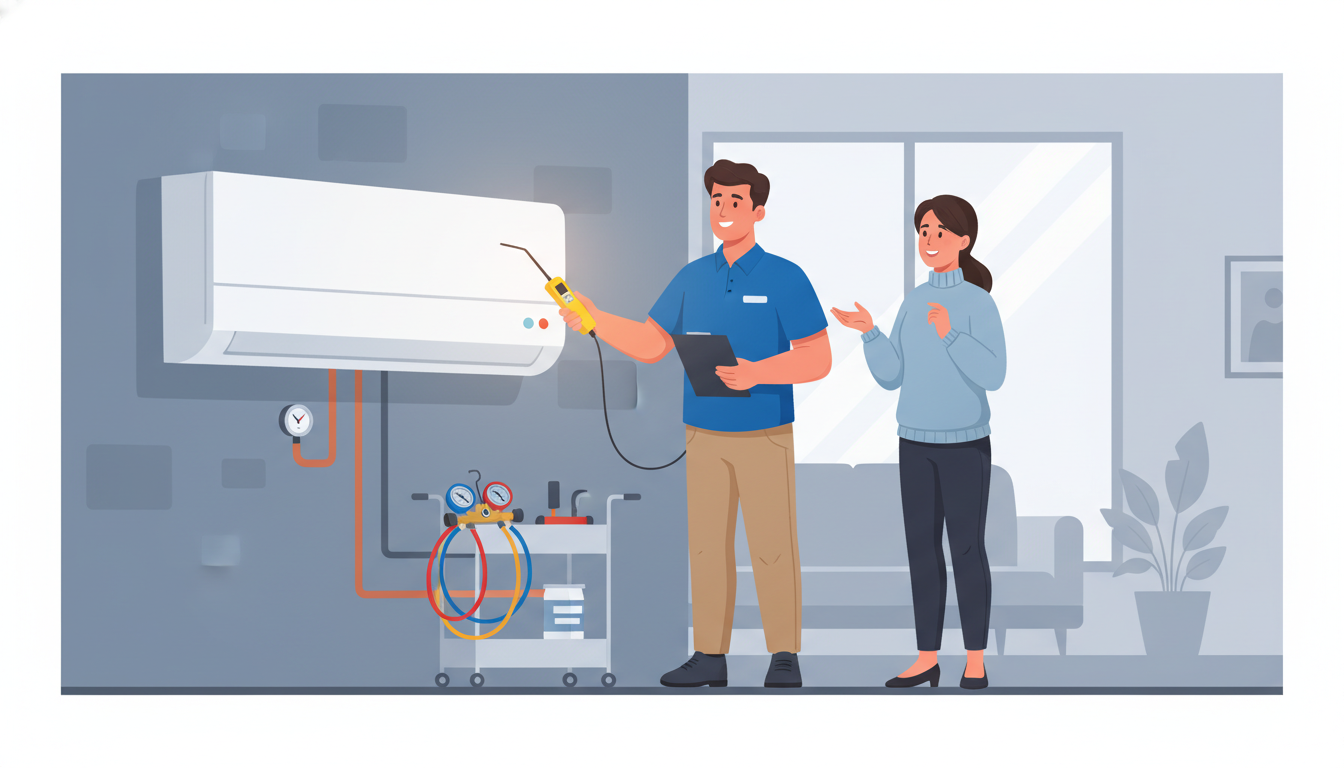
HVAC technicians have several leak detection methods at their disposal, and each has specific advantages. Ask which method they plan to use and why it's appropriate for your situation.
Common leak detection methods include:
- Electronic leak detectors: Handheld devices that sense refrigerant molecules in the air
- UV dye testing: Special dye added to the system that glows under UV light at leak points
- Nitrogen pressure test: Compressed nitrogen pumped into the system at higher-than-normal pressure to make leaks audible or detectable with soap bubbles
- Soap bubble test: Simple but effective method for visible connections and fittings
The nitrogen pressure test is often considered the most thorough because it can detect even tiny leaks that might not show up with other methods.
How Will You Check All Potential Leak Points?
A comprehensive leak search should examine every possible location where refrigerant could escape. Your technician should inspect:
- Evaporator coil (indoor unit)
- Condenser coil (outdoor unit)
- Refrigerant line connections
- Service valves and Schrader valves
- Brazed joints and soldered connections
- Flare fittings
- Filter drier connections
Ask your technician to explain their systematic approach. A thorough inspection follows a specific sequence, checking the most common failure points before moving to less likely locations. For more details on how professionals conduct leak searches, check out our guide on how technicians find HVAC refrigerant leaks.
Will You Recover the Existing Refrigerant Before Testing?
Before conducting certain leak tests, technicians should recover any remaining refrigerant from the system. This is both an EPA requirement for environmental protection and a practical necessity for accurate nitrogen pressure testing.
Ask whether refrigerant recovery is included in the quoted price or if it's an additional charge. Professional technicians should have the proper recovery equipment and EPA Section 608 certification to handle refrigerants legally.
Questions About Your System's Leak History
Has This System Had Refrigerant Added Before?
If your system has needed refrigerant added in the past, you have a leak. Refrigerant circulates in a closed system and doesn't get "used up" through normal operation.
Be honest with your technician about any previous refrigerant additions. This information helps them establish how quickly the system is losing refrigerant, which provides clues about leak severity and location.
Should We Test for Leaks Before Adding More Refrigerant?
This is one of the most important questions to ask. Adding refrigerant to a system with an active leak wastes money and doesn't solve the problem.
A reputable technician will recommend finding and repairing the leak before recharging the system. If they suggest just "topping it off" without leak detection, you're not getting a real solution.
If you've been experiencing cooling problems, you might also want to learn more about refrigerant leak symptoms homeowners should recognize to catch issues early.
Questions About Repair Options and Process
Can This Leak Be Repaired or Does the Component Need Replacement?
Not all leaks can be effectively repaired. The answer depends on the leak's location, size, and the component's condition.
Small accessible leaks in refrigerant lines or fittings can often be repaired by:
- Tightening loose connections
- Replacing valve cores
- Brazing new joints
- Replacing small sections of line
Large or hard-to-reach leaks in major components like evaporator coils or condenser coils typically require component replacement. Repairing coil leaks is often not cost-effective because:
- The repair may not last long-term
- Coils may have multiple leak points
- Accessing the leak requires significant labor
- New leaks often develop in corroded coils
What Type of Refrigerant Does My System Use?
The refrigerant type affects both repair decisions and costs. Older systems use R-22 (Freon), which has been phased out and is extremely expensive. Newer systems use R-410A, which is more affordable and environmentally friendly.
If your system uses R-22 and needs major repairs, replacement might be more economical than investing in an aging system that requires expensive refrigerant.
What's the Repair Process and Timeline?
Understanding the repair timeline helps you plan accordingly. Ask:
- How long will the repair take?
- Do you have the necessary parts in stock?
- Will I be without air conditioning during the repair?
- What happens if you find additional problems during the repair?
Most straightforward leak repairs can be completed in a few hours. More complex repairs requiring component replacement might take a full day or require ordering parts.
Will You Evacuate and Recharge the System After Repair?
After repairing a leak, the technician must:
- Evacuate the system: Use a vacuum pump to remove all air and moisture
- Test the repair: Verify the system holds vacuum, confirming the leak is fixed
- Recharge the system: Add the correct amount of refrigerant according to manufacturer specifications
Ask if these steps are included in the quoted repair price. Proper evacuation is crucial—any moisture left in the system can cause corrosion and future leaks.
Questions About Cost and Value
What Does Your Quote Include?
Get a detailed breakdown of what's included in the quoted price:
- Leak detection/testing
- Labor for repairs
- Refrigerant recovery
- Parts and materials
- System evacuation
- Refrigerant recharge
- Follow-up testing
What's NOT included is equally important. Ask about potential additional charges so you're not surprised by the final bill.
How Much Will the Leak Detection Cost?
Leak detection is often charged separately from repairs. Typical costs range from $150 to $400 depending on:
- Detection method complexity
- System accessibility
- Time required for thorough testing
- Local market rates
Some companies apply the detection fee toward repair costs if you proceed with the work. Ask about this policy upfront.
Is Repair or Replacement More Cost-Effective?
For systems over 10-15 years old with major component leaks, replacement might be the smarter investment. Industry professionals often use the "$5,000 rule" to help homeowners decide:
Multiply the repair cost by your system's age. If the result exceeds $5,000, replacement is usually the better choice.
For example:
- $800 repair × 12 years old = $9,600 → Consider replacement
- $800 repair × 4 years old = $3,200 → Repair makes sense
Ask your technician for their honest assessment of whether repair or replacement offers better long-term value for your specific situation.
Do You Offer Financing Options?
HVAC repairs can be expensive, especially if component replacement is needed. Many reputable companies offer financing options to qualified homeowners.
Ask about:
- Available financing terms
- Interest rates
- Approval process
- Payment plans
Questions About Warranties and Guarantees
What Warranty Do You Provide on the Repair?
A quality repair should come with a warranty covering both parts and labor. Typical warranties range from 30 days to one year, depending on the repair type.
Ask specifically:
- How long is the warranty period?
- What does the warranty cover?
- What voids the warranty?
- Who do I contact if problems occur during the warranty period?
Be wary of companies offering no warranty or only a very short warranty period—this suggests they lack confidence in their work quality.
What Happens if the Leak Returns?
Despite best efforts, leaks can sometimes recur, especially in aging systems with corroded components. Ask what happens if:
- The same leak returns during the warranty period
- A new leak develops in a different location
- The repair doesn't solve the cooling problem
Reputable companies will return to address warranty issues at no additional charge for covered repairs.
What Warranty Does the Equipment Manufacturer Provide?
If component replacement is necessary, new parts typically come with manufacturer warranties separate from the installation warranty. Ask:
- How long is the manufacturer's parts warranty?
- What does it cover?
- Who handles warranty claims—you or the contractor?
- Are there any registration requirements?
For a comprehensive understanding of HVAC repairs and maintenance, review our complete HVAC repair guide.
Questions About Technician Credentials
Are You EPA Section 608 Certified?
Federal law requires HVAC technicians who work with refrigerants to hold EPA Section 608 certification. This certification demonstrates they understand:
- Proper refrigerant handling procedures
- Environmental protection requirements
- Safe recovery and recycling practices
- Leak repair standards
Don't hesitate to ask for proof of certification. Hiring an uncertified technician puts you at risk of improper repairs and potential environmental violations.
What Professional Certifications Do You Hold?
Beyond EPA certification, ask about additional credentials like:
- NATE certification (North American Technician Excellence): Industry-recognized competency certification
- Manufacturer-specific training: Special certification for your equipment brand
- State licensing: Required in some states for HVAC work
More credentials generally indicate a technician invests in ongoing education and professional development.
How Long Have You Been Doing HVAC Leak Repairs?
Experience matters with leak detection and repair. Ask about:
- Years of experience in HVAC service
- Specific experience with refrigerant leak repairs
- Familiarity with your system type and brand
An experienced technician can often locate leaks more quickly and recommend the most cost-effective solutions based on patterns they've seen in similar systems.
Questions About Prevention and Follow-Up
What Caused This Leak?
Understanding the cause helps prevent future problems. Common causes include:
- Corrosion: From moisture, contaminants, or chemical exposure
- Vibration: From normal system operation over time
- Installation errors: Improper brazing or connections during original installation
- Physical damage: From landscaping, hail, or accidental impact
- Age: Natural deterioration of components
If the leak resulted from correctable factors (poor drainage causing coil corrosion, for example), addressing the root cause prevents repeat failures.
How Can I Prevent Future Leaks?
Ask your technician for specific recommendations to protect your investment:
- Regular maintenance schedule
- Air filter replacement frequency
- Drainage system checks
- Outdoor unit protection from debris
- Signs to watch for between service visits
Preventive maintenance catches small issues before they become expensive repairs.
When Should I Schedule Follow-Up Service?
After a leak repair, ask when you should schedule follow-up service:
- Immediate follow-up: Some technicians recommend a check within a few days to verify the repair is holding
- Regular maintenance: Annual tune-ups help catch developing issues early
- Warning signs: Know what symptoms warrant an immediate service call
Don't wait until you have no cooling—catching problems early prevents more extensive damage.
Questions to Avoid Common Mistakes
Will You Just Add Refrigerant Without Finding the Leak?
If a technician suggests simply recharging your system without leak detection, find a different contractor. This "quick fix" approach:
- Wastes your money on refrigerant that will leak out again
- Violates EPA regulations for systems with known leaks
- Damages the environment
- Doesn't solve the underlying problem
Reputable technicians always locate and repair leaks before recharging systems.
Do You Use Leak Seal Products?
Some technicians use leak seal additives that claim to seal small leaks from the inside. Ask whether they plan to use these products.
While leak sealers work occasionally for tiny leaks, they have significant drawbacks:
- Can clog system components
- May void equipment warranties
- Often provide only temporary fixes
- Can damage recovery equipment
- Make future leak detection harder
Most manufacturers and professional technicians avoid leak seal products except as a last resort.
Frequently Asked Questions
How long does leak testing take?
Leak testing typically takes 1-3 hours depending on the detection method and system complexity. Nitrogen pressure tests require more time because the system must be pressurized and monitored. Electronic leak detection is usually faster but may not find every leak.
Can I detect refrigerant leaks myself?
You might notice signs like reduced cooling, ice on refrigerant lines, or hissing sounds, but accurately locating leak sources requires professional equipment. DIY soap bubble tests work only for accessible fittings and won't find most leaks. Professional detection is more thorough and cost-effective than guessing.
How much does refrigerant leak repair cost?
Leak repair costs range from $200 to $1,500+ depending on leak location and severity. Simple repairs like tightening fittings or replacing valve cores cost $200-$400. Component replacement like evaporator coils can exceed $1,500. Always get a detailed written estimate before authorizing work.
Will my homeowner's insurance cover leak repairs?
Standard homeowner's insurance typically doesn't cover HVAC repairs from normal wear and tear. Coverage may apply if the leak resulted from a covered peril like storm damage. Check your policy and contact your insurance company to verify coverage before paying out of pocket for potentially covered repairs.
How often should HVAC systems be checked for leaks?
Annual preventive maintenance should include leak checks, particularly for aging systems or those with previous leak history. Between professional visits, watch for warning signs like reduced cooling, higher electric bills, or ice buildup. Early detection prevents more expensive repairs.
Taking Action: What to Do Next
Armed with these questions, you're prepared to have an informed conversation with your HVAC technician about leak testing and repair. Don't be intimidated—asking questions is your right as a homeowner and customer.
Before your technician arrives:
- Review this list and mark your most important questions
- Gather information about previous refrigerant additions or repairs
- Note any symptoms you've observed
- Check your system's age and refrigerant type (usually on the outdoor unit label)
During the service call:
- Take notes on the technician's answers
- Ask for clarification if something isn't clear
- Request a detailed written estimate before authorizing work
- Don't feel pressured to make immediate decisions on major repairs
Remember: A qualified, honest technician will welcome your questions and take time to explain your options clearly. If you feel rushed or pressured, it's okay to get a second opinion.
Finding and fixing refrigerant leaks properly the first time protects your investment, keeps your home comfortable, and ensures your system operates efficiently for years to come. The right questions today prevent expensive problems tomorrow.
Conclusion
Asking the right questions about HVAC leak testing and repair empowers you to make informed decisions, avoid costly mistakes, and ensure quality work. Focus on understanding the detection methods, repair options, costs, warranties, and your technician's qualifications.
Don't settle for a quick refrigerant recharge that doesn't address the underlying leak. Demand thorough testing, proper repairs, and clear answers to all your questions. Your comfort, your budget, and your HVAC system's longevity depend on it.
Ready to find a qualified HVAC technician in your area? Use these questions to separate the professionals from the quick-fix contractors, and you'll get the quality service your system deserves.