Why Does My Blower Motor Keep Going Bad? 7 Root Causes You Need to Fix
Why Does My Blower Motor Keep Going Bad? 7 Root Causes You Need to Fix
If you've replaced your blower motor once, maybe even twice, and it keeps failing again, you're not alone—and you're right to be frustrated. The problem isn't bad luck or cheap parts. When your blower motor keeps going bad, there's almost always an underlying issue with your HVAC system that's killing each new motor you install.
In this guide, we'll show you exactly why blower motors fail repeatedly and what you need to fix to stop the cycle for good.
Understanding Why Blower Motors Fail Repeatedly
Here's the truth most HVAC companies won't tell you upfront: if you don't fix the root cause, your next blower motor will fail too.
A blower motor is designed to last 10-20 years under normal conditions. When yours keeps dying every few months or years, something in your system is putting excessive stress on the motor. Simply replacing the motor without addressing that underlying problem is like putting a bandaid on a broken bone—it's not going to hold.
The good news? Once you identify and fix the real problem, your blower motor should last its full lifespan.
1. Dirty Blower Wheel Is Slowly Killing Your Motor
This is the number one cause of repeated blower motor failure, and it's often overlooked during basic service calls.
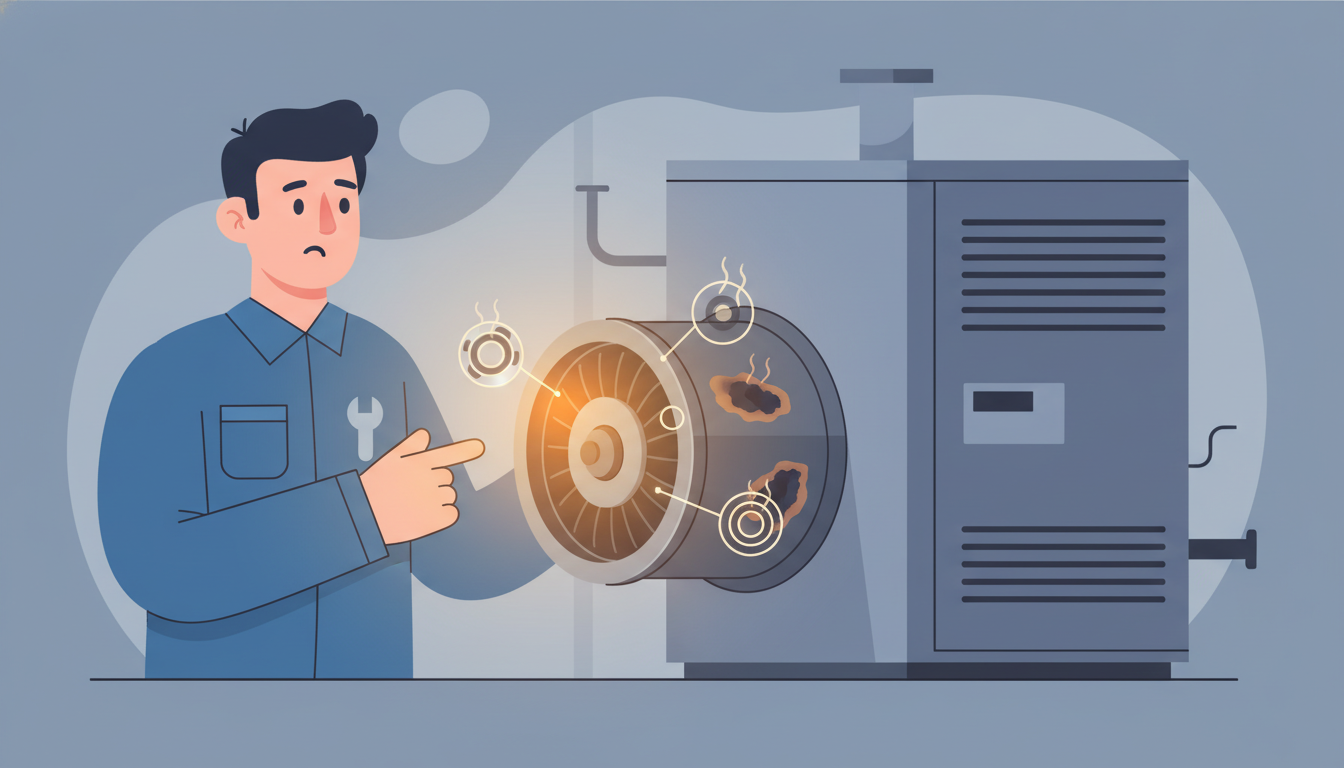
Your blower wheel (the squirrel cage that actually moves the air) accumulates dust, dirt, pet hair, skin cells, and other debris over time. As this buildup gets thicker, it adds significant weight to the wheel, forcing your motor to work much harder to spin it.
What happens inside the motor:
- The added weight creates excessive resistance
- The motor draws more electricity (higher amperage) to compensate
- Increased electrical load generates extra heat
- Bearings wear out faster from the strain
- Motor windings overheat and eventually fail
A blower wheel caked with debris can add several pounds of weight. Imagine trying to spin a heavy, unbalanced load every single day—your motor simply wasn't designed for that.
The fix: Have your blower wheel professionally cleaned during your annual HVAC maintenance. If it's been years since it was cleaned, don't be surprised if the technician pulls out handfuls of compacted dirt. For more information on maintaining proper airflow, check out our guide on weak airflow from HVAC vents.
2. Restricted Airflow From Dirty Filters
Your air filter has one job: trap particles before they reach your HVAC system. But when you forget to change it, that filter becomes a barrier that chokes your entire system.
How dirty filters destroy motors:
- Blocked filter restricts airflow through the system
- Motor works harder to pull air through the clogged filter
- Reduced airflow means less cooling for the motor itself
- Motor overheats from both increased workload and poor ventilation
- Overheating degrades motor components and shortens lifespan dramatically
According to ENERGY STAR, a dirty filter not only wastes energy but leads to expensive maintenance and early equipment failure. If you're replacing your blower motor but not your filter regularly, you're setting yourself up for another failure.
The fix: Change your air filter every 1-3 months depending on:
- Whether you have pets (monthly if you do)
- How dusty your area is
- Whether anyone has allergies
- The type of filter (standard vs. high-efficiency)
Set a reminder on your phone. This simple $20-30 habit can save you hundreds in motor replacements.
3. Failed or Failing Capacitor
Your blower motor's capacitor is like a battery that gives the motor the electrical "kick" it needs to start spinning. When the capacitor weakens or fails, your motor struggles—and that struggle kills motors fast.
Signs your capacitor is the problem:
- Motor hums but won't start
- Motor starts slowly or hesitantly
- Motor runs for a while then shuts off randomly
- You've replaced the motor multiple times, but problems continue
A weak capacitor forces your motor to draw excessive current during startup. This is called "hard starting," and it's brutal on motor windings. Over time, the excessive electrical stress causes the motor to burn out—sometimes in months rather than years.
The fix: Have your HVAC technician test the capacitor's microfarad rating. Capacitors are inexpensive ($20-50 for the part), but the labor adds cost. If your motor failed and the capacitor wasn't tested and replaced as needed, there's a good chance it's contributing to your repeated failures.
4. Electrical Problems in Your System
Electrical issues are silent motor killers. They're harder to diagnose than mechanical problems, but they're just as deadly.
Common electrical problems that kill blower motors:
- Loose or corroded connections: Create electrical resistance, causing voltage drops and overheating
- Bad ground wire: Disrupts current flow and can cause intermittent failures
- Incorrect voltage: Too high or too low voltage damages motor windings
- Faulty wiring: Aged, damaged, or incorrectly sized wires can't handle the motor's electrical load
- Tripping breakers: If your motor keeps tripping the breaker, there's an underlying electrical fault
If you notice flickering lights when your HVAC system starts, or if the motor has visible burnt marks on connections, electrical problems are likely your culprit.
The fix: This requires a professional with electrical diagnostic equipment. A qualified HVAC technician should check:
- Voltage at the motor under load
- All electrical connections for tightness and corrosion
- Wire gauge (thickness) matches motor requirements
- Ground connection integrity
- Control board function
For a complete understanding of HVAC system diagnostics, see our HVAC repair guide.
5. Oversized or Undersized Replacement Motor
Not all blower motors are created equal, and using the wrong replacement can lead to premature failure.
Why motor sizing matters:
- Oversized motor: Moves too much air, creating excessive pressure in the ductwork. This causes the motor to work against resistance and overheat.
- Undersized motor: Can't move enough air, so it runs constantly at maximum capacity, burning out quickly.
- Wrong rotation speed (RPM): Creates airflow problems and makes the motor work inefficiently.
- Incorrect horsepower: Even a small difference can affect performance and longevity.
If your motor was replaced by someone who grabbed "whatever fit," you might not have the right motor for your system.
The fix: Always use the motor specified by your equipment manufacturer. The motor data plate should match:
- Horsepower (HP)
- Voltage (V)
- Rotation speed (RPM)
- Frame size
- Rotation direction
When in doubt, consult your system's model number and get an exact replacement.
6. Ductwork Issues Causing Back Pressure
Your ductwork is supposed to move conditioned air smoothly through your home. When there are problems with your ducts, your blower motor pays the price.
Ductwork problems that kill motors:
- Collapsed or crushed ducts: Restrict airflow and create back pressure
- Closed or blocked vents: Force the motor to push against resistance
- Undersized ductwork: Creates excessive pressure the motor must overcome
- Disconnected or leaking ducts: Cause airflow imbalance and motor strain
Back pressure is particularly damaging. It's like trying to blow air through a straw that's partially blocked—you have to work much harder, and the effort is exhausting.
The fix: Have an HVAC professional inspect your ductwork for:
- Proper sizing for your system capacity
- Crushed or damaged sections (common in attics and crawl spaces)
- Disconnected joints
- Adequate return air pathways
Remember, your blower motor isn't just about moving air—it's about addressing overall airflow problems. Ductwork issues affect the entire system.
7. Lack of Regular Maintenance
This might sound obvious, but inconsistent maintenance is a major reason blower motors fail repeatedly.
What maintenance prevents:
- Dirt accumulation on blower wheel and motor
- Filter clogs that restrict airflow
- Bearing wear from lack of lubrication
- Early detection of capacitor failure
- Electrical connection corrosion
- Minor problems becoming major failures
HVAC systems need annual professional maintenance—ideally in spring before cooling season and fall before heating season. During these tune-ups, technicians clean components, test electrical systems, lubricate bearings, and catch small problems before they destroy your motor.
The fix: Schedule professional maintenance twice per year. Between visits:
- Change filters regularly (every 1-3 months)
- Keep outdoor unit clear of debris
- Listen for unusual noises and address them promptly
- Ensure all vents in your home are open and unobstructed
How to Prevent Your Next Blower Motor From Failing
Now that you know what kills blower motors, here's your action plan:
Immediate steps:
- Change your air filter today if it's been more than 3 months
- Schedule HVAC maintenance to have your system professionally inspected
- Listen to your system for unusual noises, weak airflow, or other warning signs
Long-term prevention:
- Set monthly reminders to check/change filters
- Keep outdoor unit clear of leaves, grass, and debris
- Don't close vents in unused rooms (causes pressure imbalances)
- Address strange sounds or performance issues immediately
- Have your system professionally maintained twice per year
Before replacing another motor:
- Demand the capacitor be tested and replaced if needed
- Insist on blower wheel cleaning
- Have ductwork inspected for restrictions
- Get electrical connections checked
- Verify you're getting the correct replacement motor specs
FAQ: Blower Motor Failures
How long should a blower motor last?
Under normal conditions with proper maintenance, a quality blower motor should last 10-20 years. If yours is failing every 2-5 years, there's an underlying problem with your HVAC system that needs to be addressed.
Can I clean the blower wheel myself?
While it's technically possible, we don't recommend it unless you have HVAC experience. Accessing the blower wheel requires disassembling parts of your system, and improper reassembly can create safety hazards or damage your equipment. A professional cleaning during annual maintenance typically costs $100-200 and is done correctly.
Will a bad capacitor ruin a new motor?
Yes, absolutely. A weak or failing capacitor forces your motor to draw excessive current during startup, which creates heat and stress that dramatically shortens motor life. Always have the capacitor tested when replacing a blower motor.
How much does it cost to replace a blower motor?
Blower motor replacement typically costs $400-$800 including parts and labor, depending on your location and system type. However, if you're replacing motors repeatedly without fixing the root cause, you're wasting money. Spending an extra $200 on diagnostics can save you thousands in repeated replacements.
What are the warning signs of blower motor failure?
Watch for these symptoms:
- Weak or no airflow from vents
- Unusual noises (squealing, grinding, humming)
- Motor that starts then quickly shuts off
- Burning smell from vents
- Higher than normal energy bills
- System that runs constantly but doesn't heat/cool properly
If you notice any of these signs, address them immediately before complete motor failure occurs.
Stop the Cycle: Fix the Real Problem
Replacing your blower motor over and over isn't just expensive—it's unnecessary. The motor itself is rarely the problem. Something in your HVAC system is creating conditions that destroy motors prematurely.
Whether it's a dirty blower wheel adding pounds of resistance, a weak capacitor causing hard starts, restricted airflow from clogged filters, or electrical issues creating damaging voltage conditions, the root cause must be fixed.
Don't replace another motor without a thorough system diagnosis. Insist that your HVAC technician:
- Inspect and clean the blower wheel
- Test and replace the capacitor if needed
- Check all electrical connections and voltage
- Verify proper airflow throughout the system
- Confirm the replacement motor matches specifications exactly
Your HVAC system is an investment. Protect it with regular maintenance, prompt repairs, and proper diagnostics when problems occur. Fix the real issue, and your blower motor will give you years of reliable service.
Need help diagnosing why your blower motor keeps failing? Don't waste money on another temporary fix. Get a complete system evaluation from experienced HVAC professionals who will find and fix the real problem.