What Causes a Condensate Overflow Shutdown? (And How to Fix It)
What Causes a Condensate Overflow Shutdown? (And How to Fix It)
Has your air conditioner suddenly shut off on its own, leaving you sweating in the heat? If you're dealing with an unexpected AC shutdown, there's a good chance your condensate overflow switch has kicked in. This safety feature is designed to protect your home from water damage, but it also means something's wrong with your HVAC system's drainage.
In this guide, you'll learn exactly what triggers a condensate overflow shutdown, how to identify the warning signs, and what you can do to prevent it from happening again.
What Is a Condensate Overflow Shutdown?
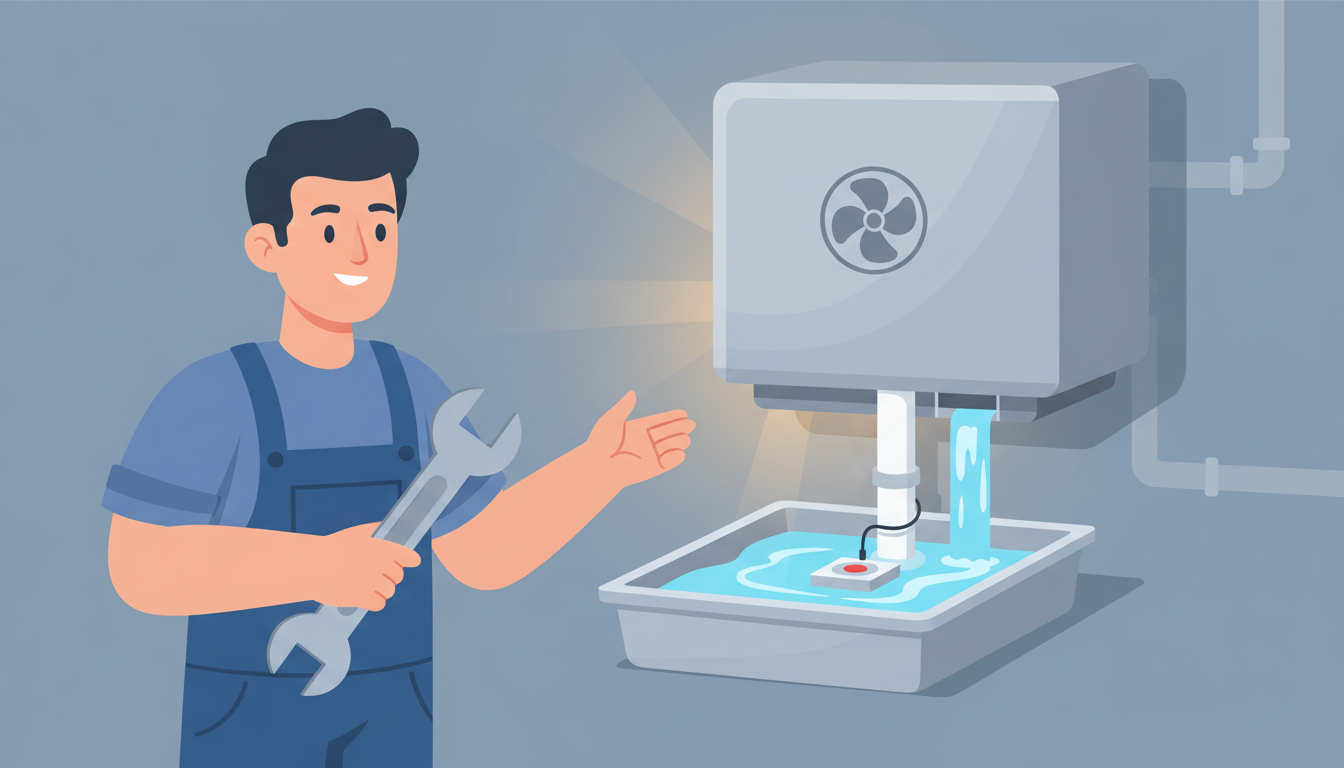
A condensate overflow shutdown occurs when your air conditioning system automatically turns itself off because too much water has accumulated in the drain pan. This happens when a safety device called a condensate overflow switch detects rising water levels and sends a signal to shut down your AC unit.
Your air conditioner produces a surprising amount of water—anywhere from 5 to 20 gallons per day in humid climates. All that moisture needs to drain away properly. When it doesn't, the overflow switch acts as your home's first line of defense against costly water damage.
Think of it like the overflow drain in your bathroom sink. It's there to prevent flooding when something goes wrong with the primary drainage system.
How Does the Condensate Overflow Switch Work?
Before diving into what causes problems, it helps to understand how this safety system operates.
The Two Types of Overflow Switches
Float Switches
Float switches work just like the mechanism in your toilet tank. A small buoyant ball sits in the condensate drain pan. When water levels rise too high, the float lifts and triggers an electrical contact that shuts off your AC system. Once you fix the drainage problem and water levels drop, the system can restart.
Sensor Switches
Sensor switches use electronic detection instead of mechanical parts. These devices monitor water levels continuously and send a shutdown signal when moisture reaches a predetermined threshold. They're typically more reliable than float switches because they have fewer moving parts that can fail.
Many modern HVAC systems include one of these safety switches as standard equipment, though older units might not have this protection.
The Main Causes of Condensate Overflow Shutdown
Now let's explore the specific issues that trigger an overflow shutdown. Understanding these causes will help you prevent future problems.
1. Clogged Condensate Drain Line
This is the number one culprit behind condensate overflow shutdowns. Your AC's drain line is typically a 3/4-inch PVC pipe that carries water away from your indoor unit. Over time, this pipe becomes a breeding ground for problems.
What clogs the line:
- Algae and mold growth (thrives in dark, damp conditions)
- Dust and dirt particles that wash off the evaporator coil
- Pollen that enters through the return air
- Spider webs and insect nests near the drain exit
- Mineral deposits from hard water
The drain line starts small, so it doesn't take much buildup to create a complete blockage. When water can't flow through, it backs up into the drain pan and triggers the overflow switch.
2. Full or Damaged Drain Pan
The drain pan (also called a drip pan) sits directly beneath your air handler to catch condensation. Problems here happen in two ways:
Overflow Issues
When your primary drain line clogs, water fills the pan faster than it can drain. Most systems have a secondary drain pan as backup, but if that fills up too, the overflow switch activates.
Physical Damage
Drain pans don't last forever:
- Plastic pans crack over time, especially in hot attics
- Metal pans rust through after years of constant moisture exposure
- Improper installation can cause pans to tilt, preventing proper drainage
A damaged pan might leak water directly into your ceiling or walls while simultaneously triggering the overflow switch.
3. Condensate Pump Failure
Not every home can rely on gravity to drain condensate. If your air handler is in the basement or located below the outdoor drain exit point, you need a condensate pump to move water upward.
Common pump problems:
- Electrical issues (loose wires, blown fuses, tripped breakers)
- Clogged intake screen where water enters the pump
- Jammed float switch inside the pump reservoir
- Worn-out motor after years of continuous operation
- Blocked check valve that prevents water from flowing backward
When your condensate pump stops working, water accumulates rapidly. Most pumps have their own safety switch that will shut down your central AC system to prevent overflow.
4. Dirty or Clogged Air Filter
You might be surprised to learn that a dirty air filter can cause drainage problems. Here's how:
When your air filter gets clogged with dust and debris, it restricts airflow across the evaporator coil. This reduced airflow causes the coil to get too cold, leading to excessive frost or ice formation. When that ice eventually melts, it produces more water than your drainage system can handle, overwhelming the drain pan.
A severely restricted filter also causes your AC to work harder, producing more condensation overall.
Quick tip: Change your filter every 1-3 months depending on your home's conditions. Homes with pets, high dust, or allergy sufferers should change filters monthly.
5. Frozen Evaporator Coil
A frozen evaporator coil creates a delayed drainage crisis. When the coil freezes over, water can't drain normally. Once the ice melts—either during a defrost cycle or when you turn off the system—you get a sudden flood of water that the drain pan can't handle.
What causes coil freezing:
- Restricted airflow (dirty filters, closed vents, blocked returns)
- Low refrigerant levels due to leaks
- Blower motor problems that reduce air circulation
- Running your AC when outdoor temperatures drop below 60°F
6. Improper Drain Line Installation
Sometimes the problem was built into your system from day one. Condensate drain lines need proper slope to allow gravity to do its job—typically 1/4 inch of drop per foot of horizontal run.
Installation issues that cause problems:
- Insufficient slope angle
- Low points or "belly" sections where water pools
- Drain lines that run upward before dropping down
- Disconnected pipe sections
- Missing or improperly installed drain pan
These issues might not cause immediate problems but will lead to chronic drainage failures over time.
7. High Humidity and Overworked Systems
During peak summer months or in exceptionally humid climates, your AC works overtime to remove moisture from the air. This increased workload produces significantly more condensation than normal.
If your drainage system has any minor restrictions or reduced flow capacity, high humidity periods can push it over the edge. What normally drains adequately suddenly can't keep up with the volume, triggering an overflow shutdown.
8. Vent or Trap Issues
Many condensate drain lines include a trap (similar to the P-trap under your sink) to prevent sewer gases or outdoor air from entering through the drain line. Problems with this trap can affect drainage:
- A dry trap allows air into the line, which can reduce drainage efficiency
- Improperly sized traps create unnecessary restrictions
- Debris collection in the trap creates partial blockages
Some drain lines also have vent connections to equalize air pressure. A blocked vent can slow or stop drainage completely.
Warning Signs Before a Complete Shutdown
Your system usually gives you warning signs before the overflow switch trips. Watch for these red flags:
- Water stains on the ceiling near your air handler
- Musty odors indicating mold growth in the drain system
- Gurgling sounds from the drain line when the AC runs
- Visible water in the condensate pan that doesn't drain away
- Intermittent shutdowns that resolve themselves temporarily
- Reduced cooling performance as the system cycles on and off
Catching these early warnings lets you address the problem before you lose cooling completely during a hot day.
How to Prevent Condensate Overflow Shutdowns
Prevention is always cheaper and easier than emergency repairs. Here's your game plan:
Regular Maintenance Tasks
Monthly:
- Check and change your air filter
- Inspect visible sections of drain line for leaks
- Pour 1 cup of white vinegar or bleach solution down the drain line to kill algae
Quarterly:
- Inspect the condensate drain pan for standing water
- Test the overflow switch by carefully simulating rising water levels
- Check that the drain line exit is clear of obstructions
Annually:
- Professional HVAC tune-up including drain line cleaning
- Condensate pump inspection and testing
- Evaporator coil cleaning
DIY Drain Line Cleaning
For minor clogs, you can often clear the drain line yourself:
- Turn off your AC at the thermostat and breaker
- Locate the drain line access point (usually a PVC T-fitting with a cap)
- Remove the cap and inspect for visible blockages
- Pour a mixture of 1 cup vinegar and 1 cup hot water into the line
- Use a wet/dry vacuum on the outdoor drain exit to suck out debris
- Flush with clean water to verify the line is clear
When to call a professional: If you can't clear the clog with these basic steps, or if you're not comfortable working with your HVAC system, contact a professional technician. Attempting aggressive clearing methods can damage your drain line.
Professional Solutions
HVAC technicians have specialized tools that homeowners don't:
- High-pressure nitrogen or CO2 to blast through stubborn clogs
- Drain line inspection cameras to identify exact blockage locations
- Professional-grade cleaning solutions
- Proper equipment to safely remove and clean drain pans
- Knowledge to identify and fix installation problems
They can also install preventive measures like:
- Algae prevention tablets that slowly dissolve in the drain pan
- UV lights near the evaporator coil to kill biological growth
- Float switch upgrades for more reliable protection
- Improved drain line routing to prevent future clogs
What to Do When Your AC Shuts Down
If you're currently dealing with a condensate overflow shutdown, here are your immediate steps:
- Turn off your AC at the thermostat to prevent it from cycling on and off
- Check the drain pan for standing water
- Carefully remove excess water with a wet/dry vacuum or towels
- Inspect the drain line for obvious clogs at access points
- Try basic clearing methods as described above
- Reset the overflow switch if your system has a manual reset button
- Monitor the system after restart to ensure water drains properly
If the problem persists or you're not comfortable troubleshooting, it's time to call for professional help. A condensate overflow shutdown isn't something to ignore—continued operation without fixing the underlying issue risks serious water damage to your home.
For comprehensive guidance on handling various AC problems, check out our condensate overflow switch troubleshooting guide.
The Cost of Ignoring Overflow Problems
Some homeowners try to bypass the overflow switch to keep their AC running. This is a terrible idea. That switch exists for good reasons:
Water damage costs: Repairing water-damaged ceilings, walls, and insulation can easily cost $2,000-$10,000 or more. Mold remediation adds another $2,000-$6,000.
Equipment damage: Water leaking into electrical components can destroy motors, control boards, and other expensive parts.
Health risks: Persistent moisture creates ideal conditions for mold and mildew growth, triggering allergies and respiratory issues.
Energy waste: A system cycling on and off due to drainage problems runs inefficiently, increasing your electric bills.
The cost to fix a clogged drain line professionally? Typically $75-$250. The cost to replace a condensate pump? Around $150-$400. These preventive fixes are a bargain compared to the alternative.
Frequently Asked Questions
How long does it take for a condensate drain line to clog?
It varies widely based on conditions, but a drain line can go from clear to completely blocked in 1-3 years without maintenance. In humid climates with biological growth, clogs can form in just a few months.
Can I run my AC after clearing the drain line?
Yes, but monitor it closely for the first few hours. Make sure water is draining properly and the system stays running without shutdowns. If problems persist, there may be additional issues requiring professional attention.
Will a condensate overflow shutdown damage my AC unit?
No—the shutdown actually protects your AC and your home. The overflow switch prevents the system from continuing to produce condensation when water can't drain, avoiding water damage and potential electrical problems.
How often should condensate lines be cleaned?
Most experts recommend professional drain line cleaning annually as part of routine HVAC maintenance. In humid climates or if you've had previous drainage issues, cleaning every six months is better.
Can I prevent algae growth in my condensate line?
Yes! Monthly treatments with white vinegar or specialized condensate drain tablets help prevent biological growth. Installing a UV light near the evaporator coil also reduces algae and mold formation.
Keep Your AC Running Smoothly
A condensate overflow shutdown is your HVAC system's way of telling you something needs attention. While it's frustrating to lose cooling on a hot day, that safety switch is protecting your home from much bigger problems.
The good news? Most condensate drainage issues are preventable with regular maintenance and early intervention when you notice warning signs. By understanding what causes these shutdowns and taking proactive steps, you can keep your air conditioner running reliably all summer long.
Don't wait for a complete shutdown to address drainage concerns. A little preventive care today saves you from expensive emergency repairs tomorrow. Whether you handle basic maintenance yourself or rely on professional service, keeping that condensate flowing freely is essential for trouble-free cooling.
Stay cool, and keep that drain line clear!