
What Causes Poor Airflow in a Ductless System?
What Causes Poor Airflow in a Ductless System?
Is your ductless mini-split system running but barely putting out any air? You're not alone. Poor airflow is one of the most common complaints from mini-split owners, and it can turn a comfortable home into an uncomfortable one fast. The good news? Most airflow problems have simple fixes you can tackle yourself.
In this guide, we'll walk you through the most common causes of poor airflow in ductless systems and show you exactly how to fix them. Whether it's a clogged filter or something more serious, you'll know what to look for and when to call in the pros.
Understanding Airflow in Ductless Systems
Before we dive into what goes wrong, let's talk about how ductless systems work. Unlike traditional HVAC systems that push air through ducts, ductless mini-splits blow conditioned air directly into your room from an indoor unit mounted on your wall or ceiling.
Your system pulls in room air, passes it over cold (or hot) coils, and pushes it back out. When any part of this process gets interrupted, you'll notice weaker airflow right away. The air might feel weak, uneven, or like it's barely coming out at all.
Understanding this simple flow helps you diagnose problems faster. If air can't get in (blocked filter), can't flow over the coils (dirty coils), or can't get pushed out (fan problems), you'll have airflow issues.
Common Causes of Poor Airflow in Ductless Systems
Dirty or Clogged Air Filters
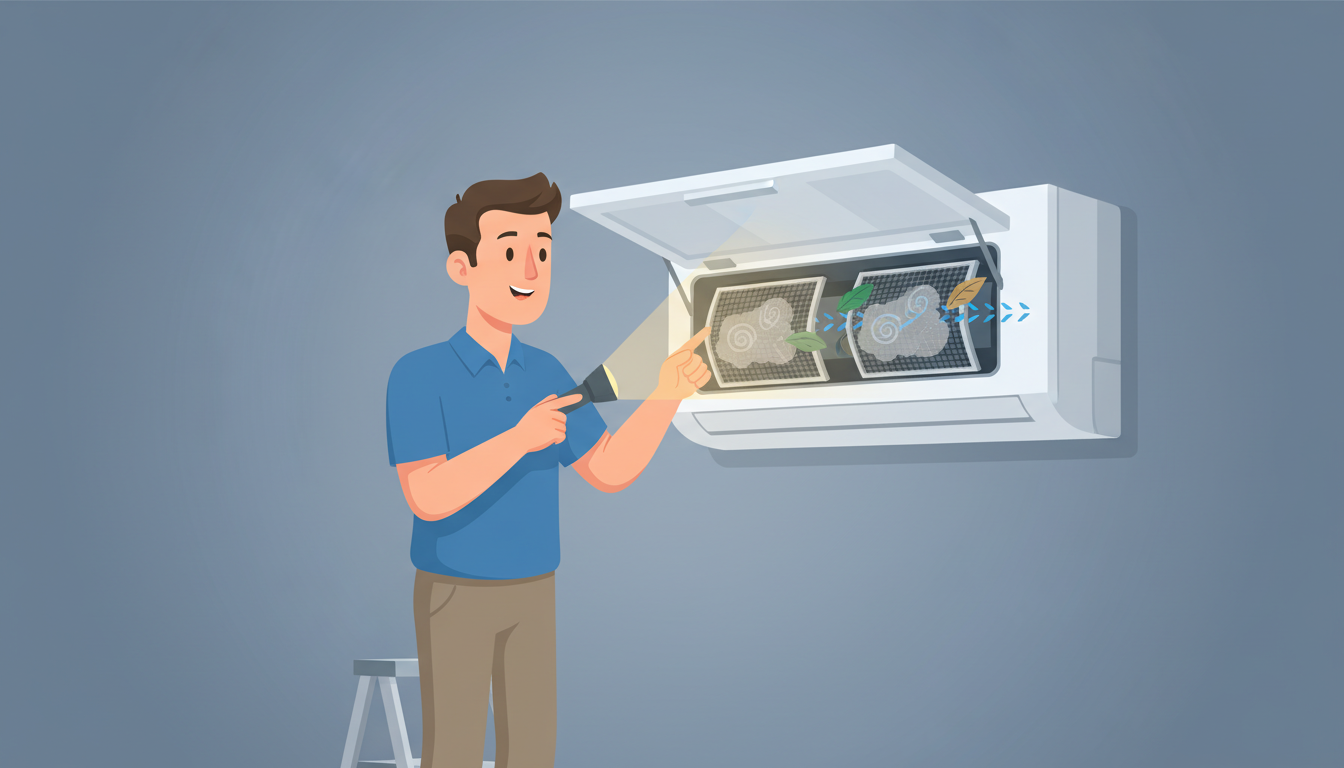
This is the number one culprit behind weak airflow, and fortunately, it's also the easiest to fix. Your mini-split's air filter catches dust, pet hair, pollen, and other particles before they can clog up the internal components.
When filters get dirty, they create resistance. Your system has to work harder to pull air through, which means less air makes it into your room. You might notice:
- Noticeably weaker airflow from the vents
- The indoor unit sounds like it's working hard but puts out little air
- Higher energy bills as your system struggles
- More dust settling in your home
How to fix it: Check your filters every 2-4 weeks. Most ductless systems have filters you can remove, rinse with water, and reinstall. Let them dry completely before putting them back. If you have pets or live in a dusty area, check them more often.
Need help with ongoing maintenance? Check out our complete HVAC repair guide for year-round tips.
Frozen Evaporator Coils
When you notice ice building up on your indoor unit, you've got a problem. Frozen coils block airflow and prevent your system from cooling properly. Ice acts like a wall, stopping air from passing over the coils.
Several things can cause coils to freeze:
- Dirty air filters (yes, the same issue causes multiple problems)
- Low refrigerant levels
- Running your AC when it's too cold outside
- Blocked return air flow
How to fix it: Turn off your system and let the ice melt completely. This can take several hours. Once melted, check your air filters first. If they're clean and the problem returns, you likely have a refrigerant leak or another issue that needs a professional.
Blocked or Dirty Indoor Unit Blower Wheel
Inside your indoor unit sits a blower wheel (also called a squirrel cage fan). This cylindrical fan pulls air in and pushes it over the coils. Over time, dust and grime build up on the blower wheel's fins.
Even a thin layer of buildup reduces the blower's efficiency. Heavy buildup can make it nearly impossible for the fan to move air properly. You might hear the fan spinning, but barely any air comes out.
How to fix it: Cleaning a blower wheel requires opening your indoor unit's cover. If you're comfortable with basic maintenance, you can gently vacuum or wipe the blower wheel. Use a soft brush and mild cleaner. Be very gentle—bent fins will make the problem worse.
If you're not comfortable opening up your unit, this is a perfect job for a professional. Our mini-split repair guide covers when to DIY and when to call for help.
Dirty Evaporator Coils
Your evaporator coils sit inside the indoor unit. Air passes over these coils to get cooled or heated. When dust and grime coat the coils, they can't exchange heat efficiently, and airflow gets restricted.
Dirty coils cause several problems:
- Reduced cooling or heating capacity
- Weak airflow
- Higher energy consumption
- Ice buildup on the coils
- Musty odors from mold growing on the wet, dirty coils
How to fix it: Coil cleaning requires removing panels and carefully cleaning delicate fins. You can use a coil cleaner spray from a hardware store, but be gentle. The fins bend easily, and bent fins further restrict airflow.
Many homeowners prefer having a technician handle this during annual maintenance. They have the right tools and experience to clean thoroughly without damage.
Faulty Fan Motor or Capacitor
Your indoor unit's fan motor does the heavy lifting, spinning the blower wheel thousands of times per minute. When the motor starts failing, you'll notice weak or inconsistent airflow.
The capacitor—a small electrical component that helps the motor start and run—often fails before the motor itself. A bad capacitor can't provide the electrical boost the motor needs, resulting in slow fan speeds or a fan that won't start at all.
Signs of motor or capacitor problems:
- Weak airflow even with clean filters
- Fan runs slower than normal
- Strange humming or buzzing sounds
- Fan starts and stops randomly
- System doesn't turn on at all
How to fix it: Motor and capacitor issues require an HVAC technician. Working with electrical components is dangerous without proper training. A technician can test the capacitor and motor, replacing whichever component has failed.
Refrigerant Leaks
Low refrigerant doesn't directly block airflow, but it creates conditions that do. When refrigerant levels drop, your evaporator coils get too cold. This causes moisture in the air to freeze on the coils, creating ice that blocks airflow.
You might also notice:
- Ice on the refrigerant lines outside
- Hissing or bubbling sounds (indicating an active leak)
- Your system runs constantly but doesn't cool well
- Higher electricity bills
How to fix it: Refrigerant leaks aren't DIY repairs. Refrigerant is a controlled substance that requires EPA certification to handle. A technician will locate the leak, repair it, and recharge your system to the proper level.
Want to know what a technician checks during ductless repair? We break down the entire inspection process.
Blocked Outdoor Condenser Unit
Your outdoor condenser unit needs to breathe. It pulls in outside air, passes it over hot coils to release heat, and blows it back out. When the condenser gets blocked by debris, tall grass, or leaves, the whole system struggles.
A blocked condenser creates high pressure in the refrigerant lines. This affects the entire cooling cycle and can reduce indoor airflow. You'll notice your system works harder, runs longer, and cools less effectively.
How to fix it: Inspect your outdoor unit monthly:
- Clear away leaves, grass clippings, and debris
- Trim vegetation to at least 2 feet away on all sides
- Gently spray the fins with a garden hose (not a pressure washer)
- Make sure nothing is stacked against or on top of the unit
Incorrect Fan Speed Settings
Sometimes poor airflow isn't a mechanical problem at all. Many ductless systems have multiple fan speed settings. If your system is set to low or "quiet" mode, you'll get less airflow—that's by design.
Check your remote control or wall controller. You might have accidentally changed the fan speed setting. Most remotes have a "fan" button that cycles through low, medium, high, and auto settings.
How to fix it: Set your fan to a higher speed or "auto" mode. Auto mode adjusts fan speed based on how hard the system is working to reach your target temperature.
Obstructions Around the Indoor Unit
Your indoor unit needs at least 6-12 inches of clear space around it to pull in and push out air properly. Common obstructions include:
- Curtains hanging too close to the unit
- Furniture placed directly below the unit
- Decorations or plants on shelves near the unit
- Dust buildup on the vents themselves
Even partial blockage can significantly reduce airflow. The unit pulls in air from the sides and top, so anything blocking these areas hurts performance.
How to fix it: Rearrange furniture and decor to give your unit clear space. Vacuum the intake vents regularly. If you have curtains, make sure they don't hang directly in front of the unit when it's running.
Ductwork Issues (For Ducted Mini-Splits)
While most mini-splits are truly ductless, some systems connect to short duct runs. If you have a ducted mini-split, crushed, disconnected, or leaking ducts can cause airflow problems.
How to fix it: Inspect any accessible ductwork for obvious damage. Seal small leaks with mastic sealant or metal tape (not duct tape). For hidden or severely damaged ducts, call a professional.
How to Diagnose Your Airflow Problem
Here's a simple step-by-step process to figure out what's causing your poor airflow:
Step 1: Check your air filters first. Clean or replace them even if they look "okay." This solves 70% of airflow problems.
Step 2: Look at your outdoor unit. Is it dirty? Is grass or debris blocking it? Clear everything away and see if airflow improves.
Step 3: Check around your indoor unit. Remove any obstructions within 12 inches of the unit.
Step 4: Verify your fan speed setting on the remote. Try running it on high for 10 minutes to see if airflow improves.
Step 5: Look for ice on the indoor unit or refrigerant lines. If you see ice, turn the system off and let it thaw completely.
Step 6: If none of the above helps, you likely have a mechanical problem (motor, capacitor, or internal blockage) that needs a professional.
Preventing Future Airflow Problems
An ounce of prevention is worth a pound of cure. Here's how to keep your ductless system blowing strong:
Monthly: Clean or check your air filters. This 5-minute task prevents most airflow problems.
Quarterly: Clean around your outdoor unit. Remove debris and trim back vegetation.
Annually: Schedule professional maintenance. A technician will deep-clean coils, check refrigerant levels, test electrical components, and catch small problems before they become big ones.
As needed: Keep furniture and curtains away from your indoor unit. Don't block airflow with decorations or clutter.
Regular maintenance isn't just about airflow. It also:
- Extends your system's lifespan by 5-10 years
- Keeps energy bills lower
- Prevents expensive emergency repairs
- Maintains your manufacturer's warranty
When to Call a Professional
Some airflow problems are beyond DIY fixes. Call an HVAC technician when:
- You've cleaned filters and cleared obstructions, but airflow is still weak
- Ice keeps forming on your coils or refrigerant lines
- You hear unusual noises (grinding, squealing, or loud humming)
- Your system won't turn on or cycles on and off rapidly
- You smell burning or notice electrical issues
- You see water leaking from your indoor unit
Don't wait too long to call. A small problem like a dirty blower wheel can turn into a burned-out motor if ignored. The repair cost jumps from $150 to $800+ when you wait.
Professional technicians have specialized tools like refrigerant gauges, multimeters, and inspection cameras. They can diagnose problems in minutes that might take you hours to figure out.
The Cost of Ignoring Poor Airflow
When you ignore weak airflow, you're not just uncomfortable—you're damaging your system and wasting money. Here's what happens:
Higher energy bills: Your system runs longer to reach the target temperature. Dirty filters alone can increase energy use by 15-25%.
Premature system failure: Components working harder wear out faster. A $1,500 compressor might fail years early because of a $20 dirty filter.
Comfort issues: Weak airflow means uneven temperatures. Some rooms stay too hot while others get too cold.
Indoor air quality problems: When air doesn't circulate properly, humidity builds up. This creates perfect conditions for mold and mildew.
Voided warranty: Most manufacturer warranties require annual professional maintenance. Skip it, and you might pay for repairs that should be covered.
A simple filter cleaning takes 5 minutes. Replacing a failed compressor because you ignored that filter takes hundreds of dollars and days without cooling.
Frequently Asked Questions
Why is my mini-split blowing air but not cold?
If air is flowing but not cold, the problem usually isn't airflow—it's a cooling issue. Common causes include low refrigerant, a dirty outdoor coil, incorrect mode settings, or a malfunctioning compressor. Check that your system is in cooling mode and the outdoor unit is running. If both are working but air isn't cold, call a technician to check refrigerant levels.
How often should I clean my ductless system filters?
Check filters every 2-4 weeks during heavy use seasons (summer and winter). Clean them whenever you see visible dust buildup. In dusty environments or homes with pets, you might need to clean filters weekly. Set a phone reminder so you don't forget.
Can I run my mini-split with a dirty filter temporarily?
You can, but you shouldn't. Even a moderately dirty filter reduces efficiency, increases energy costs, and makes your system work harder. If you must run it dirty temporarily (waiting for a filter to dry, for example), keep it short—a few hours at most. Extended use with dirty filters can damage the blower motor or cause coils to freeze.
What's the best temperature to run my ductless system?
For cooling, set your thermostat to 68-72°F for optimal comfort and efficiency. Every degree cooler increases energy use by about 3%. For heating in winter, aim for 68-70°F. Avoid extreme temperature settings—they won't cool or heat your space faster, but they will waste energy and strain your system.
Why does my mini-split smell musty when airflow is low?
Weak airflow often means moisture isn't evaporating from the coils properly. Standing moisture creates perfect conditions for mold and mildew, which cause that musty smell. Clean your filters, improve airflow, and consider using your system's "dry" or "fan only" mode occasionally to dry out the coils. If the smell persists, you need professional coil cleaning.
Conclusion
Poor airflow in your ductless system isn't something to ignore. Whether it's a simple dirty filter or a more complex issue like a failing fan motor, addressing airflow problems quickly saves money and keeps your home comfortable.
Start with the easy fixes: clean your filters, clear obstructions around both units, and check your fan settings. These simple steps solve most airflow problems in minutes.
If basic troubleshooting doesn't help, don't hesitate to call a professional. A trained technician can diagnose and fix complex issues before they turn into expensive repairs. Regular maintenance keeps your system running efficiently for years to come.
Remember, your ductless mini-split is an investment in your comfort. A little attention and care goes a long way toward protecting that investment and keeping your home comfortable year-round.