What a Technician Checks During Ductless Repair: Complete Inspection Guide
What a Technician Checks During Ductless Repair: Complete Inspection Guide
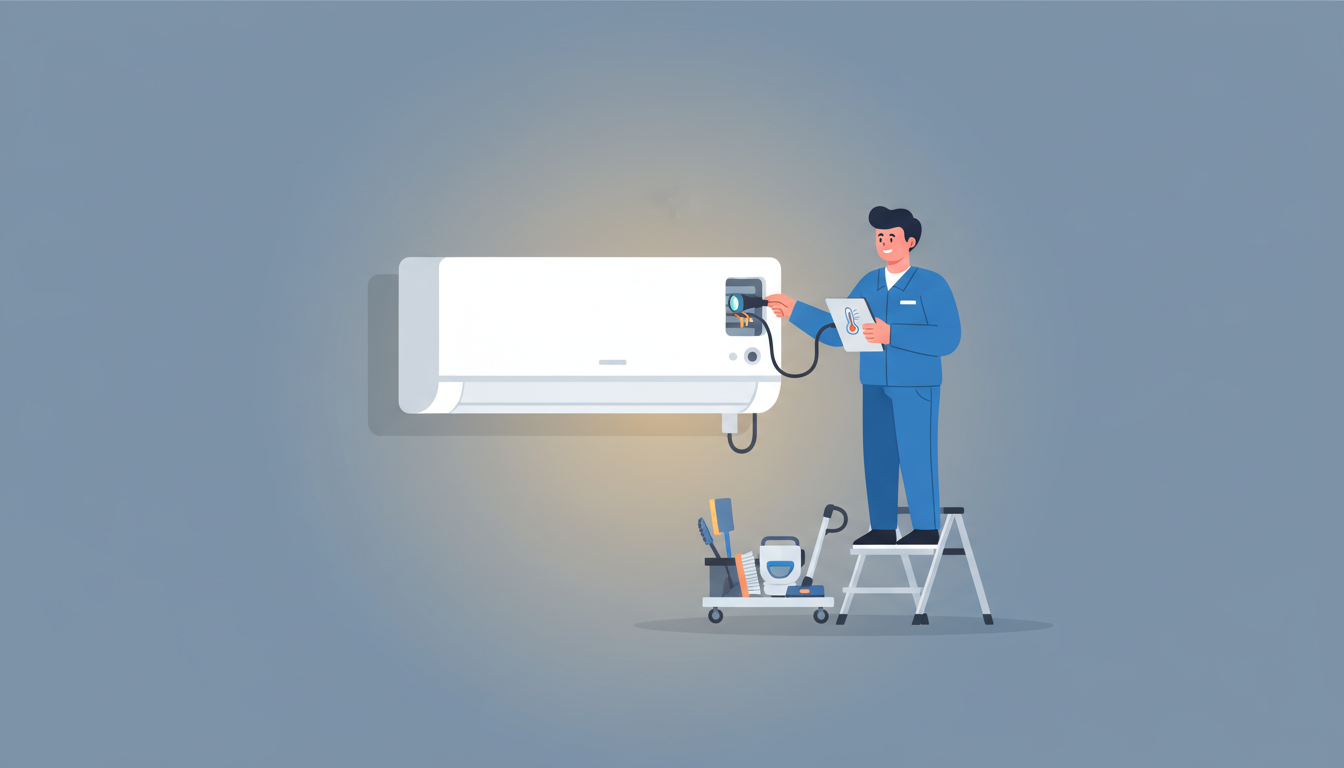
When your ductless mini split system starts acting up, calling a professional HVAC technician is the smart move. But have you ever wondered what exactly happens during a ductless repair visit? Understanding what a technician checks during ductless repair helps you know what to expect, ensures you're getting thorough service, and helps you spot the difference between a quick fix and a comprehensive inspection.
The Initial Diagnostic Assessment
Before diving into specific components, a qualified HVAC technician starts with a systematic diagnostic assessment. This isn't just a quick glance at your system—it's a methodical process that identifies the root cause of your problem.
Your technician will begin by asking detailed questions about the symptoms you've noticed. When did the problem start? Is the issue constant or intermittent? Have you noticed any unusual sounds, smells, or performance changes? These questions aren't just small talk—they're crucial diagnostic clues that guide the inspection process.
Next, the technician examines any error codes displayed on your indoor unit. Modern ductless systems have built-in diagnostic capabilities that flag specific issues through error codes. A skilled technician knows how to interpret these codes and use them as a starting point for deeper investigation.
Indoor Unit Inspection: What Technicians Check First
The indoor unit (also called the air handler or evaporator unit) is where most visible problems manifest, so it's typically the first stop during a ductless repair inspection.
Air Filter Examination
Your technician will immediately check the air filters. Clogged or dirty filters are among the most common culprits behind poor performance. Even if a dirty filter isn't your main problem, it can mask other issues or make accurate diagnostics difficult.
The technician removes the filters to inspect them for dirt, dust, pet hair, and debris accumulation. They'll also check for any damage to the filter mesh that could allow unfiltered air to bypass the filtration system.
Evaporator Coil Assessment
Behind the filters sits the evaporator coil—a critical component that absorbs heat from your indoor air. During a mini split repair inspection, technicians carefully examine these coils for several issues:
- Dirt and debris buildup that reduces heat transfer efficiency
- Ice formation that indicates refrigerant problems or airflow restrictions
- Corrosion or physical damage to the coil fins
- Biological growth like mold or mildew that affects air quality
The technician uses specialized tools to measure the temperature differential across the coil, which tells them whether the coil is performing properly. If the temperature difference is outside normal parameters, it signals refrigerant issues or airflow problems.
Blower Assembly and Fan Inspection
The blower wheel and fan assembly circulate conditioned air throughout your space. Technicians check for:
- Excessive dust accumulation on the blower wheel that creates imbalance
- Bearing wear that causes unusual noises
- Motor performance by measuring amperage draw
- Proper fan speed across all operating modes
An unbalanced or dirty blower wheel doesn't just make noise—it reduces airflow, decreases efficiency, and puts extra strain on the motor. That's why thorough technicians take time to inspect this component carefully, as explained in our comprehensive HVAC repair guide.
Drain Pan and Condensate System Check
Water leaks are a common complaint with ductless systems. During the inspection, your technician examines:
- The drain pan for cracks, rust, or standing water
- The condensate drain line for clogs or blockages
- Proper drainage slope and flow
- The condensate pump (if your system has one) for proper operation
Many technicians pour water directly into the drain pan to verify that the drainage system is working correctly. If water backs up or drains slowly, they'll use specialized tools to clear the blockage or recommend drain line replacement.
Outdoor Unit Inspection: The Heart of Your System
The outdoor unit (condenser) houses your system's compressor, condenser coil, and other vital components. A comprehensive ductless repair inspection always includes thorough outdoor unit checks.
Condenser Coil Examination
Like the indoor evaporator coil, the outdoor condenser coil needs to be clean and undamaged for proper heat transfer. Technicians inspect for:
- Dirt, leaves, and debris coating the coil surfaces
- Bent fins that restrict airflow
- Coil damage from lawn equipment, hail, or wear
- Proper clearance around the unit for adequate airflow
If the coils are dirty, the technician will clean them using appropriate methods—either chemical coil cleaner for light buildup or more intensive cleaning for heavy contamination. This single step can dramatically improve system efficiency.
Compressor and Motor Performance
The compressor is the most expensive component in your ductless system, so technicians pay special attention to its condition. They check:
- Starting capacitor and run capacitor values
- Compressor amperage draw compared to nameplate specifications
- Unusual sounds during operation that indicate bearing wear
- Proper cycling without short-cycling or continuous running
- Temperature readings at the compressor housing
Using a multimeter and clamp-on ammeter, technicians measure electrical draw to ensure the compressor isn't working too hard or underperforming. Readings outside the normal range signal potential compressor problems that need addressing before complete failure occurs.
Refrigerant Line Inspection
The refrigerant lines connecting your indoor and outdoor units are critical for system operation. During a ductless HVAC repair process, technicians thoroughly inspect:
- Insulation integrity on the suction line (the larger, cold line)
- Signs of refrigerant leaks at connection points
- Physical damage to the copper tubing
- Proper line set routing and support
- Condensation issues that indicate insulation problems
Damaged or missing insulation doesn't just waste energy—it can cause moisture problems and reduced system efficiency. If insulation is deteriorating, a good technician will recommend replacement before it leads to bigger issues, as detailed in our article about causes of poor airflow in ductless systems.
Refrigerant System Testing: The Technical Deep Dive
One of the most critical aspects of what a technician checks during ductless repair involves the refrigerant system. This requires specialized tools and expertise.
Refrigerant Pressure and Charge Testing
Using manifold gauges, technicians measure both high-side and low-side refrigerant pressures. These readings, combined with outdoor temperature, tell the technician whether your system has the correct refrigerant charge.
Low refrigerant pressure indicates a leak somewhere in the system. High pressure might signal an overcharge, dirty coils, or airflow restrictions. Either condition reduces efficiency and can damage the compressor.
If pressures are abnormal, the technician performs additional tests to pinpoint the problem.
Superheat and Subcooling Measurements
Professional technicians don't just check refrigerant pressure—they calculate superheat and subcooling values. These measurements provide precise information about refrigerant charge and system performance.
Superheat is measured at the indoor unit and tells the technician if enough refrigerant is evaporating. Subcooling is measured at the outdoor unit and indicates whether enough liquid refrigerant is available. Together, these values provide a complete picture of refrigerant system health.
Most homeowners never see this level of detail, but it's what separates a thorough inspection from a quick service call.
Leak Detection Procedures
If low refrigerant is suspected, technicians employ several leak detection methods:
- Electronic leak detectors that sense refrigerant in the air
- Bubble solution applied to connections and potential leak points
- UV dye injection for difficult-to-find leaks
- Visual inspection for oil stains that indicate refrigerant leaks
Finding and repairing leaks before simply adding refrigerant is crucial. Adding refrigerant without fixing the leak is just a temporary fix that will fail again soon.
Electrical System Inspection: Safety and Performance
Electrical problems can cause system failures, inefficient operation, or even safety hazards. A comprehensive mini split technician checklist always includes electrical system checks.
Electrical Connection Examination
Loose electrical connections create resistance, which generates heat. Over time, this can damage components or create fire hazards. Technicians check:
- Terminal tightness at all connection points
- Wire condition for fraying, heat damage, or corrosion
- Proper wire sizing for the electrical load
- Grounding connections for safety
Using a screwdriver and visual inspection, the technician ensures every connection is secure and properly made.
Voltage and Amperage Testing
Ductless systems require specific voltage to operate correctly. Using a multimeter, technicians measure:
- Supply voltage at the disconnect box
- Voltage at the indoor and outdoor units during operation
- Amperage draw of the compressor, fan motors, and blower
- Proper phase voltage (for systems on three-phase power)
Low voltage causes poor performance and can damage motors. High amperage indicates component problems or system overload. These measurements provide early warning of developing issues.
Control Board and Thermostat Diagnostics
Modern ductless systems have sophisticated electronic controls. Technicians test:
- Control board function and error code history
- Thermostat accuracy and calibration
- Communication between indoor and outdoor units
- Sensor operation (temperature sensors, defrost sensors)
- Remote control function and battery status
If the control board is faulty, it can cause intermittent problems that are difficult to diagnose without proper testing. Experienced technicians know how to access diagnostic modes and interpret the results.
Airflow and Performance Testing
Beyond individual components, technicians evaluate overall system performance to ensure your ductless system delivers proper heating and cooling.
Temperature Differential Measurement
Using digital thermometers or temperature probes, technicians measure:
- Supply air temperature coming from the indoor unit
- Return air temperature entering the unit
- Temperature differential between supply and return
For cooling mode, a proper temperature split is typically 15-20°F. For heating mode, it's usually 30-40°F. Values outside these ranges indicate problems with refrigerant charge, airflow, or coil condition.
Airflow Volume Assessment
While precise airflow measurement requires specialized equipment, technicians assess whether airflow is adequate by:
- Observing air velocity from the vents
- Listening for air movement restrictions
- Checking for proper operation across all fan speeds
- Comparing airflow to manufacturer specifications
Restricted airflow reduces efficiency, causes uneven temperatures, and stresses the compressor. Identifying and correcting airflow problems is a key part of the ductless system diagnostic steps.
System Cycling and Operation Verification
Technicians run the system through complete cycles in both heating and cooling modes (if applicable) to verify:
- Proper startup without hard starts or delays
- Smooth operation without unusual sounds or vibrations
- Correct mode switching for heat pump systems
- Appropriate cycle times without short-cycling
- Thermostat response and temperature control
- Defrost cycle operation in heating mode
This functional testing often reveals intermittent problems that don't show up during static inspections.
Mount and Installation Integrity Check
A often-overlooked aspect of ductless repair inspection involves the physical installation itself.
Wall Mount Bracket Inspection
The indoor unit hangs on a mounting bracket attached to your wall. Over time, these can loosen or corrode. Technicians check:
- Bracket attachment to the wall structure
- Proper leveling for correct drainage
- Structural integrity of the bracket itself
- Indoor unit secure attachment to the bracket
A loose or improperly leveled unit can cause drainage problems, noise, and even safety hazards if the unit falls.
Refrigerant Line and Wiring Support
The lines connecting your indoor and outdoor units should be properly supported and protected. Technicians verify:
- Adequate support spacing to prevent line sag
- Protection from physical damage in exposed areas
- Proper entry points through walls without air leaks
- UV protection for outdoor line sets
Unsupported lines can develop leaks at connections due to vibration and movement.
What Happens After the Inspection
Once the inspection is complete, a professional technician provides you with a detailed explanation of their findings.
Repair Recommendations and Estimates
Based on what they've discovered, the technician should clearly explain:
- What's wrong with your system in terms you can understand
- Why it happened and whether it could have been prevented
- Repair options available to fix the problem
- Cost estimates for recommended repairs
- Urgency level (immediate repair needed vs. can wait)
A good technician educates you about your options without pressure tactics. For more detailed information about different repair scenarios, check out our mini split repair guide.
Repair vs. Replacement Considerations
If your system has significant problems, the technician should discuss whether repair makes sense or if replacement is more cost-effective. Factors they'll consider:
- Age of the system (most mini splits last 15-20 years)
- Cost of repair compared to replacement cost
- Energy efficiency of repair vs. new system
- Warranty coverage that might reduce costs
- Likelihood of additional problems in the near future
An honest technician will tell you when repairs don't make financial sense.
How Long Does a Ductless Repair Inspection Take?
A thorough inspection typically takes 60-90 minutes for a single-zone system. Multi-zone systems with multiple indoor units require additional time—plan for about 30 minutes per additional zone.
Quick "service calls" that last only 15-20 minutes are red flags. While simple problems like dirty filters can be resolved quickly, a comprehensive diagnostic inspection simply can't be rushed without cutting corners.
What You Can Do to Prepare for the Technician Visit
Help your technician provide better service by:
- Clearing access to both indoor and outdoor units
- Noting specific symptoms you've observed
- Having maintenance records available if you have them
- Ensuring the system is accessible (unlock gates, move furniture)
- Being available to answer questions about system behavior
Good preparation helps technicians work more efficiently and ensures they have all the information needed for accurate diagnosis.
Frequently Asked Questions
How much does a ductless system repair cost?
Repair costs vary widely depending on the problem. Simple fixes like filter replacement or drain cleaning might cost $100-200, while major repairs like compressor replacement can run $1,500-2,500 or more. Many technicians charge a diagnostic fee ($75-150) that's often applied to repair costs if you proceed with the work.
What tools do HVAC technicians use for mini split repairs?
Professional technicians carry specialized tools including manifold gauge sets for refrigerant testing, digital multimeters for electrical diagnosis, temperature probes, leak detectors, vacuum pumps, refrigerant recovery equipment, and various hand tools. The quality and completeness of a technician's tools often reflects their professionalism.
How do I know if my technician is qualified?
Look for proper licensing (required in most states), manufacturer certifications, EPA Section 608 certification for refrigerant handling, and professional affiliations like NATE (North American Technician Excellence) certification. Don't hesitate to ask about credentials—qualified technicians are proud to share them.
Can I stay home during ductless repair?
Yes, you can stay home during most ductless repairs. In fact, it's helpful to be available to answer questions and approve repair decisions. The technician will need access to both indoor and outdoor units, but the work isn't typically disruptive enough to require you to leave.
How often should ductless systems be professionally inspected?
Most manufacturers recommend professional maintenance twice yearly—once before cooling season and once before heating season. Regular inspections catch small problems before they become expensive repairs and keep your system running efficiently.
Conclusion: The Value of Thorough Ductless Repair Inspections
Understanding what a technician checks during ductless repair helps you appreciate the complexity of these systems and the skill required to diagnose and fix problems properly. A comprehensive inspection covers everything from filters and coils to refrigerant levels, electrical systems, and performance metrics.
When you call for ductless repair, you're not just paying for a quick fix—you're investing in expert diagnosis that identifies root causes and prevents future problems. A thorough technician doesn't just repair what's broken; they optimize your entire system for reliable, efficient operation.
Don't settle for quick-fix service calls that ignore underlying issues. Insist on comprehensive inspections that give you complete information about your system's condition. Your comfort, your energy bills, and the longevity of your ductless investment depend on it.
If you're experiencing problems with your ductless mini split system, don't wait until minor issues become major failures. Contact a qualified HVAC professional who understands the thorough diagnostic process and provides the detailed attention your system deserves.