What Causes a Transformer Failure in HVAC Systems?
What Causes a Transformer Failure in HVAC Systems?
Is your HVAC system refusing to turn on? Is your thermostat display completely blank? If you're dealing with these frustrating issues, there's a good chance your HVAC transformer has failed. Understanding what causes transformer failure in HVAC systems can save you time, money, and the discomfort of a broken heating or cooling system.
In this guide, we'll walk you through everything you need to know about HVAC transformer failures—from the most common causes to warning signs you shouldn't ignore. Whether you're a homeowner trying to troubleshoot or just want to prevent future problems, you're in the right place.
What Is an HVAC Transformer and Why Does It Matter?
Before diving into what causes transformer failure in HVAC systems, let's quickly cover what this component actually does.
Your HVAC transformer is a small but critical device that steps down the high voltage from your home's electrical system (typically 120 volts) to the low voltage (24 volts) needed to power your thermostat and control circuit. This 24-volt power runs the control board, thermostat, contactors, and relays that keep your heating and cooling system running smoothly.
Without a working transformer, your entire HVAC system comes to a halt. The thermostat won't respond, the furnace won't ignite, and your air conditioner won't cool. Most HVAC systems use a 40VA transformer, though the exact rating can vary depending on your system's requirements.
The Most Common Causes of HVAC Transformer Failure
1. Bad or Stuck Contactor
A faulty contactor is one of the leading causes of transformer failure. The contactor is an electromagnetic switch that controls the flow of electricity to your compressor and condenser fan. When a contactor gets stuck in the closed position, it forces the transformer to supply power continuously without any breaks.
Transformers aren't designed for constant, uninterrupted operation—they need downtime between heating or cooling cycles to cool off. When a stuck contactor keeps the transformer running 24/7, it overheats and eventually burns out. If your HVAC transformer keeps blowing repeatedly, a bad contactor is often the culprit.
2. Electrical Wiring Problems
Loose, damaged, or incorrectly installed wiring can create serious problems for your transformer. Here's how wiring issues lead to failure:
- Loose connections: When wires aren't properly secured, they can create intermittent contact, leading to arcing and heat buildup
- Frayed or damaged insulation: Exposed wires can short circuit, sending excessive current through the transformer
- Improper gauge wiring: Using wire that's too thin for the current load causes resistance and overheating
- Incorrect connections: Wiring the transformer to the wrong voltage or terminals can instantly damage it
Even a single loose wire inside your HVAC unit can cause a short circuit that fries your transformer in seconds. This is why professional installation and regular inspections are so important.
3. Power Surges and Voltage Fluctuations
Power surges are sudden spikes in electrical voltage that can overwhelm your transformer's delicate internal windings. These surges can come from several sources:
- Lightning strikes: Even if lightning doesn't hit your home directly, a nearby strike can send a massive surge through power lines
- Grid fluctuations: When the utility company switches power loads or when large industrial equipment cycles on and off
- Downed power lines: When power is restored after an outage, the initial surge can be particularly damaging
- Faulty electrical panel: Problems with your home's main electrical panel can cause voltage instability
A single powerful surge can instantly destroy a transformer, while repeated smaller fluctuations gradually degrade the insulation and windings over time.
4. Overloading and Excessive Current Draw
Your transformer is rated for a specific power capacity (measured in volt-amperes or VA). When you overload it by connecting too many devices to the low-voltage circuit, the transformer works harder than it's designed to handle.
Common scenarios that overload transformers include:
- Installing a larger HVAC system without upgrading the transformer
- Adding zone controls or multiple thermostats without accounting for increased power needs
- Connecting aftermarket accessories that draw additional power
- Short circuits in connected components that create excessive current flow
When a transformer is consistently asked to deliver more power than its rating, it overheats. The insulation around the windings breaks down, and eventually the transformer fails.
5. Age, Wear, and Natural Deterioration
Like all electrical components, HVAC transformers don't last forever. Most transformers have a lifespan of 10-20 years under normal operating conditions. Over time, several factors contribute to natural deterioration:
- Thermal cycling: Repeated heating and cooling causes expansion and contraction of internal components
- Insulation breakdown: The insulation around the copper windings gradually degrades from heat exposure
- Core deterioration: The metal core can develop small cracks or lose its magnetic properties
- Connection oxidation: Terminal connections can corrode, creating resistance and hot spots
Even with perfect maintenance and no external problems, an old transformer will eventually reach the end of its useful life.
6. Environmental Factors
The environment where your HVAC equipment is located can significantly impact transformer longevity:
Moisture and Humidity: Transformers in damp basements, humid crawl spaces, or poorly ventilated attics are vulnerable to moisture infiltration. Water can:
- Cause internal corrosion of windings and connections
- Create conductive paths that lead to short circuits
- Accelerate insulation breakdown
- Promote rust on the metal core and housing
Temperature Extremes: Outdoor HVAC units expose transformers to harsh conditions. Extreme heat in summer can push a transformer closer to its thermal limits, while freezing temperatures in winter can make components brittle and more prone to failure.
Dust and Debris: Accumulated dust acts as an insulator, trapping heat inside the transformer. In outdoor units, debris like leaves, dirt, and even insect nests can block ventilation and cause overheating.
7. Short Cycling
Short cycling occurs when your HVAC system turns on and off repeatedly in quick succession instead of running through normal heating or cooling cycles. This puts tremendous stress on the transformer because:
- Each startup creates an inrush current spike that's several times higher than normal operating current
- The transformer doesn't get adequate cooling time between cycles
- Thermal stress accumulates rapidly
- Connected components like contactors and relays also degrade faster, potentially causing secondary failures
Short cycling can be caused by oversized equipment, thermostat problems, refrigerant issues, or dirty filters. Whatever the root cause, the constant on-off cycling will shorten your transformer's life.
8. Grounding Issues
Proper grounding is essential for electrical safety and equipment protection. Grounding problems can cause transformer failure in several ways:
- Improper grounding: Without a proper ground connection, fault currents have nowhere to go safely
- Ground loops: Multiple ground paths can create circulating currents that damage components
- Lightning protection failure: Without proper grounding, surge protection devices can't effectively divert dangerous voltages
Many homeowners don't realize that electrical code violations in the grounding system can void warranties and create serious safety hazards beyond just transformer damage.
Warning Signs Your HVAC Transformer Is Failing
Catching transformer problems early can prevent a complete system breakdown. Watch for these symptoms:
Blank or Unresponsive Thermostat
If your thermostat display is completely dark or won't respond to button presses, it's not getting the 24-volt power it needs. This is often the first and most obvious sign of transformer failure.
Humming or Buzzing Sounds
A failing transformer often produces a loud humming, buzzing, or vibrating noise. This happens when the internal windings are loose or the core is degrading. The sound may be constant or may only occur when the system tries to start.
Tripped Circuit Breaker
If the circuit breaker for your HVAC system trips repeatedly, it could indicate a short circuit in the transformer or other low-voltage components. Never simply reset a breaker multiple times without investigating the cause—this is a fire hazard.
System Won't Start or Runs Intermittently
When a transformer is on the verge of failure, your HVAC system may work sometimes but not others. You might notice the system starts but shuts down quickly, or refuses to turn on during particularly hot or cold weather when you need it most.
Visible Damage
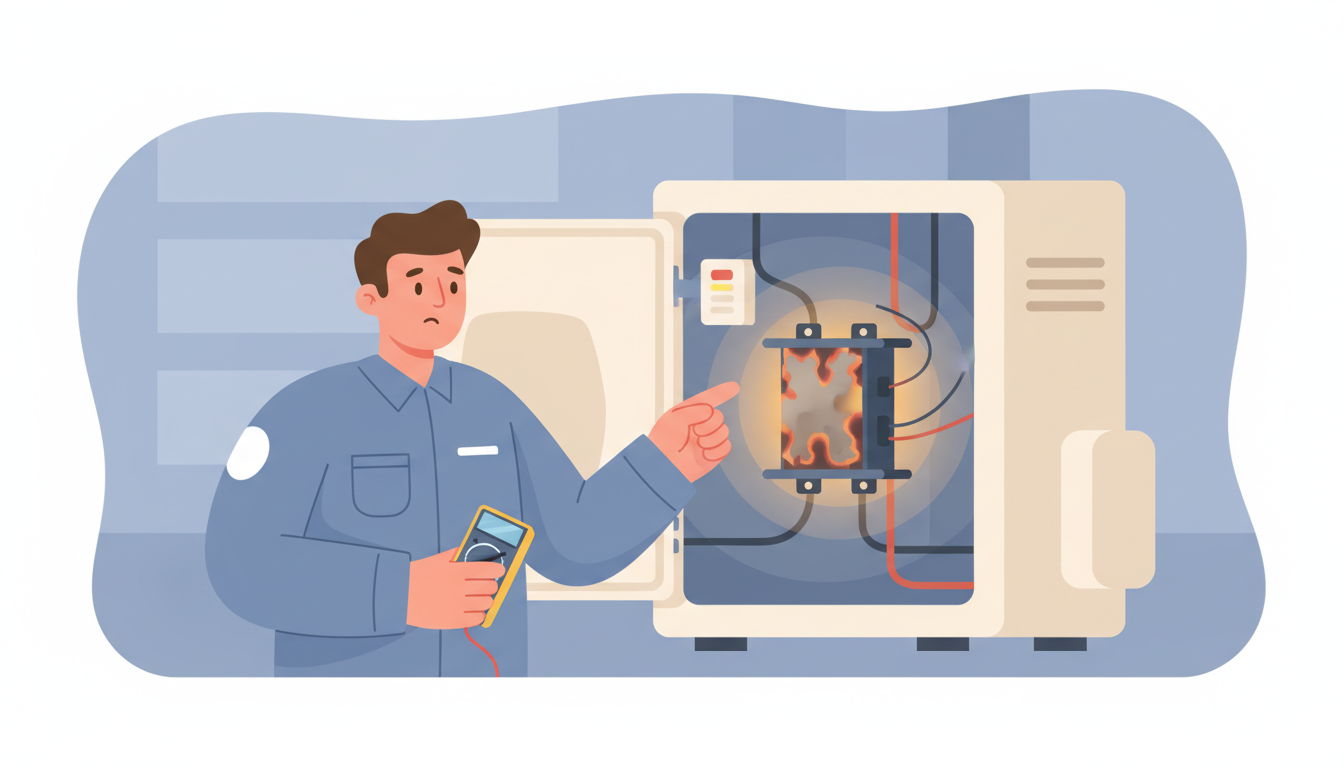
During routine maintenance, a technician may spot visible signs of transformer damage:
- Burn marks or discoloration on the transformer casing
- Melted insulation on wires
- A burnt electrical smell
- Corrosion or rust on terminals
- Swollen or deformed transformer housing
If you notice a burning smell coming from your HVAC unit, turn it off immediately and call a professional.
What to Do When Your HVAC Transformer Fails
If you suspect transformer failure, follow these steps:
- Turn off your HVAC system at the thermostat and the circuit breaker to prevent further damage
- Don't attempt DIY repairs unless you're a licensed electrician—working with electrical components is dangerous
- Call a qualified HVAC technician who can properly diagnose the problem
- Ask about the root cause—replacing the transformer without fixing the underlying issue means it will likely fail again
For more guidance on common HVAC electrical problems, check out our comprehensive HVAC repair guide.
How Much Does HVAC Transformer Replacement Cost?
The cost to replace an HVAC transformer typically ranges from $150 to $400, including parts and labor. The transformer itself usually costs $20-$100, while the rest covers the technician's time to diagnose the problem, install the new transformer, and test the system.
Costs can be higher if:
- Your system is difficult to access
- The failure damaged other components that also need replacement
- You need emergency or after-hours service
- The underlying cause requires additional repairs
If your transformer keeps blowing after replacement, the technician will need to investigate deeper issues like a bad contactor or wiring problems, which will add to the total cost.
Can You Replace an HVAC Transformer Yourself?
While replacing a transformer might seem straightforward, we strongly recommend against DIY replacement unless you have electrical training. Here's why:
- Electrical safety: Even 120-volt circuits can cause serious injury or death
- Diagnosis accuracy: The transformer might not be the actual problem—you could waste money replacing a good transformer while the real issue remains
- Code compliance: Improper installation may violate local electrical codes
- Warranty concerns: DIY work often voids manufacturer warranties
- Fire risk: Incorrect installation can create fire hazards
If you're experiencing issues with your breaker tripping repeatedly, read our article on why your HVAC breaker keeps tripping for more insights.
How to Prevent HVAC Transformer Failure
While some causes of transformer failure are beyond your control, you can take several preventive steps:
Schedule Regular Maintenance
Have a professional HVAC technician inspect your system at least once a year. They'll check for:
- Loose electrical connections
- Signs of component wear
- Proper voltage readings
- Contactor condition
- Overall system performance
Catching small problems during routine maintenance prevents them from turning into expensive failures.
Install a Surge Protector
A whole-home surge protector or a dedicated HVAC surge protector can shield your system from damaging voltage spikes. These devices cost $200-$600 installed but can save you thousands in replacement costs and system downtime.
Ensure Proper Ventilation
Keep the area around your HVAC equipment clean and unobstructed. For outdoor units, clear away leaves, grass clippings, and debris regularly. For indoor equipment, ensure adequate airflow around the unit.
Address Problems Promptly
Don't ignore warning signs like unusual noises, intermittent operation, or burning smells. Small issues almost always get worse and more expensive if left unattended. If you notice burn marks or electrical smells, learn more about causes of burn marks and electrical smells in HVAC systems.
Replace Aging Components
If your HVAC system is over 15 years old, consider having the transformer and other key electrical components inspected closely. Proactive replacement during planned maintenance is cheaper and less stressful than emergency repairs during a heat wave or cold snap.
Transformer Failure vs. Other Component Failures
Sometimes symptoms that seem like transformer failure are actually caused by other components. Here's how to tell the difference:
Bad Contactor: The contactor makes a chattering or clicking sound, or you see visible pitting and burn marks on the contacts. The system may start briefly then shut down.
Failed Capacitor: A bad capacitor often causes the compressor to hum without starting, or the system won't cool/heat effectively even though it runs. Capacitors can also bulge or leak.
Thermostat Problems: If the thermostat display works but the system doesn't respond, the issue might be with the thermostat itself rather than the transformer.
Control Board Failure: A failed control board can cause erratic system behavior, with components turning on at the wrong times or not at all, even with a good transformer.
A qualified technician will test multiple components to identify the true cause of system failure.
Frequently Asked Questions
How long does an HVAC transformer typically last?
Most HVAC transformers last between 10 and 20 years under normal operating conditions. However, factors like power surges, environmental conditions, and system quality can significantly shorten or extend this lifespan. Regular maintenance helps maximize transformer longevity.
Why does my HVAC transformer keep failing repeatedly?
If you're replacing transformers frequently, there's an underlying problem causing the failures. Common culprits include a stuck contactor, short circuit in the low-voltage wiring, persistent power surges, or an undersized transformer for your system's requirements. A thorough diagnosis by a qualified technician is essential to identify and fix the root cause.
Can a bad transformer damage other HVAC components?
Yes, a failing transformer can cause collateral damage. Voltage fluctuations from a dying transformer can damage your thermostat, control board, and other low-voltage components. Additionally, if the transformer fails due to a short circuit, it may trip breakers or damage upstream electrical components.
How can I test if my HVAC transformer is bad?
Testing a transformer requires a multimeter to check voltage on both the primary (high-voltage) and secondary (low-voltage) sides. With power on, you should see approximately 120 volts on the primary and 24 volts on the secondary. However, this test involves working with live electricity and should only be performed by someone with electrical knowledge and proper safety equipment.
Is it worth replacing just the transformer or should I replace the whole unit?
If your HVAC system is less than 10 years old and in otherwise good condition, replacing just the transformer makes sense. However, if your system is 15+ years old and experiencing multiple problems, it might be more cost-effective long-term to replace the entire system. A trusted HVAC professional can help you make this decision based on your specific situation.
Conclusion: Protect Your HVAC Investment
Understanding what causes transformer failure in HVAC systems empowers you to recognize warning signs early and take preventive action. Whether it's a bad contactor, electrical wiring problems, power surges, or simply age-related wear, identifying the root cause is essential for a lasting repair.
Remember these key takeaways:
- HVAC transformers typically fail due to bad contactors, wiring issues, power surges, overloading, age, environmental factors, or short cycling
- Warning signs include blank thermostats, unusual noises, tripped breakers, and intermittent operation
- Professional diagnosis is essential—the transformer might be a symptom of a deeper problem
- Regular maintenance and surge protection can significantly extend transformer life
- Replacement costs range from $150-$400, but repeated failures signal an underlying issue that needs attention
Don't wait for a complete system breakdown during extreme weather. If you notice any signs of transformer trouble, contact a qualified HVAC technician right away. Your comfort and safety depend on it.
Need help with a failing HVAC transformer or other heating and cooling issues? Our team of experienced technicians is ready to diagnose and fix your system quickly and correctly. Stay comfortable year-round with proper HVAC care and maintenance.