Why Ceiling Cassette and Wall-Mount Mini-Splits Fail Differently: A Complete Guide
Why Ceiling Cassette and Wall-Mount Mini-Splits Fail Differently: A Complete Guide
If you're dealing with a mini-split that's acting up, you've probably noticed that ceiling cassette and wall-mount units don't fail the same way. Understanding these differences can save you hundreds of dollars in repair costs and help you make smarter decisions about which system to install in your home.
The truth is, each mounting style faces unique challenges that lead to different types of failures. Let's break down exactly why these systems fail differently and what you can do about it.
Understanding the Fundamental Design Differences
Before we dive into failure modes, you need to understand what makes these systems different. Both ceiling cassettes and wall-mounted mini-splits are ductless air handlers connected to an outdoor compressor, but that's where the similarities end.
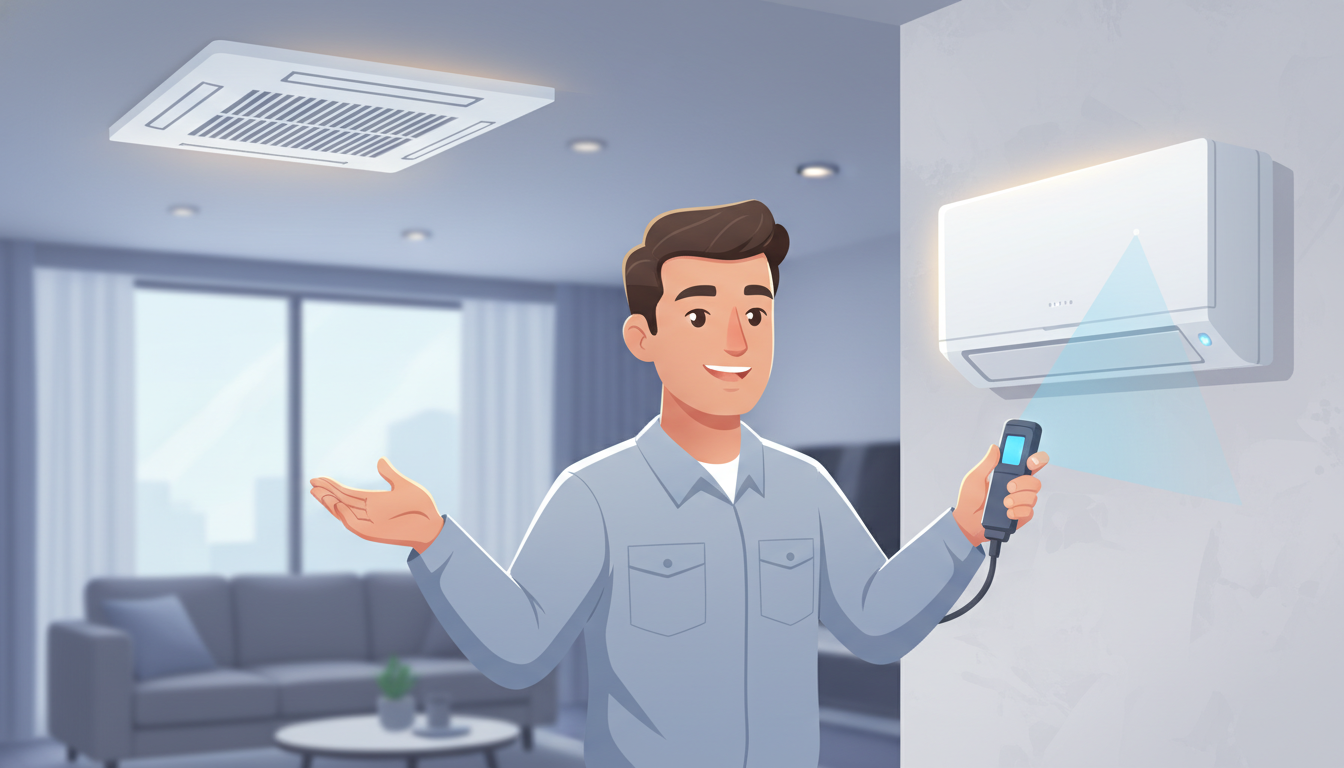
Ceiling cassettes sit recessed into your ceiling with only the discharge grille visible. They distribute air through multiple vents in a 360-degree pattern. This mounting position creates specific vulnerabilities you won't find in wall units.
Wall-mounted units hang high on your wall and blow air in a directional pattern. They're easier to access but face their own set of challenges based on their positioning and airflow design.
The mounting location alone determines how condensate drains, how easy maintenance becomes, and which components wear out fastest. When you understand these design differences, the failure patterns start to make perfect sense.
Drainage Failures: The #1 Problem for Both Types (But Different Causes)
Drainage issues are the most common problem for both ceiling cassette and wall-mount mini-splits, but they fail in distinctly different ways.
Why Ceiling Cassettes Experience More Severe Drainage Failures
Ceiling cassettes face a perfect storm of drainage challenges. First, the condensate must travel horizontally through ceiling space before dropping down to exit your home. This creates multiple points where things can go wrong.
Leveling is critical for ceiling cassettes. If your installer didn't mount the unit perfectly level during installation, condensate won't flow toward the drain lines properly. Instead, water pools in the drain pan until it overflows—right into your ceiling. Wall-mounted units have gravity working in their favor, so minor leveling issues don't cause immediate failures.
Condensate pumps add complexity. Many ceiling cassettes require a condensate pump to lift water up and out through your roofline. When these pumps fail, water accumulates faster than it can drain away. Wall-mounted units typically use gravity drainage and rarely need pumps, eliminating this failure point entirely.
Drain line routing is complicated. Ceiling cassette drain lines snake through your ceiling cavity, often with multiple bends and connections. Each junction is a potential leak point. The longer horizontal runs also allow debris to settle and create clogs more easily than the shorter, more vertical drain paths of wall units.
Wall-Mount Mini-Split Drainage Problems
Wall-mounted units aren't immune to drainage failures, but they face different challenges. The most common issue is clogged drain lines caused by the cheap corrugated tubing that comes with most lineset kits. This tubing provides tons of surface area for mold, bacteria, and dirt particles to accumulate.
Inadequate slope is another common problem. Your wall-mount drain line needs at least a 1/100 slope (1 inch of drop per 100 inches of horizontal run) to drain properly. Without sufficient slope, condensate moves slowly and debris has time to settle and form clogs.
External drain line damage happens more frequently with wall units because the drain line is often exposed on your home's exterior. Freezing temperatures, UV exposure, or physical damage can crack or collapse these lines, causing water to back up into your unit.
For expert guidance on maintaining your mini-split system, check out our comprehensive mini-split repair guide that covers preventive maintenance and common fixes.
Installation-Related Failures: Location Matters
Installation problems cause cascading failures in both system types, but ceiling cassettes face more severe consequences when installation goes wrong.
Ceiling Cassette Installation Failures
The biggest installation failure with ceiling cassettes is insufficient ceiling space. Most cassettes require a 24x24 inch cavity, but standard residential construction uses 16-inch rafter spacing. Installers sometimes force-fit units into inadequate spaces, causing:
- Restricted airflow that freezes evaporator coils
- Improper drain pan positioning that leads to leaks
- Inadequate insulation around refrigerant lines
- Vibration problems from units touching structural members
Weight support failures are another serious issue. Ceiling cassettes weigh 40-60 pounds before you add refrigerant and water in the drain pan. Without proper support rods and cables anchored to structural members, units can sag over time, throwing off the critical level needed for proper drainage.
Refrigerant line stress develops when ceiling cassettes are installed off-center from the outdoor unit. Long, unsupported refrigerant lines can develop leaks at connection points due to thermal expansion and contraction cycles.
Wall-Mount Installation Failures
Wall-mounted units face fewer catastrophic installation failures, but they're not problem-free. The most common issue is improper backing support. If your installer mounted the unit to drywall instead of studs, the vibration from the blower motor can loosen the mounting bracket over time.
Drain line routing errors happen when installers take shortcuts. Running the drain line through unconditioned spaces without insulation causes it to sweat and drip. Running it uphill even slightly creates drainage problems.
Electrical issues are more common with wall mounts because the power supply often runs through walls rather than ceiling cavities. Improper wire sizing or loose connections can cause voltage drops that damage the compressor or control board.
Maintenance Access Creates Different Failure Patterns
How easily you can maintain your system directly affects which components fail first and how severe the damage becomes.
The Ceiling Cassette Maintenance Challenge
Ceiling cassettes are notoriously difficult to maintain, and this creates a cascade of preventable failures. Filter access requires a ladder and often removal of the entire grille assembly. Most homeowners simply don't do it, leading to:
- Severely restricted airflow
- Frozen evaporator coils
- Overworked blower motors that burn out prematurely
- Excessive condensate production that overwhelms drain systems
Professional service is mandatory for most ceiling cassette maintenance. Even simple tasks like cleaning the drain pan or checking refrigerant levels require specialized access. This means problems go undetected longer, turning minor issues into expensive failures.
The average homeowner changes a ceiling cassette filter every 6-12 months instead of the recommended monthly cleaning during peak season. This neglect dramatically increases failure rates.
Wall-Mount Maintenance Advantages
Wall-mounted units put maintenance at eye level or within easy reach with a step stool. Filter access is simple—just pop open the front panel. This accessibility means homeowners actually perform regular maintenance, preventing many common failures.
Visual inspection is easy. You can spot water leaks, ice formation, or unusual condensation immediately. With ceiling cassettes, these problems often go unnoticed until water damages your ceiling or the unit completely fails.
DIY-friendly repairs are possible with wall units. Cleaning the drain line, checking for refrigerant leaks, or replacing filters doesn't require professional help for most homeowners. This reduces the total cost of ownership and catches problems earlier.
For troubleshooting tips specific to wall-mounted units, our mini-split remote not working guide covers common control issues that affect both ceiling and wall units.
Mechanical Component Failures: Different Stress Patterns
The mounting position and airflow design create different mechanical stress patterns that cause specific components to fail.
Blower Motor and Fan Failures
Ceiling cassette fans are larger and slower-moving, designed to push high air volumes without rapid spinning. They typically fail due to:
- Bearing wear from the horizontal mounting position
- Dust accumulation that unbalances the fan wheel
- Condensate exposure when drain pans overflow
- Vibration from improper installation
Wall-mount fans are smaller and spin much faster to achieve needed airflow. This creates different failure modes:
- Higher RPM puts tremendous strain on bearings
- Motor overheating from restricted airflow (dirty filters)
- Capacitor failures from frequent cycling
- Blade stress from vertical mounting orientation
Statistics show wall-mounted blower motors work harder and run at significantly higher RPMs than ceiling cassettes, but ceiling cassettes face more environmental damage from condensate issues.
Evaporator Coil Failures
Both systems use evaporator coils, but they fail differently based on mounting position and drainage patterns.
Ceiling cassettes experience coil failures from:
- Standing water in the drain pan that corrodes the bottom coil rows
- Inadequate drainage causing constant moisture exposure
- Difficulty cleaning coils leading to dirt buildup that holds moisture
- Refrigerant leaks from thermal stress at poorly supported line connections
Wall-mounted coils typically fail from:
- Frozen coil cycles that physically damage the fins
- Corrosion from airborne contaminants (kitchens, coastal areas)
- Impact damage from cleaning attempts
- UV exposure if mounted near windows
Electrical and Control Failures
Electronics fail differently based on environmental conditions created by the mounting position.
Ceiling Cassette Electrical Issues
The biggest risk for ceiling cassettes is water damage to electrical components. When drain pans overflow or condensate pumps fail, water drips directly onto:
- Control boards
- Temperature sensors
- Fan motor windings
- Electrical connections
Water and electronics don't mix. A single overflow event can destroy a control board that costs $200-500 to replace.
Heat accumulation in ceiling cavities also damages electronics. Attic-adjacent installations experience much higher ambient temperatures that degrade electronic components faster than wall-mounted units in conditioned space.
Wall-Mount Electrical Problems
Wall-mounted units face voltage fluctuation damage more often because their power supplies run through longer wire paths. Improper wire sizing causes voltage drops that can damage:
- Compressor windings
- Control boards
- Capacitors
- Transformer circuits
Remote sensor failures are more common with wall units because the infrared receiver is exposed to direct sunlight, dust, and physical contact. Ceiling cassette remotes fail less often because the receiver is recessed in the grille.
Seasonal Failure Patterns
Different mounting styles experience different failure patterns throughout the year.
Summer Failures
Ceiling cassettes see most failures during peak cooling season when condensate production is highest. The combination of maximum humidity removal and stressed drainage systems creates perfect conditions for:
- Drain pan overflows
- Condensate pump failures
- Clogged drain lines
- Water-damaged electrical components
Wall-mounted units experience more frozen coil events during summer because homeowners set thermostats too low. The directional airflow makes it more obvious when the unit isn't keeping up, leading people to lower setpoints excessively.
Winter Failures
Both systems face challenges in heating mode, but ceiling cassettes have a unique problem: heat rise in attic spaces. The warm air naturally accumulates in ceiling cavities, making the system work harder to heat lower living spaces. This increases runtime and accelerates wear.
Wall-mounted units experience more defrost cycle stress because they're directly exposed to cold wall surfaces. This increases the frequency of defrost cycles, which creates thermal shock stress on components.
Cost of Repairs: Why Mounting Location Affects Your Wallet
Repair costs differ dramatically based on mounting position and failure type.
Ceiling Cassette Repair Costs
Ceiling cassette repairs cost 30-50% more than equivalent wall-mount repairs because:
- Technician access requires more time - Setting up ladders, removing grilles, and navigating ceiling cavities adds 30-60 minutes to every service call
- Parts are harder to replace - Removing and reinstalling a ceiling cassette for major repairs can take 4-6 hours versus 1-2 hours for wall units
- Ceiling damage often requires repair - Water leaks from failed cassettes damage drywall, insulation, and paint, adding $300-800 to your repair bill
- Drain system repairs are complex - Accessing and repairing drain lines in ceiling cavities requires ceiling access panels or removal
Expect to pay $400-600 for a typical ceiling cassette drain cleaning versus $200-400 for a wall-mount unit.
Wall-Mount Repair Cost Advantages
Wall-mounted repairs are faster and cheaper because everything is accessible. Even major repairs like compressor replacement cost less because the labor component is significantly reduced.
The easier access also means you can perform more preventive maintenance yourself, reducing the frequency of professional service calls.
For general HVAC troubleshooting and repair guidance across all system types, explore our complete HVAC repair guide with step-by-step solutions.
Prevention Strategies Specific to Each System Type
Knowing how these systems fail differently means you can prevent problems with targeted maintenance.
Preventing Ceiling Cassette Failures
- Install condensate overflow sensors that shut down the unit before water damages your ceiling
- Schedule professional drain cleaning twice per season (spring and fall)
- Verify proper leveling annually using a smartphone level app
- Install redundant drain lines if possible—many cassettes have secondary drain connections
- Check condensate pump operation monthly during cooling season by pouring water into the drain pan
- Maintain adequate attic ventilation to reduce heat stress on components
- Document exact installation location and support structure for future service needs
Preventing Wall-Mount Failures
- Clean filters monthly during peak season—set phone reminders
- Inspect drain line slope annually and clear any vegetation blocking the discharge point
- Protect exterior drain lines with UV-resistant covers and insulation
- Keep the area around the unit clear for proper airflow—no curtains, furniture, or decorations within 3 feet
- Perform annual drain line flushes using a vinegar solution (1 cup down the drain line)
- Check mounting bracket tightness annually—tighten any loose bolts
- Avoid extreme temperature setpoints that cause frozen coils (don't set below 68°F in cooling mode)
Making the Right Choice: Failure Risk vs. Benefits
Understanding these failure differences should inform your decision when choosing between ceiling cassette and wall-mount mini-splits.
Choose ceiling cassettes when:
- Aesthetics are your top priority
- You're willing to invest in professional maintenance
- You have proper ceiling space and support structure
- You're installing in a commercial space with maintenance contracts
Choose wall-mounted units when:
- You want to minimize maintenance costs
- DIY maintenance appeals to you
- You're concerned about repair accessibility
- Initial installation budget is limited
Frequently Asked Questions
Q: Which type of mini-split is more reliable long-term?
Wall-mounted mini-splits generally prove more reliable because they're easier to maintain and have simpler drainage systems. The accessibility factor means problems get caught and fixed early, before they cause cascade failures. However, properly installed and well-maintained ceiling cassettes can be equally reliable—they just require more diligent professional maintenance.
Q: How often should I have my ceiling cassette inspected?
Schedule professional inspection twice annually—before cooling season and before heating season. This catches developing problems before they cause failures. Between inspections, pour 8 ounces of water into the drain pan monthly and verify it drains completely within 60 seconds.
Q: Can I convert a ceiling cassette to a wall-mount unit?
Yes, but it requires replacing the indoor unit while keeping your existing outdoor compressor (if compatible). You'll need to patch the ceiling opening, run new refrigerant lines, and install new electrical connections. The total cost typically runs $1,500-2,500, but you'll save money on maintenance and repairs long-term.
Q: Why does my ceiling cassette leak only during humid weather?
High humidity increases condensate production beyond what your drainage system can handle. This usually indicates a partially clogged drain line, undersized drain pipe, or failing condensate pump. The system works fine during normal conditions but can't keep up when condensate production peaks. Schedule professional drain system service immediately.
Q: Are there reliability differences between mini-split brands?
Brand quality matters, but installation quality matters more. A premium brand installed poorly will fail faster than a mid-range brand installed correctly. Focus on finding an experienced installer who understands the specific requirements of your chosen mounting style. Proper installation prevents 70% of common failures regardless of brand.
Conclusion: Knowledge Prevents Expensive Failures
Understanding why ceiling cassette and wall-mount mini-splits fail differently gives you a massive advantage. You can make smarter purchasing decisions, perform targeted preventive maintenance, and catch problems early before they become expensive disasters.
The key takeaway: mounting position determines failure patterns. Ceiling cassettes face drainage complexity, maintenance challenges, and water damage risks. Wall-mounted units deal with faster-wearing fans, drain line exposure, and airflow restrictions.
Both systems can provide decades of reliable service when properly installed and maintained. The difference is that wall-mounted units forgive maintenance lapses better, while ceiling cassettes demand professional attention to avoid catastrophic failures.
Ready to tackle your mini-split issues head-on? Start with a thorough inspection of your drainage system—it's the most common failure point for both mounting styles. Clean those filters, check those drain lines, and verify proper operation before problems force expensive emergency repairs.
Your HVAC system is a major investment. Understanding how it fails differently based on design gives you the power to protect that investment and keep your home comfortable year-round.