
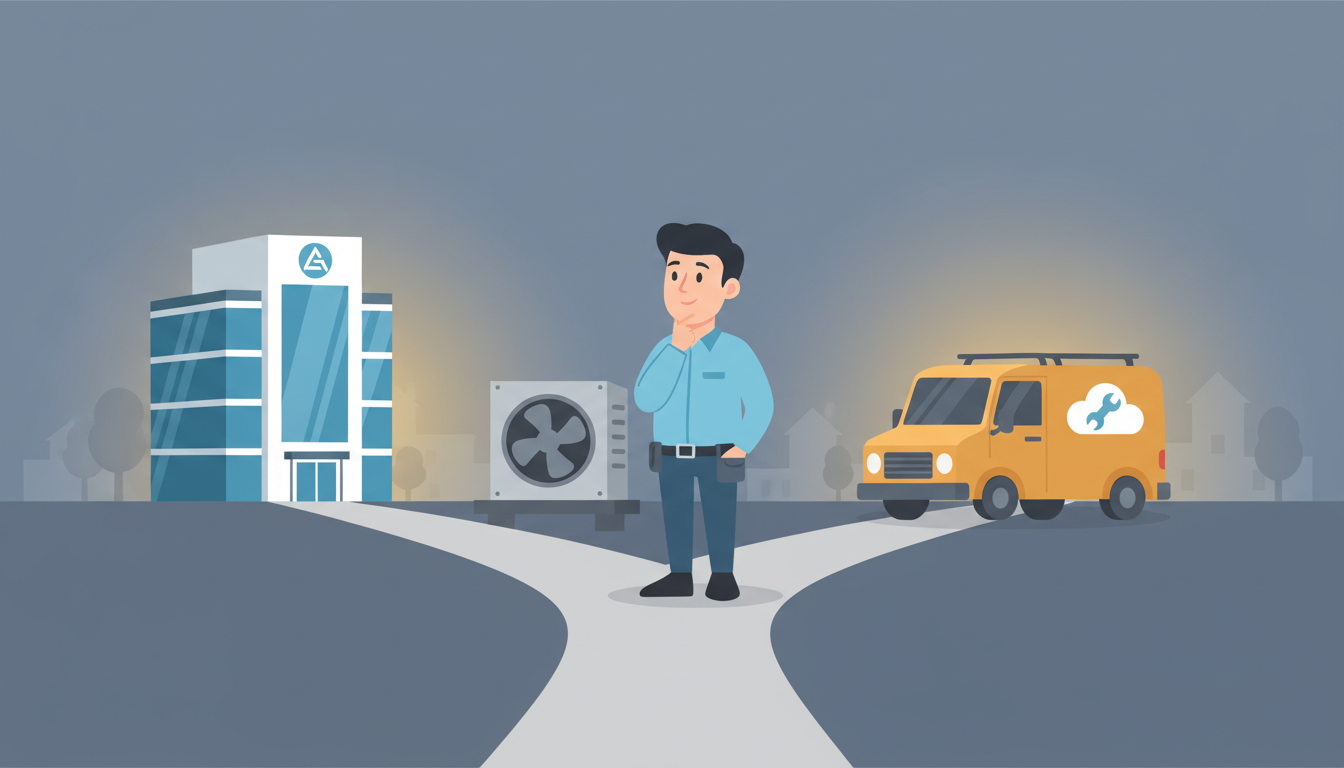
Should You Choose a Big HVAC Company or a Local Contractor?
Should You Choose a Big HVAC Company or a Local Contractor?
When your air conditioner breaks down on the hottest day of summer or your furnace quits in the middle of winter, you need help fast. But here's the million-dollar question: should you call a big HVAC company or a local contractor?
The truth is, both options have their strengths and weaknesses. Choosing between a national HVAC chain and a family-owned local business isn't just about who can fix your system—it's about finding the right fit for your specific needs, budget, and expectations.
In this guide, we'll break down everything you need to know about big HVAC companies versus local contractors so you can make the best decision for your home.
Understanding the Different Types of HVAC Companies
Before we dive into the pros and cons, let's clarify what we mean by "big" and "local" HVAC companies.
What Counts as a Big HVAC Company?
Big HVAC companies typically include:
- National franchise chains with locations across multiple states
- Regional corporations serving dozens of cities
- Equity-backed firms owned by investment groups
- Companies with 50+ employees and large fleets of service vehicles
These companies often have recognizable brand names, extensive advertising budgets, and standardized service protocols.
What Defines a Local HVAC Contractor?
Local contractors are usually:
- Family-owned businesses serving a specific community
- Independent contractors with 1-10 employees
- Small operations with local roots and reputation
- Businesses focused on one city or region
These contractors typically rely on word-of-mouth referrals and have deep connections in their service area.
Big HVAC Companies: The Pros and Cons
Advantages of Choosing a Big HVAC Company
1. Faster Scheduling and Availability
Large HVAC companies have more resources at their disposal. With dozens of technicians and a fleet of service trucks, they can usually schedule appointments faster than smaller operations.
When you're dealing with a broken AC in July, that quick response time matters. Big companies can often get someone to your door within 24 hours, sometimes even the same day.
2. 24/7 Emergency Service
Most national HVAC chains offer round-the-clock emergency service. Whether it's 2 AM on a Sunday or Christmas morning, they'll have someone available to take your call and dispatch a technician.
This level of availability provides peace of mind, especially for families with young children, elderly relatives, or anyone with health conditions affected by extreme temperatures.
3. Consistent Training and Certification Standards
Big companies invest heavily in employee training programs. Their technicians typically undergo:
- Standardized onboarding processes
- Regular continuing education courses
- Manufacturer-specific training
- NATE (North American Technician Excellence) certification programs
This structured approach to training helps ensure you'll get competent service, regardless of which technician shows up.
4. More Resources and Equipment
Large HVAC companies can afford to invest in:
- The latest diagnostic tools and equipment
- Specialized machinery for complex jobs
- Larger parts inventory for quick repairs
- Advanced software for load calculations
These resources can mean faster, more accurate diagnoses and repairs.
5. Established Warranty Programs
National companies usually offer comprehensive warranty coverage on both parts and labor. If something goes wrong after a repair or installation, their warranty policies are typically well-documented and honored company-wide.
6. Multiple Financing Options
Big HVAC companies often have relationships with financing companies, making it easier to spread out the cost of expensive repairs or new system installations through monthly payment plans.
Disadvantages of Big HVAC Companies
1. Higher Overhead Costs
Those fancy trucks, extensive advertising campaigns, and large office spaces don't pay for themselves. Big companies have significant overhead costs that get passed on to you.
You're not just paying for the repair—you're also covering their administrative staff, marketing budget, and corporate infrastructure.
2. Less Personalized Service
When you're one of thousands of customers, it's harder to get that personal touch. You might get a different technician each visit, and you're less likely to build a relationship with the company.
Customer service can feel standardized and impersonal, with decisions made by corporate policy rather than individual judgment.
3. Pressure Sales Tactics
Many large HVAC companies train their technicians to upsell services and equipment. You might face pressure to:
- Replace your entire system when a repair would suffice
- Purchase expensive maintenance plans
- Upgrade to premium equipment you don't need
Not all big companies operate this way, but it's common enough to warrant caution. Before hiring any HVAC contractor, watch for these red flags that signal potential problems.
4. Technician Turnover
Large companies often experience higher employee turnover rates. This can mean:
- Less experienced technicians on some calls
- Inconsistent service quality
- Loss of institutional knowledge about your specific system
5. Commission-Based Pay Structures
Some big HVAC companies pay their technicians on commission, which can create conflicts of interest. When a technician's paycheck depends on how much they sell, they may recommend unnecessary services.
Local HVAC Contractors: The Pros and Cons
Advantages of Choosing a Local Contractor
1. Lower Costs and Better Value
Local contractors have significantly lower overhead costs. Without expensive marketing campaigns, multiple office locations, or corporate management layers, they can offer more competitive pricing.
Many homeowners report saving 15-30% by choosing a local contractor over a national chain for the same work.
2. Personalized Customer Service
With a small customer base, local contractors can provide exceptional personalized service. You'll often work with the same technician or even the owner on every visit.
This relationship-based approach means:
- They remember your system's history
- They understand your home's unique needs
- They're invested in your satisfaction for future referrals
- You can call and actually talk to someone who knows you
3. Strong Local Reputation
Local contractors live in the community they serve. Their reputation is everything. They can't afford bad reviews because word travels fast in a small area.
This accountability often translates to:
- Higher quality workmanship
- Greater honesty in recommendations
- Better follow-up service
- Genuine care about customer satisfaction
4. Deep Knowledge of Local Conditions
Local contractors understand your area's specific challenges:
- Climate patterns and seasonal demands
- Local building codes and permit requirements
- Common issues with homes built in your region
- Which HVAC systems work best in local conditions
This expertise is invaluable for both repairs and new installations.
5. Flexibility and Accommodating Schedules
Small businesses can often be more flexible than corporate chains. They might:
- Work around your schedule more easily
- Take on smaller jobs big companies decline
- Provide customized service packages
- Negotiate pricing based on your specific situation
6. Supporting Your Local Economy
Choosing a local contractor keeps money in your community. These businesses employ local residents, sponsor youth sports teams, and contribute to the local tax base.
Disadvantages of Local HVAC Contractors
1. Limited Availability
Small operations have fewer technicians and trucks. This can mean:
- Longer wait times for appointments
- No 24/7 emergency service
- Limited availability during peak seasons
- Slower response during busy periods
If you need immediate service, a local contractor might not be able to accommodate you as quickly as a larger company.
2. Varying Levels of Expertise
The quality of local contractors varies dramatically. While some are highly skilled veterans with decades of experience, others might be relatively new to the business with limited expertise.
Unlike big companies with standardized training, you need to carefully vet local contractors to ensure they're qualified. Learn more about how to choose an HVAC repair company you can trust.
3. Limited Resources
Small contractors might not have:
- The latest diagnostic equipment
- Large parts inventories
- Specialized tools for complex jobs
- Multiple technicians for large installations
This can sometimes mean longer repair times or the need to order parts.
4. Uncertain Long-Term Stability
Small businesses fail more often than large corporations. If your local contractor goes out of business:
- Your warranty might become worthless
- Your service history could be lost
- You'll need to find a new contractor and start over
5. Fewer Financing Options
Local contractors typically can't offer the same financing flexibility as big companies. You might need to pay upfront or arrange your own financing for major repairs or installations.
Making the Right Choice: When to Choose Which
Choose a Big HVAC Company If:
You need immediate emergency service. Large companies with 24/7 availability and multiple technicians can respond faster to urgent situations.
You want standardized, predictable service. If you prefer knowing exactly what to expect every time, big companies offer consistent protocols and procedures.
You're purchasing a high-end system. Major installations often benefit from the advanced equipment and multiple-technician teams that large companies provide.
You plan to finance the work. Big companies typically offer more financing options with better terms.
You're in a rental property. Landlords and property managers often prefer working with larger companies that can handle multiple properties.
Choose a Local Contractor If:
You're looking for the best value. Local contractors almost always charge less for the same work due to lower overhead costs.
You want personalized service. Small businesses excel at building relationships and providing customized care.
You value supporting local businesses. Keeping your money in the community matters to you.
You have a straightforward repair or maintenance need. For routine work, local contractors provide excellent service at better prices.
You want honest, pressure-free recommendations. Local contractors who depend on reputation are less likely to push unnecessary services.
Questions to Ask Any HVAC Contractor (Big or Small)
Regardless of company size, always ask:
-
"Are you properly licensed and insured?" Verify current state HVAC licensing, liability insurance, and workers' compensation coverage.
-
"Do your technicians have NATE certification?" NATE certification is the industry's top credential and indicates professional expertise.
-
"Can you provide local references?" Ask for 3-5 recent customers you can contact.
-
"Do you pull permits for installations?" Legitimate contractors always obtain required permits.
-
"What's included in your warranty?" Get warranty terms in writing for both parts and labor.
-
"Will you provide a detailed written estimate?" Never accept work without a comprehensive written quote.
-
"How long have you been in business?" Experience matters for both companies and individual technicians.
For a complete guide on evaluating contractors, check out our comprehensive HVAC repair guide.
The Hybrid Approach: Best of Both Worlds
You don't have to pick just one type of contractor for all situations. Many savvy homeowners use a hybrid approach:
- Use local contractors for routine maintenance, minor repairs, and seasonal tune-ups
- Call big companies for emergency situations or major installations requiring specialized equipment
This strategy lets you save money on everyday needs while maintaining access to resources for complex situations.
Cost Comparison: What to Expect
While prices vary by region and specific work needed, here's a general comparison:
Routine Maintenance Visit
- Big Company: $150-$300
- Local Contractor: $100-$200
- Potential Savings: 25-33%
AC Repair (Average)
- Big Company: $350-$600
- Local Contractor: $250-$450
- Potential Savings: 20-28%
New System Installation
- Big Company: $7,000-$12,000
- Local Contractor: $5,500-$9,000
- Potential Savings: 15-25%
Keep in mind that the cheapest option isn't always the best value. Quality workmanship, proper sizing calculations, and correct installation techniques matter more than saving a few hundred dollars.
Common Misconceptions Debunked
Myth #1: "Big companies are always more reliable"
Reality: Company size doesn't guarantee quality. Plenty of small contractors provide exceptional, reliable service, while some large companies have serious quality control issues.
Myth #2: "Local contractors can't handle complex jobs"
Reality: Many local contractors have decades of experience and can handle everything from simple repairs to complete system replacements. What matters is their specific qualifications, not their company size.
Myth #3: "You'll always save money with local contractors"
Reality: While local contractors typically charge less, some inexperienced ones might take longer or make mistakes that cost more in the long run. Cheap isn't always economical.
Myth #4: "Big companies offer better warranties"
Reality: Warranty quality depends on the specific company, not its size. Some local contractors offer excellent warranties, while some national chains have loopholes that limit coverage.
Myth #5: "Local contractors aren't properly licensed"
Reality: Legitimate local contractors must meet the same state licensing requirements as big companies. Always verify licensing regardless of company size.
Frequently Asked Questions
Are local HVAC contractors cheaper than big companies?
Yes, local contractors typically charge 15-30% less than national chains due to lower overhead costs. However, price shouldn't be your only consideration. Verify qualifications, experience, and reputation before choosing based solely on cost.
Do big HVAC companies provide better quality service?
Not necessarily. Service quality depends on technician training, experience, and company standards—not size. Both large and small companies can provide excellent or poor service. Check reviews, certifications, and references to evaluate quality.
Can local contractors handle emergency HVAC repairs?
Many local contractors offer emergency services, but they may have more limited availability than large companies with 24/7 call centers and multiple crews. Ask about emergency response times before you need urgent service.
Which type of contractor is better for HVAC installation?
Both can handle installations well. Big companies may have more specialized equipment for complex installations, while local contractors often provide more personalized attention to detail. Choose based on the specific contractor's experience with your type of system.
How do I know if a local HVAC contractor is legitimate?
Verify their state HVAC license, liability insurance, and workers' compensation coverage. Check their Better Business Bureau rating, read online reviews, ask for references, and confirm they pull proper permits. Legitimate local contractors meet all the same requirements as large companies.
The Bottom Line: It Depends on Your Priorities
There's no universal "right" answer to whether you should choose a big HVAC company or a local contractor. The best choice depends on:
- Your specific situation and needs
- Your budget and value priorities
- The urgency of your service needs
- Your preference for personalized vs. standardized service
- The reputation and qualifications of available options in your area
The smartest approach? Don't decide based on company size alone. Instead, evaluate individual companies—both big and small—based on:
✓ Proper licensing and insurance ✓ Technician certifications (especially NATE) ✓ Customer reviews and references ✓ Transparent pricing and detailed estimates ✓ Clear warranty terms ✓ Communication style and professionalism ✓ Experience with your specific needs
Many homeowners find that having relationships with both a reliable local contractor for routine needs and a larger company for emergencies provides the best of both worlds.
Take Action: Find Your Ideal HVAC Contractor
Now that you understand the key differences between big HVAC companies and local contractors, you're ready to make an informed decision.
Start by:
- Identifying 2-3 contractors of each type in your area
- Checking their licenses, certifications, and reviews
- Requesting quotes for your specific needs
- Asking the key questions listed in this guide
- Comparing not just prices, but overall value and fit
Remember, the "best" HVAC contractor isn't determined by the size of their company—it's the one who provides quality work, honest service, and fair pricing while meeting your specific needs.
Your heating and cooling system is one of your home's most important investments. Taking the time to choose the right contractor, whether big or small, will pay dividends in comfort, energy efficiency, and long-term savings.