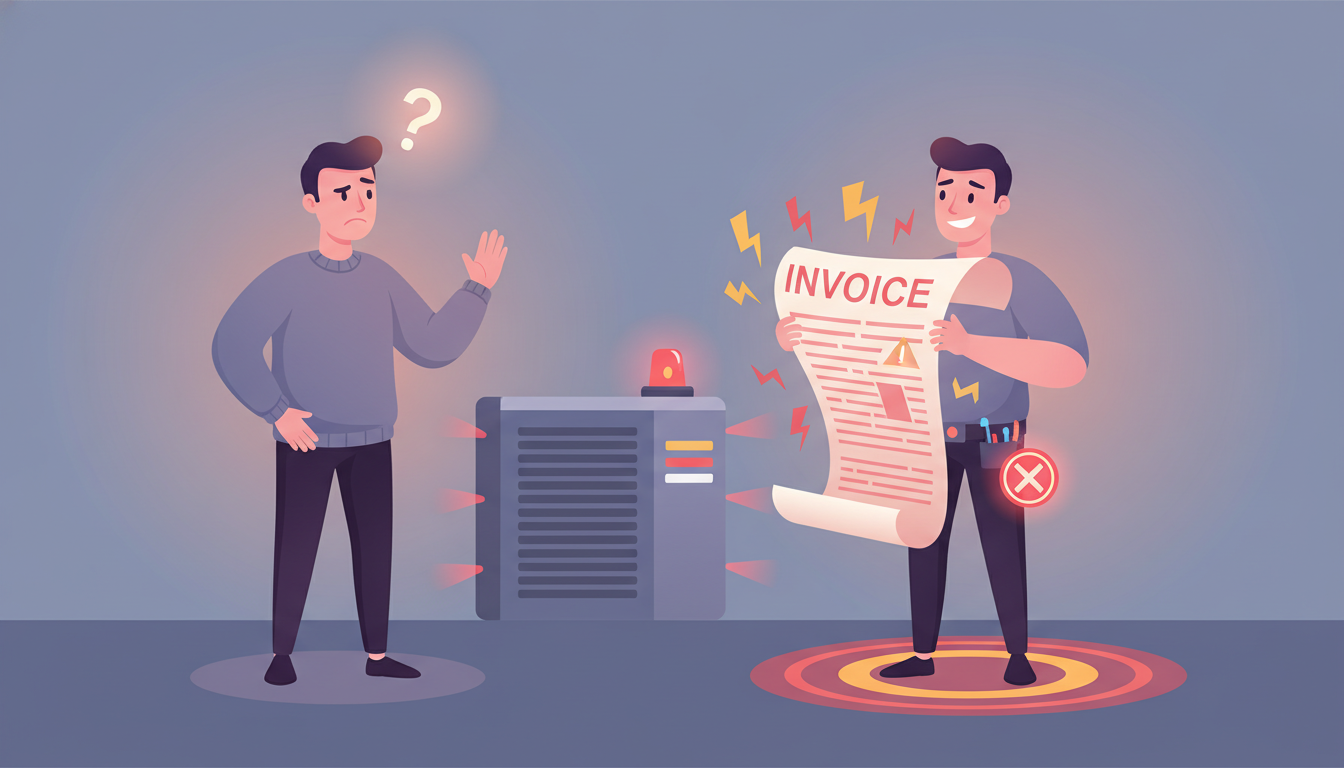
10 Red Flags When Hiring an HVAC Contractor (Don't Get Scammed!)
10 Red Flags When Hiring an HVAC Contractor (Don't Get Scammed!)
Hiring the wrong HVAC contractor can cost you thousands of dollars in shoddy repairs, unnecessary replacements, and even safety hazards. Whether you need air conditioning installation, furnace repair, or routine maintenance, knowing the warning signs of unreliable contractors is essential to protecting your home and your wallet.
In this guide, we'll walk you through 10 critical red flags when hiring an HVAC contractor so you can make an informed decision and avoid costly mistakes.
1. Missing or Invalid Licensing and Insurance
One of the biggest red flags hiring HVAC contractor is the absence of proper licensing and insurance. Every legitimate heating and cooling contractor should hold valid state licensing and carry comprehensive insurance coverage.
What to verify:
- State-issued HVAC contractor license
- General liability insurance
- Workers' compensation coverage
- EPA Section 608 certification (required for refrigerant handling)
A licensed and insured contractor protects you from liability if accidents occur on your property. If a technician gets injured or damages your home during repairs, you could be held financially responsible without proper insurance coverage.
How to check: Ask for license numbers and insurance certificates. Most states have online databases where you can verify contractor credentials. Don't just take their word for it—actually verify the information.
If a contractor becomes defensive or makes excuses about providing documentation, move on to someone else. Professional contractors are proud to show their credentials.
2. Refusal to Provide Written Estimates
A reputable HVAC company always provides detailed written estimates before starting any work. If a contractor only offers verbal quotes or seems hesitant to put pricing in writing, that's a major warning sign.
A proper written estimate should include:
- Detailed scope of work
- Labor costs broken down
- Parts and materials needed
- Project timeline
- Total cost estimate
- Warranty information
- Payment schedule
Written estimates protect both you and the contractor by establishing clear expectations. They also make it easier to compare multiple bids and spot unreasonable charges.
Verbal quotes are worthless if disputes arise later. Always insist on getting everything in writing before any work begins. For more guidance on evaluating HVAC services, check out our complete HVAC repair guide.
3. Unusually Low Prices (Too Good to Be True)
While everyone loves a good deal, extraordinarily low estimates compared to other quotes should raise concerns. Rock-bottom prices often indicate:
- Use of substandard or counterfeit parts
- Inexperienced or unlicensed technicians
- Hidden fees that appear later
- Rushed, poor-quality workmanship
- Lack of proper insurance coverage
What to do instead: Get at least three written estimates from different contractors. If one bid is significantly lower than the others (30% or more), ask detailed questions about why. There may be legitimate reasons, but often it signals corner-cutting.
Remember, quality HVAC work requires skilled labor, proper parts, and adequate time. Contractors offering suspiciously low prices are cutting corners somewhere—and you'll likely pay for it later through premature failures or additional repairs.
4. High-Pressure Sales Tactics and Scare Tactics
Professional HVAC contractors give you time to make informed decisions. Warning signs of pushy contractors include:
- Creating artificial urgency ("This price is only good today!")
- Using fear-based language about system failures
- Pressuring you to sign contracts immediately
- Discouraging you from getting other estimates
- Claiming your system is "dangerous" without proper inspection
Legitimate contractors understand that HVAC systems represent significant investments. They welcome questions and encourage you to take time for research and comparison shopping.
If someone is rushing you into a decision or making you feel pressured, that's a red flag. Trust your instincts and don't let anyone pressure you into expensive repairs or replacements you're not ready for.
5. Pushing Replacement Over Repair Without Justification
Some contractors immediately recommend full system replacement without thoroughly investigating repair options. While replacement is sometimes necessary, it shouldn't be the first recommendation for every issue.
Questions to ask:
- What specific problem requires replacement?
- What repair options are available?
- How old is my current system?
- What's the cost comparison between repair and replacement?
- Can you show me the failed component?
Most HVAC systems last 10-15 years with proper maintenance. If your system is relatively new and a contractor immediately recommends replacement without diagnostics, get a second opinion.
A trustworthy heating and cooling contractor explores all repair possibilities first and provides honest guidance about when replacement genuinely makes financial sense versus repairing. Learn more about how to choose an HVAC repair company you can trust.
6. Demanding Full Payment Upfront
Never pay the full amount before work is completed. This is a classic home improvement scam tactic. While a deposit for materials is reasonable, it should typically be:
- No more than 25-30% of the total project cost
- Clearly outlined in your written contract
- Refundable if work isn't performed as agreed
Standard payment schedule:
- Small deposit upfront for materials
- Progress payments for large projects (only after milestones)
- Final payment upon satisfactory completion
If a contractor demands full payment before starting work or completing the job, that's a huge red flag. You have no leverage once you've paid in full, and unscrupulous contractors know this.
Legitimate contractors have established relationships with suppliers and don't need your money upfront to purchase materials. They understand that final payment comes after you're satisfied with the completed work.
7. No Online Presence or Poor Reviews
In today's digital age, established HVAC companies maintain professional online presences. Red flags include:
- No website or social media presence
- Inability to find the company through online searches
- Numerous negative reviews on Google, Yelp, or Better Business Bureau
- No verifiable customer testimonials
- Recent business registration (brand new companies with no track record)
Where to check:
- Better Business Bureau (BBB) for ratings and complaint history
- Google Reviews for customer experiences
- Yelp and Facebook for additional feedback
- State licensing boards for disciplinary actions
While even great companies occasionally receive negative reviews, look for patterns. Multiple complaints about the same issues (overcharging, incomplete work, poor communication) indicate systemic problems.
Also be wary of companies with exclusively five-star reviews that seem fake or generic. Authentic reviews include specific details about the service experience.
8. Lack of Proper Certifications Beyond Basic Licensing
Beyond state licensing, professional HVAC technicians often hold additional certifications that demonstrate expertise and ongoing training:
Important certifications:
- NATE Certification (North American Technician Excellence): The leading HVAC certification showing technical competence
- EPA Section 608 Certification: Required for handling refrigerants
- Manufacturer Certifications: Training on specific equipment brands
- HVAC Excellence Certification: Industry-recognized competency credential
Contractors who invest in ongoing education and certification stay current with evolving technology, efficiency standards, and best practices. While not every technician needs every certification, complete absence of professional credentials beyond basic licensing is concerning.
Ask about technician qualifications and certifications. Professional companies are happy to discuss their team's credentials and expertise.
9. Skipping Proper Inspections and Load Calculations
Quality HVAC work requires proper assessment before installation or major repairs. Warning signs include:
- Quoting replacement systems without measuring your home
- Not performing Manual J load calculations for new installations
- Skipping inspection of existing ductwork
- Recommending oversized or undersized equipment
- No assessment of insulation or air leakage
Manual J load calculation determines the correct HVAC system size for your home based on:
- Square footage
- Insulation levels
- Window sizes and locations
- Climate zone
- Ductwork configuration
- Ceiling heights
Installing an incorrectly sized system leads to:
- Higher energy bills
- Poor humidity control
- Frequent cycling and premature wear
- Uncomfortable temperature variations
- Shortened equipment lifespan
If a contractor quotes a new system based solely on your current unit's size or a quick visual estimate, that's inadequate. Proper sizing requires detailed calculations—insist on it.
10. Unclear Communication and Poor Customer Service
How a contractor communicates during the sales process reveals how they'll handle problems later. Red flags include:
- Difficulty reaching them by phone or email
- Days or weeks to respond to inquiries
- Vague answers to specific questions
- Using excessive technical jargon to confuse rather than educate
- Dismissive attitude toward your concerns
- No clear point of contact for questions
Quality HVAC companies prioritize customer service because they want long-term relationships, not one-time transactions. They:
- Respond promptly to inquiries
- Explain technical issues in understandable terms
- Provide multiple contact methods
- Assign a specific contact person for your project
- Welcome questions and concerns
Poor communication before you hire them will only get worse once they have your money. Choose contractors who demonstrate professionalism and responsiveness from your first interaction.
For additional insights on selecting the right contractor, read our comparison of big HVAC companies vs. local contractors.
Additional Warning Signs to Watch For
Beyond the top 10 red flags, watch for these additional concerns:
Unprofessional Appearance
- Unmarked vehicles with no company branding
- No uniforms or identification badges
- Lack of professional tools and equipment
- Operating without a physical business address
Permit and Code Issues
- Unwillingness to pull required permits
- No knowledge of local building codes
- Suggesting unpermitted work to "save money"
- No final inspection after installation
Warranty Red Flags
- Refusing to offer warranty on labor
- No manufacturer warranty on equipment
- Vague warranty terms
- No written warranty documentation
Financial Warning Signs
- Only accepting cash payments
- No payment plan options for large projects
- Pushing unnecessary maintenance contracts
- Unexplained charges on invoices
FAQ: Hiring an HVAC Contractor
How do I verify an HVAC contractor's license?
Most states maintain online databases where you can verify contractor licenses. Visit your state's licensing board website and search by company name or license number. You can also request a copy of their license and verify it matches state records. Don't skip this step—unlicensed contractors void equipment warranties and create liability risks.
What certifications should my HVAC technician have?
At minimum, HVAC technicians should have EPA Section 608 certification for refrigerant handling. NATE (North American Technician Excellence) certification is the industry gold standard for technical competence. Manufacturer certifications for specific equipment brands are also valuable. Ask about ongoing training and professional development.
When should I replace vs. repair my HVAC system?
Generally, consider replacement if: your system is over 15 years old, repair costs exceed 50% of replacement cost, you're experiencing frequent breakdowns, or energy bills have significantly increased. For newer systems or minor issues, repair is typically more cost-effective. Get multiple professional opinions before deciding.
How much should I pay upfront for HVAC work?
For small repairs, no upfront payment should be required—pay after completion. For larger projects or new installations, a deposit of 25-30% for materials is reasonable. Never pay the full amount upfront. Structure payments around project milestones with final payment upon satisfactory completion and inspection.
What insurance does an HVAC contractor need?
HVAC contractors should carry general liability insurance (covering property damage), workers' compensation insurance (covering employee injuries), and often professional liability insurance. Request certificates of insurance showing current coverage and verify them directly with the insurance company if you're hiring for a major project.
Conclusion: Protect Your Investment
Avoiding these red flags when hiring an HVAC contractor protects your home, your budget, and your peace of mind. While it takes extra time to verify credentials, compare estimates, and research contractors thoroughly, it's far less expensive than dealing with botched repairs or contractor scams.
Your hiring checklist:
- ✓ Verify licensing and insurance
- ✓ Get multiple written estimates
- ✓ Check online reviews and BBB ratings
- ✓ Confirm professional certifications
- ✓ Ensure proper inspections and load calculations
- ✓ Review warranty terms carefully
- ✓ Never pay full price upfront
- ✓ Trust your instincts about professionalism
Remember, reputable HVAC contractors welcome your questions and due diligence. They understand you're making a significant investment and want you to feel confident in your choice. If something feels off, it probably is—trust your instincts and keep looking.
Taking time to choose the right heating and cooling contractor ensures quality work, fair pricing, and reliable service for years to come. Your HVAC system is too important to trust to just anyone.
Need reliable HVAC service? Start your search with contractors who demonstrate transparency, professionalism, and proper credentials. Your home comfort depends on it.