
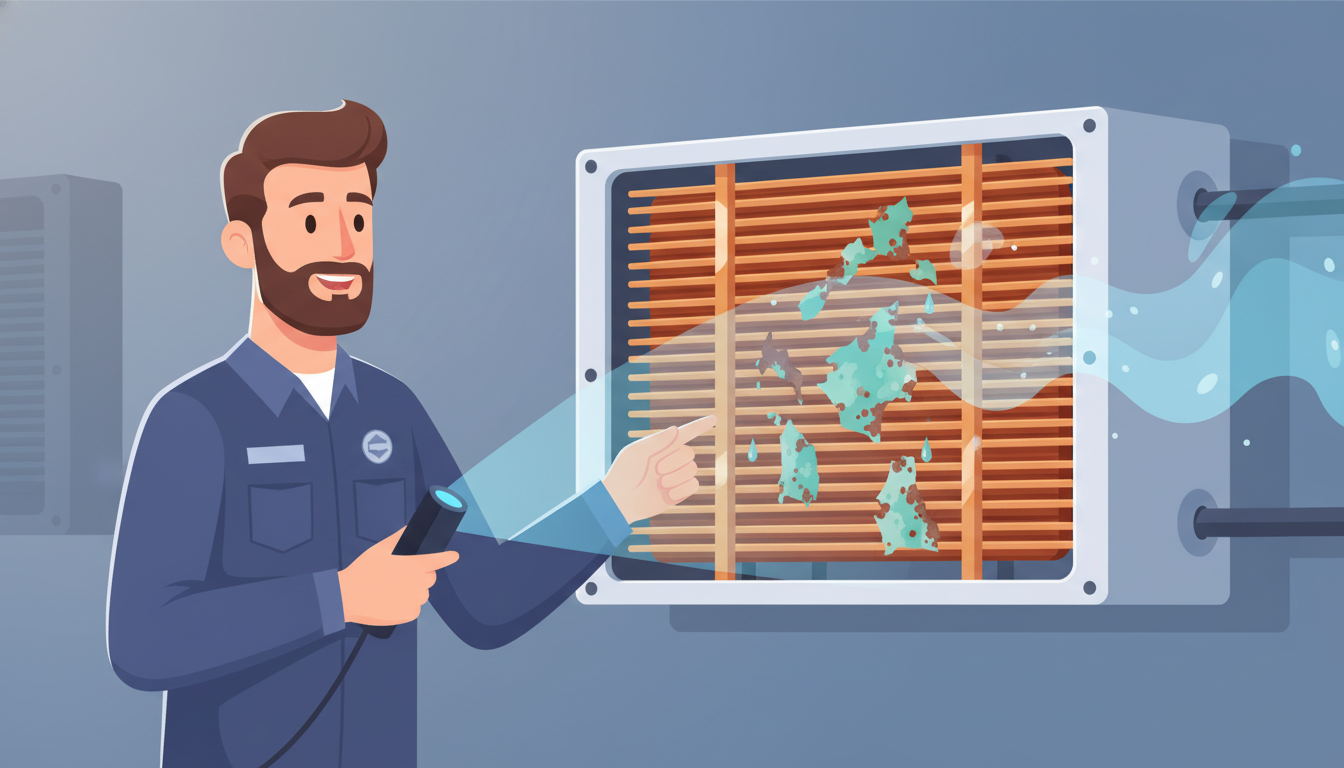
How Coil Corrosion Leads to Refrigerant Loss in Your HVAC System
How Coil Corrosion Leads to Refrigerant Loss in Your HVAC System
If your air conditioner isn't cooling like it used to, coil corrosion could be silently draining your system's refrigerant. Understanding how coil corrosion leads to refrigerant loss can help you catch this problem early and avoid costly repairs or complete system replacement. Let's explore the relationship between corroded coils and refrigerant leaks, plus what you can do to protect your HVAC investment.
What Is Coil Corrosion and Why Does It Matter?
Coil corrosion is the gradual deterioration of the copper tubing and aluminum fins in your AC's evaporator and condenser coils. These coils are essential for heat transfer—the evaporator coil absorbs heat from your indoor air, while the condenser coil releases it outside.
When corrosion attacks these coils, it doesn't just reduce efficiency. It creates physical pathways for refrigerant to escape, leading to leaks that compromise your entire cooling system. Without adequate refrigerant charge, your AC can't maintain comfortable temperatures, and you'll see your energy bills climb.
The Two Main Types of HVAC Coil Corrosion
Understanding the types of corrosion helps you identify the source of your refrigerant leak and determine the best solution.
Pitting Corrosion: The Visible Threat
Pitting corrosion creates small, crater-like holes on the surface of copper tubing. This type of corrosion typically results from exposure to fluoride (found in municipal water supplies) and chloride (present in cleaning products, ice melt, and even some carpeting materials).
Here's how it works: chloride and fluoride ions attack the protective oxide layer on copper pipes. Once this barrier is compromised, the corrosion process accelerates, eating deeper into the copper until it forms a pinhole. These pinholes allow high-pressure refrigerant to escape, starting as a slow leak that gradually worsens over time.
Formicary Corrosion: The Hidden Danger
Formicary corrosion is more insidious because it develops beneath the surface of copper tubing, creating ant-like tunnels (hence the name "formicary," from the Latin word for ant). This internal corrosion results from exposure to organic acids—specifically formic acid and acetic acid.
Common sources include:
- Formaldehyde in building materials and adhesives
- VOCs from paints, solvents, and aerosol sprays
- Vehicle exhaust fumes
- Industrial pollutants
- Cleaning products
The tunnels created by formicary corrosion gradually work their way through the coil wall until they reach the interior surface. Once a tunnel penetrates completely, refrigerant leaks out. The challenging aspect of formicary corrosion is that the exterior of the coil may look fine while significant damage exists internally.
How Coil Corrosion Creates Refrigerant Leaks: The Technical Process
The connection between coil corrosion and refrigerant loss is direct and mechanical. Your HVAC system operates under pressure—typically 60-100 PSI on the low-pressure side and 250-400 PSI on the high-pressure side, depending on your system and operating conditions.
Refrigerant naturally seeks the path of least resistance. As corrosion weakens the copper tubing wall, the metal becomes thinner and more porous. Eventually, the corrosion creates a complete pathway through the tube wall, forming a pinhole leak.
Initially, these pinholes might be microscopic, releasing only small amounts of refrigerant. However, several factors cause the leak to worsen over time:
- Continuous pressure: The constant high pressure inside the coil pushes refrigerant through the opening
- Expansion: Refrigerant escaping through the hole can cause erosion, making the opening larger
- Ongoing corrosion: The corrosive process doesn't stop; it continues to eat away at the metal around the initial breach
This is why refrigerant leaks from coil corrosion rarely get better on their own—they always get worse until properly repaired or the coil is replaced.
Signs of Coil Corrosion Before Major Refrigerant Loss
Catching coil corrosion early can save you thousands of dollars. Watch for these warning signs:
Visible Indicators
- Green, blue, or white deposits on copper lines (copper oxidation)
- Oily residue around coil connections (refrigerant often carries compressor oil)
- Rust or flaking on aluminum fins
- Black spots or discoloration on copper tubing
Performance Symptoms
- Reduced cooling capacity: Your system runs longer but doesn't reach the set temperature
- Ice buildup on the evaporator coil or refrigerant lines
- Hissing sounds near the indoor or outdoor unit (escaping refrigerant)
- Higher energy bills without increased usage
- Frequent cycling: The system turns on and off more often than normal
If you notice any of these symptoms of refrigerant leaks, it's time to call a professional for inspection.
Where Corrosion Strikes: Evaporator vs. Condenser Coils
Coil corrosion can affect both the evaporator and condenser coils, though each is vulnerable to different corrosive agents.
Evaporator Coil Corrosion
The evaporator coil sits inside your home, typically in the air handler or above your furnace. It's particularly vulnerable to:
- Indoor VOCs from cleaning products, air fresheners, and paint
- Formaldehyde from furniture, carpeting, and building materials
- Moisture that can trap corrosive chemicals against the coil surface
Because evaporator coils operate in a cool, humid environment, condensation on the coil surface can accelerate corrosion. If the condensate isn't properly drained or if the drain line backs up, standing water creates ideal conditions for deterioration.
Condenser Coil Corrosion
Your condenser coil faces outdoor elements constantly. Common threats include:
- Road salt and ice melt chemicals in winter
- Coastal salt air (especially in seaside locations)
- Industrial pollutants and vehicle exhaust
- Fertilizers and lawn chemicals
- Pet urine
Condenser coils are exposed to temperature extremes, UV radiation, and direct weather, making them especially susceptible to environmental corrosion.
How Quickly Does Coil Corrosion Lead to Refrigerant Loss?
The timeline from initial corrosion to noticeable refrigerant loss varies significantly based on several factors:
In aggressive environments (coastal areas, industrial zones, or homes with high VOC exposure), coil corrosion can create leaks within 3-5 years, even in relatively new systems.
In moderate environments, you might expect 8-12 years before corrosion becomes severe enough to cause refrigerant leaks.
With proper maintenance and protective coatings, well-maintained coils can last 15-20 years or more without significant corrosion issues.
The key factor is exposure intensity. A small amount of corrosive chemical exposure over many years can have the same effect as intense exposure over a shorter period. This is why some homeowners discover refrigerant leaks from corrosion in systems that are only a few years old, while others have trouble-free systems for decades.
Detecting Refrigerant Leaks from Corroded Coils
Professional HVAC technicians use several methods to detect and confirm refrigerant leaks caused by coil corrosion:
Electronic Leak Detectors
These sensitive instruments can detect refrigerant concentrations as low as 0.1 ounces per year. Technicians move the detector probe along coil surfaces, connections, and tubing to pinpoint leak locations.
Ultraviolet Dye Testing
A UV-reactive dye is injected into the refrigerant system. After the system runs for a period, a UV light reveals the dye at leak points, making even tiny leaks visible.
Soap Bubble Testing
For suspected leak areas, technicians apply a soap solution. Escaping refrigerant creates bubbles, confirming the leak location. This method works well for accessible areas but can miss very small leaks.
Pressure Testing
The system is pressurized with nitrogen (which won't damage components), and pressure readings are monitored. A drop in pressure indicates a leak somewhere in the system.
Visual Inspection
Experienced technicians can often spot corrosion before it leads to leaks by looking for discoloration, oily residue, and deterioration patterns on coils.
Regular maintenance includes leak checks, which can catch problems before you lose significant refrigerant and before your cooling capacity suffers. Following a comprehensive HVAC repair guide helps ensure all system components are inspected regularly.
Can Corroded Coils Be Repaired or Must They Be Replaced?
This is one of the most important questions homeowners ask, and the answer depends on the extent and location of the corrosion.
When Repair Is Possible
Small, isolated leaks in accessible areas of the coil can sometimes be repaired through:
- Brazing or soldering: Permanently sealing small holes in copper tubing
- Leak sealant products: Chemical sealants injected into the system (though these are temporary solutions)
However, repairs are only viable when:
- The leak is in a single, accessible location
- The surrounding coil material remains in good condition
- The repair cost is significantly less than replacement
When Replacement Is Necessary
In most cases of coil corrosion, replacement is the better long-term solution because:
- Multiple leak sites: Corrosion rarely creates just one leak. If one area has failed, other sections are likely compromised
- Warranty concerns: Many manufacturers won't warranty refrigerant charges if the coil has known corrosion
- Ongoing deterioration: Repairing one leak doesn't stop the corrosion process elsewhere in the coil
- Cost effectiveness: Multiple repair visits often exceed replacement costs
Additionally, if your system uses R-22 refrigerant (being phased out), coil replacement is usually recommended because recharging with R-22 has become extremely expensive.
The Cost of Ignoring Coil Corrosion and Refrigerant Loss
Delaying action on coil corrosion and refrigerant leaks creates a cascade of problems:
Compressor damage: Low refrigerant levels force your compressor to work harder, often leading to premature failure. Compressor replacement costs $1,500-$3,000 or more.
Energy waste: A system low on refrigerant runs longer to achieve the same cooling, increasing energy consumption by 20-30%.
Complete system failure: Continued operation with insufficient refrigerant can damage multiple components, eventually requiring full system replacement ($5,000-$12,000+).
Comfort issues: You'll endure weeks or months of inadequate cooling while problems gradually worsen.
Environmental impact: Refrigerant released into the atmosphere contributes to ozone depletion and climate change.
Understanding the causes of repeated refrigerant loss helps you avoid the cycle of constant recharging without addressing the underlying corrosion problem.
Preventing Coil Corrosion and Protecting Against Refrigerant Loss
While you can't completely eliminate corrosion risk, several strategies significantly reduce it:
Apply Protective Coil Coatings
Specialized epoxy or phenolic coatings create a barrier between coil surfaces and corrosive chemicals. These coatings:
- Block chloride, fluoride, and organic acid penetration
- Withstand temperature extremes
- Don't significantly impact heat transfer
- Can extend coil life by 10-15 years
Coatings are most effective when applied during installation or early in the system's life, before corrosion begins.
Maintain Proper Drainage
Ensure your evaporator coil's condensate drain line flows freely. Standing water on the coil surface accelerates corrosion. Flush drain lines annually and install overflow switches to prevent backups.
Control Indoor Air Quality
Reduce VOC exposure by:
- Using VOC-free cleaning products
- Ensuring adequate ventilation when painting or using solvents
- Choosing low-VOC building materials and furnishings
- Running exhaust fans when using aerosol products
Keep Condenser Coils Clean
Outdoor coils accumulate dirt, pollen, and corrosive materials. Annual professional cleaning removes these contaminants before they cause damage.
Schedule Regular Professional Maintenance
Annual HVAC maintenance includes:
- Visual inspection of coils for early corrosion signs
- Refrigerant level checks to detect small leaks
- Coil cleaning to remove corrosive materials
- Condensate drain service
Catching corrosion early—before it causes refrigerant leaks—is always less expensive than emergency repairs.
Consider System Location
If you're installing a new system:
- Keep outdoor units away from swimming pools (chlorine exposure)
- Avoid placement near dryer vents or exhaust fans
- In coastal areas, choose coils with enhanced corrosion-resistant coatings
- Ensure adequate clearance for airflow and maintenance access
Coil Corrosion and HVAC System Types
Different HVAC configurations face varying corrosion risks:
Split systems (separate indoor and outdoor units) have both evaporator and condenser coils at risk. The long refrigerant lines also provide additional potential leak points.
Heat pumps cycle refrigerant in both directions, subjecting coils to different pressure and temperature conditions that can accelerate corrosion in vulnerable areas.
Package units (all components in one outdoor cabinet) may have increased condenser coil corrosion from constant outdoor exposure but reduced evaporator coil VOC exposure.
Mini-split systems typically have smaller coils with less surface area, potentially reducing overall corrosion risk, but their wall-mounted indoor units may be harder to service regularly.
Frequently Asked Questions About Coil Corrosion and Refrigerant Loss
How do I know if my refrigerant loss is from coil corrosion or another problem?
A professional HVAC technician can inspect your coils for visible corrosion signs and use leak detection methods to pinpoint the source. Refrigerant leaks can also occur at valve connections, service ports, or along refrigerant lines, so a thorough inspection is essential.
Will adding more refrigerant fix my problem if I have corroded coils?
No. Recharging the system without repairing the leak is a temporary fix that wastes money. The refrigerant will simply leak out again, and continued operation with fluctuating refrigerant levels damages other system components.
Are newer HVAC systems less susceptible to coil corrosion?
Not necessarily. While some manufacturers use enhanced materials or coatings, modern coils can still corrode, especially in harsh environments. Some evidence suggests that thinner-walled tubing in newer, higher-efficiency systems may actually be more vulnerable to rapid corrosion penetration.
Can I prevent formicary corrosion if I already have it?
Once formicary corrosion begins, it's difficult to stop without coil replacement. However, you can prevent it from affecting other components by eliminating VOC sources, improving ventilation, and applying protective coatings to unaffected coils.
Does homeowner's insurance cover coil corrosion and refrigerant leaks?
Most standard homeowner's policies exclude coverage for maintenance-related issues and gradual deterioration, which includes corrosion. However, if corrosion results from a covered peril (like storm damage), you may have coverage. Review your specific policy or contact your insurance agent.
Taking Action: What to Do If You Suspect Coil Corrosion
If you've noticed signs of coil corrosion or unexplained refrigerant loss:
- Stop using the system if it's completely failing to cool or making unusual sounds
- Schedule a professional inspection promptly—early detection prevents more expensive damage
- Get a detailed assessment including leak location, corrosion extent, and repair vs. replacement recommendations
- Ask about warranties on parts and labor for any repairs or replacements
- Discuss preventive measures like coil coatings for replacement coils
- Consider system age when making repair vs. replace decisions
Protect Your Investment With Proactive Coil Care
Coil corrosion leading to refrigerant loss is one of the most common yet preventable HVAC problems. By understanding how corrosion creates leaks, recognizing early warning signs, and maintaining your system properly, you can extend your equipment's lifespan and avoid expensive emergency repairs.
Remember that refrigerant doesn't just disappear—if your system needs frequent recharging, there's a leak somewhere. Finding and fixing that leak, whether through targeted repair or coil replacement, is always more cost-effective than the endless cycle of recharging a leaking system.
Don't wait until complete system failure forces your hand. Schedule regular maintenance, address early corrosion signs promptly, and protect your coils with appropriate coatings. Your HVAC system—and your comfort—will thank you.
Ready to address coil corrosion before it leads to costly refrigerant loss? Contact a qualified HVAC professional today for a comprehensive system inspection and personalized recommendations for protecting your cooling investment.