
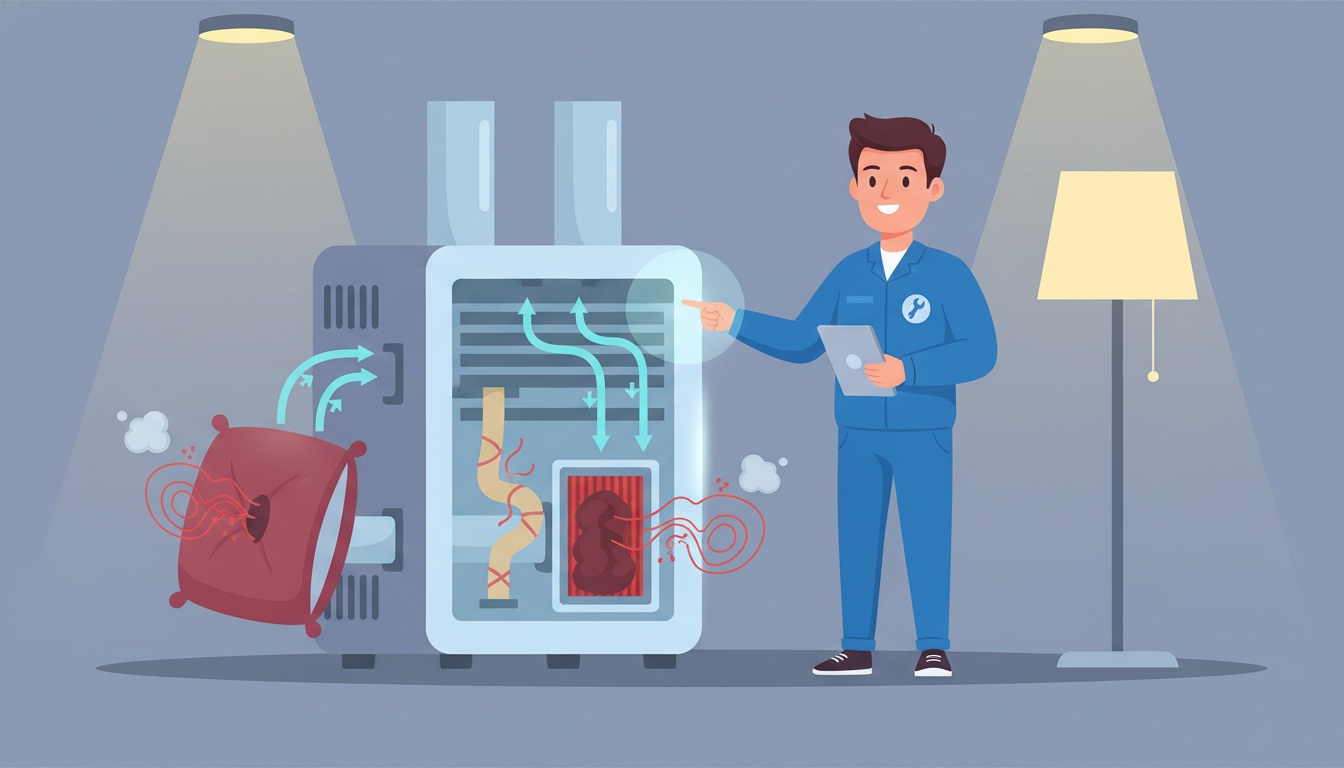
Common Airflow Mistakes Homeowners Make (And How to Fix Them)
Common Airflow Mistakes Homeowners Make (And How to Fix Them)
Is your home feeling stuffy even though your HVAC system is running? Are some rooms freezing while others feel like a sauna? You're not alone. Most homeowners unknowingly make common airflow mistakes that reduce comfort, spike energy bills, and shorten the life of their heating and cooling system.
The good news? Most of these mistakes are easy to fix once you know what to look for. In this guide, we'll walk you through the most common airflow mistakes homeowners make and show you exactly how to correct them.
Mistake #1: Closing Vents in Unused Rooms
Many homeowners think closing vents in unused rooms saves energy and money. It sounds logical—why heat or cool a room nobody uses?
Here's the problem: Your HVAC system is designed to distribute air throughout your entire home. When you close vents, you create pressure imbalances that force your system to work harder, not smarter.
Why This Hurts Your System
Closing vents doesn't reduce the amount of air your blower motor produces. Instead, that air gets redirected, increasing static pressure in your ductwork.
This extra pressure stresses your equipment. Your furnace or air handler runs longer cycles trying to reach the thermostat setting. Higher pressure can even cause ductwork leaks or damage your blower motor over time.
The increased pressure also forces air through tiny gaps and cracks in your ductwork. Air that should reach your living spaces ends up in your attic or crawl space, wasting energy and money.
What to Do Instead
Keep all vents open, even in rooms you rarely use. If you want zone control, consider installing a zoning system with dampers designed for your HVAC setup.
Proper zoning systems use motorized dampers controlled by multiple thermostats. These systems are engineered to handle restricted airflow without damaging your equipment.
For multi-story homes with airflow challenges, check out our guide on how to fix second floor airflow problems for targeted solutions.
Mistake #2: Ignoring Dirty Air Filters
Your air filter is the first line of defense for your HVAC system. When filters get clogged with dust, pet hair, and debris, airflow drops dramatically.
The result? Your system works overtime to push air through a blocked filter. You'll notice weak airflow from vents, longer heating and cooling cycles, and higher energy bills.
A dirty filter doesn't just reduce comfort. It allows dust and particles to bypass the filter entirely, coating your evaporator coil and blower motor with grime that reduces efficiency even further.
How Often Should You Change Filters?
Most homes need a new filter every 1-3 months. But your schedule depends on several factors:
- Pets: If you have dogs or cats, change filters monthly
- Allergies: Households with allergy sufferers need more frequent changes
- System usage: Heavy use in summer and winter requires more frequent replacement
- Filter type: Higher MERV-rated filters may need more frequent changes
- Home location: Homes in dusty areas or near construction need more frequent changes
Set a reminder on your phone. A $5 filter replacement beats a $500 repair bill every time.
Mark your calendar for the first day of each season as a reminder. This ensures you never forget during peak heating and cooling months.
Signs Your Filter Needs Changing
Check your filter if you notice weak airflow from vents, increased dust around your home, or the system running constantly without reaching your desired temperature. These are clear warning signs of restricted airflow.
You can also visually inspect the filter. Hold it up to a light source. If you can't see light through it, it's time for a replacement.
Mistake #3: Using the Wrong MERV-Rated Filter
Not all air filters are created equal. MERV (Minimum Efficiency Reporting Value) ratings measure how well a filter captures particles. Higher numbers mean better filtration, right?
Not so fast. Higher MERV ratings also mean more restricted airflow.
The MERV Rating Sweet Spot
Most residential HVAC systems work best with MERV 8-11 filters. These catch common pollutants like dust, pollen, and pet dander without choking your system.
MERV 13-16 filters are designed for hospitals and commercial buildings. Your home system's blower motor probably isn't powerful enough to push air through these high-density filters.
What Happens When MERV Is Too High
Installing a filter your system can't handle reduces airflow throughout your home. Your blower motor strains, working harder than designed. Over time, this burns out motors and compressors, leading to expensive repairs.
The reduced airflow also affects system performance. Your air conditioner can't cool properly, and your furnace might overheat and shut down on safety limits.
Check your HVAC manual or ask a professional what MERV rating your system supports. For more on maintaining proper airflow, read our complete HVAC repair guide.
When Higher MERV Makes Sense
Some situations justify higher MERV filters. If family members have severe allergies or respiratory conditions, upgrading your blower motor to handle MERV 13 filters might make sense.
Just ensure your system is modified to accommodate the increased static pressure. Installing high-MERV filters without upgrading equipment causes more problems than it solves.
Mistake #4: Blocking Air Vents and Registers
Take a quick look around your home. Are vents hidden behind furniture, curtains, or storage boxes? This common mistake significantly reduces air circulation.
Common Culprits That Block Airflow
Sofas pushed against wall vents, beds placed over floor registers, and curtains draped over return air vents all restrict airflow. Even furniture placed 6 inches in front of a vent can reduce efficiency by 25% or more.
Return air vents need even more clearance. These vents pull air back to your system for heating or cooling. Blocking them forces your system to work harder to draw in air.
Rugs and carpet placed over floor vents create another common problem. The fibers trap dust and restrict airflow, making your system work harder while reducing comfort.
The Furniture Placement Fix
Keep at least 12 inches of clearance around all supply vents. For return air vents, maintain 24 inches of open space.
Rearrange furniture if needed. Your comfort and lower energy bills are worth the effort. If you're dealing with weak airflow from specific vents, our article on weak airflow vent causes covers diagnosis and fixes.
Consider using vent deflectors or extenders if furniture placement unavoidably blocks a vent. These inexpensive devices redirect airflow around obstacles.
Mistake #5: Neglecting Outdoor Unit Clearance
Your outdoor condenser unit needs breathing room. Many homeowners make the mistake of letting vegetation, debris, and storage items crowd their AC unit.
Why Outdoor Unit Clearance Matters
Your condenser needs to expel heat from your home. When shrubs, grass clippings, leaves, or lawn equipment block airflow around the unit, it can't release heat efficiently.
The result? Your AC runs longer, uses more energy, and struggles to cool your home. In extreme cases, blocked airflow can cause your compressor to overheat and fail.
Restricted airflow around the outdoor unit increases refrigerant pressures. High head pressure reduces cooling capacity and shortens compressor lifespan.
Proper Clearance Requirements
Maintain at least 2-3 feet of clearance on all sides of your outdoor unit. Keep the area above the unit clear for at least 5 feet.
Trim back bushes and vegetation regularly. After mowing, blow grass clippings away from your condenser. In fall, remove leaves and debris weekly.
Never store items like lawn chairs, grills, or gardening supplies next to your outdoor unit. These block airflow and reduce cooling efficiency.
Seasonal Outdoor Unit Maintenance
Check your outdoor unit monthly during cooling season. Remove leaves, grass, and debris from the fins using a soft brush or vacuum.
In spring, hose down the condenser fins from the inside out to remove accumulated dirt. Use low pressure to avoid bending the delicate aluminum fins.
Mistake #6: Installing an Oversized HVAC System
Bigger isn't always better—especially with HVAC systems. Many homeowners assume a larger system provides better cooling and heating.
The truth: An oversized unit causes more problems than it solves.
Problems with Oversized Systems
Oversized systems cool or heat your home too quickly. This sounds great until you understand the consequences.
Your system reaches the thermostat setting before completing a full cycle. It shuts off, then starts again shortly after. This is called short-cycling.
Short-cycling prevents your system from properly dehumidifying your home. You end up with a cold, clammy house in summer. The constant starting and stopping also increases wear on components, shortening your system's lifespan.
Each startup stresses electrical components more than continuous operation. Contactors, capacitors, and compressors all wear faster with frequent cycling.
The Right Way to Size HVAC Equipment
Proper system sizing requires a professional load calculation. This calculation considers your home's square footage, insulation levels, window placement, climate zone, and more.
Never let a contractor size your system based on square footage alone. Demand a Manual J load calculation before any replacement. The upfront effort saves thousands in the long run.
A proper load calculation accounts for your home's orientation, window shading, insulation R-values, air infiltration rates, and local climate data. These factors significantly impact the correct equipment size.
Mistake #7: Poor Thermostat Placement
Your thermostat's location directly affects your comfort and energy costs. Many thermostats end up in the worst possible spots during home construction.
Bad Thermostat Locations
Placing a thermostat near windows, doors, kitchens, or bathrooms throws off your system's readings. Your thermostat reads the local temperature and assumes that's representative of your whole home.
A thermostat in direct sunlight thinks your home is warmer than it really is. Your AC runs constantly trying to reach your setting. A thermostat near a drafty door triggers heating unnecessarily.
Hallway locations near exterior doors create false readings. Every time someone enters or exits, your thermostat senses the temperature change and adjusts accordingly.
Ideal Thermostat Placement
Install thermostats on interior walls away from direct sunlight, drafts, and doorways. Choose a location with good air circulation that represents your home's average temperature.
The ideal height is about 52-60 inches from the floor. This puts the thermostat at a height where air temperature is most representative of your living space.
If your current thermostat is poorly placed, relocating it is usually worth the investment. This simple fix can reduce energy waste by 10-15%.
Mistake #8: Ignoring Ductwork Issues
Out of sight, out of mind—until leaky or damaged ductwork costs you hundreds in wasted energy.
Common Ductwork Problems
Duct leaks allow conditioned air to escape into attics, crawl spaces, and walls before reaching your living areas. The Department of Energy estimates that 20-30% of air moving through duct systems is lost to leaks.
Poorly insulated ducts running through unconditioned spaces also waste energy. Air cools down in winter or heats up in summer before reaching your rooms.
Crushed or kinked flex ducts restrict airflow just like a crimped garden hose restricts water flow.
Disconnected duct joints are surprisingly common. A single disconnected joint can dump hundreds of cubic feet per minute into an attic, wasting energy while leaving rooms uncomfortable.
Signs of Ductwork Issues
Watch for rooms that never reach comfortable temperatures, excessive dust in certain areas, and unusually high energy bills despite normal usage.
You might also notice whistling sounds from vents, which indicate air escaping through gaps or holes.
Unusual temperature differences between the supply register and your living space suggest duct losses. If air comes out cold but the room stays warm, your ducts are leaking.
Ductwork Solutions
Have your ductwork inspected during annual maintenance. Professional duct sealing with mastic or metal tape (never cloth duct tape) stops leaks.
Add insulation to ducts in unconditioned spaces. Replace crushed or damaged flex duct sections. These repairs quickly pay for themselves through energy savings.
Consider a professional duct leakage test if you suspect major issues. These tests use specialized equipment to quantify exactly how much air you're losing.
Mistake #9: Skipping Regular Maintenance
Regular HVAC maintenance isn't optional—it's essential for optimal airflow and system performance.
What Happens Without Maintenance
Skipping annual tune-ups allows small issues to become major failures. Dirty coils reduce heat transfer efficiency. Refrigerant levels drop. Blower motors accumulate dust and strain.
These issues compound over time, reducing airflow throughout your home. Your system works harder, uses more energy, and fails sooner.
The average well-maintained HVAC system lasts 15-20 years. Systems without regular maintenance often fail within 8-10 years, costing thousands in premature replacement.
The Maintenance Schedule
Schedule professional maintenance twice yearly—once before cooling season and once before heating season.
During these visits, technicians clean coils, check refrigerant levels, test electrical connections, lubricate moving parts, and inspect ductwork. They catch small problems before they become expensive repairs.
Spring maintenance prepares your AC for summer's demands. Fall maintenance ensures your furnace operates safely and efficiently through winter.
Between professional visits, change your air filter regularly and keep the outdoor unit clear of debris. These simple tasks make a huge difference.
DIY Maintenance Tasks
Homeowners can handle several maintenance tasks between professional visits. Clean debris from around the outdoor unit monthly. Vacuum supply registers to remove dust buildup.
Check that your condensate drain line flows freely. A clogged drain can shut down your system and cause water damage.
Listen for unusual sounds during operation. Squealing, grinding, or banging noises indicate problems that need professional attention.
FAQ: Common Questions About Airflow Mistakes
How do I know if I have airflow problems?
Watch for uneven temperatures between rooms, weak air coming from vents, longer than normal heating or cooling cycles, and unusually high energy bills. Excessive dust or humidity also indicate airflow issues.
Can closing vents in one room improve airflow to other rooms?
No. Closing vents creates pressure imbalances that reduce overall system efficiency. Your HVAC system is designed to distribute air evenly throughout your home when all vents remain open.
What's the fastest way to improve airflow in my home?
Start with the easiest fixes first: change your air filter, clear furniture away from vents, and make sure all registers are fully open. These simple steps often solve common airflow problems immediately.
How much does it cost to fix ductwork leaks?
Professional duct sealing typically costs $300-1,000 depending on your home's size and the extent of leaks. Most homeowners recover this cost within 2-3 years through energy savings.
Should I DIY HVAC airflow repairs or hire a professional?
Simple tasks like changing filters, clearing debris, and moving furniture are DIY-friendly. Complex issues involving ductwork, refrigerant, electrical components, or system sizing require professional expertise and tools.
Take Action: Improve Your Home's Airflow Today
Now you know the most common airflow mistakes homeowners make—and exactly how to fix them. These aren't complicated repairs that require expensive equipment or specialized knowledge.
Start by walking through your home and checking for blocked vents, dirty filters, and poor outdoor unit clearance. These quick wins often solve immediate comfort problems.
For more complex issues like ductwork leaks, oversized equipment, or persistent airflow problems, professional help ensures proper diagnosis and repair.
Don't let poor airflow drain your wallet and reduce your comfort. Simple changes today prevent expensive repairs tomorrow while keeping your home comfortable year-round.
Need professional help diagnosing airflow issues? Check out our comprehensive HVAC repair guide or contact a qualified HVAC technician in your area.