Why HVAC Contactors Fail (And What to Do About It)
Why HVAC Contactors Fail (And What to Do About It)
Is your air conditioner refusing to start, making strange clicking noises, or running nonstop? The culprit might be a small but critical component called the contactor. When this electrical switch fails, your entire HVAC system can grind to a halt—leaving you sweating in the summer heat. In this guide, you'll learn exactly what an HVAC contactor does, how to spot the warning signs of failure, and what it costs to fix the problem.
What Is an HVAC Contactor?
An HVAC contactor is an electrically controlled switch that acts as the gatekeeper for high-voltage power flowing to your air conditioner's compressor and condenser fan motor. Think of it as a heavy-duty relay that can handle the significant electrical load required to run these components.
When your thermostat signals that your home needs cooling, it sends a low-voltage control signal (typically 24 volts) to the contactor. This activates an electromagnetic coil inside the contactor, which creates a magnetic field strong enough to pull two metal contact points together. When these contacts touch, they complete the high-voltage circuit (usually 220-240 volts), allowing electricity to flow to the compressor and fan.
When the thermostat is satisfied and stops calling for cooling, the electromagnetic coil de-energizes. A spring mechanism inside the contactor then pulls the contact points apart, breaking the circuit and shutting off power to the compressor and fan motor.
Contactor Components Explained
Understanding the anatomy of a contactor helps you diagnose problems more effectively:
- Electromagnetic coil: Receives the low-voltage control signal from your thermostat and creates the magnetic field
- Contact points: Metal surfaces that physically touch to complete the high-voltage circuit
- Spring return mechanism: Pulls the contacts apart when the coil is de-energized
- Pole configuration: Single-pole contactors control one circuit, while double-pole versions control two separate circuits simultaneously
- Arc suppression features: Some contactors include design elements to minimize electrical arcing during operation
How HVAC Contactors Fail: Common Causes
Contactors don't last forever. Several factors contribute to their eventual breakdown:
Normal Wear and Tear
Every time your air conditioner cycles on and off, the contactor's metal contacts physically slam together and pull apart. This happens thousands of times per cooling season. Each cycle creates tiny electrical arcs that gradually pit and erode the metal contact surfaces.
Over time, these contact points can become so degraded that they no longer make solid electrical connection—or they may weld themselves together from excessive heat.
Electrical Overload and Surges
Power surges from lightning strikes, utility grid fluctuations, or even other appliances in your home can damage the sensitive electromagnetic coil. High inrush current when the compressor starts also stresses the contact points, accelerating wear.
If your HVAC breaker keeps tripping, it could indicate that your contactor is struggling with electrical overload issues.
Environmental Factors
Contactors live inside your outdoor condenser unit, exposed to the elements:
- Moisture and humidity: Causes corrosion on metal contacts
- Dirt and debris: Can prevent contacts from closing completely
- Extreme temperatures: Accelerates the breakdown of plastic housing and internal components
- Insects and pests: Can nest inside the contactor housing, causing short circuits
Related Component Failures
A failing contactor rarely exists in isolation. Often, problems with other components contribute to contactor failure:
- Bad capacitors: Force the contactor to work harder, generating excessive heat
- Compressor problems: Draw abnormal current that damages contact points
- Control board issues: May send irregular signals that cause rapid cycling
Understanding these interconnections is crucial—that's why a comprehensive HVAC repair guide considers the whole system, not just individual parts.
7 Warning Signs Your Contactor Is Failing
Recognizing these symptoms early can prevent complete system failure and potentially save you from costly secondary damage to your compressor or other components.
1. AC Won't Start at All
You turn down the thermostat, but nothing happens. You hear no clicking sound from the outdoor unit, and the compressor never kicks on. This is the most obvious sign of complete contactor failure—the contacts are either welded open or too corroded to complete the circuit.
2. Air Conditioner Runs Continuously
If your AC won't shut off even when your home reaches the set temperature, your contactor may be stuck in the closed position. The contacts have essentially welded themselves together from excessive heat or electrical arcing, keeping power flowing to the compressor constantly.
This scenario is dangerous for multiple reasons: it wastes massive amounts of energy, puts extreme wear on your compressor, and can lead to system overheating.
3. Clicking, Chattering, or Buzzing Noises
A healthy contactor makes a single, crisp "click" when it engages and another when it disengages. If you hear rapid clicking, chattering, or humming sounds from your outdoor unit, the contactor is struggling to maintain a stable connection.
This usually indicates that the contact points are pitted or corroded, preventing them from making solid contact. The magnetic coil may be pulling them together, but worn surfaces create intermittent connection that produces the chattering sound.
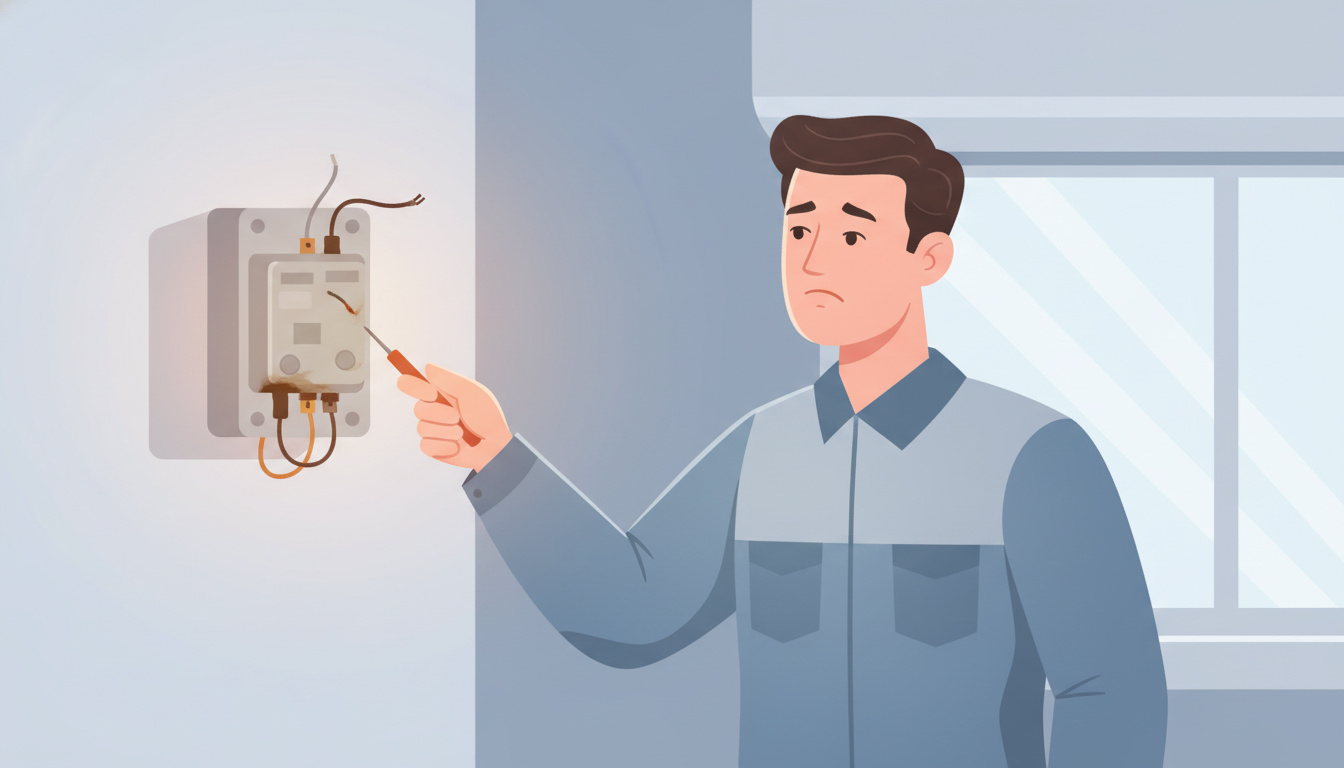
4. Visible Physical Damage
During a visual inspection of your outdoor unit (with power OFF), check the contactor for:
- Pitting or burn marks on the metal contact points
- Melted or discolored plastic housing
- Black carbon deposits around the contacts
- Corrosion on metal surfaces
- Cracked or damaged housing
Any of these visual indicators means the contactor needs immediate replacement.
5. Weak or Inconsistent Cooling
If your air conditioner seems to work intermittently—sometimes cooling properly, sometimes blowing warm air—a failing contactor could be interrupting power delivery to the compressor. The contacts may be making partial connection, allowing some current through but not enough for full system operation.
6. The Contactor Feels Excessively Hot
While contactors naturally warm up during operation, they shouldn't be too hot to touch after the system has been running. Excessive heat indicates electrical resistance from degraded contacts, which can lead to complete failure if not addressed.
7. Voltage Testing Shows Irregular Readings
Using a multimeter, you can test the voltage across the contactor's contacts. If you're getting irregular or fluctuating voltage readings when the system is running, the contacts are likely degraded and need replacement.
How to Test an HVAC Contactor
Safety Warning: Testing a contactor involves working with high-voltage electricity. If you're not comfortable working with electrical components, call a professional HVAC technician. Always turn off power at the breaker before inspecting or testing any HVAC components.
Visual Inspection Test
- Turn off power to your AC unit at the breaker
- Remove the access panel from your outdoor condenser unit
- Locate the contactor (usually a black or gray rectangular box with wires attached)
- Examine the contact points for pitting, burning, or corrosion
- Check the plastic housing for melting or cracks
- Look for any carbon deposits indicating arcing
Multimeter Continuity Test
- With power OFF, disconnect the wires from the contactor's load terminals (mark them for reinstallation)
- Set your multimeter to measure continuity or resistance
- Touch the probes to each set of contact points
- With the contactor in the open (de-energized) position, you should read infinite resistance
- Manually press the contactor closed (or have a helper turn on the thermostat while you watch from a safe distance)
- In the closed position, you should read near-zero resistance (continuity)
If you get resistance readings in either position that don't match these expectations, the contacts are worn and the contactor should be replaced.
Voltage Test
- Turn power back on at the breaker
- Set your thermostat to call for cooling
- Use a multimeter to measure voltage across the coil terminals (should read approximately 24 volts when calling for cooling)
- Measure voltage across the line and load terminals
- When the contactor is engaged, voltage should be nearly identical on both sides
Significant voltage drop across the contacts indicates poor connection and worn contact points.
HVAC Contactor Lifespan: How Long Do They Last?
Most HVAC contactors are rated for 50,000 to 100,000 cycles. In practical terms, this typically translates to:
- 5-10 years in moderate climates with average usage
- 3-5 years in hot climates where the AC runs frequently
- 7-12 years in milder climates with less demand
However, several factors can shorten this lifespan:
- Electrical surges and poor power quality
- Oversized or undersized contactors for the load
- Poor ventilation causing overheating
- Contamination from dirt, moisture, or debris
- Related component failures (bad capacitor, failing compressor)
Contactor Replacement Cost: What to Expect
Understanding the cost helps you budget for this inevitable repair.
Parts Cost
- Generic aftermarket contactors: $15-$40
- OEM (Original Equipment Manufacturer) contactors: $40-$80
- High-quality contactors with extended ratings: $60-$120
Professional Installation Cost
Most HVAC technicians charge:
- Service call fee: $75-$150
- Labor for contactor replacement: $100-$200
- Total professional replacement: $175-$350
The job typically takes 30-60 minutes for an experienced technician.
DIY Replacement Cost
If you're comfortable working with electrical systems and follow proper safety procedures, you can replace a contactor yourself for just the cost of the part ($15-$80). However, you'll need:
- Basic electrical knowledge
- Proper safety equipment
- A multimeter for testing
- Appropriate tools
Important: Many jurisdictions require licensed HVAC technicians to perform electrical work on cooling systems. Check your local codes before attempting DIY replacement.
Single Pole vs. Double Pole Contactors
Understanding the difference helps you buy the correct replacement:
Single-pole contactors control one circuit and have two main terminals. They're typically used when only the compressor needs switching, and the fan runs independently.
Double-pole contactors control two separate circuits simultaneously and have four main terminals. They're more common in residential AC systems, switching power to both the compressor and condenser fan motor together.
Always replace your contactor with the same pole configuration as the original. Installing the wrong type can cause system malfunction or damage.
Contactor vs. Relay: What's the Difference?
While contactors and relays both function as electrically controlled switches, they differ in important ways:
Contactors:
- Designed for high-current applications (20-60+ amps)
- Handle heavy loads like compressors and motors
- Larger and more robust construction
- Typically normally-open (contacts open when de-energized)
Relays:
- Handle lower current applications (typically under 20 amps)
- Control smaller components like fan motors or pilot lights
- Smaller, lighter construction
- Can be normally-open or normally-closed
Your HVAC system likely uses both: contactors for high-power components and relays for control circuits and accessories. If your HVAC control board fails, it may affect the signals sent to the contactor.
Can You Run Your AC with a Bad Contactor?
Short answer: No, you shouldn't.
If your contactor has completely failed (stuck open), your AC simply won't run at all. But if it's stuck closed or making intermittent contact, you might be tempted to let it limp along. This is a bad idea for several reasons:
- Fire hazard: Stuck contactors can overheat and potentially cause electrical fires
- Compressor damage: Irregular power delivery can damage your expensive compressor
- Increased energy costs: Poor electrical connection creates resistance, wasting electricity as heat
- Total system failure: What starts as a minor contactor problem can cascade into major component failures
If you suspect contactor problems, shut down your system and call for professional repair. The modest cost of contactor replacement is far less than replacing a burned-out compressor.
When to Replace vs. When to Wait
Not every contactor issue requires immediate replacement. Use this decision framework:
Replace immediately if:
- Contacts are visibly pitted, burned, or corroded
- Housing shows melting or heat damage
- System won't start or won't stop
- You detect burning smells from the outdoor unit
- Electrical testing reveals failed contacts
Monitor and plan for replacement if:
- Contactor is approaching 7-10 years old
- You hear occasional chattering but system still operates
- Contacts show minor surface wear but still function
- You're already replacing other components like the capacitor
Preventive replacement considerations:
- If you're already having other major repairs done, replacing an aging contactor adds minimal labor cost
- Spring (before cooling season) is the ideal time for preventive replacement
Frequently Asked Questions
How do I know if my contactor or capacitor is bad?
A bad capacitor typically prevents the compressor or fan motor from starting—you might hear humming but no operation. A bad contactor prevents any electrical signal from reaching these components. Test the capacitor first with a multimeter; if the capacitor is good but the compressor still won't start, test the contactor.
Will a bad contactor trip my circuit breaker?
Usually no—a bad contactor typically prevents current flow rather than causing overcurrent. However, if the contactor is making intermittent contact (chattering), it could create irregular current draw that might trip a sensitive breaker. If your breaker trips when the AC tries to start, the problem is more likely a bad capacitor or compressor issue.
Can I replace just the contacts instead of the whole contactor?
While replacement contacts are available for some industrial contactors, residential HVAC contactors are designed as sealed units meant for complete replacement. The cost savings of replacing just contacts is minimal, and you risk improper installation or continued problems with other worn components inside the contactor.
Why does my contactor hum but not click?
This usually indicates that the electromagnetic coil is receiving voltage and trying to engage, but the contacts are unable to close. Possible causes include physical obstruction (dirt, debris, insect nests), severely pitted contacts that won't make connection, or mechanical failure of the spring return mechanism.
What's the difference between a 1-pole and 2-pole contactor?
A 1-pole contactor switches a single circuit (two wires), while a 2-pole contactor switches two separate circuits simultaneously (four wires). Most residential AC systems use 2-pole contactors to control both the compressor and condenser fan motor together. Always replace with the same pole configuration as the original.
How can I make my contactor last longer?
Keep your outdoor condenser unit clean and free of debris. Schedule annual HVAC maintenance to catch problems early. Ensure proper ventilation around your outdoor unit. Consider installing a whole-home surge protector to prevent damage from power spikes. Replace air filters regularly to prevent system strain that can cause rapid cycling.
Is it normal for my contactor to spark when it engages?
Small sparks when the contacts first touch are normal—this is called electrical arcing and happens whenever a high-current circuit is switched. However, excessive sparking, visible flames, or sparking when the contactor is already engaged indicates worn contacts that should be replaced immediately.
Can I use a higher-rated contactor than the original?
Generally yes, but with caution. You can safely install a contactor with a higher amperage rating (the maximum current it can handle), but it must have the same voltage rating and pole configuration. Never install an underrated contactor—it will fail quickly under the load. Consult an HVAC professional if you're unsure about proper sizing.
Conclusion: Don't Ignore Contactor Problems
Your HVAC contactor might be a small, inexpensive component, but it plays a crucial role in your air conditioner's operation. Recognizing the warning signs of contactor failure—clicking noises, intermittent operation, visible damage, or complete system shutdown—allows you to address problems before they cascade into expensive compressor damage.
While contactor replacement is one of the more straightforward HVAC repairs, it involves working with high-voltage electricity. If you're not experienced with electrical work, the investment in professional service ($175-$350) provides peace of mind and ensures the job is done safely and correctly.
Regular maintenance and prompt attention to warning signs will help you stay cool all summer long. If you're experiencing any of the symptoms discussed in this article, don't wait—contact a qualified HVAC technician to diagnose and resolve the problem before your next heat wave arrives.
Ready to tackle your HVAC issues? Check out our comprehensive HVAC repair guide for expert troubleshooting tips and solutions.