How a Dirty Coil Leads to Water and Ice Problems
How a Dirty Coil Leads to Water and Ice Problems
Is your air conditioner dripping water onto your floor? Do you see ice forming on your AC unit? These aren't just minor annoyances—they're warning signs of a dirty evaporator coil that could lead to expensive repairs and water damage in your home.
When your evaporator coil gets clogged with dust and debris, it sets off a chain reaction that creates both ice buildup and water leaks. Understanding how this happens can help you catch the problem early and avoid costly repairs.
What Is an Evaporator Coil and Why Does It Matter?
Your evaporator coil is the heart of your air conditioning system. Located inside your indoor unit, this component contains refrigerant that absorbs heat from the air in your home. As warm air passes over the cold coil, the refrigerant inside absorbs the heat, cooling the air that gets blown back into your rooms.
The evaporator coil operates at very cold temperatures—typically between 40°F and 50°F. This cold surface naturally attracts moisture from the air, which condenses on the coil's surface. Under normal conditions, this condensation drips into a drain pan and flows away through a drain line.
But when the coil gets dirty, everything changes.
The Dirty Coil Problem: How Dust and Debris Accumulate
Your evaporator coil doesn't exist in a vacuum. Every time your AC runs, thousands of cubic feet of air pass over the coil. Even with air filters in place, microscopic particles of dust, pollen, pet dander, and other debris gradually build up on the coil's surface.
Over time, this accumulation creates several problems:
- Airflow restriction: The layer of dirt acts like insulation, blocking air from reaching the coil surface
- Reduced heat transfer: Dirt interferes with the coil's ability to absorb heat from passing air
- Bacterial growth: The damp, dirty environment becomes a breeding ground for mold and algae
- Drain blockages: Debris washes into the drain pan and clogs the drain line
Most homeowners don't realize their coil is dirty until serious problems develop. The buildup happens gradually over months or even years, making it easy to miss until ice or water appears.
How a Dirty Coil Causes Ice Formation
Here's where the physics gets interesting—and where your water and ice problems begin.
The Ice Formation Cycle
When your evaporator coil is clean, it maintains a consistent temperature around 40-50°F. This is cold enough to cool air effectively but warm enough that condensation stays liquid and drains away normally.
But when dust and debris coat the coil, the refrigerant inside can't absorb heat properly. With less heat being absorbed, the coil temperature drops significantly—often below 32°F, the freezing point of water.
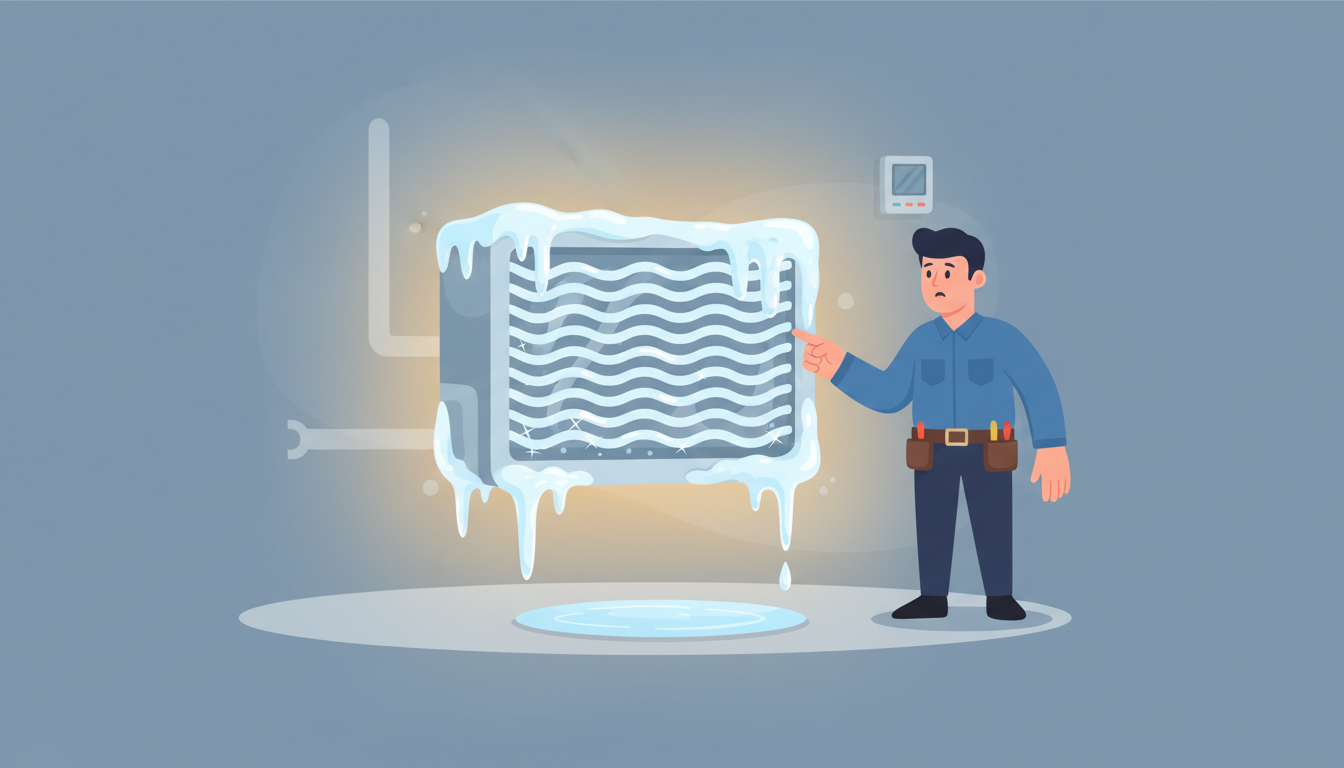
Now condensation doesn't drip away as water. Instead, it freezes on contact with the coil surface.
Stage 1: Frost appears - You'll notice a thin layer of frost on the coil fins, especially near the refrigerant lines.
Stage 2: Ice spreads - The frost layer thickens and spreads across the entire coil surface, creating a solid block of ice.
Stage 3: Complete blockage - Ice completely covers the coil, blocking all airflow and stopping cooling entirely.
This progression can happen over several hours or several days, depending on how dirty your coil is and how much moisture is in your air.
Why Airflow Restriction Makes Everything Worse
The dirty coil already restricts airflow, but ice makes it exponentially worse. As ice builds up, even less air can pass over the coil. This creates a vicious cycle:
Less airflow → Coil gets even colder → More ice forms → Even less airflow
Your AC keeps running because it can't reach the temperature your thermostat wants, but it's actually making the problem worse with every minute it operates.
How Ice Formation Leads to Water Problems
Now we get to the water damage part—and why discovering ice on your coil often means you'll soon discover water too.
The Melting Problem
Ice doesn't stay frozen forever. Eventually, one of three things happens:
- You turn off the AC - The ice begins melting immediately
- The AC shuts down automatically - Many systems have safety switches that detect frozen coils
- The compressor overheats - The system fails and stops running
When that ice melts, you're dealing with significant amounts of water. A fully frozen coil can contain several gallons of ice. As it melts, all that water flows into your drain pan—often faster than the drain line can handle it.
Drain Pan Overflow
Your drain pan is designed to handle normal condensation, which accumulates gradually. It's not designed to handle gallons of melting ice all at once.
When ice melts rapidly, the drain pan fills faster than water can drain away. The result? Water overflows onto your floor, ceiling, or into your walls.
The damage can be significant:
- Stained or damaged ceilings below the unit
- Soaked insulation in attics or crawl spaces
- Water damage to flooring and baseboards
- Mold growth in damp areas
- Damage to furniture and belongings
According to insurance industry data, water damage from HVAC systems causes thousands of dollars in repairs for the average homeowner.
Clogged Drain Lines Make It Worse
Remember how we mentioned that dirty coils create an environment for bacterial growth? Those bacteria, along with algae and mold, thrive in the warm, damp drain pan.
Over time, this biological growth creates a slimy biofilm that clogs your drain line. When your drain line is partially or completely clogged, even normal condensation can cause water overflow—and you don't need ice to have a water problem.
When you combine a clogged drain with melting ice, you've got a recipe for serious water damage.
The Warning Signs You Shouldn't Ignore
How do you know if a dirty coil is causing water and ice problems in your system? Watch for these telltale signs:
Ice-Related Warnings
- Visible frost or ice on refrigerant lines - These copper lines connect to your coil
- Ice forming on the outdoor unit - Indicates severe coil issues
- Reduced airflow from vents - Ice blocks air passage through the coil
- Warm air blowing from vents - Frozen coil can't cool air
- Hissing or bubbling sounds - Refrigerant trying to flow through iced sections
Water-Related Warnings
- Water pooling around the indoor unit - Overflow from the drain pan
- Dripping sounds inside the unit - Excess condensation
- Water stains on ceilings or walls - Indicates ongoing leaks
- Musty odors near vents - Mold growth from moisture
- High humidity levels indoors - AC isn't removing moisture properly
If you notice any combination of these signs, you likely have a dirty coil that needs immediate attention. For guidance on what to do when you discover these problems, check out our HVAC repair guide.
The Cost of Ignoring Dirty Coil Problems
Many homeowners see ice or water and think they can wait to address it. That's a costly mistake.
Progressive Damage
A dirty coil doesn't get better on its own. Every day you delay:
- More dirt accumulates on the coil
- Ice buildups become more frequent and severe
- Water damage spreads to more areas
- Your system works harder and less efficiently
- Major components face increased wear and stress
Compressor Failure
Your compressor is the most expensive component in your AC system—often costing $1,500 to $2,500 to replace. When your coil is frozen, the compressor must work against restricted refrigerant flow, generating excessive heat and stress.
Many compressor failures originate from dirty, frozen coils that force the compressor to operate under damaging conditions.
Energy Waste
A dirty coil reduces your system's efficiency by 20-40%. You're paying significantly more on your energy bills to cool your home inadequately. The average homeowner wastes $200-$400 per cooling season with a dirty evaporator coil.
Water Damage Costs
Water damage repairs vary widely based on severity:
- Minor ceiling stains: $200-$500
- Significant ceiling repair: $500-$2,000
- Floor damage and replacement: $1,000-$5,000
- Mold remediation: $1,500-$4,000
Compare these costs to professional coil cleaning ($100-$400 annually) and preventive maintenance ($150-$300 for a tune-up), and the value of prevention becomes crystal clear.
What to Do If You Find Ice or Water
If you've discovered ice formation or water leaks, take these immediate steps:
1. Turn off your AC immediately - Continuing to run the system will make both problems worse.
2. Switch your thermostat to "fan only" - This helps melt the ice without adding more refrigerant to the frozen coil.
3. Soak up visible water - Use towels or a wet/dry vacuum to prevent water damage.
4. Check your air filter - A clogged filter often contributes to coil icing. Replace it if it's dirty.
5. Call an HVAC professional - Don't attempt to chip away ice or clean the coil yourself without proper training.
For detailed steps on handling a frozen evaporator coil, see our guide on what to do with a frozen evaporator coil.
Why DIY Isn't Recommended
While changing your air filter is simple, cleaning an evaporator coil requires specialized knowledge and tools. Here's why:
- Delicate fins: Coil fins bend easily, reducing efficiency
- Chemical cleaners: Wrong products can damage the coil or create toxic fumes
- Refrigerant handling: Accessing the coil may require working near refrigerant lines
- Hidden damage: Professionals can spot problems you'd miss
A professional HVAC technician has the training, tools, and experience to clean your coil safely and thoroughly without causing damage.
How to Prevent Water and Ice Problems from Dirty Coils
Prevention is always easier and cheaper than repairs. Here's how to keep your coils clean and avoid ice and water issues:
Change Your Air Filters Regularly
Your air filter is your first line of defense against dirty coils. Follow these guidelines:
- Standard 1-inch filters: Replace monthly
- Thicker pleated filters: Replace every 2-3 months
- HEPA or advanced filters: Follow manufacturer recommendations
If you have pets, allergies, or live in a dusty area, change filters more frequently.
Schedule Annual Professional Maintenance
A professional tune-up includes coil inspection and cleaning as needed. During a maintenance visit, your technician will:
- Inspect the evaporator coil for dirt and damage
- Clean the coil using professional-grade equipment
- Check refrigerant levels and pressures
- Clear the drain line and treat it to prevent algae
- Inspect all components for wear and problems
- Test system performance and efficiency
Annual maintenance typically costs $150-$300 but prevents the majority of HVAC breakdowns and extends your system's lifespan by years.
Upgrade Your Filtration
If dirty coils are a recurring problem, consider:
- Higher MERV-rated filters (MERV 8-11 for residential use)
- Whole-home air purification systems
- UV lights in the air handler to prevent biological growth
These upgrades reduce the amount of debris reaching your coil, keeping it cleaner longer.
Keep Your Outdoor Unit Clean
While we've focused on the evaporator coil, your outdoor condenser unit also affects system performance. Keep the area around it clear of leaves, grass clippings, and debris. Trim bushes and plants to maintain at least 2 feet of clearance.
For comprehensive strategies to avoid recurring issues, read our article on preventing repeat HVAC leak and ice problems.
Understanding the Connection Between Dirty Coils and System Health
Your HVAC system operates as an interconnected whole. When one component develops problems, it affects everything else.
A dirty coil impacts:
- Refrigerant flow and pressure: Affecting cooling capacity
- Compressor operation: Causing excessive strain and heat
- Blower motor: Working harder to push air through restricted coils
- Thermostat function: System can't reach desired temperatures
- Indoor air quality: Mold and bacteria circulate through your home
Keeping your coils clean isn't just about preventing ice and water problems—it's about maintaining a healthy, efficient HVAC system that keeps your home comfortable for years to come.
Frequently Asked Questions
Can a dirty coil cause both ice AND water at the same time?
Yes, absolutely. You'll often see ice forming on the coil while water leaks from the drain pan. The ice forms because the coil temperature drops below freezing, while water leaks occur because excess condensation or melting ice overwhelms your drain system. These problems typically happen together because they share the same root cause—a dirty coil restricting airflow and heat transfer.
How long does it take for a dirty coil to freeze?
It depends on how dirty the coil is and environmental factors, but typically a moderately dirty coil can develop ice within 2-4 hours of continuous operation. Extremely dirty coils may freeze within an hour. Temperature and humidity in your home also play a role—higher humidity accelerates ice formation.
Will turning off the AC make the ice go away?
Yes, turning off the AC will allow the ice to melt, but it doesn't solve the underlying problem. The ice will return when you turn the system back on unless you address the dirty coil. Always have a professional inspect and clean the coil after experiencing ice formation.
Can I prevent ice by just changing my thermostat setting?
Raising your thermostat temperature slightly may reduce ice formation temporarily, but it won't prevent it if your coil is dirty. The problem is restricted heat transfer due to dirt buildup, not your temperature setting. You need to address the root cause with professional coil cleaning.
How much does professional coil cleaning cost?
Professional evaporator coil cleaning typically costs between $100 and $400, depending on your location, system accessibility, and how dirty the coil is. This service is often included in annual maintenance agreements, which cost $150-$300 per year and include multiple services beyond just coil cleaning.
Take Action Before Small Problems Become Big Ones
A dirty coil leading to water and ice problems won't fix itself. Every day you wait, the problem gets worse and the potential for damage increases.
If you're experiencing ice formation, water leaks, or poor cooling performance, don't wait for a complete system failure. Contact a qualified HVAC professional to inspect your coils, clean them properly, and restore your system to efficient, reliable operation.
Regular maintenance and prompt attention to warning signs will keep your AC running smoothly, your home comfortable, and your repair costs manageable. Your evaporator coil works hard to keep you cool—give it the care it needs to keep working for years to come.