
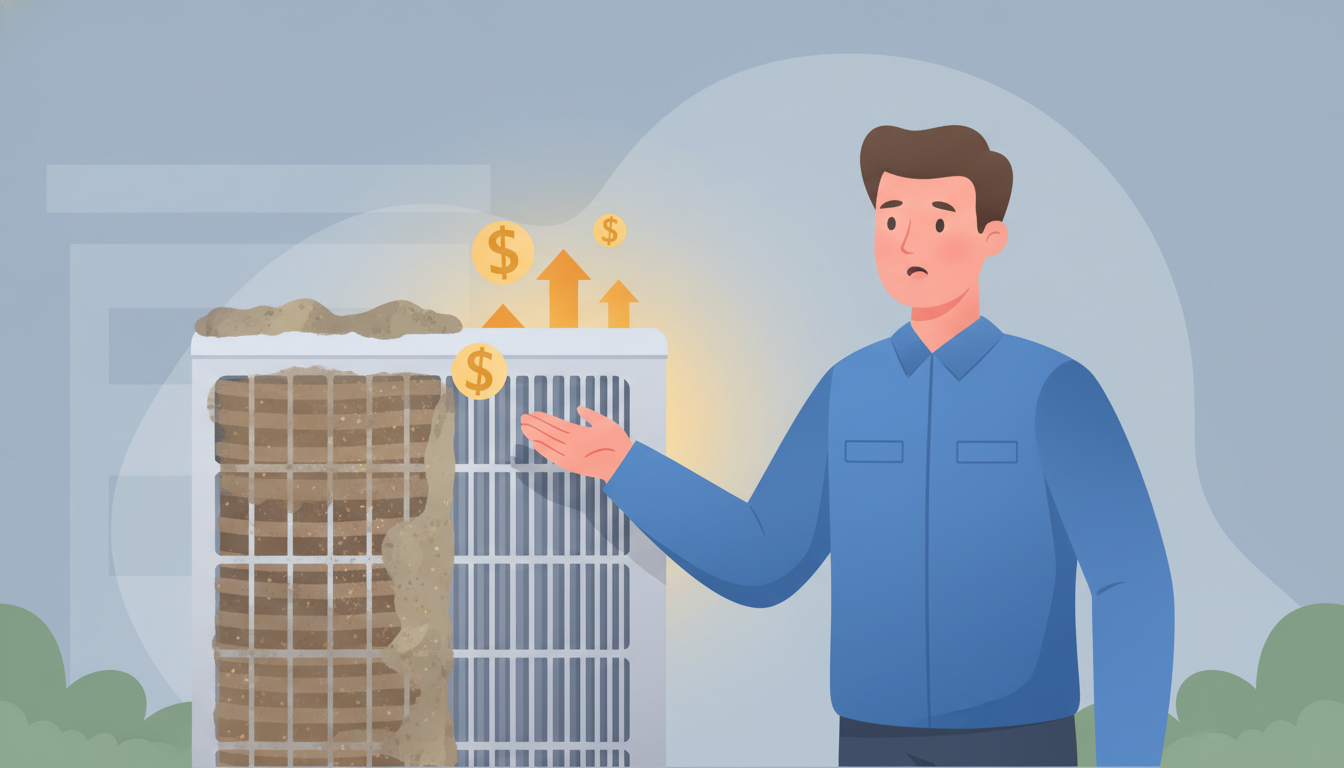
How Dirty Outdoor Coils Are Costing You Hundreds in AC Repairs
How Dirty Outdoor Coils Are Costing You Hundreds in AC Repairs
Have you noticed your energy bills creeping higher each month? Is your AC running constantly but barely keeping your home cool? The culprit might be hiding in plain sight in your backyard—dirty outdoor coils on your condenser unit. What starts as a thin layer of dust and debris can quickly spiral into expensive repairs that could cost you thousands of dollars if left unchecked.
Your outdoor AC coils are the unsung heroes of your cooling system, but they're also magnets for dirt, pollen, leaves, and grime. When these coils get clogged, your entire HVAC system suffers. Let's explore exactly how dirty outdoor coils cause expensive AC problems and what you can do to protect your investment.
What Are Outdoor AC Coils and Why Do They Matter?
Your air conditioning system has two sets of coils that work together to keep your home comfortable. The outdoor unit houses the condenser coils, which are responsible for releasing the heat absorbed from inside your home into the outside air. Think of them as the exhaust system for your AC—they need to be clean and unobstructed to work efficiently.
These coils are made of copper tubing surrounded by thin aluminum fins that increase the surface area for heat transfer. When air flows freely across clean coils, heat dissipates quickly and your system runs smoothly. But when dirt, grass clippings, cottonwood seeds, and other debris build up on these fins, everything changes.
The outdoor location of your condenser unit makes it vulnerable to all kinds of contaminants. Dust from nearby construction, pollen during spring months, leaves in fall, and even pet hair can accumulate on the coil surfaces. Over time, this buildup creates an insulating barrier that prevents proper heat exchange.
The Hidden Costs of Dirty Outdoor Coils
1. Skyrocketing Energy Bills
When your outdoor coils are dirty, your AC system has to work much harder to cool your home. Studies have shown that dirty coils can reduce system efficiency by 30% or more. That means your air conditioner runs longer cycles, consuming significantly more electricity to achieve the same temperature.
Here's what that looks like in real dollars: If your typical summer cooling bill is $200 per month with clean coils, dirty coils could push that to $260-280 per month or higher. Over a single cooling season, that's an extra $300-$400 literally thrown away because of neglected maintenance.
The problem compounds over time. As dirt accumulation worsens, efficiency continues to drop. What might have cost an extra $50 in the first month becomes $100 the next month as your system struggles harder against the blockage.
2. Compressor Failure—The $2,000+ Nightmare
The compressor is the heart of your AC system, and it's also the most expensive component to replace. When outdoor coils are clogged with debris, heat cannot escape from the refrigerant. This causes refrigerant pressure to build up to dangerous levels, a condition known as "high head pressure."
Your compressor has to work against this elevated pressure, generating excessive heat and wearing out internal components much faster than normal. Eventually, the compressor overheats and fails. Replacing a residential AC compressor typically costs between $1,500 and $3,000, depending on the unit size and refrigerant type.
Many homeowners facing compressor failure discover that replacing the entire outdoor unit makes more financial sense than replacing just the compressor, especially if the system is more than 10 years old. That's a $3,000-$6,000 expense that could have been prevented with routine coil cleaning costing $100-$200 annually.
If you've experienced misdiagnosed central AC problems before, dirty coils might have been the root cause that was overlooked.
3. Frozen Evaporator Coils and Cascade Failures
Here's where things get interesting—dirty outdoor coils can actually cause your indoor evaporator coils to freeze. When the condenser coils can't release heat properly, refrigerant pressure throughout the system becomes imbalanced. This causes the indoor coils to get too cold, and moisture in the air freezes on the coil surface.
A frozen evaporator coil blocks airflow completely, causing your AC to blow warm air or stop cooling altogether. When homeowners see ice on their indoor unit, they often assume the indoor coils are the problem. But the real culprit might be the neglected outdoor unit sitting in the backyard.
Fixing frozen coil issues involves more than just thawing the ice. Technicians need to check refrigerant levels, inspect for leaks, verify system pressures, and clean both coil sets. This type of service call typically runs $300-$600, and that's assuming no additional damage has occurred.
For comprehensive guidance on avoiding these issues, check out our central AC repair guide.
4. Shortened Equipment Lifespan
A well-maintained air conditioning system should last 15-20 years. Dirty outdoor coils can cut that lifespan by 30-40%, meaning you might need to replace your entire system at year 10 instead of year 18.
The constant strain of operating with restricted heat transfer accelerates wear on every component. The compressor runs hotter and longer. The fan motor works harder to pull air through the blocked fins. Electrical components experience more frequent cycling. All of this adds up to premature system failure.
Replacing a central air conditioning system costs $5,000-$10,000 or more for most homes. If dirty coils force you to replace your system even 3-4 years early, that's a massive financial hit that could have been avoided with routine maintenance.
Warning Signs Your Outdoor Coils Need Cleaning
Visual Inspection Tells the Story
Walk outside and take a close look at your condenser unit. Can you see dirt, leaves, or debris stuck between the metal fins? Are the fins bent or damaged? If you shine a flashlight through the coil from one side, can you see light coming through on the other side?
If the answer to that last question is no, your coils are likely clogged with debris. Clean coils should allow you to see through them when you look from the side. Blocked coils look dark and solid, with no visible gaps between the fins.
Your AC Runs Constantly But the House Stays Warm
If your thermostat is set to 72°F but your home hovers around 76-78°F despite the AC running all day, dirty outdoor coils are a prime suspect. The system simply cannot transfer heat efficiently enough to keep up with cooling demand.
This is especially noticeable on hot days. Your AC might perform adequately when it's 80°F outside but struggle when temperatures hit 95°F. That's because the temperature difference between the refrigerant and outdoor air becomes smaller, making efficient heat transfer even more critical.
Higher Energy Bills Without Increased Usage
If your electricity bills have jumped 20-30% compared to the same time last year, and you haven't changed your thermostat settings or usage patterns, your AC efficiency has likely dropped. Dirty outdoor coils are one of the most common causes of this gradual efficiency loss.
Strange Noises From the Outdoor Unit
A struggling compressor often makes unusual sounds. You might hear rattling, buzzing, or a labored humming noise that's different from the normal operation sound. These noises indicate your compressor is working harder than it should, often due to high refrigerant pressure caused by dirty coils.
Ice Forming on the Indoor or Outdoor Unit
Any ice formation on your AC system is a red flag. While ice on indoor coils is more common, extremely dirty outdoor coils can sometimes develop frost as well due to pressure imbalances. Either way, ice means your system is out of balance and needs professional attention.
For more detailed troubleshooting steps, our HVAC repair guide walks you through common AC problems and solutions.
How Dirt and Debris Damage Your System
The Physics of Heat Transfer
Your AC doesn't create cold air—it removes heat from your home and dumps it outside. The outdoor coils are where this heat rejection happens. Refrigerant enters the condenser coils as a hot, high-pressure gas. As outdoor air flows across the coils, heat transfers from the refrigerant to the air, and the refrigerant condenses into a liquid.
This process requires maximum contact between the coil surface and outdoor air. The aluminum fins on the coils are designed to maximize this surface area. But when even a thin layer of dirt coats these fins, it acts as insulation, dramatically reducing heat transfer efficiency.
The Snowball Effect
Coil contamination is progressive. A little bit of dirt attracts more dirt. Pollen sticks to dust. Moisture causes particles to clump together. Before long, what started as a barely visible film becomes a thick mat of debris that blocks airflow entirely.
This is why annual cleaning isn't always enough in certain environments. If you live near agriculture, construction sites, busy roads, or areas with heavy pollen, your coils might need cleaning twice per year.
Regional Factors That Accelerate Buildup
Desert climates with dust storms can coat outdoor coils in fine sand that's particularly difficult to remove. Coastal areas deal with salt air that corrodes fins and attracts moisture and debris. Areas with cottonwood trees experience massive amounts of seed fluff that clogs coils rapidly.
If you live in a high-humidity area, moisture on the coils acts like glue for airborne particles. The combination of humidity and dirt creates a paste-like substance that's much harder to clean than dry dust.
Prevention Strategies That Save Money
Regular Professional Maintenance
The single most cost-effective thing you can do is schedule annual professional AC maintenance before cooling season begins. A thorough maintenance visit includes coil cleaning, refrigerant level checks, electrical component inspection, and system performance testing.
Professional coil cleaning costs $100-$200 but can prevent thousands in repair costs. Technicians use specialized cleaning solutions and equipment that remove debris without damaging the delicate aluminum fins.
DIY Maintenance Between Professional Visits
You can extend the time between professional cleanings with simple DIY maintenance:
- Clear debris weekly: Remove leaves, grass clippings, and visible debris from around the outdoor unit
- Gentle hosing: Using a garden hose (not a pressure washer), gently rinse the coils from the inside out to push debris away from the fins
- Maintain clearance: Keep at least 2 feet of clearance around the unit; trim shrubs and vegetation regularly
- Install a coil guard: Mesh screens or coil guards can prevent large debris from reaching the coils while still allowing airflow
Important safety note: Always turn off power to the unit at the breaker before performing any maintenance. Never use a pressure washer on coils—the high pressure can bend fins and cause permanent damage.
Consider Your Environment
If you live in an area prone to rapid coil contamination, adjust your maintenance schedule accordingly:
- High pollen areas: Spring and fall cleaning
- Agricultural areas: Every 4-6 months
- Coastal locations: Every 6 months with corrosion inspection
- Urban areas with high pollution: Annual cleaning with mid-season inspection
Protect Your Investment With Preventive Measures
Consider having a professional install a coil coating that helps prevent corrosion and makes dirt less likely to stick. These coatings typically cost $200-$400 but can significantly reduce cleaning frequency and extend coil life.
Some homeowners also invest in covers or screens for their condenser units, though these must be designed specifically for AC use to avoid restricting airflow. Never use tarps or solid covers on a running AC unit.
When to Call a Professional vs. DIY
DIY Cleaning Is Appropriate When:
- You're performing regular preventive maintenance
- Debris is surface-level and hasn't penetrated deep into the coil
- Fins are in good condition without significant bending
- You're comfortable working around electrical equipment (with power off)
Call a Professional When:
- Coils are heavily clogged with compacted debris
- Fins are bent, corroded, or damaged
- Your AC is showing performance problems (not cooling properly, running constantly)
- Ice is forming anywhere on the system
- You notice refrigerant leaks (oily residue on coils or lines)
- The system is making unusual noises
Professional cleaning involves more than just rinsing with water. HVAC technicians use alkaline or acid-based coil cleaners that break down organic matter, grease, and oxidation. They also have tools to carefully straighten bent fins and check system pressures to ensure everything is operating correctly.
The True Cost of Neglect
Let's look at a real-world scenario to understand the financial impact:
Year 1-2: Neglected maintenance
- Extra energy costs: $400/year x 2 years = $800
- Saved maintenance cost: $150/year x 2 years = $300
- Net loss: $500
Year 3: Compressor failure from overwork
- Compressor replacement: $2,500
- Lost productivity (time off work for service calls): $200
- Emergency service fees: $150
- Total: $2,850
Grand total: $3,350 in extra costs, compared to $450 for three years of preventive maintenance.
This doesn't even account for the stress and discomfort of dealing with a broken AC during summer, or the shortened overall system lifespan.
Frequently Asked Questions
How often should outdoor AC coils be cleaned?
Most homes benefit from annual professional coil cleaning before cooling season. However, if you live in areas with heavy pollen, agricultural dust, or coastal salt air, consider cleaning every 6 months. Monthly visual inspections help you identify when cleaning is needed between scheduled maintenance.
Can I clean my AC coils myself or should I hire a professional?
Surface cleaning with a garden hose is safe for homeowners to do with the power turned off. However, heavily soiled coils require professional cleaning with specialized chemicals and equipment. For annual deep cleaning and system inspection, professional service is recommended to ensure nothing is missed.
How much does it cost to have outdoor coils professionally cleaned?
Professional coil cleaning typically costs $100-$200 as part of a routine maintenance visit. This usually includes cleaning both indoor and outdoor coils, checking refrigerant levels, inspecting electrical components, and testing system performance. It's a small investment that prevents expensive repairs.
What causes outdoor AC coils to get dirty so quickly?
Environmental factors are the main culprits: pollen from trees and grasses, dust from nearby construction or unpaved roads, leaves and yard debris, pet hair if you have outdoor pets, and cottonwood seeds in certain regions. The outdoor unit's fan pulls air through the coils, and anything airborne can get trapped in the fins.
Can dirty outdoor coils cause my AC to stop working completely?
Yes, severely dirty coils can cause complete system failure. The high refrigerant pressure from inadequate heat rejection can trigger safety switches that shut down the compressor. In extreme cases, the excessive pressure and heat can cause compressor failure, which usually requires replacing the entire outdoor unit.
Protect Your AC Investment Starting Today
Your outdoor coils might be small components, but they play an enormous role in your AC system's performance, efficiency, and longevity. The difference between a $150 annual maintenance visit and a $3,000 emergency compressor replacement often comes down to how well those coils are maintained.
Don't wait for your energy bills to spike or your AC to fail on the hottest day of summer. Take a few minutes today to inspect your outdoor unit. If it's been more than a year since your last professional maintenance, or if you can see visible debris on the coils, it's time to schedule service.
A little preventive care goes a long way. Your wallet—and your comfort—will thank you when your AC runs efficiently all summer long instead of breaking down when you need it most. Regular coil maintenance isn't just smart; it's essential to avoiding those expensive AC problems that catch homeowners by surprise.
Remember, the most expensive repair is the one you could have prevented. Keep those outdoor coils clean, and your AC will reward you with years of reliable, efficient service.