The Most Misdiagnosed Central AC Problems (And How to Spot Them)
The Most Misdiagnosed Central AC Problems (And How to Spot Them)
Your central air conditioner isn't cooling like it used to, and you're worried it's a major repair. Before you panic and call for an expensive service visit, you should know that nine out of ten AC "emergencies" turn out to be simple issues that homeowners overlook. The problem isn't always what it seems, and misdiagnosed central AC problems cost families hundreds—sometimes thousands—in unnecessary repairs every summer.
Understanding which AC problems are commonly misdiagnosed can save you time, money, and frustration. Let's break down the most frequently misidentified issues and show you how to recognize what's really going on with your system.
Why AC Problems Get Misdiagnosed So Often
Before diving into specific problems, it's important to understand why misdiagnosis happens. Central air conditioning systems are complex, with multiple components that can produce similar symptoms when they fail. A system that won't cool properly could have a refrigerant leak, a failed compressor, dirty coils, or simply a clogged air filter.
Many homeowners—and even some inexperienced technicians—jump to the most expensive conclusion first. They assume the compressor has failed or the refrigerant is leaking when the real culprit is often something much simpler and cheaper to fix.
The good news? Once you understand what to look for, you can often identify the real problem yourself and either fix it or at least know what to expect before calling a professional.
The Dirty Air Filter: The #1 Misdiagnosed AC Problem
Here's a startling statistic: HVAC professionals report that dirty air filters cause problems in about 90% of service calls. Yet homeowners constantly overlook this simple issue and assume something more serious is wrong.
Why Dirty Filters Cause So Many Symptoms
When your air filter becomes clogged with dust, pet hair, and debris, it restricts airflow throughout your entire system. This single problem can mimic symptoms of much more serious issues:
- Weak airflow from vents (often blamed on a failing blower motor)
- Warm air instead of cold (mistaken for refrigerant leaks)
- Frozen evaporator coils (confused with low refrigerant)
- System short cycling (blamed on thermostat or compressor problems)
- Higher energy bills (attributed to an aging, inefficient system)
How to Check Your Air Filter
Check your air filter every 30 days during cooling season. If you can't see light through it when you hold it up to a bright light, it needs replacing. Homes with pets, heavy dust, or multiple occupants may need monthly filter changes, while others can stretch to 90 days.
For comprehensive guidance on maintaining your system, check out our complete HVAC repair guide.
Thermostat Issues Mistaken for System Failures
Your thermostat is the brain of your cooling system, but it's often overlooked when troubleshooting AC problems. Homeowners frequently assume their compressor has failed or their refrigerant is low when the real issue is a simple thermostat problem.
Common Thermostat Misdiagnoses
Dead Batteries Blamed on Electrical Failures: If your AC won't turn on at all, many people immediately think there's a major electrical problem or a failed component. In reality, if you have a battery-powered thermostat, dead batteries are often the culprit. Replace them first before assuming the worst.
Wrong Settings Mistaken for Cooling Problems: When your system runs constantly but doesn't cool effectively, the fan setting might be the issue. If your thermostat fan is set to "ON" instead of "AUTO," the blower runs continuously—even when the system isn't actively cooling. This creates the illusion of weak cooling when the system is actually working fine during cooling cycles.
Location Problems Causing False Readings: Thermostats placed in direct sunlight or near heat sources (like lamps or electronics) will register artificially high temperatures. Your AC will run excessively trying to reach the set temperature, which looks like a cooling capacity problem but is actually a measurement error.
Quick Thermostat Troubleshooting Steps
- Check and replace batteries if applicable
- Verify the fan setting is on "AUTO" not "ON"
- Make sure the system mode is set to "COOL" not "HEAT" or "OFF"
- Check that your temperature setting is at least 5 degrees below the current room temperature
- Remove any obstructions blocking the thermostat
Dirty Outdoor Coils: The Hidden Efficiency Killer
Your outdoor condenser unit works hard to release heat from your home, but when the condenser coils become caked with dirt, grass clippings, cottonwood seeds, and debris, cooling performance plummets. This problem is frequently misdiagnosed as refrigerant loss or compressor failure.
Why Dirty Coils Get Misdiagnosed
Dirty condenser coils and low refrigerant produce nearly identical symptoms:
- Reduced cooling capacity
- Longer run times
- Higher energy bills
- Ice formation on refrigerant lines
- System struggles on hot days
The difference? Dirty coils cost $20-30 to clean yourself or $150-200 for professional cleaning. Refrigerant recharge and leak repair can cost $500-1,500 or more.
Before assuming you have a refrigerant leak, inspect your outdoor unit. Turn off power at the disconnect box, then look closely at the condenser coils (the metal fins on the sides of the unit). If they're clogged with debris, that's likely your problem.
Learn more about this issue in our detailed article on how dirty outdoor coils cause expensive AC problems.
Proper Coil Maintenance
Clean your outdoor coils at least once per year, preferably before cooling season begins. Remove leaves, grass clippings, and visible debris. For deeper cleaning, use a coil cleaner spray from any hardware store. Always spray from the inside out to push debris away from the coil, not deeper into it.
Circuit Breaker Trips vs. Electrical System Failure
When your AC won't turn on, many homeowners immediately fear major electrical failure or a burned-out compressor. In reality, a tripped circuit breaker is often the simple explanation.
Why Breakers Trip and What It Really Means
Circuit breakers trip for several reasons:
Normal Power Surges: During startup, AC compressors draw a surge of electricity. On extremely hot days when your AC cycles frequently, this can occasionally trip the breaker. A single trip isn't necessarily cause for concern.
Dirty Filters and Overworking: When airflow is restricted (usually by dirty filters), your system works harder and draws more current. This can trip the breaker and often gets misdiagnosed as an electrical problem when it's actually a maintenance issue.
Actual Electrical Problems: If your breaker trips repeatedly after you reset it, you may have a real electrical issue—possibly a failing capacitor, bad compressor motor, or wiring problem.
How to Troubleshoot Breaker Issues
- Check your main electrical panel for a tripped breaker (it will be in a middle position or "OFF")
- Before resetting, check your air filter and replace it if dirty
- Reset the breaker once and wait to see if the system runs normally
- If the breaker trips again immediately or within a few minutes, call a professional—don't keep resetting it
Blocked or Closed Vents Causing System-Wide Issues
This might surprise you: intentionally closing vents in unused rooms to "save energy" is one of the most common misdiagnosed AC problems. Homeowners think they're being smart, but they're actually creating problems that look like serious system failures.
The Closed Vent Trap
When you close supply vents in multiple rooms, you increase pressure in your ductwork. This causes:
- Reduced airflow throughout the entire system
- Frozen evaporator coils
- Increased energy consumption (not savings!)
- Premature blower motor failure
- Duct leaks from increased pressure
These symptoms often get blamed on refrigerant leaks, failing compressors, or undersized systems when the real problem is simply restricted airflow.
The Right Approach to Vents
Keep all supply vents at least 80% open. Your AC system was designed to cool your entire home with all vents open. If you want to reduce cooling in specific rooms, use a programmable thermostat with zoning or partially close bedroom doors at night—but never close off multiple supply vents.
Also check that furniture, curtains, or storage items aren't blocking vents or return grilles. Blocked returns are especially problematic and commonly overlooked.
Short Cycling: Multiple Causes, One Symptom
Short cycling—when your AC turns on, runs briefly, then shuts off—is perhaps the most frequently misdiagnosed AC problem. Homeowners and technicians often blame the thermostat or compressor when the actual cause could be one of many issues.
What Really Causes Short Cycling
Oversized AC Units: If your system is too large for your home (a common installation mistake), it will cool too quickly and shut off before completing a proper cooling cycle. This isn't a malfunction—it's a design problem that was present from day one.
Dirty Components: Dirty air filters, clogged evaporator coils, or blocked condenser units all restrict airflow and can cause short cycling. The system overheats, shuts down for safety, cools slightly, then tries again.
Refrigerant Issues: Low refrigerant can cause short cycling, but so can overcharged refrigerant—another reason why proper diagnosis is critical before adding refrigerant.
Thermostat Placement: A thermostat located near a cold air vent or in direct sunlight will give false readings that cause short cycling.
Electrical Problems: Failing capacitors, bad contactors, or loose wiring can cause intermittent operation that looks like short cycling.
Diagnosing the Real Cause
Start with the simplest possibilities:
- Replace your air filter
- Check thermostat placement and settings
- Inspect outdoor unit for visible dirt or blockage
- Listen for unusual sounds during the short cycles
If basic maintenance doesn't solve short cycling, you'll need a professional diagnostic. For specific guidance on central AC issues, see our central AC repair guide.
Ice Formation: Not Always Low Refrigerant
When homeowners see ice forming on their refrigerant lines or evaporator coils, they immediately assume there's a refrigerant leak. While low refrigerant can cause freezing, it's actually less common than several other causes.
Why Your AC Forms Ice
Ice forms when the evaporator coil temperature drops below freezing. This happens when:
Restricted Airflow (Most Common): Dirty filters, closed vents, or blocked return grilles prevent warm air from flowing over the cold evaporator coil. Without enough warm air, the coil gets too cold and moisture in the air freezes on it.
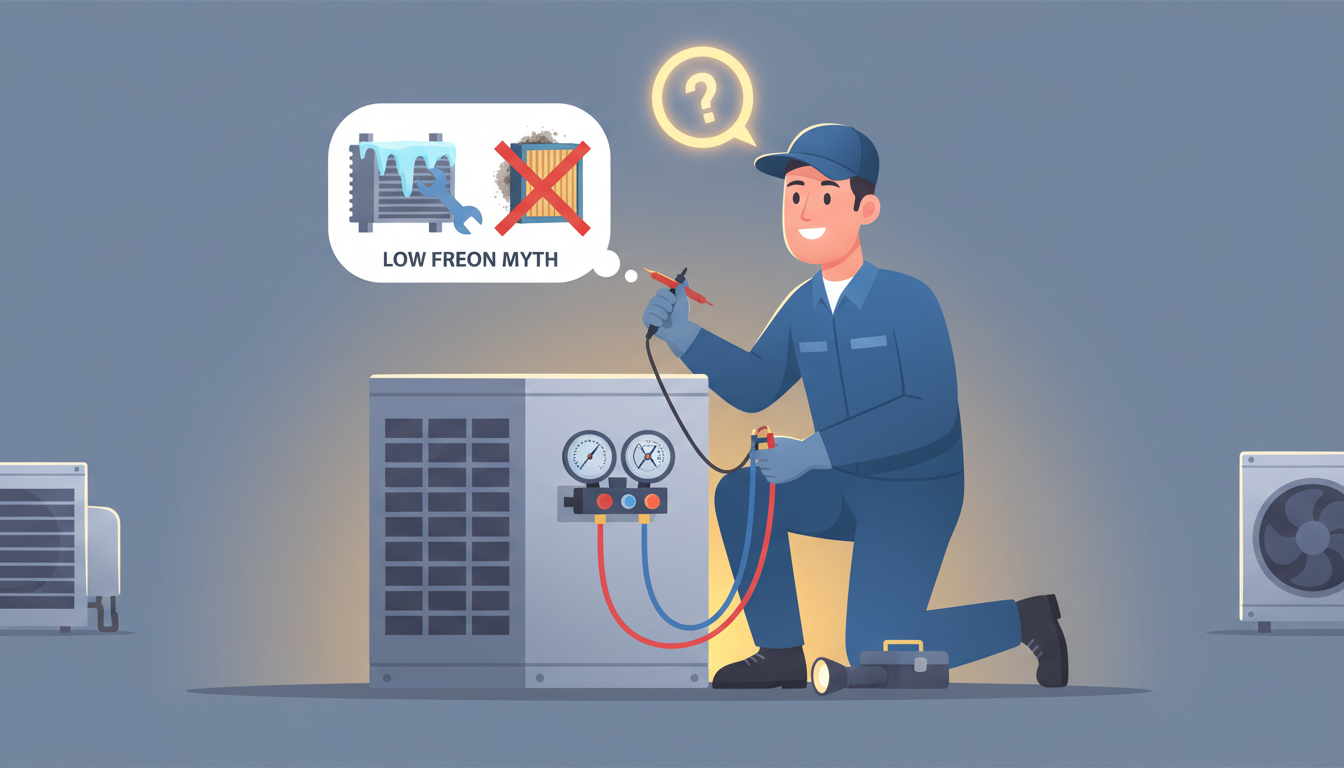
Low Refrigerant (Less Common): Refrigerant leaks can cause low pressure in the system, which does lead to freezing. However, this is often assumed to be the problem before checking airflow issues.
Dirty Evaporator Coils: If the indoor coil itself is dirty, airflow restriction causes the same freezing effect as a dirty filter.
Outdoor Temperature: Running your AC when outdoor temperatures drop below 60°F can cause freezing because the system isn't designed to operate in cool weather.
The Right Response to Ice Formation
- Turn off your system immediately
- Switch the fan to "ON" to help thaw the ice (this can take several hours)
- Check and replace your air filter
- Inspect all vents to ensure they're open
- Once thawed, restart the system and monitor it
If ice returns quickly after addressing airflow issues, then you likely do have a refrigerant leak and should call a professional.
Warm Air from Vents: The Most Varied Diagnosis
When your AC blows warm air instead of cold, homeowners panic. This symptom has more potential causes than almost any other AC problem, which makes it frequently misdiagnosed.
Possible Causes (From Simplest to Most Complex)
Thermostat Set Wrong: Sounds silly, but verify your thermostat is set to "COOL" mode and the temperature setting is below the current room temperature.
Outdoor Unit Not Running: Your indoor blower might run while the outdoor compressor and condenser fan are shut off. Check your outdoor unit—if it's silent, the problem could be a tripped breaker, bad capacitor, or failed contactor.
Dirty Air Filter: Severe airflow restriction can prevent proper cooling even when the system is running correctly.
Dirty Condenser Coils: As discussed earlier, this prevents heat rejection and reduces cooling capacity dramatically.
Low Refrigerant: This is often blamed first but should be checked only after ruling out the simpler issues above.
Failed Compressor: This is the worst-case scenario and expensive to repair. However, it's less common than homeowners fear.
The key is systematic troubleshooting starting with the simplest, cheapest possibilities before jumping to expensive diagnoses.
When DIY Diagnosis Isn't Enough
While many misdiagnosed AC problems turn out to be simple maintenance issues, there are times when you need professional help. Knowing when to call a technician saves you from making a problem worse.
Call a Professional When:
- Refrigerant lines have ice that returns after addressing airflow issues
- The system makes loud grinding, squealing, or banging noises
- Your breaker trips repeatedly after being reset
- You smell burning, electrical odors, or musty mildew smells
- The outdoor unit runs but makes no sound (silent compressor failure)
- You've addressed all simple causes but cooling is still inadequate
Finding the Right HVAC Technician
When you do need professional service, get multiple quotes and ask technicians to explain their diagnosis before authorizing repairs. A good technician will show you the problem, explain why it's causing your symptoms, and provide options for repair.
Beware of technicians who immediately recommend the most expensive solution without checking simple issues first. Any reputable HVAC professional will check your air filter, inspect your coils, and verify refrigerant pressures before suggesting major component replacement.
Frequently Asked Questions
How often should I change my AC air filter?
During heavy use (summer cooling season), check your filter monthly. Replace it when you can't see light through it. Homes with pets, allergies, or high dust levels need monthly changes. Homes with minimal dust and no pets can sometimes stretch to 90 days, but monthly checking is still recommended.
Can a dirty air filter really cause my AC to freeze?
Absolutely. A clogged filter is one of the most common causes of frozen evaporator coils. When airflow is restricted, the cold refrigerant in the coil doesn't have enough warm air passing over it to absorb heat. The coil temperature drops below freezing, and moisture from the air freezes on it.
Why does my AC work fine until it gets really hot outside?
This usually indicates dirty condenser coils or low refrigerant. When outdoor temperatures are moderate, your system can still reject heat despite these problems. On extremely hot days, the marginal efficiency loss becomes critical and your system can't keep up. Clean your outdoor coils first before assuming you need refrigerant.
Is it normal for my AC to run constantly on very hot days?
If your AC runs continuously (without short cycling) on the hottest days of the year, that's generally normal—especially if it maintains your desired temperature. AC systems are typically sized to handle extreme heat by running longer. However, if it runs constantly and can't maintain temperature, you have a problem.
Should I close vents in unused rooms to save energy?
No. Closing vents increases pressure in your ductwork, reduces efficiency, and can damage your system. Your AC was designed to cool your whole home with all vents open. You'll actually use more energy and risk expensive repairs by closing multiple vents.
Take Control of Your AC Maintenance
The most misdiagnosed central AC problems share a common thread: they're often simple maintenance issues that get mistaken for expensive system failures. By understanding what symptoms really mean and checking the basics first, you can save hundreds or thousands in unnecessary repairs.
Your action plan starts with these fundamentals:
- Check and replace your air filter monthly during cooling season
- Keep your outdoor unit clear of debris and clean the coils annually
- Verify thermostat settings and battery condition
- Keep all supply vents open and unblocked
- Address small problems before they become emergencies
Most importantly, don't assume the worst when your AC acts up. Start with simple diagnostics, rule out common misdiagnoses, and call for professional help only when basic troubleshooting doesn't solve the problem.
Your AC system will reward proper maintenance with years of reliable cooling—and you'll avoid the frustration and expense of unnecessary repairs based on misdiagnosis.