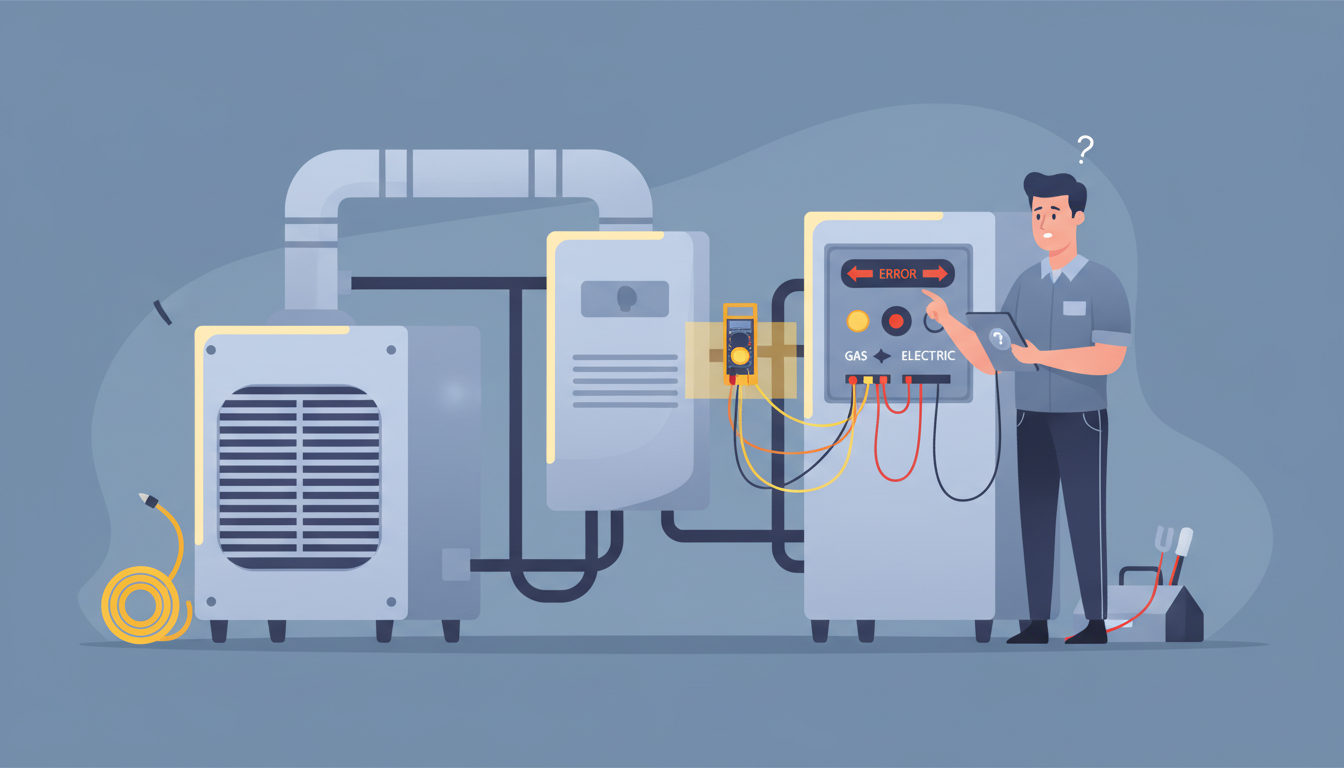
Why Is My Dual-Fuel System Not Switching Correctly?
Why Is My Dual-Fuel System Not Switching Correctly?
Is your dual-fuel HVAC system refusing to switch between your heat pump and gas furnace? You're not alone. When your system gets stuck using one heating source instead of automatically switching based on outdoor temperatures, it's not just frustrating—it's costing you money on your energy bills. The good news? Most dual-fuel switching problems have straightforward causes, and many you can troubleshoot yourself before calling a technician.
What Is a Dual-Fuel System and How Should It Switch?
Before diving into troubleshooting, let's quickly understand what should be happening. A dual-fuel system combines two heating sources: an electric heat pump (your outdoor unit) and a gas furnace (your indoor unit). The system automatically switches between these two based on outdoor temperature, using whichever is most efficient at the current conditions.
In mild weather, your heat pump handles the heating because it's incredibly efficient at transferring heat from outside air into your home. But when temperatures drop below your system's "balance point"—typically between 30-40°F—your gas furnace takes over because it can generate heat more efficiently and cost-effectively in cold conditions.
This automatic switching is controlled by your thermostat working together with an outdoor temperature sensor and control board. When any part of this system fails, you end up with a dual-fuel system that's not switching correctly.
Common Reasons Your Dual-Fuel System Won't Switch
1. Thermostat Compatibility and Configuration Issues
Your thermostat is the brain of your dual-fuel system, and not all thermostats are created equal when it comes to dual-fuel operation.
Thermostat Doesn't Support Dual Fuel: Many standard thermostats simply can't control dual-fuel systems. If you recently replaced your thermostat with a basic model, it may not have the programming to measure outdoor temperature or switch between heating sources. Smart thermostats like Honeywell, Nest, or Ecobee with dual-fuel capability are essential for proper operation.
Incorrect Thermostat Settings: Even capable thermostats need proper configuration. Check your thermostat's settings menu for dual-fuel or hybrid heat options. The balance point temperature might be set incorrectly, causing the system to switch at the wrong outdoor temperature—or not switch at all.
Staging Problems: Some thermostats only support single-stage auxiliary heat, but your system might require two stages. This mismatch prevents proper switching and can leave your heat pump running when the furnace should kick in.
For comprehensive guidance on heat pump thermostat issues, check out our heat pump repair guide.
2. Outdoor Temperature Sensor Malfunctions
The outdoor temperature sensor (also called an ambient sensor) is critical for automatic switching. This small device tells your thermostat what the outdoor temperature is, allowing it to make switching decisions.
Sensor Failure or Drift: Over time, sensors can fail completely or become inaccurate. If your sensor reads incorrectly—say it thinks it's 50°F when it's actually 25°F—your system will keep running the heat pump in freezing conditions, dramatically reducing efficiency and potentially damaging the compressor.
Physical Damage or Exposure: The sensor should be mounted in a shaded location away from direct sunlight, heat sources, or cold drafts. If it's in direct sun, near an exhaust vent, or damaged by weather, it won't provide accurate readings.
Loose or Corroded Wiring: The sensor connects to your control system via wiring that can become loose, corroded, or disconnected. Even a small connectivity issue disrupts the signal, preventing proper switching.
3. Control Board and Relay Failures
Your dual-fuel system relies on a control board (sometimes called a dual-fuel kit or control box) installed near your indoor unit. This board receives signals from the thermostat and sensor, then physically switches between heating sources by controlling relays.
Control Board Communication Errors: The board manages communication between your thermostat, outdoor sensor, and heating equipment. Software glitches, power surges, or component wear can cause communication failures that prevent switching commands from executing.
Relay Stuck or Burned Out: Relays are electromagnetic switches that physically connect power to either your heat pump or furnace. If a relay gets stuck in one position or burns out, your system remains locked on one heating source. You might hear clicking sounds when the thermostat tries to switch but nothing happens.
Board Needs Reprogramming: Sometimes the control board simply needs to be reset or reprogrammed to restore proper function. This is especially common after power outages or electrical storms.
4. Wiring and Connection Problems
Dual-fuel systems have more complex wiring than single-source heating systems, and several wiring issues can prevent switching:
Loose or Disconnected Wires: The communication wire between your thermostat, control board, and outdoor sensor must be secure. Vibration from equipment operation can loosen connections over time.
Incorrect Wiring During Installation: If your dual-fuel system was recently installed or you replaced a component, incorrect wiring could be the culprit. The "O/B" wire that controls the reversing valve, the "W" wire for furnace heat, and auxiliary heat wiring must all be correctly configured.
Damaged Wiring: Rodents, renovation work, or aging insulation can damage wiring, creating intermittent connections that cause unreliable switching.
5. Balance Point Configuration Errors
The balance point is the outdoor temperature at which your system switches from heat pump to furnace operation. If this isn't set correctly for your climate and system, you'll have switching problems.
Set Too Low: If your balance point is set at 20°F but your heat pump becomes inefficient at 35°F, you're wasting energy running the heat pump in conditions where the furnace would be more cost-effective.
Set Too High: Conversely, if the balance point is too high, your furnace runs when the heat pump could handle the load efficiently, wasting natural gas and money.
Not Configured at All: Some systems arrive with factory default settings that don't match your local climate or equipment specifications. The balance point needs to be calculated based on your equipment's efficiency ratings and local energy costs.
For more information on heat pump heating and cooling switching issues, see our guide on heat pump not switching between heating and cooling.
6. Reversing Valve Issues
While the reversing valve primarily switches your heat pump between heating and cooling modes, problems with this component can also affect dual-fuel switching.
Valve Stuck or Failed: A reversing valve stuck in one position can prevent your heat pump from operating in heating mode, forcing your system to rely entirely on the furnace—or vice versa.
Insufficient Power to Valve: The reversing valve solenoid needs consistent power to operate. Electrical issues, weak transformer output, or wiring problems can prevent the valve from switching properly.
7. System Lockout Features Engaged
Modern dual-fuel systems include safety features that can prevent switching under certain conditions:
Cold Weather Lockout: Many heat pumps have a built-in lockout temperature (often around 20-25°F) below which they won't operate to prevent compressor damage. If this lockout engages but the system doesn't switch to furnace mode, you'll have no heat.
Defrost Cycle Interference: During defrost cycles, your heat pump temporarily reverses to melt ice buildup on the outdoor coil. If there's a problem with the defrost cycle, it can interfere with normal dual-fuel switching.
Safety Limit Switches: High-limit switches, pressure switches, and other safety devices can prevent operation of either heating source if they detect unsafe conditions. These need to be checked and reset if tripped.
Step-by-Step Troubleshooting: What You Can Check Yourself
Before calling a professional, here are diagnostic steps you can safely perform:
Step 1: Perform a System Reset
Many dual-fuel switching problems are temporary communication glitches that clear with a simple reset:
- Turn off your thermostat and set it to OFF mode
- Locate your electrical panel and turn off the breakers for both your indoor furnace and outdoor heat pump unit
- Wait at least 60 seconds (this clears the system memory)
- Turn the breakers back on
- Set your thermostat to HEAT mode and raise the temperature setting above the current room temperature
- Wait 5-10 minutes for the system to fully engage and go through its startup sequence
Listen and observe which unit starts running. If outdoor temperatures are above your balance point, the outdoor heat pump should run. If it's colder, the furnace should operate.
Step 2: Verify Thermostat Settings
Access your thermostat's settings menu and check:
- System Type: Should be set to "dual fuel," "hybrid heat," or similar
- Balance Point: Verify it's set to an appropriate temperature (typically 30-40°F for most systems)
- Heat Stages: Confirm auxiliary/emergency heat settings match your system's capabilities
- Outdoor Sensor: Some thermostats show the outdoor temperature reading—verify this matches actual outdoor conditions
If the outdoor temperature reading is wildly inaccurate, your sensor likely needs attention.
Step 3: Inspect the Outdoor Temperature Sensor
Locate your outdoor temperature sensor (often mounted on an exterior wall in the shade):
- Check that it's securely mounted and not damaged
- Verify it's not in direct sunlight or near heat sources like dryer vents
- Look for visible damage to the wire or sensor housing
- Ensure connections are tight where the wire enters your indoor unit
Step 4: Listen for Switching Sounds
When your thermostat calls for heat, you should hear relays clicking inside your indoor unit or control box. If you hear clicking but nothing happens, a relay may be stuck. If there's no sound at all, the control board may not be receiving switching signals.
Step 5: Test Emergency Heat Mode
Most thermostats have an "emergency heat" or "E-heat" setting that forces the furnace to run regardless of outdoor temperature. Switch to this mode temporarily:
- If the furnace runs fine in emergency heat mode but won't automatically switch, the problem is in the switching mechanism (sensor, control board, or thermostat configuration)
- If the furnace doesn't run even in emergency heat, you may have a furnace problem unrelated to dual-fuel switching
Remember to return your thermostat to normal heat mode after testing.
Step 6: Check Air Filters and Airflow
While not directly related to switching, dirty filters can cause system malfunctions. A severely restricted filter can:
- Trigger safety limit switches that prevent heating
- Cause the indoor blower to underperform
- Create symptoms that mimic switching problems
Replace your filter if it's dirty and see if normal operation resumes.
When to Call a Professional HVAC Technician
Some dual-fuel switching problems require professional diagnosis and repair. Call a qualified technician if:
- Reset doesn't restore function: System still won't switch after power cycling
- Thermostat shows errors: Error codes or fault messages appear on your thermostat display
- No outdoor temperature reading: Your thermostat can't communicate with the outdoor sensor
- Strange noises or smells: Buzzing, humming, burning smells, or other concerning sounds
- Safety concerns: Your system is running continuously in inappropriate modes (heat pump in extreme cold)
- Recent storm or power surge: Electrical events can damage control boards
- You're uncomfortable with diagnostics: It's always better to call a pro than risk damaging equipment or creating safety hazards
A qualified HVAC technician has specialized tools to:
- Test sensor accuracy and calibration
- Diagnose control board function with multimeters and diagnostic software
- Check wiring continuity and voltage at all connection points
- Reprogram or replace control boards
- Verify proper balance point settings for your specific equipment and climate
- Measure actual system performance and efficiency
For general HVAC troubleshooting and maintenance tips, explore our comprehensive HVAC repair guide.
Repair Costs: What to Expect
Understanding potential costs helps you make informed decisions:
DIY Fixes (Free to $50):
- Thermostat reconfiguration: Free
- System reset: Free
- Air filter replacement: $15-30
- Thermostat battery replacement: $5-10
Professional Diagnosis: $100-200 for a service call and diagnostic
Common Repairs:
- Outdoor temperature sensor replacement: $150-300
- Control board replacement: $300-600
- Thermostat replacement (dual-fuel capable): $200-500 installed
- Wiring repairs: $150-400 depending on extent
- Reversing valve replacement: $400-800
When Replacement Makes Sense: If your dual-fuel system is over 15 years old and requires expensive repairs (over $1,000), replacement might be more cost-effective than repair. Modern systems are significantly more efficient, and you may recoup the investment through energy savings and available tax credits.
Preventing Future Dual-Fuel Switching Problems
Regular maintenance keeps your dual-fuel system switching smoothly:
Annual Professional Maintenance: Schedule tune-ups twice yearly—once before heating season, once before cooling season. Technicians will:
- Test all switching mechanisms
- Verify sensor accuracy
- Check and tighten all electrical connections
- Clean components
- Verify balance point settings
Seasonal Homeowner Tasks:
- Replace air filters every 1-3 months
- Keep outdoor unit clear of debris, snow, and ice
- Verify outdoor sensor is clean and properly positioned
- Test emergency heat mode at the start of each heating season
After Power Outages: Following storms or outages, verify your system is switching normally. Control boards can lose programming during electrical events.
Upgrade Outdated Thermostats: If you have an older thermostat without smart features or outdoor temperature sensing, upgrading to a modern dual-fuel-compatible smart thermostat improves reliability and gives you better control over switching behavior.
Understanding Emergency Heat vs. Auxiliary Heat
Confusion about these two modes often accompanies dual-fuel switching problems:
Auxiliary Heat (Auto): Your system's normal backup mode. When outdoor temperatures drop below the balance point, auxiliary heat (your furnace) automatically supplements or replaces the heat pump. This is the correct automatic switching you want.
Emergency Heat (Manual): A manual override that completely shuts off your heat pump and runs only the furnace. Use this mode only when your heat pump is malfunctioning and needs repair. Running emergency heat unnecessarily wastes energy and money.
If your system frequently runs in emergency heat mode when it shouldn't, or if auxiliary heat engages at inappropriate temperatures, you have a switching configuration problem that needs correction.
The Role of Smart Thermostats in Dual-Fuel Operation
Modern smart thermostats have transformed dual-fuel system management:
Advanced Features:
- Outdoor temperature monitoring: Built-in weather data eliminates the need for external sensors in some models
- Adaptive balance points: Some thermostats learn your system's optimal switching point over time
- Energy usage tracking: Monitor which heating source is running and associated costs
- Remote diagnostics: Alerts notify you of switching problems before they cause comfort issues
- Scheduling and geofencing: Automatically adjust heating based on occupancy to maximize savings
Popular Dual-Fuel Compatible Models:
- Honeywell T6 Pro and Prestige Series
- Ecobee SmartThermostat with Voice Control
- Nest Learning Thermostat (with proper configuration)
- Carrier Cor and Infinity Series
- Trane ComfortLink II
If you're experiencing frequent switching problems with an older thermostat, upgrading may solve your issues while adding convenience and energy monitoring features.
FAQ: Dual-Fuel System Switching Problems
Why is my heat pump running when it's below freezing outside?
This indicates your dual-fuel system is not switching to furnace mode as it should. The most common causes are an incorrectly set balance point, a failed outdoor temperature sensor, or a thermostat that doesn't support dual-fuel operation. Running your heat pump in extremely cold weather is inefficient and can damage the compressor. Switch to emergency heat temporarily and call a technician.
Can I manually control which heating source my dual-fuel system uses?
Most dual-fuel thermostats allow manual override. You can force furnace-only operation by switching to "emergency heat" mode, but this should only be temporary. The whole point of dual-fuel is automatic switching for optimal efficiency. If you find yourself manually switching frequently, your system needs professional attention to restore automatic operation.
How do I know what my balance point should be set to?
The ideal balance point depends on your specific equipment efficiency ratings and local energy costs. Generally, systems are set between 30-40°F, but this varies. Your HVAC technician can calculate the optimal balance point by comparing your heat pump's HSPF rating against your furnace efficiency and the cost difference between electricity and natural gas in your area.
Will a bad outdoor sensor prevent my heat pump from working in summer?
Typically, no. The outdoor temperature sensor primarily affects heating mode switching in dual-fuel systems. Your air conditioning function usually doesn't depend on this sensor. However, some advanced systems use the outdoor sensor for efficiency optimization in cooling mode, so a failed sensor could affect performance even in summer.
Is it normal for my dual-fuel system to switch back and forth frequently?
Brief switching during transition temperatures (near your balance point) can be normal, especially if outdoor temperatures are fluctuating around the setpoint. However, rapid cycling—switching every few minutes—indicates a problem. This could be an incorrect balance point setting, a malfunctioning sensor providing erratic readings, or a control board issue. Frequent switching reduces efficiency and increases wear on components.
Can I add dual-fuel capability to my existing heat pump and furnace?
In many cases, yes. If you have a compatible heat pump and furnace, a dual-fuel kit (control board and wiring) plus a compatible thermostat can be added. However, the installation requires professional expertise to ensure proper wiring, configuration, and balance point settings. Your technician will verify that your existing equipment can work together efficiently before recommending this upgrade.
Conclusion: Get Your Dual-Fuel System Switching Smoothly Again
A dual-fuel system that's not switching correctly defeats the purpose of having this efficient, flexible heating solution. Whether the problem is a simple thermostat configuration error or a failed component like the outdoor sensor or control board, identifying and fixing the issue quickly saves you money on energy bills and prevents potential equipment damage.
Start with the simple troubleshooting steps outlined above—many switching problems resolve with a system reset or thermostat adjustment. For persistent issues, error codes, or if you're uncomfortable performing diagnostics yourself, don't hesitate to call a qualified HVAC professional. The investment in proper diagnosis and repair pays off through restored comfort, optimal efficiency, and peace of mind knowing your system is operating safely.
Your dual-fuel system is designed to give you the best of both worlds: the efficiency of a heat pump in mild weather and the reliable warmth of a gas furnace in the cold. With proper maintenance and timely repairs, you can enjoy that advantage for years to come.
Need expert help with your dual-fuel system? A qualified HVAC technician can diagnose switching problems, calibrate settings, and restore automatic operation quickly—usually in a single service call. Don't let switching problems cost you comfort and money all season long.