
Frozen Evaporator Coil? What It Means and What to Do Next
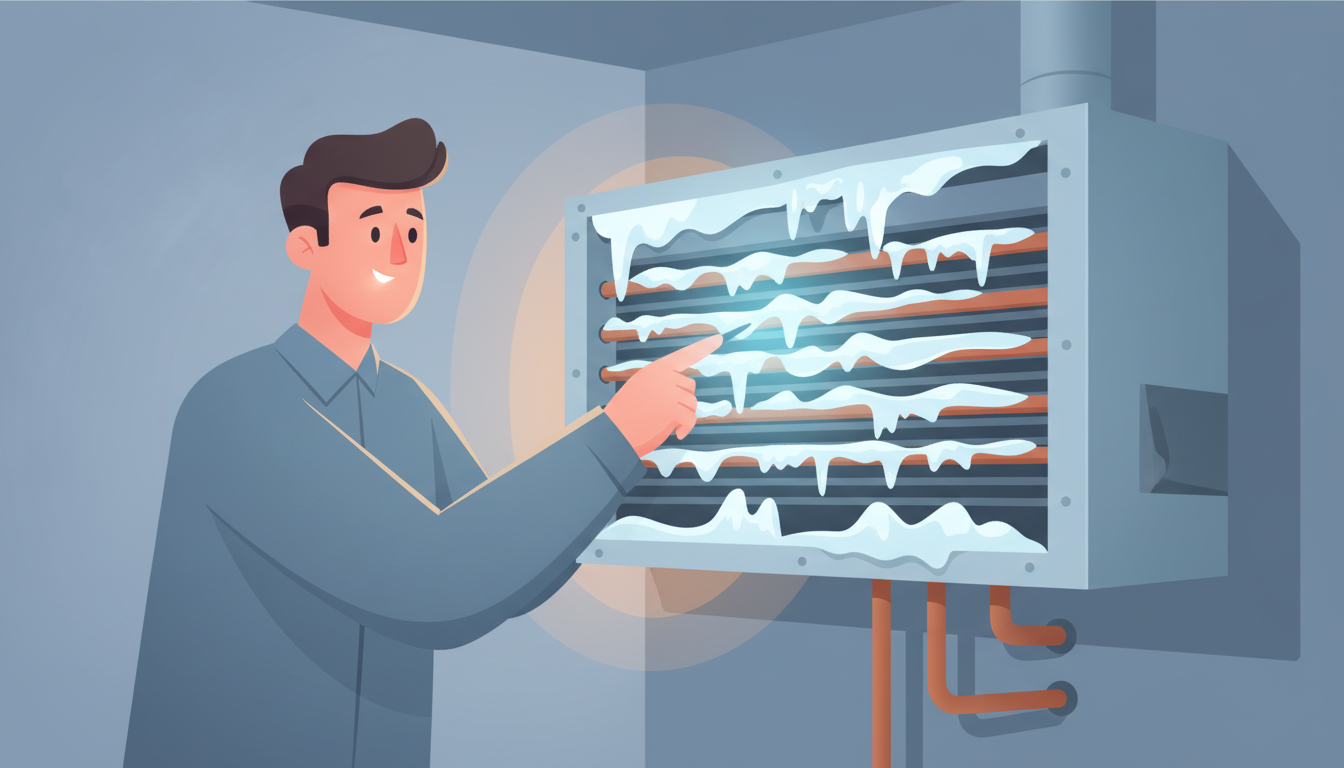
Frozen Evaporator Coil? What It Means and What to Do Next
Your air conditioner is running, but your home feels like a sauna. You check the indoor unit and discover something alarming—ice covering the evaporator coil. If you've found a frozen evaporator coil, you're dealing with a serious AC problem that demands immediate attention. But don't panic. Understanding what's happening and knowing the right steps to take can save you from expensive compressor damage and get your cooling system back on track.
What Is an Evaporator Coil and Why Does It Freeze?
Your evaporator coil is the indoor component of your air conditioning system where the magic of cooling happens. Located inside your air handler or attached to your furnace, this coil absorbs heat from your home's air as refrigerant flows through it.
Under normal conditions, your evaporator coil operates at around 40 degrees Fahrenheit—cool enough to remove heat and humidity, but not cold enough to freeze. When something disrupts this delicate balance, the coil temperature drops too low, causing moisture in the air to freeze on contact.
A frozen AC coil isn't just an inconvenience. It's a warning sign that your system can't move air properly, has lost refrigerant, or is suffering from another critical issue. Left unaddressed, this problem can destroy your compressor—the most expensive component in your HVAC system.
Signs Your Evaporator Coil Is Frozen
Catching a frozen coil early can prevent major damage. Watch for these telltale symptoms:
Visible ice buildup: Open your air handler or furnace cabinet and you'll see frost or ice covering the copper coil lines.
Reduced cooling capacity: Your AC runs constantly but fails to cool your home effectively.
Water leaks: As ice melts, water overflows the condensate drain pan, potentially causing water damage to your home.
Hissing or bubbling sounds: These noises indicate refrigerant problems associated with freezing.
Higher energy bills: A frozen coil forces your system to work harder, consuming more electricity while delivering less cooling.
If you notice any of these signs, it's time to investigate your evaporator coil immediately.
Top Causes of a Frozen Evaporator Coil
Understanding why your evaporator coil is freezing helps you prevent future problems. Here are the most common culprits:
1. Restricted Airflow from Dirty Air Filters
Your air filter protects your HVAC system from dust, pet dander, and debris. When it gets clogged, airflow drops dramatically. Without enough warm air passing over the evaporator coil, the coil temperature plummets below freezing.
This is the most common cause of frozen coils—and the easiest to prevent. Most homeowners should replace standard filters every 1-3 months. If you have pets or allergies, change filters monthly.
2. Blocked or Closed Return Vents
Your return vents pull warm air from your home into the HVAC system. When furniture, curtains, or closed vents block these returns, your system can't circulate enough air over the evaporator coil.
Walk through your home and check every return vent. Make sure nothing obstructs them, and keep all vents open—even in rooms you don't use frequently. Proper HVAC maintenance includes ensuring clear airflow throughout your home.
3. Dirty Evaporator Coil
Over time, dust and debris accumulate on the evaporator coil itself, forming an insulating layer that prevents proper heat exchange. When the coil can't absorb heat efficiently, its temperature drops and ice forms.
Coil cleaning requires professional equipment and expertise. Annual maintenance visits typically include coil inspection and cleaning as part of comprehensive central AC repair and maintenance.
4. Low Refrigerant Levels
Refrigerant is the lifeblood of your air conditioning system. When refrigerant levels drop—usually due to leaks—the pressure in your evaporator coil decreases. This pressure drop causes the remaining refrigerant to become extremely cold, well below the normal operating temperature, leading to ice formation.
Low refrigerant never fixes itself. If you're dealing with a refrigerant leak, you'll need a licensed HVAC technician to locate the leak, repair it, and recharge your system with the correct amount of refrigerant.
5. Malfunctioning Blower Fan
Your blower fan circulates air across the evaporator coil. When the fan motor fails, runs at reduced speed, or struggles due to dirt buildup, airflow decreases dramatically. Without adequate air circulation, the coil temperature drops too low and freezing occurs.
Blower fan problems often produce unusual noises—grinding, squealing, or rattling. If you hear these sounds along with reduced airflow, your blower fan likely needs professional attention.
6. Thermostat Issues
A faulty thermostat can cause your AC to run continuously, even when your home reaches the set temperature. This constant operation without proper cycling can eventually lead to freezing.
Additionally, running your AC when outdoor temperatures drop below 60 degrees Fahrenheit can cause the coil to freeze. Most residential air conditioners aren't designed to operate in cool weather.
7. Blocked Condensate Drain Line
While less common, a clogged condensate drain can contribute to freezing problems. When moisture can't drain properly, humidity levels around the coil increase, promoting ice formation.
Regular drain line maintenance prevents this issue. Many HVAC professionals recommend annual drain line cleaning as part of routine maintenance.
What to Do If Your Evaporator Coil Is Frozen (Step-by-Step)
Discovering a frozen evaporator coil requires immediate action. Follow these steps to safely handle the situation:
Step 1: Turn Off Your Air Conditioner Immediately
Go to your thermostat and switch it from "Cool" to "Off." Continuing to run your AC with a frozen coil can cause catastrophic compressor damage—a repair that can cost $1,500 to $2,500 or more.
Step 2: Turn On the Fan Only
Switch your thermostat fan setting from "Auto" to "On." This keeps the blower fan running without activating the compressor. The circulating air helps melt the ice faster.
Step 3: Let the Coil Thaw Completely
Depending on how much ice has accumulated, complete thawing takes 3-8 hours. Never try to chip, scrape, or force ice off the coil. These actions can puncture the delicate coil fins or refrigerant lines, creating expensive damage.
Step 4: Check and Replace Your Air Filter
While the coil thaws, inspect your air filter. If it's dirty or clogged, replace it immediately. Even if the filter looks relatively clean, consider replacing it anyway—airflow restriction might not be visible to the naked eye.
Step 5: Inspect Return Vents and Registers
Walk through your home checking every return vent. Remove any obstructions and ensure all vents remain open.
Step 6: Mop Up Any Water
As ice melts, water will collect in the condensate drain pan. Check the pan periodically and mop up excess water to prevent overflow damage.
Step 7: Restart Your System Carefully
After the coil has completely thawed (no visible ice anywhere), return your thermostat to "Cool" mode and monitor the system closely for the next few hours. Check the indoor unit every 30-60 minutes to ensure ice doesn't return.
Step 8: Call a Professional If Freezing Returns
If your evaporator coil freezes again within 24-48 hours, you're dealing with a problem that requires professional diagnosis. This indicates issues beyond simple filter replacement—likely refrigerant leaks, mechanical failures, or ductwork problems. If your evaporator coil keeps freezing up, professional intervention is necessary.
How to Prevent Your Evaporator Coil from Freezing
Prevention beats expensive repairs every time. These proactive steps keep your evaporator coil operating at the right temperature:
Change air filters religiously: Set phone reminders for filter changes every 30-60 days. Buy filters in bulk so you always have replacements ready.
Schedule annual maintenance: Professional HVAC technicians spot potential problems before they cause freezing. Annual tune-ups typically include coil cleaning, refrigerant level checks, and airflow verification.
Keep vents clear: Never block return vents with furniture, and avoid closing off too many supply vents in unused rooms.
Don't run your AC in cold weather: When outdoor temperatures drop below 60°F, turn off your air conditioner. Low ambient temperatures can cause coil freezing even in perfectly functioning systems.
Monitor your system performance: Pay attention to cooling efficiency, unusual sounds, and energy bills. Small changes often signal developing problems.
Address minor issues promptly: Strange noises, slight cooling reductions, or small water leaks often escalate into frozen coils if ignored.
Can You Run Your AC With a Frozen Coil?
Absolutely not. Running your air conditioner with a frozen evaporator coil risks destroying your compressor. The compressor is designed to compress refrigerant vapor, not liquid. When refrigerant doesn't fully vaporize in the frozen coil, liquid refrigerant flows back to the compressor—a condition called "liquid slugging."
Liquid slugging can crack the compressor valves, damage pistons, or cause complete compressor failure. Since the compressor accounts for 40-50% of your entire HVAC system's cost, this is not a risk worth taking.
The moment you discover a frozen coil, shut down your system immediately.
How Long Does It Take for a Frozen Evaporator Coil to Thaw?
Thawing time depends on ice accumulation severity. Light frost might disappear in 2-3 hours, while heavy ice buildup can take 6-8 hours to melt completely.
Running the blower fan (without the compressor) accelerates thawing by circulating room-temperature air across the coil. Never use external heat sources like hair dryers or space heaters to speed the process—these can damage coil components or create safety hazards.
Patience pays off. Rushing the thawing process or restarting your system before all ice melts can lead to immediate re-freezing and additional damage.
DIY vs. Professional Help: When to Call an HVAC Technician
Some frozen coil situations you can handle yourself, while others require professional expertise:
DIY-Friendly Situations:
- First-time freezing with an obviously dirty filter
- Clear vent obstructions causing the problem
- Simple thermostat setting errors
Call a Professional When:
- Freezing recurs after filter replacement and system restart
- You suspect refrigerant leaks (hissing sounds, chemical odors)
- The blower fan isn't working properly
- You see visible coil damage
- Ice appears on outdoor refrigerant lines (indicates serious problems)
- Your system is more than 10 years old and freezing regularly
HVAC technicians have specialized tools to diagnose exactly why your coil freezes. They can measure refrigerant pressure, test airflow velocity, inspect ductwork, and identify problems invisible to homeowners.
The Real Cost of Ignoring a Frozen Evaporator Coil
Postponing frozen coil repairs seems like a money-saver, but it's actually financial self-sabotage. Here's what happens when you ignore the problem:
Compressor failure: Replacement costs $1,500-$2,500 for the part and labor. In systems older than 10 years, compressor failure often means complete system replacement ($3,500-$7,000+).
Increased energy consumption: A struggling AC with a frozen coil can increase your electricity bills by 20-40% while delivering minimal cooling.
Secondary water damage: Overflowing condensate pans can damage flooring, drywall, and create conditions for mold growth—repairs that cost thousands.
Complete system failure: What starts as a $200 repair (filter change plus service call) escalates to multi-thousand-dollar emergency replacement.
Addressing frozen coil problems immediately is always the most economical choice.
Frequently Asked Questions About Frozen Evaporator Coils
Can a frozen evaporator coil fix itself?
No. While the ice will eventually melt on its own, the underlying cause remains. If you restart your AC without fixing the root problem, the coil will freeze again—often worse than before.
Why does my evaporator coil freeze only at night?
Nighttime freezing typically indicates borderline airflow or refrigerant issues. As outdoor temperatures drop at night, your AC doesn't need to work as hard, running longer cycles at lower capacity. These extended run times can cause marginally low airflow or refrigerant situations to cross into freezing territory.
Can low refrigerant cause only partial coil freezing?
Yes. Refrigerant leaks don't always cause uniform ice coverage. You might see ice on specific coil sections while other areas appear normal. Any ice formation signals a problem requiring attention.
Will a frozen evaporator coil ruin my entire AC system?
If caught early and shut down promptly, a frozen coil rarely causes permanent damage beyond the immediate issue. The real danger comes from continuing to run the system with a frozen coil, which leads to compressor destruction.
How much does evaporator coil replacement cost?
Replacing an evaporator coil typically costs $600-$1,200 for the part plus $400-$800 in labor. Total replacement ranges from $1,000-$2,000 depending on your system size and accessibility. However, most frozen coil situations don't require coil replacement—addressing the underlying cause usually solves the problem.
Take Action Before It's Too Late
A frozen evaporator coil is your air conditioning system's cry for help. Whether it's a simple clogged filter or a complex refrigerant leak, ignoring the problem guarantees expensive consequences.
Start with the basics: shut down your system, let it thaw, replace your filter, and check for obstructions. If freezing returns, don't gamble with DIY repairs. Professional HVAC technicians can diagnose and fix the root cause before minor issues become major expenses.
Your comfort, your budget, and your home's air quality all depend on a properly functioning cooling system. When you spot that first sign of ice on your evaporator coil, take it seriously and act quickly. Your future self—and your wallet—will thank you.