
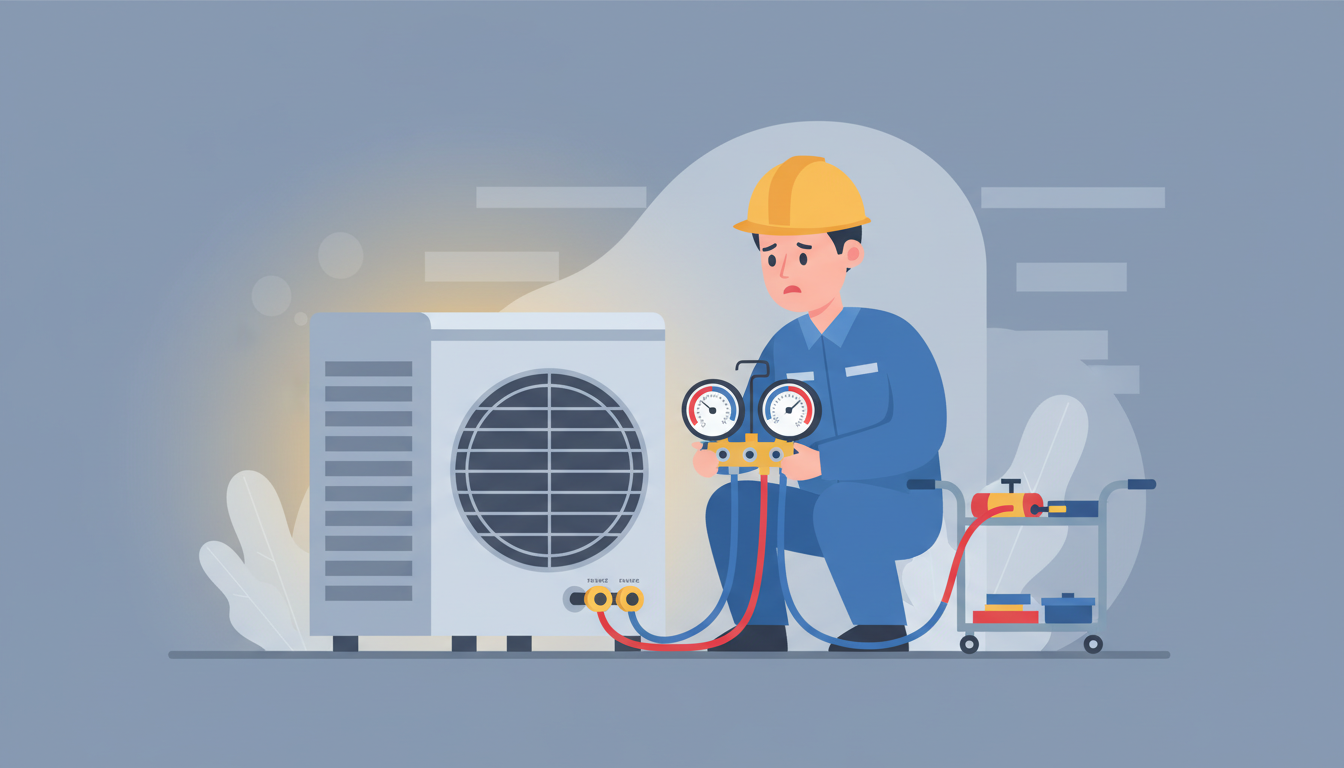
What Happens When an AC Is Overcharged or Undercharged?
What Happens When an AC Is Overcharged or Undercharged?
Is your air conditioner running but not keeping your home cool? Are your energy bills climbing even though you haven't changed how you use your AC? The problem might not be what you think. Your air conditioning system needs the exact right amount of refrigerant to work properly—not too much, not too little. When your AC is overcharged or undercharged with refrigerant, it can lead to serious problems that cost you money and comfort.
Understanding Refrigerant Charge in Your AC System
Before we dive into what goes wrong, let's clarify what "refrigerant charge" actually means. The refrigerant charge is the specific amount of refrigerant your AC system needs to operate efficiently. Think of it like the oil in your car—your engine needs the right amount, not just any amount.
Your air conditioner doesn't consume refrigerant like it does electricity. Instead, the same refrigerant circulates continuously through your system in a closed loop. It absorbs heat from inside your home at the evaporator coil, carries that heat outside, and releases it at the condenser unit. This refrigerant cycle is what keeps your home cool.
When your system has the proper charge, the refrigerant transitions between liquid and gas at exactly the right points in the cycle. This delicate balance is what makes your AC work efficiently.
What Does It Mean When an AC Is Overcharged?
An overcharged AC has too much refrigerant in the system. This might sound harmless—after all, wouldn't more refrigerant mean more cooling? Unfortunately, it doesn't work that way.
When there's too much refrigerant in your system, it can't expand and change from liquid to gas properly. The excess refrigerant increases pressure throughout the system, forcing your compressor to work much harder than it should. This extra strain reduces efficiency and can cause serious damage over time.
How Does an AC Become Overcharged?
Overcharging typically happens during installation or repair when someone adds too much refrigerant to your system. This often occurs when:
- A non-certified technician works on your system
- Someone tries to "top off" refrigerant without properly measuring current levels
- A technician doesn't follow the manufacturer's specifications for refrigerant charge
- DIY repairs go wrong (never attempt to add refrigerant yourself)
The refrigerant in your AC system should rarely need adding unless there's a leak. If a technician suggests adding refrigerant, they should first check for leaks using proper diagnostic equipment.
What Happens When Your AC Has Too Much Refrigerant?
An overcharged air conditioner creates multiple problems that affect both performance and your wallet. Here's what happens inside your system when it has too much refrigerant:
Liquid Refrigerant Floods the Compressor
In a properly charged system, only refrigerant in gas form should reach the compressor. But when your AC is overcharged, liquid refrigerant can make its way into the compressor—a condition called "liquid slugging."
Your compressor is designed to compress gas, not liquid. When liquid refrigerant enters, it can cause immediate mechanical damage. The liquid also mixes with the compressor oil, diluting it and reducing its ability to lubricate moving parts. This can lead to compressor failure, which is one of the most expensive HVAC repairs you'll face.
System Pressure Becomes Dangerously High
Too much refrigerant means too much pressure. Your AC system has safety switches that monitor pressure levels, and when pressure gets too high, these switches may shut your system down completely to prevent damage.
Even if your system doesn't shut down, the high pressure forces every component to work harder. This accelerates wear and tear on parts like the compressor, condenser fan, and expansion valve.
Cooling Performance Actually Decreases
It seems counterintuitive, but an overcharged AC doesn't cool better—it cools worse. The excess refrigerant disrupts the heat transfer process at both the evaporator and condenser coils.
When refrigerant can't properly expand and absorb heat at the evaporator coil, less heat gets removed from your indoor air. Your AC runs longer cycles trying to reach your thermostat setting, but it struggles to get there.
Signs Your AC Is Overcharged with Refrigerant
How can you tell if your air conditioner has too much refrigerant? Watch for these warning signs:
Higher Energy Bills
When your overcharged AC works harder and runs longer to cool your home, it consumes more electricity. If your energy bills have increased without a corresponding increase in usage, improper refrigerant charge could be the culprit.
Weak or Inconsistent Cooling
Your AC might run continuously without reaching the temperature you've set on your thermostat. Some rooms might feel cooler than others, or the air coming from your vents might not feel as cold as it should.
Unusual Noises from Your AC Unit
An overcharged system often makes sounds it shouldn't. Listen for:
- Knocking or clanging from the compressor
- Bubbling or gurgling sounds from the refrigerant lines
- Hissing that indicates pressure problems
- Rattling from components under strain
Frost or Ice on the AC Lines or Coils
You might notice frost forming on the refrigerant lines, especially near the outdoor unit. While frost can indicate either overcharging or undercharging, combined with other symptoms it helps diagnose the problem. The frost occurs because the refrigerant isn't absorbing heat properly, causing temperatures to drop below freezing at certain points in the system.
The System Shuts Down Unexpectedly
High pressure safety switches protect your AC from damage by shutting it down when pressure exceeds safe limits. If your system frequently turns off on its own, especially on hot days when it's working hardest, overcharging might be triggering these safety mechanisms.
What Does It Mean When an AC Is Undercharged?
An undercharged AC has too little refrigerant in the system. Unlike overcharging, which usually results from human error during service, undercharging almost always points to a leak somewhere in your refrigerant lines.
Your AC system is sealed and should never lose refrigerant under normal operation. If refrigerant levels are low, it means refrigerant is escaping from somewhere in the system.
How AC Systems Become Undercharged
The most common cause of undercharging is a refrigerant leak. Leaks can develop from:
- Corrosion on copper refrigerant lines over time, especially in coastal areas with salt air
- Vibration damage where refrigerant lines connect to components
- Poor installation with improperly brazed or flared connections
- Physical damage from landscaping, construction, or moving outdoor furniture
- Manufacturing defects in coils or connections
- Wear and tear on valve cores and service ports
Sometimes you might hear a hissing or bubbling sound near the leak location, but small leaks can be silent and hard to detect without professional equipment.
What Happens When Your AC Doesn't Have Enough Refrigerant?
An undercharged system creates different problems than an overcharged one, but they're equally serious:
The Evaporator Coil Freezes Over
When refrigerant levels drop too low, the evaporator coil gets too cold—ironically, because there isn't enough refrigerant to absorb heat properly. The moisture in the air freezes on the coil surface, building up layers of ice.
This ice blocks airflow through the coil, making cooling even worse. Eventually, the entire evaporator coil can become encased in ice, completely stopping air circulation through your system.
Your AC Can't Cool Your Home
With insufficient refrigerant, your AC simply can't move enough heat out of your house. You'll notice:
- Weak airflow from vents
- Air that's barely cooler than room temperature
- The AC running constantly without reaching the set temperature
- Some rooms barely cooling at all
The system keeps running because it can't satisfy the thermostat, wasting energy while failing to keep you comfortable.
The Compressor Overheats and Fails
Here's the dangerous part: an undercharged AC forces the compressor to run without adequate refrigerant flow. Refrigerant doesn't just transfer heat from your home—it also cools the compressor itself.
Without enough refrigerant flowing through, the compressor overheats. Running in this condition causes internal damage that accumulates over time until the compressor fails completely. Replacing a compressor often costs $1,500 to $2,500 or more, and on older systems, it might make more sense to replace the entire AC unit.
Signs Your AC Is Undercharged
Watch for these symptoms that indicate low refrigerant levels:
Ice Buildup on Indoor Coils or Lines
If you notice ice forming on the indoor evaporator coil or on the larger refrigerant line near your indoor unit, you likely have an undercharged system. Don't try to chip the ice off—you need to address the underlying refrigerant problem.
Hissing or Bubbling Sounds
A hissing sound near your AC unit often indicates refrigerant escaping from a leak. You might hear it near the outdoor unit, along refrigerant lines, or near connections. Bubbling sounds can occur at the leak site or where refrigerant is boiling in places it shouldn't.
The AC Runs Constantly Without Cooling
An undercharged system can't reach the temperature set on your thermostat, so it just keeps running. You'll notice your AC never cycles off, even though your home isn't getting cooler.
Warm Air from Your Vents
In severe cases of undercharging, your AC might blow air that's barely cool or even warm. The refrigerant level is so low that the system can barely function as an air conditioner.
Dramatically Higher Electric Bills
A constantly running AC that never shuts off will spike your energy bills. You're paying for electricity all day and night while getting little to no cooling benefit.
Overcharged vs. Undercharged: Key Differences
Both conditions cause problems, but they affect your system differently:
| Problem | Overcharged AC | Undercharged AC |
|---|---|---|
| Main Cause | Too much refrigerant added during service | Refrigerant leak in the system |
| Pressure Issues | Abnormally high system pressure | Abnormally low system pressure |
| Cooling Performance | Reduced cooling, longer run times | Little to no cooling, constant running |
| Frost/Ice Location | May appear on outdoor lines | Usually on indoor evaporator coil |
| Sound Indicators | Knocking, gurgling from compressor area | Hissing from leak location |
| Compressor Risk | Liquid slugging damage | Overheating and burnout |
| Energy Bills | Higher due to inefficiency | Extremely high due to constant operation |
How HVAC Technicians Diagnose Refrigerant Charge Problems
Professional HVAC technicians use specific tools and measurements to determine if your AC has the right refrigerant charge. Understanding this process helps you appreciate why proper diagnosis requires professional expertise:
Pressure Testing with Manifold Gauges
Technicians attach manifold gauges to your system's service ports to measure both the low-side (suction) and high-side (discharge) pressures. These pressure readings, compared to manufacturer specifications, reveal whether your system is overcharged or undercharged.
An overcharged system shows abnormally high pressure on both gauges. An undercharged system shows abnormally low pressure readings.
Superheat and Subcooling Measurements
Professional diagnosis goes beyond simple pressure readings. Technicians measure superheat and subcooling to precisely determine the refrigerant charge level.
Superheat measures how much the refrigerant vapor has warmed above its boiling point at the evaporator. Subcooling measures how much the liquid refrigerant has cooled below its condensing temperature at the condenser.
These measurements, combined with outdoor temperature and manufacturer charts, tell technicians exactly how much refrigerant to add or remove to achieve the proper charge.
Electronic Leak Detection
For undercharged systems, finding the leak is crucial. Technicians use electronic leak detectors that can sense even tiny amounts of refrigerant in the air. They may also use:
- UV dye that glows under black light at leak locations
- Soap bubble solutions for visible leak checking
- Ultrasonic leak detectors that hear the sound of escaping gas
Simply adding refrigerant without fixing the leak just means you'll be back to square one in weeks or months.
Can You Fix Refrigerant Problems Yourself?
No. You should never attempt to add, remove, or handle refrigerant yourself. Here's why:
EPA Regulations Require Certification
Federal law requires EPA Section 608 certification to purchase, handle, or add refrigerant to AC systems. These regulations exist because refrigerants are potent greenhouse gases that harm the environment when released into the atmosphere.
Working with refrigerant without certification isn't just risky—it's illegal and can result in significant fines.
Special Equipment Is Required
Properly diagnosing and adjusting refrigerant charge requires:
- Manifold gauge sets
- Digital thermometers
- Refrigerant recovery equipment
- Vacuum pumps
- Refrigerant scales
- Manufacturer specification charts
This equipment costs thousands of dollars and requires training to use correctly.
Mistakes Cause Expensive Damage
Adding too much refrigerant can destroy your compressor within hours or days. Overcharging often costs more to fix than the original problem would have. Professional technicians have the training and tools to get it right the first time.
Warranty Implications
If anyone other than a licensed HVAC technician works on your system, you'll likely void your equipment warranty. If the compressor fails after DIY work or service by an unlicensed person, you'll pay for the replacement out of pocket.
How to Fix an Overcharged Air Conditioner
If your AC is overcharged, a qualified HVAC technician will:
- Measure current refrigerant levels using gauges and temperature readings
- Calculate how much refrigerant needs to be removed based on superheat and subcooling measurements
- Use refrigerant recovery equipment to safely remove excess refrigerant into a recovery tank (it's illegal to vent refrigerant into the atmosphere)
- Retest the system to ensure the charge is now correct
- Check for any damage caused by the overcharge, particularly to the compressor
This process typically takes 1-2 hours and costs between $150-$400 depending on your location and the severity of the overcharge.
How to Fix an Undercharged Air Conditioner
Fixing an undercharged system involves more steps because you need to address the leak:
- Locate and repair the leak using leak detection equipment
- Recover any remaining refrigerant from the system
- Repair or replace the leaking component (could be a line, coil, valve, or connection)
- Vacuum the system to remove air and moisture
- Add the correct amount of refrigerant according to manufacturer specifications
- Test the repair to ensure the leak is fixed and the system operates properly
Repair costs vary widely depending on where the leak is located:
- Minor leaks at service ports or connections: $200-$500
- Refrigerant line repairs: $300-$800
- Evaporator coil replacement: $1,000-$2,000
- Condenser coil replacement: $1,500-$3,000
The cost of refrigerant itself has also increased significantly in recent years, especially for older R-22 refrigerant, which is being phased out.
Preventing Refrigerant Charge Problems
The best approach is preventing refrigerant problems before they start:
Schedule Annual Professional Maintenance
A yearly AC tune-up should include refrigerant level checks. Your technician will catch small leaks before they become big problems and ensure your charge remains correct.
Regular maintenance typically costs $80-$150 but can save you thousands in avoided repairs.
Only Use Licensed HVAC Professionals
Never hire an unlicensed person to work on your AC, no matter how much cheaper they claim to be. The money you save upfront often turns into expensive repairs later when mistakes become apparent.
Address Small Problems Quickly
If you notice any signs of refrigerant problems—reduced cooling, ice buildup, unusual sounds—call for service right away. Catching problems early prevents the catastrophic compressor damage that turns a $300 repair into a $2,500+ replacement.
Protect Your Outdoor Unit
Keep the area around your outdoor AC unit clear. Don't store ladders, lawn equipment, or building materials against it. Avoid pressure washing the unit directly, which can damage fins and potentially refrigerant lines.
Consider a Maintenance Plan
Many HVAC companies offer annual maintenance plans that include priority service, discounts on repairs, and regular inspections. These plans help ensure your system gets the attention it needs to stay properly charged and functioning efficiently.
When to Call an HVAC Professional
Contact a licensed HVAC technician immediately if you notice:
- Ice or frost on your indoor or outdoor AC components
- Your AC running constantly without cooling your home
- Unusual sounds like hissing, bubbling, or knocking from your system
- Dramatically reduced cooling performance
- Unexplained increases in your energy bills
- Your AC shutting off on its own repeatedly
Don't wait until your system fails completely. Early intervention can save your compressor and prevent a minor refrigerant issue from becoming a major expense.
Frequently Asked Questions
How long does it take to fix an overcharged or undercharged AC?
Removing excess refrigerant from an overcharged system typically takes 1-2 hours. Fixing an undercharged system takes longer—usually 2-4 hours or more—because the technician must locate and repair the leak before adding refrigerant. Complex repairs might require multiple visits if parts need to be ordered.
Can I tell if my AC is overcharged or undercharged just by looking at it?
Not definitively. While ice buildup often indicates undercharging and certain sounds suggest overcharging, only a technician with proper gauges can accurately measure refrigerant levels. Many symptoms overlap between the two conditions, making professional diagnosis essential.
Does refrigerant need to be refilled regularly like gas in a car?
No. Your AC uses a closed-loop system where refrigerant should never need refilling under normal circumstances. If your system needs refrigerant added, it has a leak that must be repaired. Simply adding refrigerant without fixing the leak is a temporary fix that wastes money and harms the environment.
What's the difference between Freon and refrigerant?
Freon is a brand name for refrigerant, like Kleenex is a brand name for tissues. The term is often used to refer to R-22, an older refrigerant being phased out due to environmental concerns. Modern systems use R-410A or other newer refrigerants. All are types of refrigerant, but they're not interchangeable.
How much does it cost to fix refrigerant problems?
Costs vary widely based on the problem:
- Removing excess refrigerant: $150-$400
- Fixing small leaks and recharging: $200-$800
- Replacing coils: $1,000-$3,000
- Compressor replacement: $1,500-$2,500+
Getting multiple quotes from licensed contractors helps ensure fair pricing.
Keep Your AC Running Right
Your air conditioner needs the Goldilocks amount of refrigerant—not too much, not too little, but just right. Whether your system is overcharged or undercharged, the result is the same: poor performance, higher energy bills, and potential damage to expensive components like your compressor.
Don't ignore the warning signs. Ice on your coils, unusual sounds, reduced cooling, or constantly running equipment all signal that something's wrong with your refrigerant charge. A quick call to a licensed HVAC professional can diagnose the problem and fix it before minor issues turn into major expenses.
Remember, refrigerant problems aren't something you can fix yourself, and they won't go away on their own. Professional service protects your investment, keeps your home comfortable, and ensures your AC runs efficiently for years to come.
Need help with your air conditioner? Contact a licensed HVAC technician in your area to inspect your system and ensure it has the proper refrigerant charge for peak performance and efficiency.