
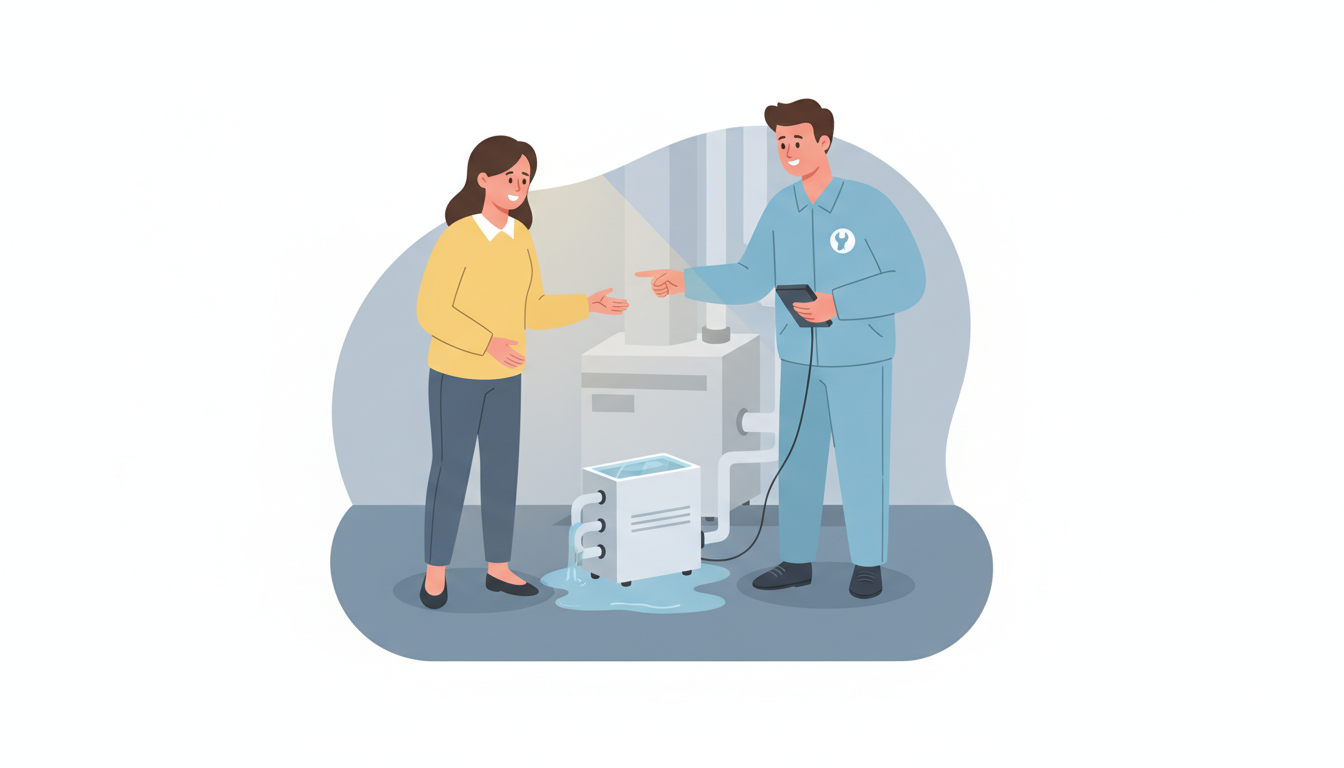
What Happens if a Condensate Pump Fails? (+ How to Fix It)
What Happens if a Condensate Pump Fails? (+ How to Fix It)
If you hear water dripping where it shouldn't be, or your AC suddenly shuts down on a hot summer day, your condensate pump might have failed. This small but critical component keeps water flowing out of your HVAC system—and when it stops working, the consequences can range from minor inconveniences to serious water damage.
In this guide, you'll learn exactly what happens when a condensate pump fails, how to spot the warning signs early, and what steps you need to take to protect your home and HVAC system.
What Is a Condensate Pump and Why Does It Matter?
Your air conditioning system and high-efficiency furnace naturally produce water (condensate) as they remove humidity from your home's air. This water needs to go somewhere, and that's where the condensate pump comes in.
A condensate pump collects water from your HVAC system's drain pan and pumps it out through a discharge pipe to a drain, sink, or outside your home. It's especially important if your HVAC equipment is located in a basement or other area where gravity drainage isn't possible.
The pump uses a float switch mechanism—when water reaches a certain level in the reservoir, the float rises and triggers the pump to turn on. Once the water level drops, the pump shuts off until it's needed again.
Immediate Consequences When Your Condensate Pump Fails
Water Overflow and Leaks
The most obvious problem when a condensate pump fails is water overflow. Without a working pump, condensate has nowhere to go and begins backing up in the drain pan. Within hours, you might see:
- Water pooling around your indoor AC unit or furnace
- Dripping from ceiling vents if your air handler is in the attic
- Wet spots on walls near your HVAC equipment
- Standing water in your basement near the furnace
A typical residential AC system produces 5-20 gallons of condensate per day in humid weather. If your condensate pump stops working during peak cooling season, that's a lot of water accumulating fast.
Automatic System Shutdown
Most modern HVAC systems have a safety overflow switch installed in the drain pan. When water reaches a critical level because the condensate pump isn't pumping, this safety switch trips and shuts down your entire system.
While frustrating—especially on a sweltering day—this automatic shutdown actually protects your equipment from water damage and prevents flooding. Your AC or furnace won't restart until the water problem is resolved and the safety switch resets.
However, if your system lacks this safety feature (common in older installations), water will continue overflowing until you notice the problem or run out of water production.
System Performance Issues
Even before complete failure, a struggling condensate pump can cause performance problems:
- Reduced cooling or heating efficiency
- Longer run cycles as the system works harder
- Higher humidity levels indoors
- Unusual noises from the pump area (grinding, clicking, buzzing)
These early warning signs often indicate the pump is partially clogged or the motor is wearing out. If you're experiencing any HVAC system leaking water issues, it's worth checking your condensate pump immediately.
Secondary Problems from Condensate Pump Failure
Water Damage to Your Home
Extended condensate pump failure leads to serious water damage:
Ceiling damage: If your air handler is in the attic, water seeps through insulation and drips through ceilings, causing stains, drywall damage, and potential collapse in severe cases.
Floor damage: Water pooling around basement or ground-floor equipment can damage flooring, carpets, and subflooring. Wood floors are especially vulnerable to warping and mold growth.
Wall damage: Water running down from attic units or seeping from basement equipment damages drywall, paint, and insulation.
Repairing water damage typically costs $1,000-$4,000 depending on the extent—far more expensive than replacing a failed condensate pump ($150-$400).
Mold and Mildew Growth
Standing water from a failed pump creates ideal conditions for mold and mildew within 24-48 hours. Mold spores can spread through your ductwork and into living spaces, causing:
- Musty odors throughout your home
- Respiratory problems and allergies
- Damage to building materials
- Expensive professional mold remediation ($500-$6,000)
The warm, humid environment near HVAC equipment accelerates mold growth faster than in other areas of your home.
Electrical Hazards
Water and electricity don't mix. A condensate pump failure that causes water overflow near electrical components creates serious safety risks:
- Short circuits in your HVAC system
- Potential electrical fires
- Damage to circuit boards and wiring
- Risk of electric shock during HVAC repair
Never attempt to operate or repair an HVAC system that's sitting in standing water. Turn off power at the breaker panel and call a professional immediately.
Frozen Evaporator Coils
When condensate doesn't drain properly, excess moisture can cause your evaporator coils to freeze—especially in AC systems. This happens because:
- Water backs up into the drain pan
- Restricted airflow reduces heat exchange
- Ice forms on the coils, reducing efficiency
- The system works harder but cools less
You'll notice reduced cooling, higher energy bills, and possibly ice visible on refrigerant lines. Learn more about why your air handler might leak water in summer.
Common Causes of Condensate Pump Failure
Understanding why condensate pumps fail helps you prevent problems before they start.
Clogged Drain Lines and Debris Buildup
The #1 cause of condensate pump failure is clogging. Over time, these materials accumulate in the pump reservoir and discharge line:
- Algae and slime (grows in standing water)
- Dust and dirt from air circulation
- Rust particles from metal components
- Mineral deposits from hard water
A clog prevents water from entering the pump properly or blocks the discharge pipe, causing the pump to run continuously without moving water or not trigger at all.
Float Switch Malfunction
The float switch is the pump's on/off trigger. Common float switch problems include:
- Stuck float due to debris or algae coating
- Broken float arm or mounting
- Corroded electrical connections
- Failed microswitch that doesn't trigger the motor
When the float switch fails, the pump doesn't know when to turn on, so water accumulates without being pumped out.
Motor Burnout and Electrical Failure
Condensate pump motors typically last 3-7 years with regular use. They can fail prematurely due to:
- Continuous operation from a stuck float switch
- Voltage fluctuations or power surges
- Overheating from running dry (no water in reservoir)
- Age-related wear on motor windings
Warning signs of motor failure include buzzing sounds without pumping action, burning smells, or complete silence when the pump should activate.
Blocked Discharge Pipe
Even with a working pump, water can't escape if the discharge pipe is blocked:
- Frozen discharge lines in winter (outdoor installations)
- Kinked or crushed flexible tubing
- Insect nests or debris in the pipe outlet
- Check valve stuck closed
The pump will run but water backs up because it has nowhere to go.
Age and Normal Wear
Like all mechanical devices, condensate pumps have a finite lifespan:
- Average lifespan: 3-7 years
- Heavy-use systems (high humidity areas): 3-5 years
- Light-use systems: 7-10 years
Older pumps develop worn seals, weakened float mechanisms, and degraded motor components. If your pump is approaching 5+ years old and showing problems, replacement is often more cost-effective than repair.
Warning Signs Your Condensate Pump Is Failing
Catching condensate pump problems early prevents water damage and system shutdowns. Watch for these warning signs:
Physical Signs
- Water pooling around your HVAC unit
- Wet spots on ceilings or walls
- Visible rust or corrosion on the pump
- Cracked or damaged pump housing
Sound Indicators
- Continuous running without stopping
- Grinding or clicking noises
- Buzzing without pumping action
- Complete silence when it should activate
System Behavior
- Frequent system shutdowns in humid weather
- High indoor humidity despite AC running
- Longer cooling cycles than normal
- Frozen refrigerant lines or coils
Visual Inspection
- Float switch doesn't move freely
- Visible algae or slime in reservoir
- Water level above the pump intake
- Discharge line dripping or leaking
If you notice any of these signs, inspect your condensate pump immediately or schedule professional service.
How to Troubleshoot a Failed Condensate Pump
Before calling a professional, you can perform some basic troubleshooting steps. Always turn off power to your HVAC system at the breaker panel before working on the condensate pump.
Step 1: Check the Power Supply
Ensure the pump is receiving power:
- Verify the pump is plugged in securely
- Check the outlet with another device
- Inspect for tripped breakers or blown fuses
- Look for damaged power cords
Some pumps plug into the HVAC unit while others have dedicated outlets. Make sure you're checking the correct power source.
Step 2: Inspect the Reservoir for Debris
Remove the pump cover and look inside the reservoir:
- Clear any visible debris, leaves, or sediment
- Check for algae growth (slimy coating)
- Ensure the intake isn't blocked
- Look for proper water level
If you see significant algae or slime, the entire pump needs cleaning.
Step 3: Test the Float Switch
The float should move freely up and down:
- Gently lift the float—the pump should start
- Lower the float—the pump should stop
- Check for sticky or stuck movement
- Look for broken float arm or mounting
If the float is stuck, try cleaning around it. If it's broken, you'll need a replacement pump.
Step 4: Check the Discharge Line
Follow the discharge pipe from the pump outlet:
- Look for kinks or crushing in flexible tubing
- Check for blockages at the end of the line
- Verify the line slopes downward (if any gravity assist)
- Test water flow by pouring water into the reservoir
You can disconnect the discharge line and blow through it to check for blockages. If air doesn't flow freely, the line is clogged.
Step 5: Listen to the Motor
Turn the pump on and listen carefully:
- A healthy motor hums steadily
- Grinding suggests bearing failure
- Buzzing without running indicates seized motor
- Clicking might be electrical issues
If the motor makes unusual sounds or doesn't run at all, it likely needs replacement.
Step 6: Clean the Pump Thoroughly
If the pump powers on but doesn't pump effectively:
- Disconnect power and remove the pump
- Disassemble according to manufacturer instructions
- Soak components in white vinegar (1 hour) to dissolve buildup
- Scrub with a brush to remove algae and debris
- Rinse thoroughly and reassemble
- Test before reinstalling
Regular cleaning every 3-6 months prevents most condensate pump failures.
Step 7: When to Replace vs. Repair
Replace the pump if:
- Motor is burned out or seized
- Housing is cracked or damaged
- Pump is 5+ years old with repeated issues
- Repair costs exceed 50% of replacement cost
Condensate pumps are relatively inexpensive ($50-$150 for the unit alone), so replacement often makes more financial sense than extensive repairs.
Emergency Response: What to Do Right Now
If your condensate pump fails and water is overflowing, take these immediate actions:
- Turn off your HVAC system at the thermostat and breaker panel
- Contain the water with towels, buckets, or a wet/dry vacuum
- Locate the source and stop additional water flow if possible
- Remove standing water quickly to prevent damage
- Dry the area thoroughly with fans or dehumidifiers
- Call a professional for emergency HVAC service
Don't restart your system until the pump is repaired or replaced. Running your AC or furnace with a failed pump will only create more water and potential damage.
Prevention: How to Keep Your Condensate Pump Working
Regular maintenance dramatically extends condensate pump life and prevents failures:
Quarterly Checks (Every 3 Months)
- Visually inspect the pump and reservoir
- Pour a cup of water in to test pump operation
- Check discharge line for proper flow
- Listen for unusual sounds
Annual Maintenance (Yearly or Before Cooling Season)
- Clean the reservoir and intake thoroughly
- Flush the discharge line with vinegar solution
- Test the float switch mechanism
- Inspect electrical connections for corrosion
Monthly During Peak Season
- Add condensate pan tablets (algaecide)
- Check for water pooling around equipment
- Verify system drains properly after running
Professional Service
Schedule professional HVAC maintenance annually. Technicians will:
- Deep clean the condensate system
- Test pump operation under load
- Check refrigerant levels and coil condition
- Inspect drain pans and safety switches
Prevention costs a fraction of emergency repairs and water damage remediation.
Cost Breakdown: Repair vs. Replacement
Understanding the financial impact helps you make informed decisions:
DIY Pump Replacement
- Condensate pump unit: $50-$150
- Basic tools (if needed): $20-$50
- Total DIY cost: $70-$200
Professional Replacement
- Pump unit: $50-$150
- Labor (1-2 hours): $100-$250
- Total professional cost: $150-$400
Repair Costs
- Service call: $75-$150
- Cleaning and minor repair: $100-$200
- Motor replacement: $150-$300
Water Damage Costs (If Neglected)
- Minor ceiling repair: $300-$800
- Major water damage: $1,000-$4,000
- Mold remediation: $500-$6,000
- Emergency HVAC repair: $200-$500
The small investment in pump maintenance or replacement is insignificant compared to potential water damage costs.
DIY vs. Professional: Making the Right Choice
When DIY is appropriate:
- You're comfortable working with basic tools
- The pump is easily accessible
- You've identified a simple issue (clog, debris)
- You're performing routine cleaning and maintenance
When to call a professional:
- Water is actively overflowing and causing damage
- Electrical issues are present
- Your system repeatedly fails or has multiple problems
- The pump is in a hard-to-reach location (attic, crawlspace)
- You're unsure about any safety concerns
Most homeowners can handle basic condensate pump cleaning and replacement. However, if you're dealing with electrical problems, water damage, or complex HVAC issues, professional help ensures safety and proper repair.
Frequently Asked Questions
Can I run my AC without a condensate pump?
Not if your HVAC system is in a basement or location below the drain outlet. The condensate pump is essential when gravity drainage isn't possible. If you have a gravity drain line and your AC is above the drain point, you might temporarily bypass the pump—but get it repaired or replaced immediately to prevent future problems.
How long does a condensate pump last?
Most condensate pumps last 3-7 years with regular maintenance. Heavy-use systems in humid climates may need replacement every 3-5 years, while light-use systems can last 7-10 years. Regular cleaning and maintenance significantly extends pump lifespan.
What causes algae growth in condensate pumps?
Algae thrives in the warm, moist environment of condensate pump reservoirs. The standing water, combined with dust and organic particles from your air, creates ideal growing conditions. Sunlight isn't necessary—algae will grow in dark pump reservoirs. Using algaecide tablets and regular cleaning prevents this problem.
How much water should a condensate pump remove?
A typical residential AC system produces 5-20 gallons of condensate per day depending on humidity levels, system size, and runtime. In very humid climates, you might see 20-40 gallons per day during peak cooling season. If you're seeing excessive water production, have your system checked for proper operation.
Why does my condensate pump keep running continuously?
Continuous operation usually indicates a stuck float switch (pump doesn't know when to turn off) or a blockage preventing water from being pumped out. The pump runs but water doesn't evacuate, so the float stays high. Check for clogs in the discharge line and test the float switch movement. A pump that runs continuously will burn out quickly.
Conclusion: Don't Ignore Condensate Pump Problems
A failed condensate pump might seem like a minor inconvenience, but the consequences—water damage, mold growth, system shutdowns, and expensive repairs—make it a problem you can't afford to ignore.
The good news? Most condensate pump failures are preventable with basic maintenance, and the repairs are relatively affordable when caught early. Whether you choose DIY cleaning and replacement or professional service, addressing pump problems quickly protects both your HVAC system and your home.
Take action today:
- Inspect your condensate pump if you haven't recently
- Schedule professional HVAC maintenance before peak season
- Keep emergency contact information for your HVAC technician handy
- Watch for warning signs and address problems immediately
Your condensate pump is a small component with a big job. Give it the attention it deserves, and you'll enjoy reliable comfort without the worry of water damage or system failures.
Need professional help with your HVAC system? Check out our comprehensive HVAC repair guide for expert advice on maintaining your home comfort systems.