
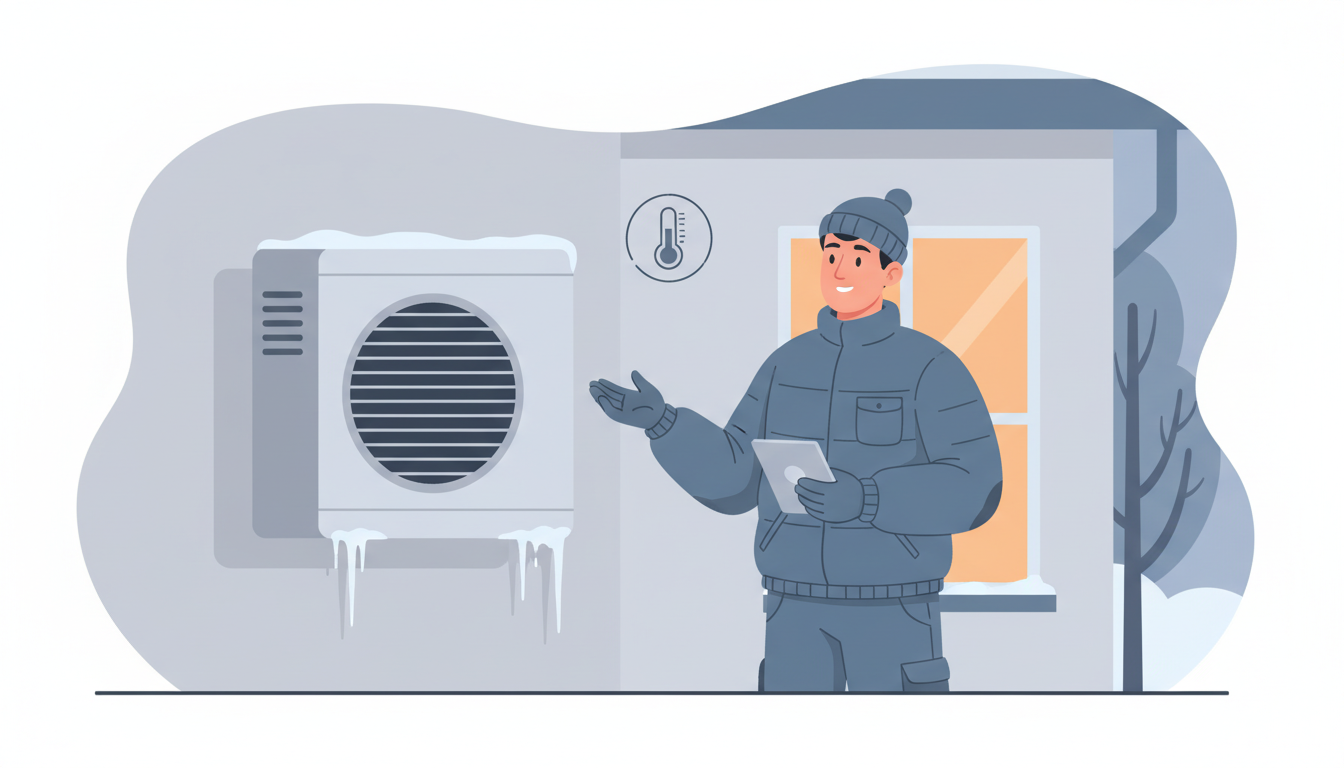
Heat Pump Not Keeping Up in Cold Weather? What's Normal and What's Not
Heat Pump Not Keeping Up in Cold Weather? What's Normal and What's Not
When the temperature drops and your heat pump struggles to keep your home warm, it's natural to worry. Is your system failing, or is this just how heat pumps work in winter? The answer isn't always straightforward, but understanding what's normal versus what signals a problem can save you both money and stress.
If your heat pump not keeping up in cold weather has you reaching for extra blankets, you're not alone. Many homeowners experience this issue during winter months, but not all cold-weather struggles mean your system needs expensive repairs.
Understanding How Heat Pumps Work in Cold Weather
Heat pumps don't generate heat like a furnace. Instead, they extract heat from outdoor air and move it inside your home. Yes, even cold air contains heat energy that your system can use.
However, as outdoor temperatures drop, there's less heat available to extract. This means your heat pump has to work harder and longer to maintain your desired indoor temperature. This is physics, not a malfunction.
The balance point temperature is the outdoor temperature at which your heat pump can no longer keep up with your home's heat loss on its own. For most standard heat pumps, this balance point sits somewhere between 25°F and 40°F, depending on your system's efficiency and your home's insulation quality.
When outdoor temperatures dip below this threshold, your auxiliary heat automatically kicks in to help. This is exactly what's supposed to happen.
What's Normal: Expected Heat Pump Behavior in Winter
Before you panic about potential heat pump repair, let's establish what normal cold-weather operation looks like.
Your Heat Pump Runs Constantly
If your heat pump runs all day during a cold snap, that's typically normal behavior. Unlike furnaces that cycle on and off, heat pumps often run continuously in cold weather to maintain temperature.
A heat pump not reaching set temperature immediately doesn't mean it's broken. During freezing weather, your system might take several hours to bring your home up to temperature, especially if you've lowered the thermostat overnight.
Auxiliary Heat Kicks In Below 30-35°F
When outdoor temperatures drop below 30-35°F, your auxiliary heat (also called backup heat or supplemental heat) should activate. You might notice:
- Your energy bill increases (auxiliary heat uses more electricity)
- The system runs more frequently
- Air from vents feels warmer than usual
This is your heat pump working as designed. The auxiliary heat strips provide additional heating capacity when the heat pump alone can't keep up.
Regular Defrost Cycles
During cold, humid weather, you'll notice your heat pump periodically going into defrost mode. Ice and frost naturally accumulate on the outdoor unit's coils, and the system needs to melt this buildup to maintain efficiency.
Normal defrost cycle frequency: Every 30-90 minutes, lasting 5-15 minutes each time.
During defrost, you might experience:
- Temporary drop in indoor temperature (1-2 degrees)
- Steam rising from the outdoor unit
- Brief period of cool air from vents
- Slight whooshing or hissing sounds
After the defrost cycle completes, your heat pump should resume normal heating within a few minutes. Understanding what normal heat pump defrost looks like can prevent unnecessary service calls.
Temperature Recovery Takes Time
On extremely cold mornings (below 20°F), your home temperature might drop 2-3 degrees below your thermostat setting overnight. This is normal, especially in older homes or those with average insulation.
Your heat pump should gradually bring the temperature back up, but it might take 2-4 hours rather than the 30 minutes you'd expect from a gas furnace. This slower recovery doesn't indicate a problem—it's simply how heat pumps operate in extreme cold.
What's NOT Normal: Signs of Actual Problems
While some cold-weather struggles are expected, certain symptoms indicate your heat pump needs professional attention.
Your Heat Pump Struggles Above 40°F
If your heat pump not reaching set temperature occurs when it's 45°F or warmer outside, something's wrong. At these moderate temperatures, your system should easily maintain comfort without auxiliary heat.
Common causes include:
- Low refrigerant levels (indicating a leak)
- Dirty air filters restricting airflow
- Faulty reversing valve
- Compressor issues
- Incorrect thermostat calibration
Ice Buildup That Never Clears
A thin layer of frost on your outdoor unit is normal. Thick ice that persists or returns immediately after defrost cycles indicates a problem.
This could mean:
- Defrost control board malfunction
- Low refrigerant
- Restricted airflow across outdoor coils
- Malfunctioning defrost sensor
Constant Emergency Heat Operation
Emergency heat and auxiliary heat aren't the same thing. Auxiliary heat works alongside your heat pump. Emergency heat bypasses your heat pump entirely and runs only on expensive electric resistance heat.
If your thermostat stays in emergency heat mode, or if you accidentally switched it to emergency heat, your energy bills will skyrocket. Emergency heat should only be used temporarily when your heat pump is completely broken.
Unusual Noises or Odors
While some operational sounds are normal, these warrant immediate attention:
- Grinding or metal-on-metal scraping
- Burning electrical smell
- Constant clicking without the system starting
- Loud banging during startup or shutdown
System Short-Cycling
If your heat pump runs for just a few minutes then shuts off, repeats this pattern constantly, and never reaches temperature, you likely have:
- An oversized system for your home's square footage
- Thermostat location issues (near drafts or heat sources)
- Electrical problems
- Failing components
Common Reasons Your Heat Pump Struggles in Cold Weather
Several factors can make cold-weather performance worse than it should be. Many of these relate to your home and system design rather than equipment failure.
1. Undersized Heat Pump System
If your heat pump was incorrectly sized during installation, it might lack the capacity to heat your home adequately. Professional load calculations account for your home's square footage, insulation levels, window quality, and local climate.
A system that's too small will struggle even in moderate cold, running constantly without reaching your desired temperature. Unfortunately, the only real solution is system replacement with properly sized equipment.
2. Poor Home Insulation and Air Leaks
Even the most efficient heat pump can't overcome major heat loss from poor insulation. If your home loses heat faster than your system can replace it, you'll never feel comfortable.
Common culprits include:
- Inadequate attic insulation (should be R-38 to R-60 in most climates)
- Uninsulated or poorly insulated walls
- Single-pane windows
- Gaps around doors and windows
- Uninsulated or leaky ductwork
Addressing these issues often improves comfort more than replacing your HVAC system. For comprehensive guidance on maintaining your entire system, check out this HVAC repair guide.
3. Dirty or Clogged Air Filters
Restricted airflow forces your heat pump to work harder and reduces efficiency. During winter, when your system runs constantly, air filters get dirty faster.
Best practice: Check filters monthly during heavy use periods. Replace or clean them when they look gray or clogged. This simple maintenance step can restore significant heating capacity.
4. Inadequate or Malfunctioning Auxiliary Heat
Some heat pumps have undersized auxiliary heat strips that can't provide enough supplemental heating when needed. Others have failing heat strips that don't activate properly.
If your system has auxiliary heat but you're still cold during moderate winter weather, the backup heating may be undersized or broken.
5. Aging Equipment with Reduced Efficiency
Heat pumps typically last 15-20 years, but their efficiency declines over time. A 12-year-old system won't perform like it did when new, especially in cold weather.
Efficiency losses come from:
- Refrigerant charge slowly declining
- Compressor wear
- Accumulated dirt and debris
- Worn electrical connections
If your heat pump is over 10 years old and struggling more each winter, replacement might be more cost-effective than repairs.
6. Wrong Type of Heat Pump for Your Climate
Standard heat pumps work well in moderate climates but struggle in regions with harsh winters. If you live where temperatures regularly drop below 25°F, you need a cold-climate heat pump (also called a low-ambient heat pump).
Cold-climate models include:
- Enhanced compressors that work down to -15°F or lower
- Improved refrigerant circuits
- Better defrost controls
- Variable-speed operation for efficiency
These systems cost more upfront but provide reliable heating in extreme cold without constantly relying on expensive auxiliary heat.
7. Thermostat Issues
Your thermostat might be creating problems:
- Location: Thermostats near drafty windows, exterior walls, or heat sources give false readings
- Frequent adjustments: Constantly changing your thermostat setting prevents your heat pump from establishing steady operation
- Wrong settings: Accidentally leaving it on emergency heat or cooling mode
- Calibration drift: Older thermostats can lose accuracy over time
Emergency Heat vs. Auxiliary Heat: Know the Difference
Many homeowners confuse these two heating modes, leading to unnecessary energy waste.
Auxiliary Heat: Automatically activates when outdoor temperature drops below your system's balance point or when there's a large temperature difference between your thermostat setting and actual room temperature. Works together with your heat pump for maximum efficiency.
Emergency Heat: A manual override that completely shuts off your heat pump and runs only on electric resistance heat. Use this only when your heat pump is broken and awaiting repair.
Never use emergency heat just because it's cold outside. This can double or triple your heating costs since electric resistance heat is much more expensive to operate than your heat pump.
When Should You Call a Professional?
Not every cold-weather struggle requires a technician, but these situations do:
- Heat pump struggles when outdoor temperature is above 35-40°F
- System won't start at all
- Thick ice buildup that doesn't clear after defrost cycles
- Unusual noises (grinding, banging, screeching)
- Burning smells or electrical odors
- System constantly trips circuit breakers
- No heat from vents even when system runs
- Thermostat shows heat pump running but outdoor unit is silent
For situations where your system works but seems less effective than previous years, schedule a maintenance call before winter hits its peak.
Optimizing Your Heat Pump for Cold Weather Performance
You can take several steps to maximize your system's cold-weather effectiveness:
Pre-Winter Maintenance Checklist
- Replace air filters before cold weather arrives
- Clear debris from around outdoor unit (leaves, grass clippings, snow)
- Trim vegetation to maintain 2-3 feet clearance around the unit
- Schedule professional maintenance including refrigerant check and electrical inspection
- Test auxiliary heat by manually lowering thermostat 5 degrees and confirming heat strips activate
- Check thermostat batteries and settings
During Cold Snaps
- Keep outdoor unit clear of snow and ice (but never use sharp tools that could damage coils)
- Don't block supply or return vents with furniture or curtains
- Avoid frequent thermostat adjustments that force the system to work harder
- Keep interior doors open to promote even airflow and heat distribution
- Use ceiling fans on low, reverse direction to push warm air down from ceilings
- Close curtains at night to reduce heat loss through windows
Long-Term Improvements
If your heat pump struggles every winter, consider:
- Adding insulation to your attic, walls, or crawl space
- Upgrading windows to double or triple-pane models
- Sealing air leaks around doors, windows, and penetrations
- Installing a dual-fuel system that switches to gas furnace when temperatures drop too low
- Replacing an aging heat pump with a more efficient or cold-climate model
Frequently Asked Questions
How cold is too cold for a heat pump?
Standard heat pumps struggle below 25-35°F and rely heavily on auxiliary heat. Cold-climate heat pumps work efficiently down to -15°F or colder. If temperatures regularly drop below 25°F in your area, consider upgrading to a cold-climate model or dual-fuel system.
Is it normal for my heat pump to run constantly in winter?
Yes, continuous operation during cold weather is normal and often more efficient than cycling on and off. As long as your home stays reasonably comfortable and you don't see signs of malfunction, constant running isn't a problem.
Should I turn on emergency heat during a cold snap?
No. Emergency heat should only be used when your heat pump is broken. Using emergency heat unnecessarily can double or triple your heating costs. Let your auxiliary heat work alongside your heat pump instead.
How often should a heat pump defrost in winter?
Normal defrost frequency ranges from every 30-90 minutes, with each cycle lasting 5-15 minutes. Frequency increases during humid, near-freezing conditions. If defrost cycles occur more often or last longer, or if ice never fully clears, call a technician.
Why does my house feel colder with a heat pump than it did with my old furnace?
Heat pumps deliver air at 95-100°F, while furnaces produce 120-140°F air. This lower temperature feels less warm on your skin even though it effectively heats your home. Also, heat pumps take longer to recover from temperature setbacks, so maintaining a steady thermostat setting works better than large daily adjustments.
The Bottom Line: Normal vs. Problem
Your heat pump not keeping up in cold weather isn't always cause for alarm. Understanding your system's limitations helps you distinguish between normal operation and genuine problems requiring professional attention.
Consider it normal if:
- Your heat pump struggles only when outdoor temperature drops below 30-35°F
- The system eventually reaches your desired temperature, just more slowly than in warmer weather
- Auxiliary heat activates during cold periods
- Regular defrost cycles occur and clear ice buildup
- Your home stays reasonably comfortable, even if not quite as warm as summer
Call for service if:
- The heat pump struggles in moderate weather (above 40°F)
- Ice buildup never fully clears
- You hear unusual noises or smell burning odors
- The system won't start or constantly trips breakers
- Your home can't reach a comfortable temperature even with auxiliary heat running
For many homeowners, improving insulation and sealing air leaks delivers better results than replacing a heat pump that's operating normally for cold conditions. Before investing in new equipment, ensure your home can retain the heat your system produces.
If you're unsure whether your cold-weather performance is normal, schedule a professional evaluation. An experienced HVAC technician can assess your system's operation, check refrigerant levels, test components, and help you determine whether you need repairs, upgrades, or simply realistic expectations for your equipment's cold-weather capabilities.
Remember, even the best heat pump has limitations in extreme cold. Understanding these limitations helps you make informed decisions about system usage, home improvements, and when professional help is truly necessary.