
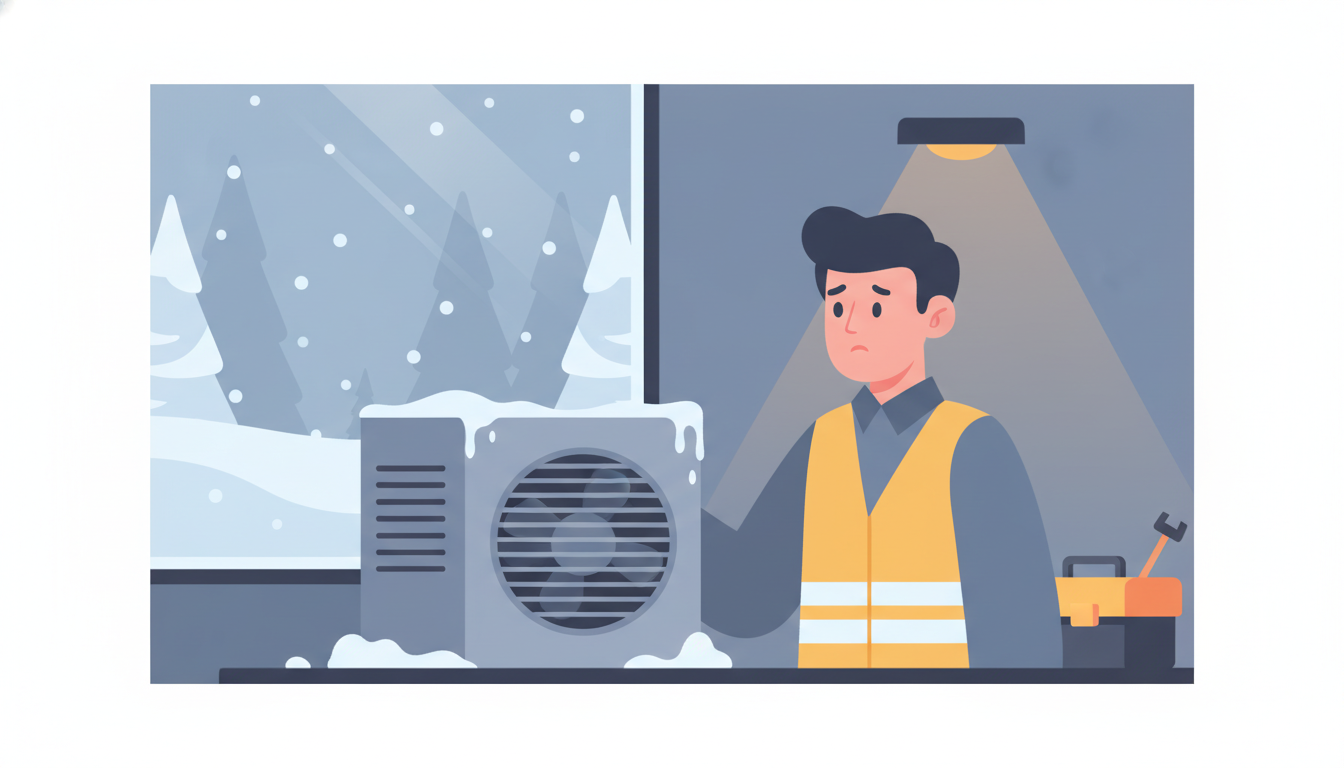
Why Does My Heat Pump Run All Day in Winter? (And When to Worry)
Why Does My Heat Pump Run All Day in Winter? (And When to Worry)
If you've noticed your heat pump running all day in winter, you're probably wondering if something is wrong. The good news? In most cases, constant operation during cold weather is completely normal and actually shows your system is working as designed.
Heat pumps operate differently than traditional furnaces, and understanding this difference can save you unnecessary worry—and expensive service calls. In this guide, we'll explain why your heat pump runs constantly in winter, when it's a sign of a problem, and what you can do about it.
Why Heat Pumps Run Constantly in Winter (This Is Normal)
Unlike a gas furnace that heats up quickly and cycles on and off, heat pumps are designed to run for longer periods at lower, steadier output levels. Think of it like cruise control for your home's temperature.
Here's why this is actually better:
Even Temperature Distribution: Running continuously prevents the hot-and-cold temperature swings you get with furnaces that blast heat and then shut off.
Better Efficiency: Starting and stopping a system repeatedly uses more energy than maintaining steady operation. Your heat pump uses less electricity running continuously at low capacity than a furnace uses cycling on and off.
System Design: Modern heat pumps, especially variable-speed models, are engineered to modulate their output and run almost all the time rather than in short bursts.
When temperatures drop below freezing, your heat pump may run 24/7 for days at a time. This is not a malfunction—it's doing exactly what it's supposed to do.
Understanding the Balance Point
The key to understanding why your heat pump runs all day in winter is knowing about the "balance point."
What Is the Balance Point?
The balance point is the outdoor temperature at which your heat pump's heating capacity exactly matches your home's heat loss. Above this temperature, your heat pump can keep up easily and will cycle on and off normally. Below this temperature, it must run continuously just to maintain your desired indoor temperature.
For most heat pumps, the balance point falls between 25°F and 35°F, depending on:
- Your heat pump's capacity and efficiency
- How well your home is insulated
- Your home's size and layout
- Your thermostat setting
- How cold it gets in your area
What Happens Below the Balance Point?
When outdoor temperatures drop below your system's balance point, the heat pump can't extract enough heat from the cold outdoor air to keep up with demand. At this point:
- The heat pump runs continuously at maximum capacity
- Auxiliary heat (usually electric resistance strips) kicks in to help
- Your energy bills may increase due to the auxiliary heat usage
This is completely normal behavior. The system isn't broken—it's just working harder in challenging conditions.
How Heat Pumps Differ from Furnaces
Many homeowners expect their heat pump to behave like a furnace, which leads to confusion when it runs all day.
Gas Furnaces:
- Heat up quickly to 140°F or higher
- Run for 10-15 minute cycles
- Shut off completely between cycles
- Noticeable temperature fluctuations
Heat Pumps:
- Produce air around 85-95°F
- Run for much longer periods
- Maintain more consistent operation
- Steadier, more even temperatures
The air coming from your heat pump vents feels cooler than furnace air, but that doesn't mean it's not working properly. It's just a different heating method that maintains comfort through steady, continuous operation rather than intermittent blasts of hot air.
When Constant Running Becomes a Problem
While running all day in winter is usually normal, there are specific warning signs that indicate a real problem:
Your Home Isn't Staying Warm
If your heat pump runs constantly but your home keeps getting colder, something is wrong. You should feel comfortable indoors even if the system never stops. A properly functioning heat pump running continuously should maintain your thermostat setting, even in very cold weather.
Cold or Lukewarm Air from Vents
Heat pump air feels less hot than furnace air, but it should still feel warm (85-95°F). If the air feels cold or barely lukewarm, you may have:
- Low refrigerant levels
- A failing compressor
- A stuck reversing valve (system thinks it's in cooling mode)
- Defrost cycle issues
The Outdoor Unit Is Completely Frozen
Some frost and ice buildup on the outdoor coil is normal in winter—that's why heat pumps have defrost cycles. However, if your entire outdoor unit is encased in ice and never seems to thaw, your defrost cycle isn't working properly.
Strange Noises
Continuous operation doesn't mean your heat pump should be loud. Watch for:
- Grinding or screeching sounds (worn bearings or motor problems)
- Loud banging or clanking (loose components)
- Hissing (refrigerant leak)
- Constant clicking without starting (electrical or capacitor issues)
Energy Bills Are Abnormally High
While winter heating costs more than summer cooling, your bills shouldn't skyrocket unexpectedly. If you're seeing a dramatic increase compared to previous winters with similar temperatures, your system may be working harder than it should due to an underlying problem.
Common Causes of Excessive Runtime
If your heat pump is running more than it should, even accounting for cold weather, these are the most common culprits:
Dirty Air Filter
This is the number one cause of heat pump problems, and it's the easiest to fix. A clogged filter restricts airflow, forcing your system to run longer to heat your home.
Solution: Check your filter monthly and replace it every 1-3 months during heavy use seasons. This simple maintenance task can prevent bigger problems and reduce energy costs by up to 15%.
Thermostat Issues
Incorrect thermostat settings or a malfunctioning thermostat can cause unnecessary runtime:
- Set too high: Every degree above 68°F increases energy use by about 3%. Setting your thermostat to 75°F in winter forces your heat pump to run constantly.
- Incorrect heat pump settings: Some thermostats have special heat pump settings that optimize operation. Using standard settings can cause inefficient operation.
- Temperature setbacks: Large overnight setbacks (dropping temperature by 10+ degrees) work well with furnaces but can backfire with heat pumps by triggering expensive auxiliary heat in the morning.
Solution: Set your thermostat to a comfortable but moderate temperature (68-70°F) and avoid large temperature swings. Consider a smart thermostat designed specifically for heat pumps.
Poor Home Insulation
Even the best heat pump can't overcome significant heat loss from poor insulation. If heat escapes faster than your system can replace it, the unit will run continuously trying to keep up.
Common heat loss culprits:
- Inadequate attic insulation
- Drafty windows and doors
- Uninsulated ductwork in unconditioned spaces
- Air leaks around outlets, fixtures, and penetrations
Solution: Improve your home's weatherization through better insulation, air sealing, and upgrading to energy-efficient windows. These improvements help any heating system perform better.
Low Refrigerant Levels
Heat pumps need the correct refrigerant charge to operate efficiently. Low refrigerant reduces heating capacity, forcing the system to run longer and rely more heavily on auxiliary heat.
Low refrigerant doesn't get "used up"—if levels are low, you have a leak that needs professional repair.
Signs of low refrigerant:
- Ice buildup on the outdoor unit (even between defrost cycles)
- Reduced heating output
- Hissing sounds
- Higher electric bills
Solution: Only a licensed HVAC technician can check refrigerant levels, locate leaks, and properly recharge your system.
Undersized Heat Pump
If your heat pump was incorrectly sized during installation, it may struggle to heat your home adequately, especially in extreme cold.
An undersized system will run constantly because it can't meet the heating demand, while an oversized system will short-cycle and waste energy. Proper sizing requires a detailed heat load calculation based on your home's specific characteristics.
Solution: If your system has always struggled in winter since installation, have an HVAC professional perform a load calculation to determine if sizing is the issue. Unfortunately, fixing this requires replacing the unit with a properly sized system.
Blocked or Dirty Outdoor Unit
The outdoor unit needs adequate airflow to extract heat from the outside air. Snow, ice, leaves, or other debris blocking the unit forces it to work harder and run longer.
Solution: Keep at least 2 feet of clearance around your outdoor unit. Gently remove snow accumulation (but never chip away ice—you could damage the coils). Clear away leaves and debris regularly.
Understanding the Defrost Cycle
The defrost cycle is one of the most misunderstood aspects of heat pump operation in winter.
How Defrost Works
When your heat pump operates in cold weather, the outdoor coil can develop frost or ice. This is normal—the coil is cold because it's extracting heat from the outside air. Too much frost reduces efficiency, so heat pumps have an automatic defrost cycle.
During defrost:
- The system temporarily reverses to cooling mode
- Hot refrigerant flows to the outdoor coil to melt ice
- You may see steam or vapor rising from the unit (this is normal)
- Auxiliary heat runs inside to prevent cold air from blowing into your home
- The cycle lasts 5-15 minutes
- The system returns to normal heating mode
Normal Defrost Frequency
In temperatures between 30-40°F with humidity, your heat pump might defrost every 30-90 minutes. In colder, drier conditions, it may defrost less frequently. There's no single "correct" frequency—it varies based on weather conditions.
Defrost Problems
If your defrost cycle malfunctions, you'll notice:
- Ice completely covering the outdoor unit that never melts
- Very short defrost cycles (under 2 minutes) that don't clear ice
- Defrost running too frequently (every 10-15 minutes)
- No defrost at all despite heavy frost buildup
Defrost cycle problems require professional diagnosis. The issue could be a faulty defrost timer, temperature sensor, or control board.
DIY Troubleshooting Steps
Before calling for heat pump repair, try these simple checks:
1. Check Your Air Filter
- Locate your filter (usually at the return air vent or furnace/air handler)
- Hold it up to light—if you can't see through it, replace it
- Install a new filter of the correct size and MERV rating
2. Check Your Thermostat
- Verify it's set to "Heat" mode, not "Auto" or "Cool"
- Confirm the temperature setting is reasonable (68-72°F)
- Replace batteries if applicable
- Check for direct sunlight or drafts affecting the thermostat's temperature reading
3. Inspect the Outdoor Unit
- Clear snow, leaves, and debris
- Ensure nothing is blocking airflow
- Look for obvious ice buildup (some is normal, complete encasement is not)
- Check that the fan is running
4. Check All Vents
- Ensure supply vents are open throughout the house
- Remove furniture or curtains blocking vents
- Verify return vents aren't blocked
5. Reset the System
- Turn off the system at the thermostat
- Locate the circuit breaker(s) for your HVAC system
- Turn off for 60 seconds, then turn back on
- Restart the system at the thermostat
6. Monitor the Temperature
- Note whether your home temperature is holding steady or dropping
- Check if auxiliary/emergency heat is running (look for indicator light or "Aux Heat" on thermostat)
If these steps don't resolve the issue or if you notice the warning signs mentioned earlier, it's time to call a professional.
Energy Costs and Efficiency Considerations
One of the biggest concerns about heat pumps running all day is the cost. Let's break down what to expect.
How Much Does Constant Running Cost?
The cost varies significantly based on:
- Your electricity rate (national average is about $0.14 per kWh)
- Your heat pump's efficiency (HSPF rating)
- Outdoor temperature (colder = more expensive)
- How much auxiliary heat runs
A typical 3-ton heat pump running continuously in moderate cold might use 30-40 kWh per day, costing around $4-6 daily. In extreme cold with auxiliary heat running, costs could double to $8-12 per day.
Auxiliary Heat Impact
Auxiliary heat (electric resistance strips) is much more expensive to operate than the heat pump compressor. While the heat pump might have a coefficient of performance (COP) of 2-3 (producing 2-3 units of heat per unit of electricity), electric resistance heat has a COP of 1.0 (one unit of heat per unit of electricity).
You can often tell when auxiliary heat is running:
- "Aux Heat" indicator on thermostat
- Higher temperatures from vents
- Noticeably higher energy consumption
Frequent auxiliary heat usage in moderate weather (above 35°F) may indicate a problem worth investigating.
Efficiency Ratings Matter
Heat pump efficiency is measured by HSPF (Heating Seasonal Performance Factor). Higher numbers mean better efficiency:
- Minimum legal efficiency: 8.2 HSPF
- Good efficiency: 9-10 HSPF
- Excellent efficiency: 10+ HSPF
A newer, more efficient heat pump running constantly may cost less to operate than an older, less efficient system that cycles on and off.
When to Call a Professional
Schedule professional service if you experience:
- Your home temperature dropping despite the system running constantly
- Ice completely covering the outdoor unit that doesn't clear during defrost
- Strange noises (grinding, screeching, banging)
- The system blowing cold air
- A sudden spike in energy bills with no weather explanation
- The system short-cycling (starting and stopping every few minutes)
- Refrigerant leaks or low refrigerant suspected
- The system is more than 10 years old and struggling
Preventive Maintenance
Even if everything seems fine, schedule annual professional maintenance before winter. A tune-up includes:
- Refrigerant level check and adjustment
- Electrical connection inspection
- Thermostat calibration
- Coil cleaning
- Defrost cycle testing
- Overall system performance verification
Regular maintenance prevents unexpected breakdowns and keeps your system running efficiently, which is especially important when it needs to run constantly in winter.
FAQ: Heat Pump Running All Day in Winter
Is it normal for my heat pump to run all day in winter?
Yes, it's completely normal for a heat pump to run continuously when outdoor temperatures drop below the balance point (typically 25-35°F). Heat pumps are designed for steady, continuous operation rather than cycling on and off like furnaces. As long as your home stays comfortable and you don't notice other warning signs, constant running is expected behavior.
At what temperature does a heat pump run constantly?
Most heat pumps begin running continuously when outdoor temperatures drop to their balance point, usually between 25°F and 35°F. The exact temperature depends on your specific system's capacity, your home's insulation, and your thermostat setting. In very cold climates, your heat pump may run 24/7 for days or weeks during the coldest part of winter.
Will constant running damage my heat pump?
No, constant running won't damage your heat pump. These systems are designed and built to run continuously for extended periods. In fact, the wear and tear from constantly starting and stopping can be harder on components than steady operation. As long as your system receives regular maintenance and proper airflow, running all day won't shorten its lifespan.
How much does it cost to run a heat pump continuously?
The cost varies based on your electricity rate and outdoor temperature. A typical residential heat pump running continuously in moderate cold (30-40°F) costs approximately $4-6 per day. In extreme cold when auxiliary heat kicks in, costs can reach $8-12 per day. Your actual costs depend on your local electricity rates, system efficiency (HSPF rating), and how much auxiliary heat runs.
Should I turn my heat pump off to give it a break?
No, don't turn off your heat pump to "give it a break." Shutting it down during cold weather can cause several problems: your home will get cold, your pipes might freeze, and reheating will trigger expensive auxiliary heat. Heat pumps are designed for continuous operation. If you're concerned about energy costs, lowering your thermostat setting by a degree or two is more effective than shutting the system off.
What's the difference between auxiliary heat and emergency heat?
Auxiliary heat automatically activates when your heat pump needs help during very cold weather or when recovering from a temperature setback. It works alongside the heat pump to maintain comfort. Emergency heat, on the other hand, is manually activated and shuts off the heat pump entirely, relying solely on electric resistance heat. Only use emergency heat when your heat pump is broken—it's much more expensive to operate and should only be temporary.
How do I know if my heat pump is broken or just working hard?
Your heat pump is working normally if: your home maintains the thermostat setting, the air from vents feels warm (even if not as hot as a furnace), and the outdoor unit periodically defrosts. Your heat pump has a problem if: your home keeps getting colder, you feel cold or lukewarm air from vents, the outdoor unit is completely frozen and never defrosts, or you hear unusual grinding or banging noises. When in doubt, have a professional inspect your system.
Conclusion
Finding your heat pump running all day in winter can be alarming, but in most cases, it's a sign your system is working exactly as designed. Heat pumps operate differently than furnaces, maintaining comfort through steady, continuous operation rather than short heating bursts.
Remember these key takeaways:
- Constant running below the balance point (25-35°F) is normal
- Heat pumps are built for continuous operation
- Watch for warning signs like cold air, frozen units, or dropping temperatures
- Simple maintenance like changing filters can prevent many problems
- Professional service ensures your system runs efficiently all winter
If your heat pump runs constantly but keeps your home comfortable, you can relax knowing it's doing its job. If you notice any warning signs or have concerns, don't hesitate to contact a qualified HVAC professional for an inspection.
Stay warm this winter, and remember—that hardworking heat pump running outside is keeping your family comfortable and doing exactly what it's supposed to do.