Why Does My Heater Keep Tripping the Breaker?
Why Does My Heater Keep Tripping the Breaker?
Is your heater constantly tripping the breaker just when you need warmth the most? You're not alone. This frustrating problem affects countless homeowners during the coldest months of the year, leaving them shivering and searching for answers. When your furnace trips the circuit breaker, it's not just an inconvenience—it's your home's electrical system signaling that something is seriously wrong. Understanding why your heater keeps tripping the breaker can help you determine whether it's a simple fix or time to call in a professional HVAC technician.
What Does It Mean When Your Heater Trips the Breaker?
A circuit breaker acts as a safety device in your home's electrical panel. When your heater trips the breaker, it means the breaker detected an electrical problem and automatically shut off power to prevent overheating, electrical fires, or damage to your HVAC system.
Circuit breakers are designed to handle a specific amp rating—typically 15 or 20 amps for most household circuits. When the electrical current flowing through the circuit exceeds this rating, or when the breaker detects a dangerous electrical fault, it "trips" by switching to the off position.
If your furnace trips the breaker once and works fine after resetting, it might be a fluke. But if your heater breaker keeps tripping repeatedly, you're dealing with an underlying issue that needs immediate attention.
Common Reasons Your Heater Keeps Tripping the Breaker
Let's explore the most frequent causes behind this problem. Understanding these issues will help you identify what's happening with your heating system.
1. Circuit Overload
An overloaded circuit is the most common reason your heater trips the breaker. Every electrical circuit in your home has a maximum capacity measured in amps. Most heating systems require a dedicated 15-amp or 20-amp circuit to function properly.
When your heater shares a circuit with other high-power appliances—like space heaters, refrigerators, or microwaves—the combined power consumption can exceed the circuit's amp rating. This is especially problematic if your heater tripping 20 amp breaker happens frequently, as it indicates your heating system is drawing too much power.
During cold weather, your furnace works harder to maintain your desired temperature, drawing more electricity. If other devices on the same circuit are also running, you've got a recipe for repeated breaker trips.
What to check: Look at your electrical panel to see what else is on the same circuit as your heater. If you find other high-wattage appliances sharing the circuit, that's likely your culprit.
2. Dirty or Clogged Air Filters
A dirty air filter might seem unrelated to electrical issues, but it's actually a major cause of heater breaker trips. When your air filter becomes clogged with dust, pet hair, and debris, it restricts airflow through your HVAC system.
This restriction forces your blower motor to work much harder than normal, drawing significantly more electrical current. The increased power consumption can push the circuit beyond its capacity, causing the breaker to trip.
This problem intensifies during peak heating season when your furnace runs constantly. If your heater trips breaker after 5 minutes of operation, a severely clogged filter could be the reason—the motor overheats quickly and draws excessive current.
What to check: Inspect your air filter immediately. If you can't see light through it when held up to a lamp, it needs replacement. Most filters should be changed every 30-90 days depending on usage, pets, and air quality.
3. Short Circuit in the Heating System
A short circuit occurs when electrical current takes an unintended path due to damaged, frayed, or exposed wiring. In heating systems, short circuits can develop in several locations:
- Blower motor wiring that has deteriorated over time
- Control board connections that have become loose
- Heating element wires that have worn through their insulation
- Damaged thermostat wiring
Short circuits are particularly dangerous because they can generate intense heat and potentially cause electrical fires. If your heater trips breaker immediately when you turn it on, a short circuit is a strong possibility.
You might notice warning signs before a short circuit causes breaker trips: burning smells, flickering lights when the heater runs, or unusual sounds from your HVAC system. For complex electrical issues in your heating system, check out our comprehensive HVAC repair guide for troubleshooting tips.
What to check: Never attempt to repair electrical wiring yourself unless you're qualified. This is a job for a licensed electrician or HVAC technician.
4. Ground Fault Issues
A ground fault happens when electricity escapes from its intended circuit path and flows to the ground through an unintended route—often through damaged insulation, moisture, or faulty components.
In heating systems, ground faults commonly occur due to:
- Moisture buildup in electrical connections
- Worn insulation on wiring
- Corroded terminals in the electrical panel
- Damaged heating elements making contact with metal housing
Ground faults are especially common in older heating systems or in homes with high humidity. If your old furnace trips breaker repeatedly, deteriorating insulation might be creating ground fault conditions.
Modern circuit breakers can detect these faults and trip to prevent electric shock hazards. If you're experiencing this issue, it requires immediate professional attention.
5. Faulty Blower Motor
Your furnace's blower motor is responsible for circulating warm air throughout your home. As motors age, they develop several problems that can cause excessive current draw:
- Worn bearings create friction and resistance
- Degraded motor windings increase electrical resistance
- Failing capacitors prevent proper motor startup
- Accumulated dirt and debris impede rotation
When a blower motor struggles, it draws far more current than it should. This increased power consumption can trip your breaker, especially during startup when motors draw the most current.
If your furnace trips breaker then resets successfully but trips again later, the motor might be overheating intermittently. The motor draws high current when cold, trips the breaker, cools down during the off period, then repeats the cycle.
Blower motor issues require professional diagnosis, as motors can sometimes be repaired but often need complete replacement.
6. Heating Element Problems (Electric Furnaces)
If you have an electric furnace, faulty heating elements are a prime suspect when your electric heater keeps tripping breaker. Electric heating elements can develop several issues:
- Internal short circuits within the element
- Element-to-housing contact causing ground faults
- Degraded element resistance drawing excessive current
- Cracked or damaged element casings
Electric furnaces use significant power—often 10,000 to 50,000 watts depending on size. When heating elements malfunction, they can draw even more current, quickly exceeding the circuit breaker's capacity.
Heating element problems typically worsen gradually. You might notice your heater working for increasingly shorter periods before tripping the breaker as the element deteriorates.
7. Defective Contactor
The contactor in your HVAC system acts as an electrical relay, controlling power flow to major components like the compressor and blower motor. When a contactor begins to fail, it can cause significant electrical problems.
Signs of a failing contactor include:
- Pitted or burned contact points creating resistance
- Stuck contacts that won't fully open or close
- Arcing between contacts
- Coil failure preventing proper operation
A defective contactor can create electrical arcing, excessive current draw, and intermittent short circuits—all of which can trip your breaker. If your contactor fails, you might hear clicking or buzzing sounds from your outdoor unit or air handler before the breaker trips.
Contactors are relatively inexpensive components, but replacing them requires electrical expertise and proper safety procedures.
8. Thermostat Malfunctions
Can a bad thermostat trip a breaker? While less common, the answer is yes. A malfunctioning thermostat can cause breaker trips through several mechanisms:
- Short circuits in the thermostat wiring
- Incorrect wiring during DIY thermostat replacement
- Power surges from smart thermostat malfunctions
- Crossed wires creating unintended electrical paths
Modern programmable and smart thermostats can also cause issues if they're incompatible with your heating system or if their power-stealing mechanisms create electrical anomalies.
If you recently installed or replaced your thermostat and your heater immediately started tripping the breaker, the thermostat installation is the likely cause.
9. Faulty Circuit Breaker
Sometimes the problem isn't your heater at all—it's the breaker itself. Circuit breakers can wear out over time, especially if they've tripped frequently throughout their lifespan.
Signs your breaker might be faulty include:
- The breaker feels hot to the touch
- The breaker trips under normal heating system loads
- The breaker won't stay in the "on" position
- The breaker is very old (15+ years)
- Visible corrosion or damage on the breaker
A weakened breaker might trip at currents below its rated capacity, making it seem like your heater has a problem when the breaker is actually the culprit.
Testing a breaker requires specialized equipment and should be done by a qualified electrician, as working inside an electrical panel is extremely dangerous.
10. Aging Heating System
If your old furnace trips breaker regularly, age-related deterioration might be the root cause. As heating systems age beyond 15-20 years, multiple components begin to fail simultaneously:
- Electrical connections corrode and loosen
- Insulation breaks down on wiring
- Motors lose efficiency and draw more current
- Capacitors weaken and fail
- Control boards develop intermittent faults
An aging system might have multiple small problems that collectively cause excessive current draw. In these cases, constantly repairing individual components becomes a losing battle—replacement might be more economical.
Warning Signs Before Your Heater Trips the Breaker
Your heating system often provides warning signs before breaker trips become frequent. Recognizing these early indicators can help you address problems before they escalate:
- Burning smells when the heater runs
- Flickering lights throughout your home when the furnace starts
- Unusual noises like grinding, squealing, or buzzing
- Reduced airflow from vents despite the system running
- Higher utility bills indicating inefficient operation
- Longer run times to reach the desired temperature
- Warm or hot breaker in the electrical panel
If you notice any of these warning signs, schedule professional maintenance before you're left without heat on the coldest day of winter.
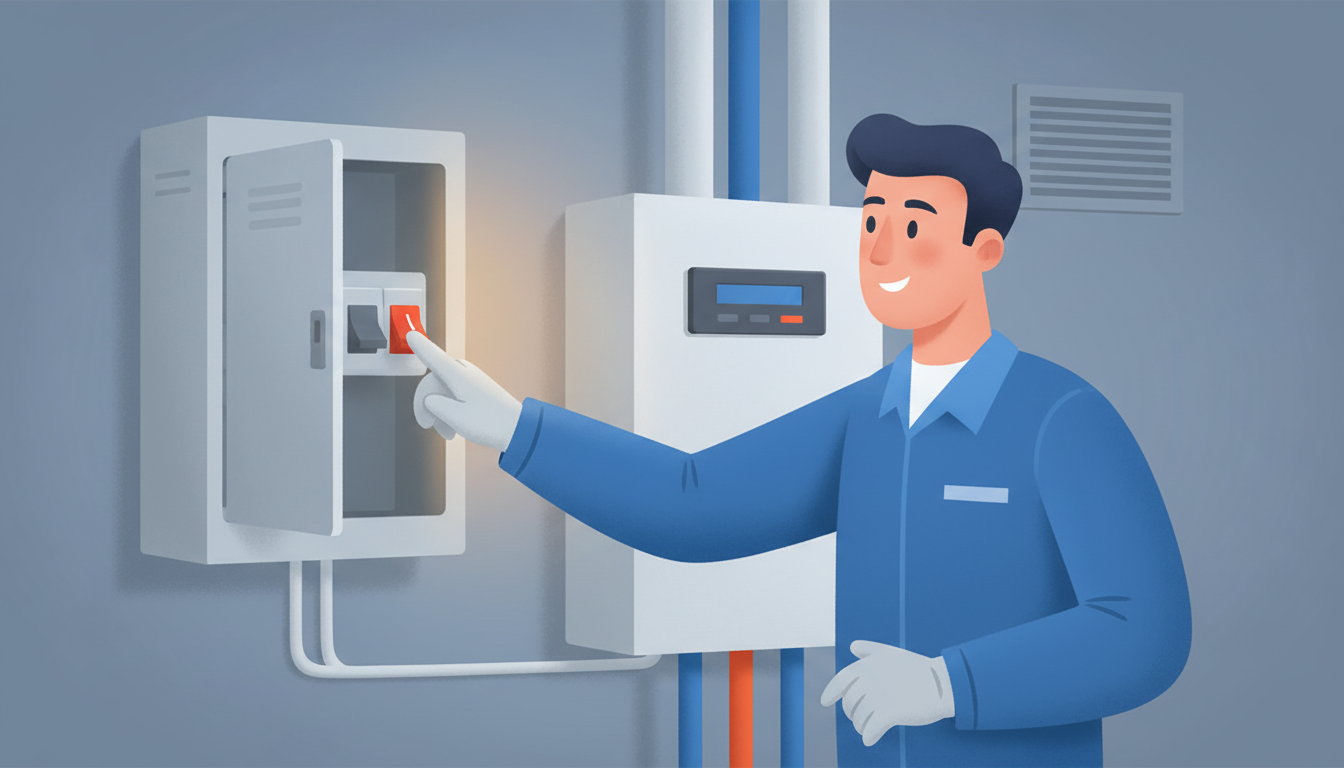
How to Safely Reset Your Furnace Breaker
When your furnace trips the breaker, knowing how to reset it safely is important. Follow these steps:
- Turn off the furnace at the thermostat and the furnace's power switch
- Wait 30 seconds to allow the system to fully shut down
- Locate the tripped breaker in your electrical panel—it will be in the middle position or "off" position
- Push the breaker firmly to "off" before switching it back to "on" (many people miss this crucial step)
- Listen for clicking indicating the breaker has fully engaged
- Wait another 30 seconds before turning the furnace back on
- Turn on the furnace at the thermostat and monitor its operation
If your heater trips breaker immediately after resetting, don't keep resetting it. Repeatedly resetting a tripping breaker can damage electrical components and create fire hazards. This indicates a serious problem requiring professional diagnosis.
DIY Troubleshooting Steps Before Calling a Professional
Before calling an HVAC technician, you can safely perform these basic troubleshooting steps:
Step 1: Replace the air filter. This simple fix solves the problem in many cases and costs just a few dollars.
Step 2: Clear all vents and registers. Make sure furniture, curtains, or other objects aren't blocking airflow.
Step 3: Check for other appliances on the same circuit. Unplug any non-essential devices sharing the circuit with your heater.
Step 4: Let the system rest. Turn off the heater for 30-60 minutes to allow overheated components to cool completely.
Step 5: Inspect visible wiring. Look for obvious damage to thermostat wires or visible furnace wiring (don't open panels requiring tools).
Step 6: Test the system. Reset the breaker and turn the heater on, monitoring closely for any unusual sounds or smells.
If these steps don't resolve the issue, or if you notice burning smells, sparking, or other dangerous signs, stop troubleshooting immediately and call a professional.
When to Call a Professional HVAC Technician
Certain situations require immediate professional attention. Contact a licensed HVAC technician or electrician when:
- The breaker trips immediately every time you reset it
- You smell burning plastic or electrical odors
- You see sparking or arcing
- The breaker feels hot to the touch
- You've tried basic troubleshooting without success
- Your furnace is more than 15 years old and having multiple issues
- The main breaker trips instead of the furnace circuit breaker
If your heater trips main breaker not circuit breaker, this indicates a very serious electrical problem potentially affecting your entire home. This situation demands immediate professional attention.
Professional HVAC technicians have specialized diagnostic tools to identify problems you can't see: multimeters to measure current draw, meggers to test insulation resistance, thermal cameras to detect hot spots, and amp clamps to measure actual power consumption.
Our HVAC breaker troubleshooting guide provides additional insights into electrical issues affecting heating and cooling systems.
Preventing Future Breaker Trips
Once you've resolved the immediate problem, implement these preventive measures to avoid future issues:
Schedule annual maintenance. Professional tune-ups catch small problems before they cause breaker trips. Technicians will clean components, tighten electrical connections, lubricate motors, and test electrical draw.
Change filters regularly. Set calendar reminders every 30-90 days depending on your system and usage patterns.
Keep vents clear. Ensure at least 80% of your home's vents remain open and unobstructed.
Don't share circuits. If your heater shares a circuit with other appliances, have an electrician install a dedicated circuit for the heating system.
Monitor your system. Pay attention to how your heater operates. Unusual sounds, smells, or behaviors often precede major failures.
Consider upgrading old systems. If your furnace is approaching 15-20 years old, start budgeting for replacement. Newer systems are more efficient, safer, and less likely to have electrical problems.
Cost Considerations: Repair vs. Replace
When your heater keeps tripping the breaker, understanding repair versus replacement costs helps you make informed decisions:
Common repair costs:
- Air filter replacement: $15-30
- Blower motor replacement: $400-600
- Contactor replacement: $150-300
- Capacitor replacement: $120-250
- Circuit breaker replacement: $150-250
- Electrical wiring repairs: $200-500
Replacement considerations: If repair costs exceed 50% of a new system's cost, and your furnace is over 15 years old, replacement usually makes more financial sense. A new furnace costs $2,500-6,000 installed but offers:
- 15-20 years of reliable service
- 15-30% lower energy bills
- Improved comfort and consistency
- Modern safety features
- Manufacturer warranties
Your HVAC technician can help you weigh these factors based on your specific situation.
Understanding Your Home's Electrical System
To fully grasp why your heater breaker keeps tripping, it helps to understand basic electrical concepts:
Amps measure current flow. Think of amps like water flowing through a pipe. The more water (electricity) flowing, the higher the amps.
Circuit breakers have amp ratings. A 15-amp breaker will trip when current exceeds 15 amps. A 20-amp breaker allows more current before tripping.
Heating systems draw significant amps. A typical gas furnace draws 10-15 amps due to the blower motor and controls. Electric furnaces can draw 60-100 amps or more.
Startup current is higher. When your furnace first turns on, it briefly draws 2-3 times its normal operating current. This "inrush current" is why heater trips breaker immediately in some cases.
Dedicated circuits are essential. Heating systems should have their own dedicated circuit with no other devices connected. This prevents overload from other appliances.
Understanding these concepts helps you communicate more effectively with HVAC technicians and electricians when diagnosing breaker trip issues.
Different Heater Types and Breaker Issues
The type of heating system you have influences which problems are most likely:
Gas Furnaces:
- Typically use 15-20 amp circuits for blower and controls
- Most common issues: blower motor problems, control board failures
- Generally draw less power than electric systems
Electric Furnaces:
- Require 60-100 amp circuits or more
- Most common issues: heating element failures, high current draw
- More prone to tripping breakers due to high power consumption
Heat Pumps:
- Use 30-50 amp circuits typically
- Most common issues: contactor failures, compressor problems, auxiliary heat issues
- Breaker trips often occur when backup electric heat engages
Space Heaters:
- Usually draw 10-15 amps
- Often trip breakers when sharing circuits with other devices
- Portable units frequently cause overload on standard 15-amp circuits
Knowing your heater type helps narrow down the most likely causes when troubleshooting breaker trips.
FAQ: Heater Tripping Breaker
Why does my heater trip the breaker only at night?
Your heater might trip the breaker at night because ambient temperatures drop, forcing your furnace to work harder and draw more current. Additionally, if other household appliances run on the same circuit, evening usage patterns might push the combined load over the breaker's capacity. Temperature-sensitive electrical components can also behave differently in colder conditions.
Can I use a higher amp breaker to stop my heater from tripping it?
Never replace your breaker with a higher-rated one without consulting a licensed electrician. Circuit breakers are sized to match the wire gauge in your walls. Installing a higher-amp breaker on wiring designed for lower amperage creates a serious fire hazard, as the wires could overheat before the breaker trips. The solution is fixing the underlying problem, not increasing the breaker size.
How often should breakers trip?
Circuit breakers should rarely trip under normal circumstances. If your furnace trips the breaker more than once or twice per heating season, you have an underlying problem that needs attention. Frequent tripping indicates electrical issues that will worsen over time and potentially create safety hazards.
Is it safe to keep resetting a breaker that keeps tripping?
No. Repeatedly resetting a tripping breaker is dangerous. Circuit breakers trip to protect your home from electrical fires and equipment damage. If the breaker keeps tripping, there's a reason—continuing to reset it exposes your home to fire risk and can damage your heating system. After two failed reset attempts, stop and call a professional.
What's the difference between a tripped breaker and a blown fuse?
Modern homes use circuit breakers that can be reset after tripping. Older homes might have fuse boxes where fuses blow (burn out) and must be replaced. Fuses were the original overcurrent protection devices. If you have fuses and your heater keeps blowing them, the diagnostic process is similar—you still have an overcurrent or short circuit issue requiring professional attention.
Conclusion: Don't Ignore a Tripping Heater Breaker
When your heater keeps tripping the breaker, it's your home's electrical system warning you of a potentially dangerous problem. While simple issues like dirty filters can sometimes be resolved with DIY efforts, most causes require professional diagnosis and repair.
Remember these key takeaways:
- Breaker trips protect your home from electrical fires and equipment damage
- Never repeatedly reset a tripping breaker without addressing the cause
- Simple troubleshooting (filter changes, vent clearing) is safe for homeowners
- Electrical repairs require qualified professionals
- Age-related deterioration often means replacement is more economical than repairs
The heating system in your home works hard to keep your family comfortable during cold weather. When it signals a problem through repeated breaker trips, responding quickly prevents more expensive repairs, dangerous situations, and uncomfortable nights without heat.
Whether your furnace trips breaker immediately or after running for a while, whether you're dealing with an old furnace trips breaker situation or a newer system acting up, professional HVAC technicians have the expertise and tools to diagnose and resolve the issue safely.
Don't let a tripping breaker leave you in the cold. Address the problem promptly to restore safe, reliable heating to your home. If you're experiencing persistent breaker trips despite basic troubleshooting, it's time to schedule a professional HVAC inspection.
Ready to fix your heater breaker issues? Contact a qualified HVAC technician today for expert diagnosis and repair. Your comfort and safety are worth the investment.