Why Does My Heater Stop Working at Night? Common Causes & Quick Fixes
Why Does My Heater Stop Working at Night? Common Causes & Quick Fixes
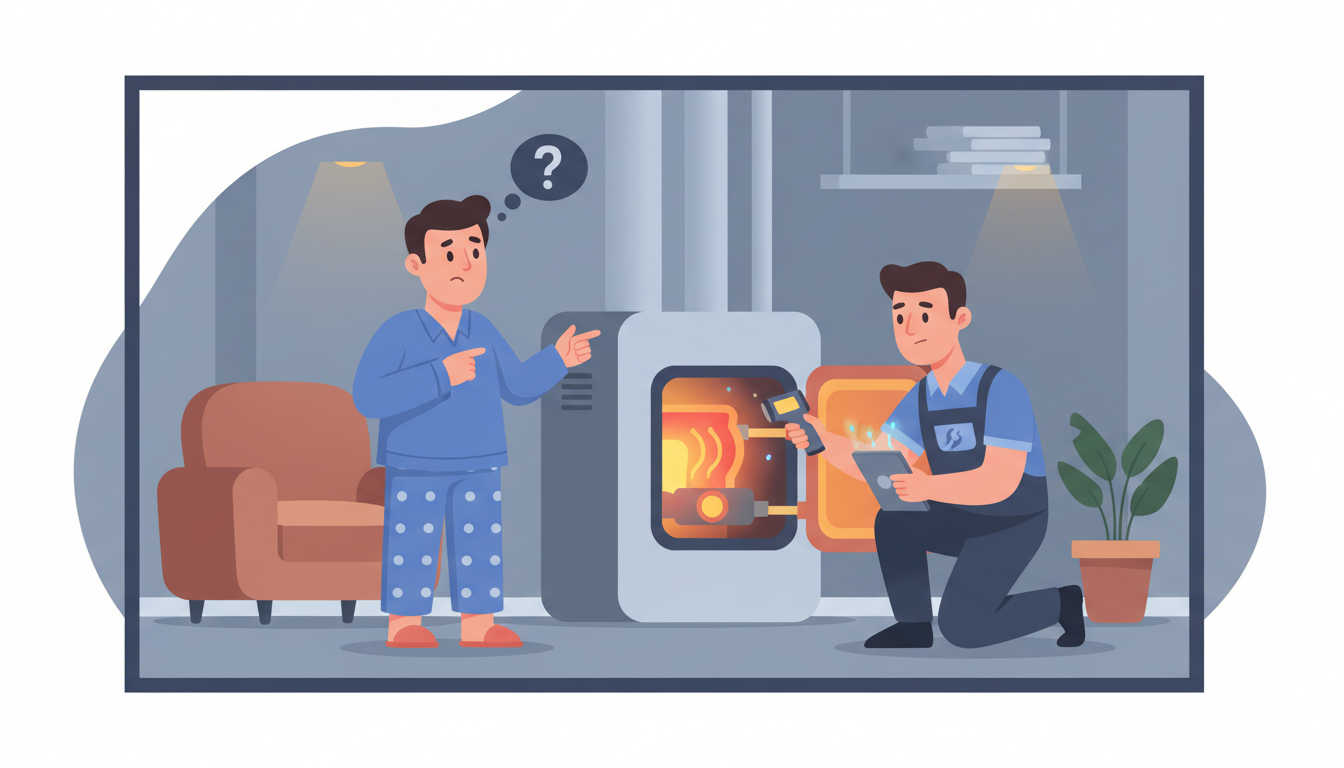
There's nothing worse than waking up in the middle of a cold winter night to discover your heater stopped working. If you've noticed your furnace shuts off at night but works fine during the day, you're not alone. This frustrating problem affects thousands of homeowners, and understanding why it happens can help you fix it quickly—or prevent it altogether.
In this guide, we'll explain exactly why your heater stops working at night, the most common causes, and what you can do to get your heat back on fast.
Why Nighttime Is Different for Your Heating System
Before we dive into specific problems, it's important to understand why your heater behaves differently at night. The answer comes down to three key factors:
Temperature drops: Nighttime temperatures are significantly colder, which means your furnace has to work harder and run longer cycles to maintain your thermostat setting.
Longer runtime: During the day, your furnace might run for 10-15 minutes at a time. At night, when it's coldest, those cycles can extend to 20-30 minutes or longer. This extended operation can expose problems that don't show up during shorter daytime cycles.
Safety mechanisms: Most modern furnaces have built-in safety switches that shut down the system if something goes wrong. These safety features are more likely to trigger during the demanding nighttime hours when your system is under the most stress.
Now let's look at the specific reasons your heat stops working overnight.
1. Dirty or Clogged Air Filter
A dirty air filter is the number one cause of nighttime heating failures. Here's why it matters more at night:
When your air filter gets clogged with dust, pet hair, and debris, it restricts airflow through your system. During the day, when your furnace runs shorter cycles, this might not cause major problems. But at night, when your system needs to run continuously for longer periods, that restricted airflow causes your heat exchanger to overheat.
What happens: Your furnace's limit switch detects the overheating and shuts down the system as a safety precaution. After it cools down, the furnace tries to restart—only to overheat again. This creates a cycle of short bursts of heat followed by shutdowns.
How to fix it: Check your air filter right now. If it looks dirty or you can't see light through it, replace it immediately. Standard filters should be changed every 1-3 months, or more often if you have pets or allergies. This simple fix solves the problem in about 60% of cases.
If you're experiencing other heating issues along with this problem, check out our complete HVAC repair guide for more troubleshooting steps.
2. Thermostat Problems and Incorrect Settings
Your thermostat controls when your heater turns on and off, so any malfunction here can cause nighttime heating failures.
Common thermostat issues:
Wrong mode: Make sure your thermostat is set to "Heat" mode, not "Cool" or "Off." It sounds obvious, but it's an easy mistake, especially if someone accidentally bumped the controls.
Temperature setting too low: If your thermostat is set to 68°F but your house drops to 65°F at night, your heater should kick on. But if the batteries are dying or the thermostat is malfunctioning, it might not send the signal to your furnace.
Poor location: If your thermostat is located near a draft, window, or external wall, it might register colder temperatures than the rest of your house. This can cause it to cycle on and off incorrectly.
Old or faulty thermostat: Older mechanical thermostats can lose calibration over time. Modern programmable thermostats can develop software glitches or sensor failures.
How to fix it: First, check that your thermostat is set correctly and has fresh batteries (if applicable). Try raising the temperature setting by 5 degrees to see if your furnace responds. If your thermostat is more than 10 years old, consider upgrading to a programmable or smart thermostat for better reliability and energy savings.
3. Flame Sensor Covered in Soot or Dust
The flame sensor is a small metal rod inside your gas furnace that detects whether the burner flame is present. If it gets dirty, your furnace won't work properly—especially at night.
How it works: When your furnace calls for heat, the gas valve opens and the burners ignite. The flame sensor must detect this flame within a few seconds. If it doesn't (because it's covered in soot), the gas valve shuts off as a safety measure.
Why it's worse at night: During extended nighttime cycles, your furnace goes through many ignition cycles. Each failed attempt can make your system less likely to succeed on the next try, eventually causing a complete shutdown.
Symptoms you'll notice:
- Furnace starts but shuts off after a few seconds
- You hear the ignitor clicking repeatedly
- Burners light up briefly then go out
- Your heater works intermittently
How to fix it: The flame sensor needs to be cleaned. This is a relatively simple repair, but it requires opening your furnace. If you're comfortable doing it yourself, turn off the power to your furnace, locate the flame sensor (a thin metal rod near the burners), and gently clean it with fine-grit sandpaper or a dollar bill. If you're not comfortable with this repair, call an HVAC professional.
4. Blocked or Restricted Flue Pipe
Your furnace needs to exhaust combustion gases safely outside through the flue pipe. When this pipe gets blocked, your furnace can't operate safely and will shut down.
Common causes of blockage:
- Bird nests or animal debris in the exhaust vent
- Ice buildup on high-efficiency furnace PVC exhaust pipes
- Snow covering exterior vents during winter storms
- Rust or deterioration inside older metal flue pipes
Why it causes nighttime problems: When your furnace runs longer cycles at night, it produces more exhaust gases. A partially blocked flue that handles short daytime cycles might not be able to handle the increased exhaust volume at night. This triggers the pressure switch or rollout switch, which shuts down your system.
How to fix it: Go outside and check your furnace exhaust vent. Look for any obvious blockages, snow accumulation, or ice buildup. Clear away any obstructions you can safely reach. For high-efficiency furnaces with PVC pipes, make sure the pipes are properly sloped so condensation can drain back into the furnace.
If you notice your heater is working but your house still feels drafty, a blocked flue might be part of a larger airflow problem.
5. Oversized Furnace Causing Short Cycling
An oversized furnace is one that's too powerful for your home's heating needs. While it might seem like bigger is better, an oversized system actually creates problems—especially at night.
What happens: An oversized furnace heats your home too quickly, reaching the thermostat setting in just a few minutes. The furnace shuts off, but then the house cools down quickly, causing the system to turn back on. This constant on-off cycling is called "short cycling."
Why it's problematic at night: During cold nights, an oversized furnace will short cycle repeatedly, causing excessive wear on components. Eventually, something fails—often the ignitor, flame sensor, or blower motor—leaving you without heat.
Signs of an oversized furnace:
- Your home heats up very quickly then cools down fast
- You hear your furnace turning on and off every 5-10 minutes
- Some rooms are too hot while others are too cold
- Higher than expected energy bills
How to fix it: Unfortunately, there's no simple DIY fix for an oversized furnace. A qualified HVAC technician can adjust the gas valve to reduce output, or in some cases, you might need to replace the unit with a properly sized one. Proper sizing is critical—your furnace should be sized based on your home's square footage, insulation, and climate.
6. Frozen or Clogged Condensate Drain Line
If you have a high-efficiency furnace (90% AFUE or higher), it produces condensation that must drain away through a plastic drain line. When this line freezes or clogs, your furnace will shut down.
How it happens: High-efficiency furnaces extract so much heat from combustion gases that water vapor condenses inside the system. This water normally drains away through a small PVC pipe. But in very cold weather—especially at night—this drain line can freeze. Alternatively, algae and bacteria can grow inside the line and create a blockage.
What happens when it clogs: Most furnaces have a safety switch that detects when the condensate pan is full. When water can't drain, this switch trips and shuts down your furnace to prevent water damage.
How to fix it: Locate your condensate drain line (usually a white or clear PVC pipe coming from your furnace). Check if it's frozen by feeling along its length. If it's frozen, you can thaw it gently with a hair dryer or by raising the temperature in your basement or utility room. For clogs, you can flush the line with a mixture of water and white vinegar, or use a wet/dry vacuum to suction out the blockage.
To prevent future problems, have your HVAC technician install a condensate pump or add insulation to exposed drain lines.
7. Tripped Circuit Breaker or Electrical Issues
Electrical problems can cause your heater to stop working suddenly, and they often happen at night when your system is drawing maximum power.
Why breakers trip at night: Your furnace draws more power during startup than during normal operation. When your system cycles on and off repeatedly during cold nights, each startup creates an electrical surge. If your circuit is already near capacity, these repeated surges can trip the breaker.
Other electrical issues:
- Loose wiring connections that fail under load
- Faulty capacitor in the blower motor
- Failing transformer
- Aging furnace control board
How to fix it: Check your electrical panel and look for a tripped breaker. It will be in the "off" position or somewhere between on and off. Reset it once by flipping it completely off, then back on. If it trips again immediately or repeatedly, you have a serious electrical problem that requires professional diagnosis. Never keep resetting a breaker that continues to trip—this indicates a dangerous condition.
For related issues, our guide on why your heater might turn off unexpectedly covers additional electrical and safety concerns.
8. Failing Blower Motor or Capacitor
Your furnace blower motor pushes heated air through your ductwork and into your home. When this motor or its capacitor starts to fail, symptoms often appear during demanding nighttime operation.
How a capacitor works: The capacitor gives your blower motor the electrical boost it needs to start up. As capacitors age, they lose their ability to hold a charge. A weak capacitor might work during short daytime cycles but fail during the longer cycles required at night.
Symptoms of blower motor problems:
- Furnace runs but no air comes out of vents
- Weak airflow even when heat is on
- Strange humming, squealing, or grinding noises
- Burning smell when furnace runs
- Furnace starts then shuts off after a few minutes
How to fix it: Blower motor and capacitor problems require professional repair. A capacitor replacement is relatively inexpensive ($150-300), while a blower motor replacement can cost $400-600 depending on your furnace model. However, catching these problems early can prevent complete motor failure and more expensive repairs.
What to Do When Your Heater Stops Working at Night
If your heater stops working in the middle of the night, follow these steps in order:
Step 1: Check the thermostat
- Verify it's set to "Heat" mode
- Raise the temperature setting by 5 degrees
- Replace batteries if it has them
- Make sure it's getting power (display is lit)
Step 2: Inspect the air filter
- Remove and look at your filter
- Replace if it's dirty or clogged
- Never run your furnace without a filter
Step 3: Check the circuit breaker
- Go to your electrical panel
- Look for tripped breakers
- Reset once if needed
- Call a professional if it trips again
Step 4: Look for obvious problems
- Check outdoor exhaust vents for blockages
- Listen for unusual sounds from your furnace
- Look for error codes on your furnace display
- Smell for gas leaks (if you smell gas, leave immediately and call 911)
Step 5: Try resetting your furnace
- Turn off the power switch near your furnace
- Wait 30 seconds
- Turn it back on
- Give the system 5 minutes to restart
If none of these steps work, it's time to call an HVAC professional. Nighttime heating emergencies often require same-day service, so don't hesitate to call—many companies offer 24/7 emergency repair.
How to Prevent Your Heater From Stopping at Night
Prevention is always better than an emergency repair. Here's how to keep your heating system running reliably:
Regular maintenance is essential: Schedule annual furnace inspections every fall before heating season. A professional tune-up includes:
- Cleaning and adjusting the burners
- Testing all safety controls
- Checking electrical connections
- Lubricating moving parts
- Measuring system efficiency
- Identifying small problems before they become failures
Change filters religiously: Set a phone reminder to check your filter monthly. Replace it at the first sign of dirt buildup. This single habit prevents the majority of heating failures.
Keep vents and returns clear: Don't block heating vents with furniture or drapes. Make sure return air vents aren't covered by rugs or debris.
Monitor your system's performance: Pay attention to how your heater sounds and performs. Small changes in operation often signal developing problems. Catching issues early saves money and prevents nighttime emergencies.
Upgrade old equipment: If your furnace is more than 15-20 years old, it's living on borrowed time. Modern furnaces are more reliable, more efficient, and have better safety features. Consider replacement before you're forced into an emergency decision on the coldest night of the year.
Frequently Asked Questions
Why does my heater work during the day but not at night?
Your heater likely works during the day because it runs shorter, less demanding cycles. At night, when temperatures drop and your furnace must run longer to keep up, hidden problems like a dirty filter, failing component, or undersized system become apparent. The extended runtime at night puts more stress on your system and can trigger safety shutoffs that don't occur during easier daytime operation.
Is it normal for my furnace to turn off at night?
Yes, it's completely normal for your furnace to cycle on and off at night as it maintains your desired temperature. However, if your furnace shuts down completely and won't restart, or if it cycles on and off every few minutes (short cycling), that indicates a problem that needs attention.
Can a dirty air filter really cause my heater to stop working?
Absolutely. A clogged air filter is the most common cause of heating failures. It restricts airflow, causes overheating, and triggers the limit switch safety shutoff. Many homeowners are surprised that such a simple, inexpensive part can completely disable their heating system.
How often should I replace my furnace filter?
For standard 1-inch filters, replace them every 1-3 months. If you have pets, allergies, or live in a dusty area, check monthly and replace as needed. Thicker 4-5 inch filters can last 6-12 months. When in doubt, check it—if you can't see light through it, it's time for a new one.
Should I try to fix my heater myself or call a professional?
You can safely handle simple fixes like changing the filter, checking the thermostat, and resetting tripped breakers. However, anything involving gas lines, electrical components inside the furnace, or disassembling the unit should be left to licensed HVAC professionals. The risks of carbon monoxide leaks, gas explosions, or electrical shock make DIY repairs dangerous for most furnace problems.
Get Your Heat Back On Tonight
When your heater stops working at night, it's more than an inconvenience—it's a safety issue, especially during winter cold snaps. While some problems have simple DIY solutions like changing a filter or resetting a breaker, many nighttime heating failures require professional diagnosis and repair.
Don't wait until the next cold night to address your heating problems. If you've tried the basic troubleshooting steps and your heater still isn't working reliably, contact a qualified HVAC technician today. They can diagnose the root cause, make necessary repairs, and ensure your system runs dependably all winter long.
Remember, regular maintenance and prompt attention to small problems prevent most nighttime heating emergencies. Take care of your furnace, and it will take care of you—even on the coldest nights.