
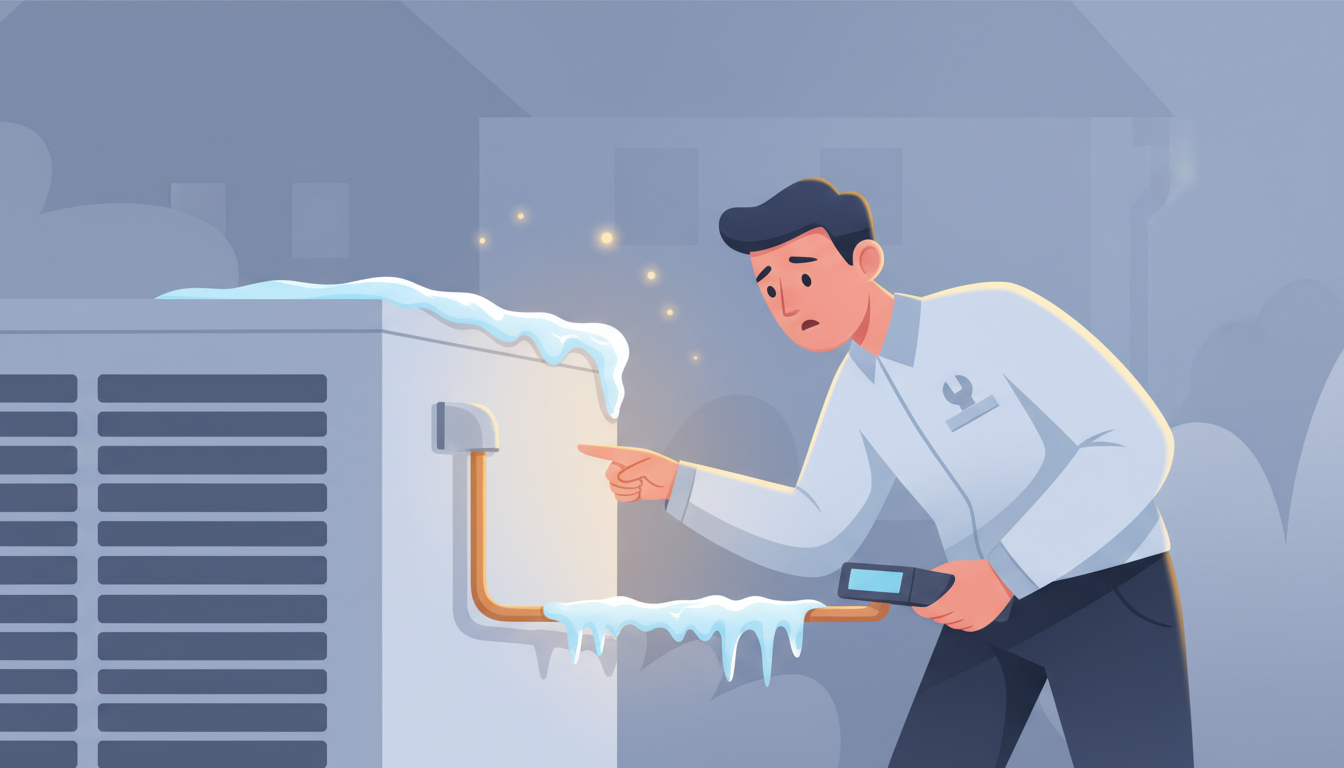
Why Is There Ice on My AC Refrigerant Line?
Why Is There Ice on My AC Refrigerant Line?
Seeing ice on your AC refrigerant line is alarming, especially during hot summer months when you need your air conditioner most. If you've spotted frost or ice buildup on the copper pipes outside your AC unit, don't ignore it. This frozen refrigerant line is a clear warning sign that something's wrong with your cooling system. The good news? Understanding why ice forms on your AC refrigerant line can help you fix the problem quickly and prevent costly damage to your HVAC system.
What Is the AC Refrigerant Line?
Your air conditioner has two refrigerant lines that connect the outdoor condenser unit to the indoor evaporator coil. These copper pipes carry refrigerant that absorbs heat from your home and releases it outside.
The suction line (also called the low-pressure line) is the larger, insulated pipe that carries cool refrigerant vapor back to the compressor. This is the line where you'll most commonly see ice formation. The liquid line is smaller and carries high-pressure liquid refrigerant to the evaporator coil.
When everything works properly, you might see slight condensation on these lines, but you should never see ice or frost buildup.
Why Does Ice Form on AC Refrigerant Lines?
Ice on your AC refrigerant line happens when the temperature of the refrigerant drops too low, causing moisture in the air to freeze on the pipe's surface. But why does the refrigerant get so cold? Let's look at the main culprits.
Restricted Airflow Over the Evaporator Coil
The most common cause of ice on AC refrigerant lines is restricted airflow. Your air conditioner needs a steady flow of warm air moving across the evaporator coil to work properly. When airflow is blocked or reduced, the evaporator coil gets too cold, and this extreme cold travels through the refrigerant line, causing ice to form.
Dirty or Clogged Air Filters
Your air filter traps dust, pet hair, and debris before they enter your HVAC system. When filters get clogged, they choke off airflow to your evaporator coil. Most homeowners should replace their air filters every 30-90 days, depending on usage and household conditions.
If you have pets or allergies, check your filter monthly. A dirty filter doesn't just cause ice buildup—it also makes your AC work harder and drives up your energy bills.
Blocked Air Vents or Registers
Closed or blocked air vents prevent proper air circulation throughout your home. Check that furniture, curtains, or boxes aren't covering your supply or return vents. Each room needs adequate airflow for your AC system to maintain proper temperature and pressure.
Dirty Evaporator Coil
Even with clean filters, your evaporator coil can accumulate dust and grime over time. This buildup acts like insulation, preventing warm air from reaching the coil surface. Without heat transfer, the coil temperature drops dangerously low, leading to ice formation that extends to your refrigerant lines.
Professional HVAC maintenance includes cleaning evaporator coils—a task best left to trained technicians who have the right tools and cleaning solutions.
Malfunctioning Blower Fan
Your blower fan circulates air across the evaporator coil. If the fan motor is failing, the fan speed is set incorrectly, or there's an electrical issue, insufficient air movement will cause the coil to freeze. You might hear unusual noises or notice weak airflow from your vents if your blower fan isn't working properly.
Low Refrigerant Levels (Refrigerant Leak)
The second major cause of ice on AC refrigerant lines is low refrigerant. Your air conditioning system is a closed loop—refrigerant doesn't get "used up" during normal operation. If your refrigerant level is low, you have a leak somewhere in the system.
How Low Refrigerant Causes Ice
When refrigerant levels drop, the pressure inside your AC system decreases. This pressure drop causes the remaining refrigerant to expand more than it should, which makes it extremely cold. The super-cold refrigerant freezes moisture on the evaporator coil and the suction line.
You might notice these refrigerant leak symptoms:
- Hissing or bubbling sounds near the AC unit
- Reduced cooling performance
- Higher energy bills
- Ice on refrigerant lines or evaporator coil
Why Refrigerant Leaks Happen
Refrigerant leaks can develop from:
- Corrosion of copper refrigerant lines
- Loose connections or fittings
- Physical damage to outdoor unit
- Vibration over time wearing connection points
- Manufacturing defects in coils
Important: Never attempt to add refrigerant yourself. Refrigerant is a controlled substance that requires EPA certification to handle. Plus, simply adding refrigerant without fixing the leak is a waste of money—the refrigerant will just leak out again.
Understanding whether you have a refrigerant issue or an airflow issue when ice forms is crucial for proper diagnosis and repair.
Other Causes of Frozen AC Refrigerant Lines
Running AC in Cold Weather
Air conditioners aren't designed to operate when outdoor temperatures drop below 60-62°F. When you run your AC in cool weather, the refrigerant doesn't absorb enough heat, causing the evaporator coil temperature to plummet and ice to form.
If you need cooling on a mild day, consider opening windows instead of running your AC.
Thermostat Set Too Low
Setting your thermostat to an extremely low temperature (like 60°F or below) during hot, humid weather can cause your AC to run continuously. Extended run times without proper cycling can freeze the evaporator coil and refrigerant lines.
Keep your thermostat at 72-78°F for efficient, problem-free operation.
Faulty Thermostat or Sensor
A malfunctioning thermostat might not signal your AC to cycle off properly, leading to over-cooling and ice formation. Similarly, if the evaporator coil temperature sensor fails, your system won't know when to shut down before freezing occurs.
Collapsed or Crushed Air Ducts
Damaged ductwork in your attic or crawl space can severely restrict airflow. Ducts can collapse from age, poor installation, or pest damage. Without proper air circulation through the ducts, your evaporator coil will freeze.
What to Do If You See Ice on Your AC Refrigerant Line
Discovering ice on your AC refrigerant line requires immediate action to prevent damage to your compressor and other components.
Step 1: Turn Off Your AC Immediately
Switch your thermostat from "Cool" to "Off" right away. Running your AC with ice buildup can damage the compressor—an expensive component that costs $1,500-$2,500 to replace.
Step 2: Turn the Fan to "On"
After turning off cooling, switch your thermostat fan setting from "Auto" to "On." This keeps air circulating to help thaw the ice. The thawing process typically takes 3-4 hours, sometimes longer for severe ice buildup.
Step 3: Check Your Air Filter
While waiting for the ice to melt, inspect your air filter. If it's dirty or clogged, replace it immediately. This simple fix might solve your problem if restricted airflow was the cause.
Step 4: Inspect Vents and Registers
Walk through your home and make sure all supply and return vents are open and unobstructed. Move furniture or other items blocking airflow.
Step 5: Look for Water Damage
As the ice melts, significant amounts of water will drip from your indoor unit. Place towels or a pan under the unit to catch water. Check your condensate drain line to ensure it's not clogged, which could cause water backup.
Step 6: Call an HVAC Professional
Once the ice has melted completely, don't just turn your AC back on. If the problem was more than just a dirty filter, the ice will return. Contact a qualified HVAC technician to diagnose and repair the underlying issue.
Professional repairs might include:
- Refrigerant leak detection and repair ($200-$1,500)
- Refrigerant recharge ($150-$800)
- Evaporator coil cleaning ($100-$400)
- Blower motor repair or replacement ($300-$600)
- Thermostat replacement ($100-$350)
How to Prevent Ice on Your AC Refrigerant Line
Prevention is always better than dealing with a frozen AC. Follow these maintenance tips to keep your refrigerant lines ice-free.
Replace Air Filters Regularly
Make filter replacement a monthly habit during cooling season. Set a phone reminder for the first day of each month. Standard 1-inch filters should be replaced monthly; thicker 4-inch filters last 3-6 months.
Schedule Annual HVAC Maintenance
Professional maintenance catches small issues before they become expensive repairs. During a tune-up, your technician will:
- Clean evaporator and condenser coils
- Check refrigerant levels and pressures
- Inspect electrical connections
- Lubricate moving parts
- Test thermostat calibration
- Verify proper airflow
Annual maintenance costs $80-$150 but can prevent thousands in repair costs.
Keep Vents Clear
Regularly check that your vents aren't blocked by furniture, rugs, or curtains. Maintain at least 12 inches of clearance around all vents.
Maintain Your Outdoor Unit
Keep the area around your outdoor condenser unit clear of debris, vegetation, and yard equipment. Trim bushes and grass at least 2 feet away from the unit on all sides.
Don't Close Too Many Vents
Closing vents in unused rooms seems like a money-saver, but it actually disrupts system balance and can restrict airflow enough to cause freezing. Keep at least 80% of your vents open.
Is Ice on the AC Refrigerant Line an Emergency?
While ice on your refrigerant line isn't an immediate safety emergency, it requires prompt attention. Continuing to run your AC with ice buildup can lead to:
Compressor failure: The heart of your AC system, compressor replacement costs $1,500-$3,000 or more.
Water damage: Melting ice produces large amounts of water that can damage ceilings, walls, and floors if the condensate drain can't handle the volume.
Complete system breakdown: Severe freezing can damage multiple components simultaneously, potentially requiring full system replacement ($3,000-$8,000+).
Don't wait until a small ice problem becomes a major system failure. Address ice buildup the same day you notice it.
How Long Does It Take for a Frozen AC Line to Thaw?
A frozen AC refrigerant line typically takes 3-4 hours to thaw completely with the fan running and the cooling turned off. Severe ice buildup might take 6-8 hours. Never try to speed up the process by chipping away ice or using hot water—you could damage the refrigerant lines or connections.
Be patient and let the ice melt naturally. The faster you try to rush the process, the more likely you'll cause expensive damage.
Can I Run My AC After the Ice Melts?
After the ice has completely melted, it's tempting to turn your AC back on, especially on a hot day. However, if you haven't addressed the root cause of the freezing, the ice will simply return—sometimes within hours.
Only restart your AC if:
- You replaced a very dirty air filter
- You opened blocked vents
- You're confident the cause was a simple airflow restriction
If you're unsure what caused the freezing, or if the ice returns after you've replaced the filter and cleared vents, call an HVAC professional before running your AC again.
When to Call a Professional HVAC Technician
Some AC issues are DIY-friendly, but ice on refrigerant lines often requires professional diagnosis and repair. Call a technician if:
- Ice returns after you've replaced filters and cleared vents
- You hear hissing sounds (indicating a refrigerant leak)
- Your AC isn't cooling effectively even after the ice melts
- You notice water leaking inside your home
- The blower fan isn't running properly
- You smell unusual odors from your vents
- Ice forms during normal operation (not cold weather, not extreme thermostat settings)
A qualified HVAC technician has specialized tools to:
- Measure refrigerant pressures accurately
- Detect refrigerant leaks with electronic sensors
- Test airflow with anemometers
- Inspect components not visible to homeowners
FAQ About Ice on AC Refrigerant Lines
Is it normal to see condensation on AC lines?
Yes, slight condensation or "sweating" on refrigerant lines is normal, especially in humid climates. However, frost or ice buildup is never normal and indicates a problem requiring attention.
Can I just scrape the ice off my AC line?
No, never scrape, chip, or attempt to remove ice from your refrigerant lines. You could damage the copper pipes or fittings, creating an expensive refrigerant leak. Always let the ice melt naturally with the cooling turned off.
How much does it cost to fix a frozen AC line?
Repair costs vary based on the cause. Simple fixes like filter replacement cost $20-$50. Refrigerant leak repair and recharge costs $350-$1,500. Compressor replacement can exceed $2,500. Most homeowners spend $300-$800 for professional diagnosis and repair of frozen AC issues.
Will a frozen AC line fix itself?
No, the ice itself will melt when you turn off the AC, but the underlying problem won't fix itself. The ice will return every time you run the AC until you address the root cause—whether it's airflow restriction, a refrigerant leak, or another issue.
Can low refrigerant cause ice on the outside unit?
Yes, low refrigerant typically causes ice on the larger suction line (the insulated copper pipe) running between your indoor and outdoor units. You might also see ice on the outdoor unit's refrigerant connections or the evaporator coil inside your home.
Protect Your AC System From Ice Damage
Ice on your AC refrigerant line is your air conditioner's way of crying for help. Whether the cause is restricted airflow, a refrigerant leak, or another issue, prompt action prevents minor problems from becoming major expenses.
Start with the simple fixes—replace your filter, clear blocked vents, and let the ice thaw completely. If these steps don't solve the problem, or if ice returns, don't hesitate to contact a professional HVAC technician.
Regular maintenance is your best defense against frozen AC lines and other cooling system problems. A small investment in annual tune-ups pays dividends in reliability, efficiency, and longevity for your air conditioning system.
Don't let ice on your refrigerant line leave you without cool air when you need it most. Take action today to protect your comfort and your investment in your home's HVAC system.