
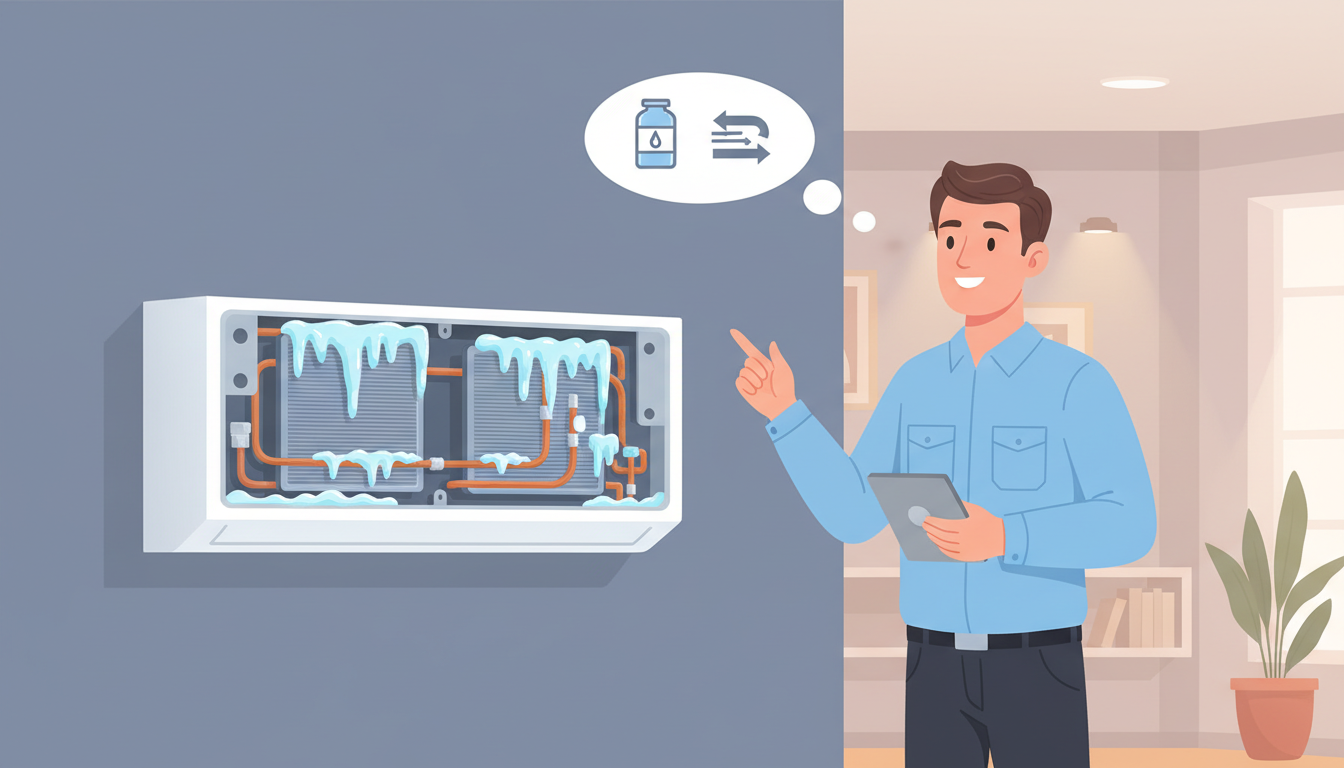
Refrigerant Issue or Airflow Issue? How Ice Forms on an AC
Refrigerant Issue or Airflow Issue? How Ice Forms on an AC
Walked outside and noticed your AC unit covered in ice? Or maybe you spotted frost creeping along your refrigerant line? This isn't normal, and it definitely means something's wrong with your air conditioning system.
Here's the confusing part: ice on your AC can happen for two completely different reasons—either you have a refrigerant issue, or you have an airflow problem. Both create the same icy symptom, but they need different fixes. In this guide, you'll learn exactly how ice forms on an AC, how to tell which problem you're dealing with, and what you should do about it.
Why Does Ice Form on Air Conditioners?
Your air conditioner works by absorbing heat from your home and releasing it outside. This happens through a refrigeration cycle involving refrigerant (the cooling chemical) and the evaporator coil (the indoor component where cooling happens).
When everything works correctly, your evaporator coil gets cold enough to cool the air—but not cold enough to freeze. It sits right around 40°F, which is perfect for removing heat and moisture from your indoor air without creating ice.
But when something goes wrong, that coil temperature drops below 32°F. At that point, the moisture in your air doesn't just condense on the coil—it freezes. That's how ice forms on an AC.
The two main culprits? Either your system doesn't have enough refrigerant, or it's not getting enough airflow. Let's break down both issues.
Refrigerant Issues: How Low Refrigerant Causes Ice
Low refrigerant is one of the most common reasons for ice buildup on your AC. Here's why it happens.
The Temperature-Pressure Connection
Your AC system relies on refrigerant flowing through a closed loop at specific pressures. When refrigerant levels drop (usually from a leak), the pressure inside your evaporator coil drops too.
This is where physics gets interesting: in HVAC systems, pressure and temperature are directly linked. Lower pressure means lower temperature. When your refrigerant pressure drops, your evaporator coil gets much colder than it should—often dropping well below freezing.
What Happens During Low Refrigerant
Normally, refrigerant absorbs heat gradually as it passes through the evaporator coil. With low refrigerant, there's less refrigerant available to absorb heat, so each bit of remaining refrigerant becomes extremely cold. Instead of maintaining that ideal 40°F temperature, the coil might drop to 20°F or even lower.
When humid air from your home hits this super-cold coil, the moisture immediately freezes on contact. Over time, this frost builds into thick layers of ice that can completely cover your refrigerant line and evaporator coil.
Signs Your Ice Is from a Refrigerant Problem
You can often identify a refrigerant issue by looking at where the ice forms:
- Ice on the larger refrigerant pipe (the suction line—it's the bigger insulated pipe running from your indoor unit to the outdoor unit)
- Ice extends outside, covering the line all the way to your outdoor condenser unit
- Hissing or bubbling sounds near refrigerant lines (indicates a leak)
- Your AC runs constantly but doesn't cool your home effectively
- Rising energy bills without improved cooling
If you see these signs, you likely have a refrigerant leak. This isn't something you can fix yourself—refrigerant leaks require professional HVAC repair. For more details on recognizing refrigerant problems early, check out our guide on refrigerant leak symptoms every homeowner should recognize.
Airflow Issues: How Restricted Airflow Freezes Your AC
The second major cause of ice on your AC is restricted airflow. Your evaporator coil needs a steady flow of warm air passing over it to function properly. When that airflow gets blocked or reduced, trouble starts fast.
Why Airflow Matters for Temperature
Think of it this way: your evaporator coil absorbs heat from the air flowing over it. That warm air keeps the coil from getting too cold. It's a balance—the coil needs to be cold enough to cool your home, but warm enough (thanks to the air) to stay above freezing.
When airflow drops, less warm air reaches the coil. Without that constant supply of warm air, the refrigerant has nothing to absorb heat from. The coil gets colder and colder until moisture starts freezing on it.
Common Causes of Restricted Airflow
Several issues can reduce airflow to your evaporator coil:
1. Dirty Air Filter
This is the most common culprit and the easiest to fix. A clogged air filter blocks air from reaching your evaporator coil. If you haven't changed your filter in months, this is probably your problem.
2. Blocked or Closed Vents
Furniture, curtains, or closed vents in unused rooms can restrict airflow throughout your system. Even a few blocked vents can cause problems.
3. Dirty Evaporator Coil
Over time, dust and debris accumulate on your evaporator coil itself. This buildup acts like insulation, preventing proper heat exchange and blocking airflow.
4. Blower Fan Problems
Your blower fan pushes air over the evaporator coil. If the fan motor fails or slows down, airflow drops dramatically. You might notice weaker airflow from your vents when this happens.
5. Ductwork Issues
Leaky, crushed, or poorly designed ductwork can reduce the amount of air reaching your indoor unit. This is less common but worth checking if other fixes don't solve the problem.
Signs Your Ice Is from an Airflow Problem
Look for these indicators of restricted airflow:
- Ice primarily on your indoor unit (the evaporator coil)
- Weak airflow from your vents even when the system runs
- Your air filter looks dirty or you can't remember the last time you changed it
- Some rooms are much warmer than others
- Ice appears quickly after turning on your AC
For more information on how ice forms on specific components, you might find our article on ice on your AC refrigerant line helpful.
How to Tell the Difference: Refrigerant vs. Airflow
Here's a quick diagnostic guide to help you identify which issue you're dealing with:
Location of the Ice
- Refrigerant problem: Ice covers the larger refrigerant line (suction line) and extends outside to your condenser unit
- Airflow problem: Ice concentrates on your indoor evaporator coil, may spread to indoor refrigerant connections
System Performance
- Refrigerant problem: AC runs constantly, barely cools, high energy bills
- Airflow problem: Weak air from vents, uneven cooling between rooms
Quick Checks You Can Do
Check your air filter first. Pull it out. If it's visibly dirty or you can't see light through it, airflow restriction is likely your problem.
Check your vents. Walk through your home. Are all supply vents open and unblocked? Is air flowing strongly from each one?
Listen for unusual sounds. Hissing or bubbling near refrigerant lines suggests a leak (refrigerant issue). Grinding or clicking from your indoor unit might indicate blower motor problems (airflow issue).
Look at the ice pattern. If ice extends to your outdoor unit, it's almost certainly a refrigerant problem. If ice stays mostly on indoor components, it's more likely airflow.
What to Do If Ice Forms on Your Air Conditioner
Finding ice on your AC requires immediate action. Here's what you should do:
Step 1: Turn Off Your AC Immediately
Don't keep running your air conditioner with ice on it. Continuing to run the system can cause serious damage to your compressor—one of the most expensive components to replace. Turn your thermostat to "off" right away.
Step 2: Switch to Fan Mode (Optional)
If you want to speed up the thawing process, you can switch your thermostat from "cool" to "fan only." This circulates air without running the cooling cycle, helping the ice melt faster. However, this step is optional—the ice will eventually thaw on its own.
Step 3: Let the System Thaw
Most frozen AC units take 1-3 hours to completely thaw, though severe ice buildup can take up to 24 hours. Place towels around your indoor unit to catch water as the ice melts.
Do not attempt to chip, scrape, or melt the ice manually. You risk damaging delicate coils and refrigerant lines.
Step 4: Check Your Air Filter
Once the ice has melted, check your air filter. If it's dirty, replace it with a new one. This might be all you need to do if restricted airflow caused your ice problem.
Step 5: Inspect for Other Airflow Blockages
Walk through your home and make sure all vents are open and unblocked. Check that furniture, curtains, or other items aren't blocking your return air vents.
Step 6: Try Running Your AC Again
After the system has fully thawed and you've replaced the filter and cleared any blockages, turn your AC back on. Monitor it closely for 30-60 minutes.
If ice starts forming again, you have a problem that needs professional attention. This likely means a refrigerant leak, blower motor failure, or dirty evaporator coil—all issues that require HVAC expertise.
For a comprehensive overview of common AC problems and their solutions, our HVAC repair guide covers everything you need to know.
The Hidden Dangers of Ignoring a Frozen AC
Some homeowners see ice on their AC and figure, "It's still running, so I'll deal with it later." That's a costly mistake. Here's what can happen if you ignore ice buildup:
Compressor Damage
Your compressor is the heart of your AC system and the most expensive component to replace (often $1,500-$3,000+). When your system freezes, liquid refrigerant can flow back to the compressor. Compressors are designed to compress refrigerant gas, not liquid. Liquid refrigerant causes what's called "liquid slugging," which can destroy the compressor in minutes.
Water Damage
As ice melts, it can overwhelm your condensate drain pan. Water might leak onto floors, ceilings, or walls, causing extensive water damage and potential mold growth.
Reduced System Lifespan
Running your AC while it's frozen puts tremendous stress on all components. This accelerates wear and tear, potentially cutting years off your system's lifespan.
Electrical Hazards
Water and electricity don't mix. Melting ice can create electrical hazards if water reaches electrical connections or wiring.
Complete System Failure
In severe cases, a frozen AC that continues running can suffer complete system failure, requiring expensive emergency repairs or full system replacement.
Can a Frozen AC Fix Itself?
Short answer: No, your frozen AC won't fix itself—but it might seem like it does temporarily.
After your system thaws, it might work fine for a little while. This happens if the ice buildup itself caused the problem to worsen (ice blocking airflow creates more ice). Once the ice melts, normal operation resumes briefly.
But here's the catch: the underlying problem is still there. Whether it's a dirty filter, a refrigerant leak, or a failing blower motor, that issue will cause ice to form again. It might take hours, days, or weeks, but the ice will return.
The only real solution is fixing the root cause. Sometimes that's as simple as changing your filter. Other times, it requires professional diagnosis and repair.
Prevention: How to Stop Ice from Forming
Preventing ice on your AC is much easier (and cheaper) than dealing with it after it happens. Here's what you should do:
Change Your Air Filter Regularly
This is the single most important thing you can do. Check your filter monthly and replace it every 1-3 months depending on usage, pets, and allergies. Set a reminder on your phone so you don't forget.
Schedule Annual AC Maintenance
A professional tune-up catches problems before they cause ice. During maintenance, your technician will:
- Check refrigerant levels
- Clean your evaporator coil
- Inspect your blower motor
- Test airflow throughout your system
- Identify potential issues early
Keep Vents Open and Unblocked
Don't close vents in unused rooms—it disrupts airflow balance. Make sure furniture, curtains, and other items aren't blocking vents or returns.
Watch for Warning Signs
Catch problems early by watching for these red flags:
- Weak airflow from vents
- AC running longer than usual
- Rising energy bills without explanation
- Unusual sounds from your AC
- Uneven cooling between rooms
Any of these signs mean you should call for professional service before ice forms.
Don't Let Your AC Cycle Too Short
If your AC turns on and off constantly (short cycling), it might not run long enough to remove moisture properly. This can contribute to ice formation. Short cycling usually indicates a sizing problem, thermostat issue, or refrigerant problem that needs professional attention.
When to Call a Professional
Some frozen AC problems you can fix yourself. Others require an HVAC professional. Here's when to call for help:
Call immediately if:
- Ice forms again after thawing and changing your filter
- You see, hear, or smell signs of a refrigerant leak
- Your blower fan isn't running
- Ice extends to your outdoor unit
- You hear unusual grinding, clicking, or hissing sounds
- Ice appears along with electrical issues
You can probably DIY if:
- Your filter was very dirty and ice hasn't returned after replacing it
- This is the first time you've seen ice
- All vents were blocked but are now clear
- Ice was minimal and limited to indoor components
Remember: refrigerant leaks legally require licensed HVAC technicians. Refrigerant is regulated by the EPA, and only certified professionals can handle it.
Cost Expectations: What Will Repairs Cost?
Understanding potential costs helps you make informed decisions:
DIY Fixes:
- Air filter replacement: $10-$30
- Cleaning vents: Free (just your time)
Professional Repairs:
- Diagnostic service call: $75-$150
- Evaporator coil cleaning: $100-$400
- Blower motor replacement: $150-$500
- Refrigerant leak repair + recharge: $200-$1,500+ (depends on leak location and refrigerant type)
- Compressor replacement (if damaged): $1,500-$3,000+
These are rough estimates. Actual costs vary by location, system type, and problem severity. But they give you an idea of what to expect. Remember: catching and fixing problems early (like a $200 leak repair) prevents much costlier damage later (like a $2,500 compressor replacement).
FAQ: Common Questions About Ice on AC Units
Can I run my AC with ice on it?
No, you should never run your AC with ice on it. Turn it off immediately. Running a frozen AC can cause severe compressor damage costing thousands to repair or replace.
How long does it take for a frozen AC to thaw?
Most frozen AC units take 1-3 hours to thaw completely. Severe ice buildup can take up to 24 hours. You can run just the fan (without cooling) to speed up the process slightly.
Will my frozen AC fix itself after it thaws?
No. While your AC might work temporarily after thawing, the underlying problem remains. Whether it's low refrigerant, a dirty filter, or airflow restriction, that issue will cause ice to return unless you fix it.
Is ice on my AC an emergency?
Ice itself isn't an immediate emergency, but you should turn off your AC right away to prevent compressor damage. After the system thaws, if the problem is just a dirty filter, you can handle it yourself. If ice returns or extends to outdoor components, call a professional the same day.
Why is only my suction line frozen and not my liquid line?
The suction line (larger refrigerant pipe) is where refrigerant absorbs heat and evaporates into gas. This is where freezing occurs because it's the coldest part of your system. The liquid line (smaller pipe) carries high-pressure liquid refrigerant to the evaporator and rarely freezes. If only your suction line has ice, that's normal for a frozen AC—it's where ice always appears first.
The Bottom Line: Refrigerant or Airflow?
Ice on your AC always means something's wrong—either with refrigerant levels or airflow. The good news? You can often identify which problem you're facing by looking at where the ice forms, checking your filter, and monitoring system performance.
Start with the simple fixes: change your filter, clear blocked vents, and let your system thaw. If ice returns after these steps, you're dealing with a more serious issue like a refrigerant leak or failing blower motor that needs professional repair.
Don't ignore ice on your AC. What starts as a simple problem can quickly escalate into expensive compressor damage or complete system failure. Take action as soon as you spot ice, and you'll save yourself money, hassle, and summer discomfort.
If you've tried the DIY steps and ice keeps coming back, or if you see ice extending to your outdoor unit, it's time to call in the professionals. A qualified HVAC technician can diagnose the exact problem, make the necessary repairs, and get your AC running properly again—without ice.