What Does a Bad Furnace Ignitor Look Like? 7 Visual Signs You Can't Ignore
What Does a Bad Furnace Ignitor Look Like? 7 Visual Signs You Can't Ignore
Your furnace won't start, and you're sitting in the cold wondering what went wrong. Before you panic or call for expensive emergency service, there's one component you can check yourself: the furnace ignitor. Knowing what a bad furnace ignitor looks like can save you time, money, and help you make informed decisions about your heating system repair.
In this guide, you'll learn exactly how to identify a failed igniter through visual inspection, understand what causes these failures, and know when it's time to call a professional. Let's get your heat back on.
What Is a Furnace Ignitor and How Does It Work?
A furnace ignitor is the component responsible for lighting the gas in your furnace's burner assembly. Think of it as the spark plug for your heating system. When your thermostat calls for heat, the ignitor heats up to extremely high temperatures—often exceeding 2,500°F—until it glows bright enough to ignite the gas flowing from the gas valve.
Modern furnaces typically use hot surface igniters made from either silicon carbide or silicon nitride. These materials can withstand intense heat cycles, but they're also surprisingly fragile. The ignitor looks like a flat ceramic stick or a looped element (similar to the letter "M" or a horseshoe shape) positioned directly in the path of the gas burners.
Understanding your ignition system is the first step in furnace troubleshooting and maintenance. When this critical component fails, your entire heating system stops working—no matter how well the rest of your furnace functions.
The 7 Visual Signs of a Bad Furnace Ignitor
1. Visible Cracks or Breaks in the Ceramic Element
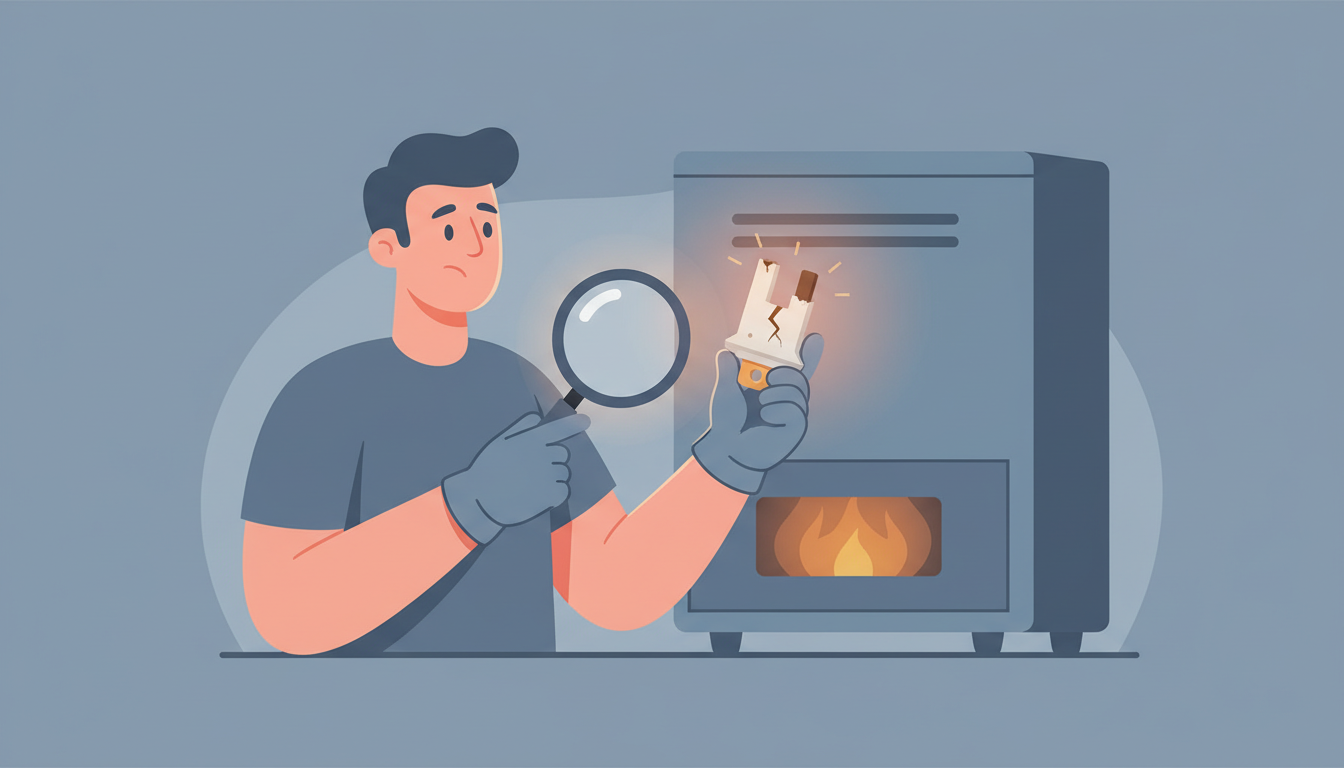
This is the most obvious sign of ignitor failure. A cracked furnace ignitor is a failed ignitor—there's no grey area here. Even hairline cracks that you can barely see spell the end for your igniter.
What to look for:
- Hairline fractures running across the ceramic surface
- Complete breaks where the ignitor element has separated
- Multiple crack lines forming a spider-web pattern
- Chipped or missing pieces at the tip or along the edges
Silicon carbide igniters are particularly prone to cracking because they're brittle. Even the slightest physical contact—like accidentally bumping it during filter changes—can cause a crack. Once cracked, the electrical current can't flow properly, and the ignitor won't heat up enough to light the gas.
2. Discoloration and Dark Spots
A healthy furnace ignitor should have a uniform, consistent color—typically a light beige, grey, or white ceramic appearance when cool. Bad hot surface igniter visual signs include dramatic color changes.
Warning signs of discoloration:
- Dark brown or black spots on the ceramic surface
- Uneven coloring with some areas much darker than others
- A chalky white residue that wasn't there before
- Rainbow-like oxidation patterns
These discoloration patterns indicate thermal stress and degradation. The ignitor has been overheating unevenly, possibly due to voltage fluctuations or age-related material breakdown. While a slightly darkened ignitor might still work temporarily, significant discoloration means failure is imminent.
3. The Ignitor Won't Glow at All
What color should a furnace ignitor glow? When functioning properly, your hot surface igniter should glow bright orange, red, or even white-hot—depending on the model and material. If you turn on your furnace and see no glow whatsoever, you're looking at a dead ignitor.
How to safely check:
- Turn off the gas supply to your furnace (safety first!)
- Remove the furnace access panel
- Turn your thermostat up to call for heat
- Watch the ignitor area for 30-60 seconds
- A working ignitor will begin glowing within this timeframe
If there's absolutely no glow, the ignitor has failed electrically. The circuit might be broken internally, or the element has degraded to the point where it can't conduct electricity. This is one of the clearest visual indicators that you need an ignitor replacement.
4. Weak or Dim Glow That Doesn't Ignite Gas
Sometimes a failing ignitor will still glow, but it's just not hot enough to do its job. How long should a furnace ignitor glow before lighting? Typically, a healthy ignitor reaches full brightness within 30-60 seconds and ignites the gas almost immediately after.
Signs of insufficient heating:
- The ignitor glows faintly orange but never brightens to red or white
- It glows for several minutes without igniting the gas
- The glow fades in and out intermittently
- It glows on one side but not the other (indicating partial failure)
This scenario—furnace ignitor glowing but not lighting—is frustrating because it seems like the part is working. However, temperature is everything. If the ignitor can't reach the 2,500°F threshold needed for gas ignition, your furnace will enter a safety lockout after a few failed attempts.
5. Warped or Bent Shape
Furnace igniters are engineered with specific shapes and positioning for optimal gas ignition. A warped ignitor is a failed ignitor, even if it still glows.
Physical deformation signs:
- The element sags downward instead of holding its original position
- Bending or twisting from its designed shape
- The tip of the ignitor drooping closer to (or away from) the burners
- Uneven gaps between the element's loops or curves
Silicon carbide igniters are more susceptible to warping than silicon nitride models. Repeated heating and cooling cycles, combined with age, can cause the ceramic material to lose its structural integrity. A warped ignitor won't align properly with the gas flow, making reliable ignition impossible.
6. Surface Pitting and Erosion
Over time, the intense heat cycles and chemical reactions can cause the ignitor's surface to deteriorate. This erosion creates a rough, pitted texture instead of the smooth ceramic finish.
Erosion indicators:
- Rough, sandpaper-like texture on the surface
- Small pits or divots in the ceramic
- Thinning of the element (appears narrower than original)
- Flaking or peeling of the outer ceramic layer
This degradation reduces the ignitor's effectiveness and is a sign that the component is near the end of its 3-7 year typical lifespan. For comprehensive HVAC maintenance and repair guidance, regular visual inspections can catch these issues before complete failure.
7. Loose or Corroded Electrical Connections
While not technically part of the ignitor element itself, the electrical connections are critical to its function. Failed igniter appearance assessment should include checking where the wires connect.
Connection problems to spot:
- Green or white corrosion on the wire terminals
- Loose wires that wiggle when touched gently
- Burnt or melted wire insulation near the connector
- Wires that have pulled away from the ignitor terminals
Poor electrical connections cause voltage drops, which prevent the ignitor from reaching proper temperature. This can also create arcing, which damages both the ignitor and the control board over time.
What Color Should Your Furnace Ignitor Glow?
Understanding the normal glow color helps you identify problems. Here's what's normal versus concerning:
Normal glow progression:
- Initial glow: Dull red or orange (first 10-20 seconds)
- Full heat: Bright orange to red (30-45 seconds)
- Optimal ignition: Bright red to white-hot (45-60 seconds)
Concerning glow patterns:
- Stays dim orange: Not reaching ignition temperature
- Flickers on and off: Electrical connection issue or internal crack
- Glows only partially: Element is breaking down internally
- No glow at all: Complete failure
The furnace ignitor orange vs white glow question depends on your specific model. Silicon carbide igniters tend to glow bright orange-red, while silicon nitride igniters often reach a more intense white-hot glow. Check your furnace manual for your specific model's normal operating appearance.
Common Causes of Ignitor Failure
Understanding why igniters fail helps you prevent premature replacement:
Voltage Fluctuations and Power Surges
Your home's electrical supply isn't perfectly stable. Voltage spikes from lightning strikes, utility switching, or large appliances cycling on and off stress the delicate ignitor element. Each surge weakens the ceramic structure, leading to cracks and premature failure.
Prevention tip: Consider installing a whole-home surge protector to shield your HVAC system from voltage irregularities.
Physical Contact and Vibration
Silicon carbide igniters are extremely fragile. Even lightly touching the element during maintenance can cause microfractures that develop into full breaks over time. Furnace vibration during operation gradually loosens and weakens the ceramic structure.
Prevention tip: Never touch the ignitor element directly. If you must handle it during filter changes or inspections, wear gloves and work carefully around it.
Age and Normal Wear
Like all furnace components, igniters have a finite lifespan. Most hot surface igniters last between 3-7 years, depending on usage patterns and quality. Furnaces in harsh climates that run constantly will wear out igniters faster than systems with moderate use.
Dirt and Debris Accumulation
Dust, pet hair, and debris can coat the ignitor surface, creating an insulating layer that prevents proper heating. This forces the ignitor to work harder and run hotter to reach ignition temperature, accelerating wear and causing premature failure.
Prevention tip: Change your furnace filter every 1-3 months and schedule annual professional maintenance to keep components clean.
Moisture and Humidity
Condensation in your furnace can damage the ignitor's ceramic composition and corrode electrical connections. This is particularly common in high-efficiency furnaces or systems installed in damp basements.
How to Safely Inspect Your Furnace Ignitor
If you're comfortable with basic DIY maintenance, you can perform a visual inspection yourself. However, safety is paramount when working with gas appliances.
Step-by-step visual inspection:
- Turn off all power: Switch off the furnace circuit breaker and the power switch near the furnace
- Shut off the gas supply: Turn the gas valve to the "OFF" position
- Remove the access panel: Most furnaces have a removable panel held by screws or clips
- Locate the ignitor: Look for the ceramic element near the burner assembly—it's usually positioned directly above or in front of the burners
- Visually examine without touching: Look for cracks, discoloration, warping, or any abnormalities
- Check electrical connections: Inspect the wire terminals for corrosion or looseness (don't pull on them)
- Optional glow test: Restore power (keep gas off!), set thermostat to call for heat, and watch for glow
Important safety warnings:
- Never touch a glowing ignitor—it reaches over 2,500°F
- Don't operate your furnace with the access panel removed for extended periods
- If you smell gas at any point, evacuate and call your gas company immediately
- When in doubt, call a professional HVAC technician
For issues beyond the ignitor, such as a cracked heat exchanger, you'll need professional diagnosis and repair.
When to Call a Professional vs. DIY
While identifying a bad furnace ignitor is something many homeowners can do, replacing it requires careful consideration.
You can likely handle DIY if:
- You're comfortable working with basic tools
- You can follow technical instructions carefully
- Your furnace is a standard residential model
- You've successfully completed similar home repairs
- The only issue is a visibly failed ignitor (no other symptoms)
Call a professional if:
- You're uncomfortable working around gas appliances
- Your furnace shows multiple symptoms beyond ignitor failure
- The ignitor looks fine but the furnace still won't light
- You've replaced the ignitor before and it failed again quickly
- You notice gas odors or other safety concerns
- Your furnace is still under warranty
Professional HVAC technicians have the tools and training to diagnose complex issues that might seem like simple ignitor failure but actually involve the gas valve, flame sensor, control board, or other components.
Ignitor Replacement Cost and Timeline
Understanding the cost expectations helps you budget for repairs:
Professional replacement:
- Parts cost: $40-$200 (depending on ignitor type and furnace model)
- Labor cost: $150-$300
- Total typical cost: $200-$500
- Timeline: 1-2 hours for standard replacement
DIY replacement:
- Parts cost: $40-$200
- Timeline: 1-3 hours (including research and careful work)
- Risk: Voiding warranty, gas safety issues if done incorrectly
Silicon nitride igniters typically cost more than silicon carbide models but last longer and resist cracking better. If you're replacing an old silicon carbide ignitor, consider upgrading to silicon nitride for improved durability.
Preventing Premature Ignitor Failure
Extend your ignitor's lifespan with these preventive measures:
- Change filters regularly: Every 1-3 months to prevent dust buildup on components
- Schedule annual maintenance: Professional tune-ups catch small issues before they become failures
- Install surge protection: Protect your furnace from electrical voltage spikes
- Avoid physical contact: Never touch the ignitor element during maintenance
- Maintain proper airflow: Keep vents and registers unblocked
- Control humidity: Use dehumidifiers in damp basements where furnaces are installed
- Upgrade when replacing: Consider silicon nitride if replacing an old silicon carbide model
Frequently Asked Questions About Furnace Ignitors
How long does a furnace ignitor typically last?
Most hot surface igniters last between 3-7 years, though lifespan varies based on usage patterns, furnace quality, and environmental factors. Silicon nitride igniters generally outlast silicon carbide models.
Can a furnace ignitor work intermittently?
Yes. A cracked or weakened ignitor might work sometimes when environmental conditions (temperature, humidity, voltage) align favorably, but fail other times. This intermittent operation is a clear sign the ignitor needs replacement soon.
Is it safe to test my furnace ignitor myself?
You can safely perform a visual inspection and glow test if you follow proper procedures: turn off the gas supply, ensure adequate ventilation, never touch the glowing element, and don't run the furnace with panels removed for extended periods. If you're uncomfortable with any step, call a professional.
What's the difference between silicon carbide and silicon nitride igniters?
Silicon carbide igniters are older technology, more brittle, prone to cracking, and generally less expensive ($40-$80). Silicon nitride igniters are newer, more durable, crack-resistant, and cost more ($80-$200) but typically last longer. When replacing, many technicians recommend upgrading to silicon nitride.
Why does my furnace ignitor glow but not light the gas?
This usually means the ignitor isn't reaching the 2,500°F threshold needed for gas ignition. Possible causes include a weakened element that's partially failed, voltage supply issues, or incorrect ignitor positioning relative to the burners. Sometimes the gas valve itself is the problem, not the ignitor.
Take Action Before You're Left in the Cold
Recognizing what a bad furnace ignitor looks like empowers you to make informed decisions about your heating system. Whether you spot hairline cracks, unusual discoloration, or a weak glow that won't ignite gas, you now know exactly what these visual signs mean and what to do next.
Don't wait for a complete furnace breakdown on the coldest night of winter. If you've identified any of the seven visual warning signs discussed in this guide, address the issue promptly. A failing ignitor will only get worse, potentially leaving you without heat when you need it most.
For homeowners comfortable with DIY repairs, replacing a furnace ignitor can be a manageable project that saves money. For everyone else, knowing what's wrong helps you communicate effectively with HVAC professionals and avoid unnecessary repairs.
Stay warm, stay safe, and keep your furnace running efficiently with regular visual inspections and preventive maintenance.