
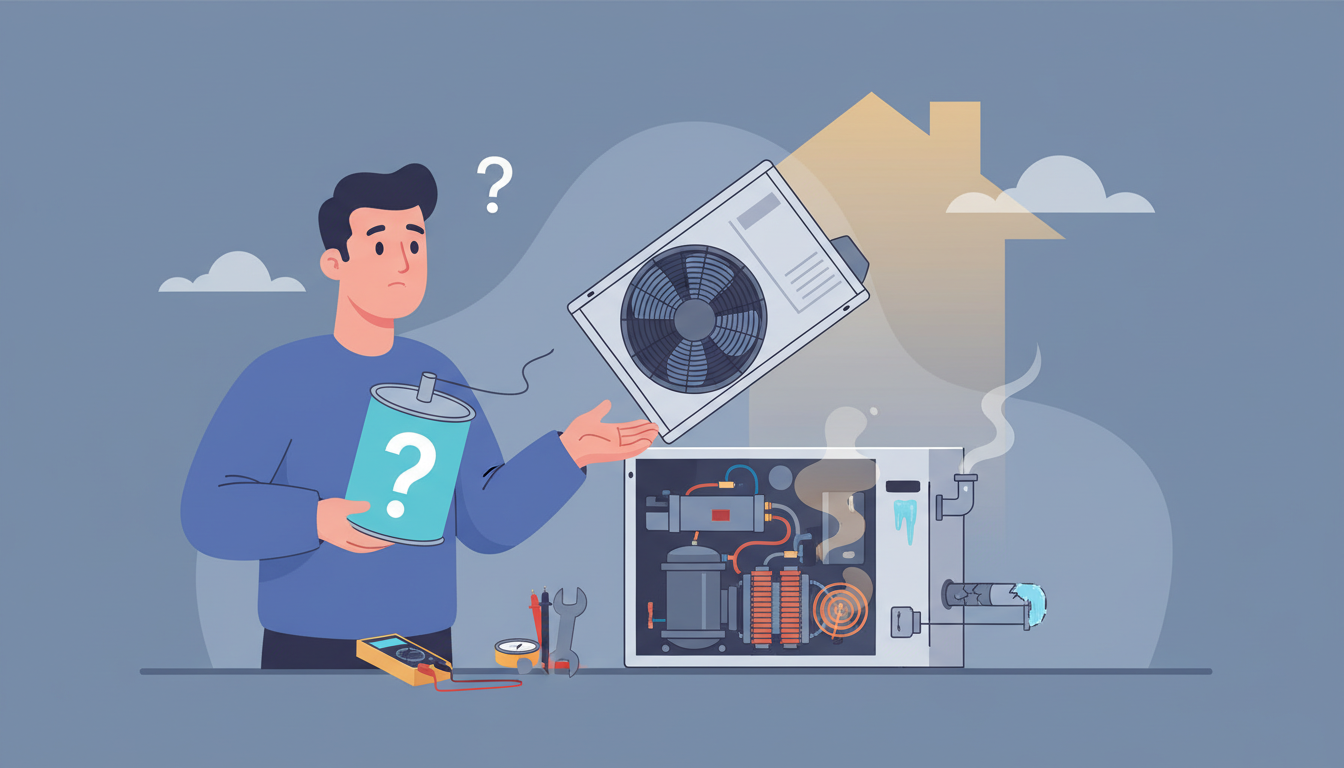
Why "Just Add Refrigerant" Is Usually the Wrong Fix for Your AC
Why "Just Add Refrigerant" Is Usually the Wrong Fix for Your AC
You've called an HVAC technician because your air conditioner isn't cooling properly. After a quick inspection, they tell you that your system is low on refrigerant and needs a recharge. Thirty minutes and $300-$500 later, your AC is blowing cold air again. Problem solved, right?
Not quite. If that same technician didn't find and repair a refrigerant leak first, you just paid for a temporary band-aid fix that will fail again in a few months. Understanding why "just add refrigerant" is usually the wrong approach can save you thousands of dollars and protect your AC system from permanent damage.
Your AC Should Never "Run Out" of Refrigerant
Here's the most important thing to understand about your air conditioning system: refrigerant doesn't get used up like gasoline in your car. Your AC operates on a closed-loop system where the same refrigerant circulates indefinitely, changing from liquid to gas and back again to transfer heat out of your home.
Think of it like the coolant in your car's radiator. If you're constantly adding coolant, you have a leak somewhere. The same principle applies to your air conditioner. A properly installed and maintained AC system should maintain the same refrigerant charge for its entire 15-20 year lifespan.
If your system is low on refrigerant, there are only two possible explanations:
- A leak exists somewhere in the system (95% of cases)
- The system was undercharged during installation (5% of cases)
Neither of these problems is solved by simply adding refrigerant without addressing the root cause.
The Real Problem: Refrigerant Leaks Don't Fix Themselves
When a technician tells you they're just going to "top off" your refrigerant without mentioning leak detection or repair, you're about to waste your money. Here's why this approach fails:
The Temporary Relief Cycle
Adding refrigerant to a leaking system creates a frustrating and expensive cycle:
- Month 1: Fresh refrigerant recharge ($300-$500)
- Month 3-6: System cooling performance gradually declines
- Month 6-12: Another service call and recharge needed
- Year 2: Repeat the cycle, possibly with higher costs due to refrigerant leak symptoms becoming more severe
Over just three years, homeowners can spend $1,500-$3,000 on repeated refrigerant recharges while never actually fixing the problem. Meanwhile, the leak continues to damage your system.
Environmental and Legal Consequences
Refrigerant leaks aren't just inconvenient—they're harmful to the environment and potentially illegal. Modern refrigerants like R-410A and older R-22 (Freon) are powerful greenhouse gases. The EPA strictly regulates refrigerant handling under Section 608 of the Clean Air Act.
If a technician knowingly adds refrigerant to a leaking system without attempting to repair the leak, they're violating federal regulations. Homeowners can also face fines if their leaking system releases significant amounts of refrigerant into the atmosphere.
Hidden Damage to Your AC System
Operating with low refrigerant doesn't just mean warm air—it causes progressive damage to expensive components:
Compressor Stress: Your compressor is the heart of your AC system and the most expensive component to replace ($1,200-$2,500). Low refrigerant forces the compressor to work harder and run longer to achieve the same cooling. This added strain significantly shortens compressor lifespan.
Ice Formation: Insufficient refrigerant reduces pressure in the evaporator coil, causing the temperature to drop below freezing. Ice buildup blocks airflow and can damage the coil itself, requiring replacement ($600-$2,000).
Reduced Heat Transfer: Low refrigerant means your system can't effectively transfer heat from inside your home to the outside. This makes your AC run continuously without reaching your target temperature, driving up your energy bills by 20-30%.
How to Identify a Refrigerant Leak (and What Causes Them)
Understanding the common sources of refrigerant leaks helps you appreciate why proper repair requires more than just adding refrigerant back to the system.
Common Leak Sources
Coil Corrosion: This is the number one cause of refrigerant leaks in residential AC systems. Coil corrosion leads to refrigerant loss through a chemical reaction that creates pinhole leaks. Indoor evaporator coils are especially vulnerable when exposed to volatile organic compounds (VOCs) from household cleaners, air fresheners, and building materials. Outdoor condenser coils corrode from exposure to salt air, industrial pollutants, and lawn chemicals.
Connection Points and Fittings: Every joint, valve, and connection in your refrigerant lines is a potential leak point. Over time, vibration and temperature cycling can loosen fittings or cause gaskets to fail.
Mechanical Damage: Refrigerant lines can be damaged during maintenance work, landscaping, or even severe weather events. A tiny puncture or crimp can create a slow leak that takes months to drain your system.
Manufacturing Defects: While rare, factory defects in coils, valves, or fittings can cause leaks that may not appear until years after installation.
Improper Installation: Poor brazing techniques, inadequate nitrogen purging during installation, or overtightened fittings can all lead to premature leaks.
Warning Signs of Refrigerant Loss
Recognizing these symptoms early can help you catch leaks before they cause extensive damage:
- Insufficient cooling even when the system runs constantly
- Ice buildup on the indoor evaporator coil or refrigerant lines
- Hissing or bubbling sounds from refrigerant lines (active leak)
- Higher than normal energy bills without increased usage
- Longer cooling cycles as the system struggles to reach temperature
- Warm air from vents when the AC is running
- Visible oil stains around AC components (refrigerant carries lubricating oil)
If you notice any of these signs, don't wait for a complete system failure. Early detection makes leak repair much more affordable.
The Right Way to Fix Low Refrigerant: Proper Diagnostic Process
A reputable HVAC technician should follow this systematic approach when they find low refrigerant in your system:
Step 1: Confirm Low Refrigerant
Using manifold gauges, the technician measures your system's operating pressures and compares them to manufacturer specifications. They'll also check superheat and subcooling values to determine exactly how much refrigerant is missing.
Step 2: Leak Detection
This is the step that separates professional service from a quick cash grab. Proper leak detection may include:
- Electronic leak detectors that sense refrigerant molecules in the air
- UV dye injection that makes leaks visible under black light
- Nitrogen pressure testing to pinpoint leaks in a depressurized system
- Bubble solution testing at suspected connection points
Finding small leaks can take 30-60 minutes of careful inspection. If your technician skips this step, they're not doing their job properly.
Step 3: Leak Repair
Once located, leaks must be repaired before adding any refrigerant. Repair methods depend on leak location and severity:
- Brazed repairs for copper line leaks (requires depressurizing system)
- Component replacement for leaking coils, valves, or fittings
- Tightening connections for loose fittings (simplest fix)
After repairs, the technician should verify the fix by pressurizing the system with nitrogen and monitoring for 24 hours. This ensures the leak is truly resolved.
Step 4: System Recovery and Evacuation
Before adding fresh refrigerant, the system must be properly evacuated to remove:
- Remaining old refrigerant (recovered and recycled per EPA regulations)
- Moisture that entered through the leak
- Air and non-condensable gases
Deep vacuum evacuation (500 microns or lower) ensures contaminants won't damage your compressor or reduce system efficiency.
Step 5: Recharge to Manufacturer Specifications
Finally, the technician adds the precise amount of refrigerant specified by your system's manufacturer—not "eyeballing it" or going by feel. Proper charge is verified by measuring:
- Superheat (for fixed orifice systems)
- Subcooling (for thermostatic expansion valve systems)
- Operating pressures under load
Both overcharging and undercharging reduce efficiency and can damage components, so precision matters.
When Adding Refrigerant IS the Right Solution (Rare Cases)
To be fair, there are legitimate situations where adding refrigerant is appropriate:
New System Installation: Systems are charged at the factory for specific line lengths. If your installation requires longer refrigerant lines, additional refrigerant may be needed.
After Component Replacement: If a coil, compressor, or line set was replaced, the system needs to be recharged as part of the repair process.
Undercharged at Installation: If a previous technician didn't properly charge the system when it was installed (verified by checking installation records and testing), adding refrigerant to correct specifications is appropriate.
After Successful Leak Repair: This is the only scenario where adding refrigerant to an existing system makes sense—after you've paid to find and fix the leak first.
Notice what's missing from this list? "Annual refrigerant top-offs" or "seasonal recharges" are never appropriate. If someone suggests this, you need a different HVAC company.
Cost Comparison: The Math Behind Proper Repair
Let's look at real numbers to understand why paying more upfront for proper leak repair saves money long-term:
The "Just Add Refrigerant" Approach
- Initial recharge: $350 (no leak detection or repair)
- Second recharge (6-12 months later): $400 (prices rising)
- Third recharge (another 6-12 months): $450
- Compressor failure (Year 3): $2,200 replacement
- Total cost over 3 years: $3,400+
The Proper Repair Approach
- Diagnostic and leak detection: $150
- Leak repair (average): $500-$800
- System recovery, evacuation, and recharge: $300
- Total one-time cost: $950-$1,250
Even in the best-case scenario where a leaking system lasts three years with periodic recharges, you'd spend nearly three times more than fixing it properly. In the more likely scenario where compressor damage occurs, you're looking at thousands in additional costs.
How to Spot an Unscrupulous HVAC Technician
Unfortunately, some HVAC companies prioritize repeat service calls over customer service. Watch for these red flags:
Warning Signs of Poor Service
They skip leak detection entirely: If the technician goes straight to adding refrigerant without checking for leaks, stop the service immediately.
They claim "refrigerant evaporates over time": This is completely false. Refrigerant doesn't evaporate from a properly sealed system, ever. This line is often used to justify regular recharges.
They can't explain what they're doing: A good technician should explain what they're testing, what they found, and what they recommend. Vague answers suggest they're cutting corners.
They offer a "discount" for skipping leak detection: Some companies offer cheaper refrigerant recharges if you decline leak detection. This should raise immediate red flags.
They recommend annual refrigerant maintenance: Your system should never need regular refrigerant additions. This is a made-up maintenance item designed to generate revenue.
They quote refrigerant cost by the pound: While refrigerant does have a per-pound cost, proper service isn't charged this way. This pricing method often hides the fact they're not doing leak detection or proper evacuation.
Questions to Ask Your HVAC Tech
Protect yourself by asking these questions before agreeing to any refrigerant service:
- "Did you test for leaks? What method did you use?"
- "Can you show me where the leak is located?"
- "What's your plan for repairing the leak before recharging?"
- "Will you perform a proper evacuation before adding refrigerant?"
- "What warranty do you offer on leak repairs?"
- "Are you EPA Section 608 certified to handle refrigerant?"
A qualified, honest technician will have clear answers to all these questions and won't be offended that you asked.
The Environmental Impact You Should Care About
Beyond your wallet, refrigerant leaks have real environmental consequences that homeowners should understand.
Greenhouse Gas Potency
The refrigerants used in air conditioners are potent greenhouse gases—far more powerful than CO2:
- R-410A has a global warming potential (GWP) 2,088 times greater than CO2
- R-22 (Freon) has a GWP 1,810 times greater than CO2
A single pound of leaked refrigerant has the climate impact equivalent to running your car for thousands of miles. A typical AC system contains 5-15 pounds of refrigerant.
Ozone Depletion
While newer R-410A doesn't deplete the ozone layer, older R-22 (Freon) does. That's why the EPA phased out R-22 production in 2020. If you have an older system using R-22, leak repair becomes even more critical as replacement refrigerant costs have skyrocketed.
Legal Obligations
EPA regulations require that:
- All refrigerant must be recovered before system disposal
- Leaking systems must be repaired or retrofitted if economically feasible
- Only EPA-certified technicians can purchase and handle refrigerant
- Intentional venting of refrigerant is illegal
Choosing proper leak repair over repeated recharges helps you meet these environmental responsibilities.
Making the Right Decision for Your AC System
When faced with low refrigerant, you have a choice between a temporary fix and a permanent solution. Here's how to make the right decision:
Choose Proper Leak Repair If:
- Your system is less than 10 years old
- The leak is accessible and repairable
- You plan to stay in your home for several more years
- Your system uses newer R-410A refrigerant
- The total repair cost is less than 50% of replacement cost
Consider System Replacement If:
- Your system is more than 15 years old
- Multiple leaks exist or the coil is severely corroded
- You're still using R-22 (Freon) refrigerant
- The compressor or multiple components need replacement
- Your system has poor efficiency (below 13 SEER)
For a detailed breakdown of repair vs. replacement decisions, check out our comprehensive HVAC repair guide.
Long-Term Prevention: Protecting Your Investment
Once you've properly repaired your AC system, these maintenance practices help prevent future refrigerant leaks:
Annual Professional Maintenance: Have a qualified technician inspect your system yearly, checking for early signs of corrosion, loose connections, and operating efficiency.
Keep Coils Clean: Dirty coils retain moisture and contaminants that accelerate corrosion. Clean or replace air filters monthly and schedule professional coil cleaning every 1-2 years.
Protect Outdoor Units: Keep your condenser unit clear of vegetation, debris, and lawn chemicals. Consider a protective cover during winter months in harsh climates.
Monitor System Performance: Pay attention to cooling performance, energy bills, and unusual sounds. Catching problems early prevents expensive damage.
Avoid Cheap Installations: When replacing your system, don't choose the lowest bidder. Poor installation techniques cause many premature refrigerant leaks.
Frequently Asked Questions
Can I add refrigerant to my AC myself?
No. Federal law requires EPA Section 608 certification to purchase and handle refrigerant. Beyond legality, improper refrigerant handling can damage your system, harm the environment, and create safety hazards. Always hire a certified professional.
How often should my AC need refrigerant?
Never. If properly installed and maintained, your AC should retain its original refrigerant charge for its entire lifespan (15-20 years). Any need to add refrigerant indicates a leak that must be repaired.
What does a refrigerant recharge cost?
Prices vary by location and refrigerant type, but expect $300-$500 for a simple recharge. R-22 (Freon) can cost significantly more due to limited supply. However, a recharge without leak detection and repair is wasted money.
How long does refrigerant last in an AC unit?
Indefinitely. Refrigerant doesn't degrade or get consumed during normal operation. It circulates in a closed loop, changing states but never depleting. If it's "running out," you have a leak.
Will my AC work with low refrigerant?
Yes, but poorly. Low refrigerant reduces cooling capacity, increases energy consumption, causes ice formation, and damages the compressor. Operating with low refrigerant accelerates system wear and shortens lifespan.
Take Action: Get Your AC Fixed Right
If you've been told your AC needs refrigerant, don't accept a simple recharge without proper leak detection and repair. The temporary relief isn't worth the long-term costs and damage.
Demand that any HVAC technician working on your system follows the proper diagnostic process: leak detection, repair verification, system evacuation, and precise recharge to manufacturer specifications. A reputable company will gladly explain each step and may even offer warranties on leak repairs.
Your air conditioner is a significant investment in your home comfort. Protect that investment by insisting on proper service the first time. The few hundred extra dollars you spend on leak repair today will save you thousands in repeated recharges and premature system replacement.
Don't fall for the "just add refrigerant" shortcut. Your wallet, your comfort, and the environment will thank you for choosing the right approach.