
How to Keep Your Outdoor AC Unit Clear and Efficient: A Complete Guide
How to Keep Your Outdoor AC Unit Clear and Efficient: A Complete Guide
Your outdoor AC unit works hard all summer long to keep your home cool and comfortable. But when debris, dirt, and overgrown vegetation block airflow around your condenser unit, your system has to work overtime just to do its job. This not only drives up your energy bills but also shortens the lifespan of your expensive HVAC equipment.
The good news? Keeping your outdoor AC unit clear and efficient doesn't require professional expertise. With a few simple maintenance habits and the right approach, you can ensure your air conditioner runs at peak performance all season long.
Why Clearance and Cleanliness Matter for Your AC Unit
Your outdoor condenser unit is the hardworking heart of your air conditioning system. It releases the heat absorbed from inside your home into the outside air through a process called heat transfer. For this to work efficiently, your unit needs unrestricted airflow from all sides.
When leaves, grass clippings, dirt, or vegetation block the condenser coils and fins, several problems occur. First, airflow becomes restricted, forcing your compressor to work harder and run longer to achieve the same cooling effect. Second, blocked coils can't release heat effectively, causing your system to overheat and potentially fail.
According to the U.S. Department of Energy, a dirty or blocked condenser can reduce your AC's efficiency by up to 15%. That's like throwing away $150 for every $1,000 you spend on cooling costs.
Understanding the 2-Foot Clearance Rule
One of the most important principles in outdoor AC unit maintenance is the 2-foot clearance rule. Your condenser unit needs at least 2 feet of clear space on all sides to function efficiently.
This clearance serves multiple purposes. It allows proper air circulation around the unit, prevents debris from being pulled into the coils, and gives you adequate space to perform routine maintenance. Most HVAC professionals recommend even more clearance when possible—up to 3 feet provides optimal airflow.
The clearance above your unit is equally important. Keep at least 5 feet of vertical space clear above the top of your condenser. This means trimming back any overhanging tree branches and avoiding the temptation to build shade structures directly on top of your unit.
How to Clear the Area Around Your AC Unit
Maintaining clear space around your outdoor AC unit should become part of your regular yard maintenance routine. Here's how to do it effectively.
Remove Debris Weekly During Peak Season
During spring and summer when your AC runs most frequently, make it a habit to check your outdoor unit weekly. Walk around the condenser and remove any visible debris like fallen leaves, grass clippings, twigs, or trash that's accumulated near the unit.
Pay special attention after storms or high winds, as these events can deposit significant amounts of debris around your AC. Even a small pile of wet leaves against your condenser can restrict airflow and reduce efficiency.
Trim Vegetation Regularly
Shrubs, bushes, and other plants grow quickly during the growing season. What started as adequate clearance in spring can become a crowded, overgrown mess by mid-summer.
Check the vegetation around your unit at least once a month. Trim back any plants that have grown within 2 feet of the condenser. Use sharp pruning shears or hedge trimmers to make clean cuts that won't damage the plants.
If you're planning new landscaping, choose slow-growing plants for areas near your AC unit. Ornamental grasses, low-growing shrubs, and ground covers make excellent choices because they require less frequent trimming.
Create a Barrier Against Grass and Weeds
Grass clippings are one of the most common culprits behind reduced AC efficiency. When you mow your lawn, the discharge from your mower can blow clippings directly into the condenser fins.
Consider installing a small gravel or mulch border around your AC unit. A 2-3 foot radius of landscaping rock or decorative mulch not only looks attractive but prevents grass from growing right up to the unit. This barrier also makes it easier to spot and remove other debris.
When mowing near your AC unit, point the mower discharge away from the condenser. Better yet, use a mower with a rear discharge or side discharge facing away from the unit.
Cleaning Your Outdoor Condenser Unit
Beyond keeping the surrounding area clear, your outdoor AC unit itself needs regular cleaning to maintain peak efficiency. Here's a complete guide to proper HVAC maintenance.
Safety First: Turn Off the Power
Before you touch your outdoor unit, always turn off the power completely. Locate the electrical disconnect box mounted on the wall near your condenser. Flip the switch or remove the fuse block to cut power to the unit.
For extra safety, also turn off the breaker for your AC system at your home's main electrical panel. Working on a powered AC unit can result in serious electrical shock.
Clean the Exterior and Remove Large Debris
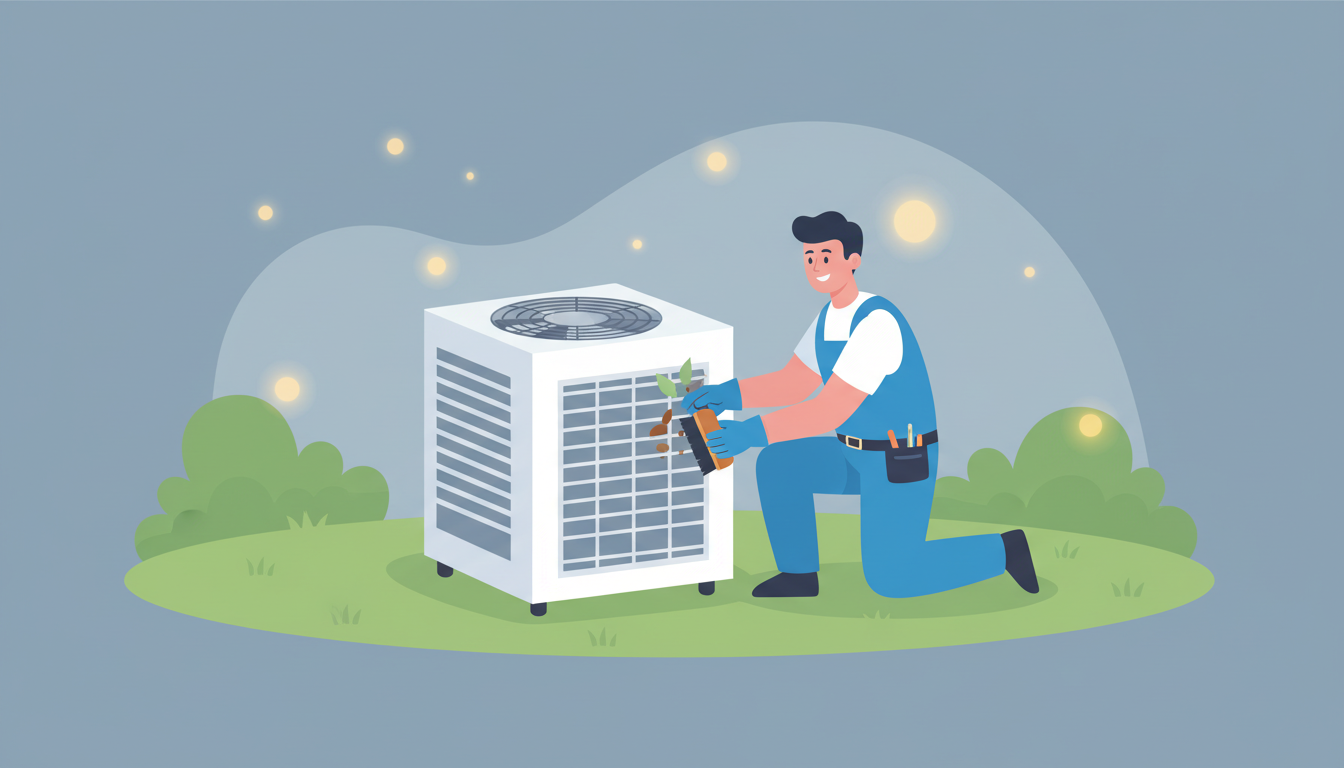
Start by removing the top grille or fan guard if your unit design allows easy access. Use a wet/dry vacuum to remove leaves, dirt, and debris from inside the unit. You can also use your hands (with gloves) to pull out larger clumps of debris.
Wipe down the exterior cabinet with a damp cloth to remove dirt, pollen, and grime. This simple step improves airflow through the side vents and helps you spot any damage to the unit's exterior.
Straighten Bent Condenser Fins
The thin aluminum fins on your condenser coils are delicate and bend easily. Even minor bending can restrict airflow significantly. Inspect the fins carefully and look for areas where they're bent or flattened.
You can purchase an inexpensive fin comb from any hardware store. These tools have different spacing to match various fin configurations. Gently run the comb through bent fins to straighten them back to their original position.
Be extremely gentle during this process. The fins are thin and can break if you apply too much pressure. If large sections of fins are severely damaged, contact an HVAC professional to assess whether replacement is necessary.
Clean the Condenser Coils
The condenser coils are where the real heat transfer magic happens, so keeping them clean is critical for efficiency. You can clean the coils from the outside using a garden hose with a spray nozzle.
Spray the coils gently from the inside out, working from top to bottom. This helps push dirt and debris out of the fins rather than deeper into them. Never use a pressure washer, as the high pressure can bend fins and damage the coils.
For stubborn dirt and grime, use a commercial coil cleaner specifically designed for air conditioners. These foam cleaners are available at home improvement stores. Follow the product instructions carefully—most require you to spray on the cleaner, let it sit for 10-15 minutes, then rinse thoroughly with water.
Clean or Replace Your Indoor Air Filter
While you're focused on outdoor maintenance, don't forget that your indoor air filter plays a crucial role in system efficiency. A clogged filter restricts airflow throughout your entire HVAC system, forcing your outdoor unit to work harder.
Check your air filter monthly and replace it when it appears dirty or clogged. Most filters should be changed every 1-3 months depending on usage, pets, and home conditions. This simple step alone can improve your AC efficiency by 5-15%.
For more detailed guidance on maintaining your entire AC system, check out this central AC repair guide.
Seasonal Maintenance Schedule for Maximum Efficiency
Consistency is key when it comes to keeping your outdoor AC unit clear and efficient. Follow this seasonal schedule to maintain peak performance year-round.
Spring: Pre-Season Preparation
Spring is the most important time for AC maintenance. Before the cooling season begins, perform a thorough cleaning and inspection of your outdoor unit.
Remove the winter's accumulation of leaves, dirt, and debris. Clean the condenser coils thoroughly. Straighten any bent fins. Check that the unit is level—settling soil can cause the condenser to tilt, which affects drainage and performance.
This is also the ideal time to schedule a professional AC tune-up. During a professional service call, technicians check refrigerant levels, test electrical connections, measure airflow, and catch potential problems before they become expensive failures. Learn more about what happens during an AC tune-up.
Summer: Monthly Quick Checks
During the cooling season, perform quick monthly inspections. Walk around your unit and check for adequate clearance, trim back any growing vegetation, and remove visible debris.
Take a moment to listen to your unit while it's running. Unusual noises like grinding, squealing, or rattling can indicate problems that need professional attention. Also notice if your unit seems to run constantly without adequately cooling your home—this often signals restricted airflow or other efficiency issues.
Fall: Post-Season Cleanup
After the cooling season ends, give your unit a final cleaning to remove summer's accumulation of dust and debris. This prevents dirt from hardening over winter and makes spring startup easier.
Some homeowners wonder whether to cover their outdoor unit during winter. Most manufacturers advise against full covers because they can trap moisture and encourage rust and corrosion. If you want protection from falling debris, use a cover that only protects the top of the unit while leaving the sides open for ventilation.
Winter: Periodic Checks
Even though your AC isn't running, check on it occasionally during winter. Remove any leaves or debris that accumulate. After heavy storms, inspect for damage from falling branches or ice.
Common Mistakes That Reduce AC Efficiency
Even well-intentioned homeowners sometimes make mistakes that hurt their AC's efficiency. Avoid these common pitfalls.
Building Structures Too Close to the Unit
It's tempting to hide your outdoor AC unit behind a fence or decorative screen. While these can improve your yard's appearance, they can severely restrict airflow if placed too close.
If you must screen your unit, leave at least 2 feet of clearance on all sides. Use open-design fencing or lattice rather than solid panels. Ensure the structure doesn't block the top of the unit.
Planting Trees or Shrubs for Shade
Shade can actually benefit your outdoor AC unit by keeping it cooler and reducing the temperature difference it needs to achieve. However, trees and large shrubs planted too close create more problems than they solve.
If you want to shade your condenser, plant trees at least 6-10 feet away. This provides dappled shade without dropping leaves and debris directly onto the unit. Choose species that don't produce heavy leaf litter or seed pods.
Using Pressure Washers for Cleaning
Pressure washers seem like an efficient way to blast away dirt and grime, but they're too powerful for delicate condenser fins. The high-pressure spray can bend fins, damage coils, and force water into electrical components.
Always use a regular garden hose with moderate pressure. The goal is to rinse away dirt, not blast it with force.
Neglecting Indoor Components
Your outdoor unit can't perform efficiently if your indoor components are neglected. Dirty air filters, blocked return vents, and closed registers all restrict airflow and force your entire system to work harder.
Think of your HVAC system as a complete circuit—every component affects the others. Maintaining just the outdoor unit while ignoring indoor components is like changing your car's oil but never checking the tire pressure.
Attempting Complex Repairs Without Professional Help
There's a difference between routine maintenance and complex repairs. While homeowners can handle cleaning and basic upkeep, refrigerant issues, electrical problems, and component replacements require professional expertise.
Know your limits. If you notice refrigerant leaks (ice on the coils, hissing sounds), electrical issues (frequent breaker trips, burning smells), or mechanical failures (compressor not starting), call a qualified HVAC technician.
Signs Your Outdoor Unit Needs Attention
Between regular maintenance sessions, watch for these warning signs that your outdoor AC unit needs immediate attention.
Reduced Cooling Performance
If your home isn't cooling as effectively as it used to, restricted airflow around your outdoor unit could be the culprit. Check for adequate clearance and debris accumulation first before assuming you need expensive repairs.
Higher Energy Bills
A sudden spike in your cooling costs often indicates efficiency problems. Blocked condenser coils and restricted airflow make your system run longer to achieve the same temperature, consuming more electricity in the process.
Ice Formation on the Unit
Ice on your outdoor condenser unit during warm weather is never normal. While multiple issues can cause icing, restricted airflow and dirty coils are common causes. Turn off your system and investigate the clearance and cleanliness around your unit.
Unusual Noises
Your condenser should run with a steady hum and the sound of the fan. Grinding, squealing, rattling, or clicking noises suggest mechanical problems that need professional diagnosis.
Visible Damage to Fins or Coils
During your regular inspections, look for significant damage to fins (large bent sections) or visible corrosion on coils. While minor fin bending is fixable with a fin comb, extensive damage may require professional repair.
The Cost Benefits of Proper Maintenance
Investing time in keeping your outdoor AC unit clear and efficient pays tangible financial dividends.
A well-maintained AC unit operates 15-20% more efficiently than a neglected one. For the average household spending $500 annually on cooling, that's $75-$100 in savings every summer. Over the typical 15-year lifespan of an AC unit, proper maintenance can save $1,500-$2,000 in energy costs alone.
Beyond energy savings, proper maintenance extends equipment life. Neglected units typically fail after 8-10 years, while well-maintained systems easily reach 15-20 years. Replacing an air conditioning system costs $5,000-$10,000 on average. By doubling your unit's lifespan through regular maintenance, you avoid that massive expense for many additional years.
FAQ: Common Questions About Outdoor AC Unit Maintenance
How often should I clean my outdoor AC unit?
Clean your outdoor condenser unit twice per year at minimum—once in spring before the cooling season and once in fall after it ends. During peak cooling season, perform quick monthly checks to remove debris and trim vegetation.
Can I run my AC if plants are touching it?
You can run your AC with plants touching it, but you shouldn't. Even minor vegetation contact restricts airflow and reduces efficiency. Trim back any plants within 2 feet of your condenser as soon as possible.
What's the most common cause of reduced AC efficiency?
Dirty air filters are the single most common cause of reduced AC efficiency, affecting both indoor and outdoor components. Check and replace your filter monthly during heavy use. For outdoor units specifically, debris accumulation and restricted clearance are the top efficiency killers.
Should I cover my outdoor AC unit in winter?
Most manufacturers recommend against covering your outdoor unit completely during winter. AC units are designed to withstand weather year-round. Full covers trap moisture and can cause rust, corrosion, and pest infestations. If you want protection from falling debris, use a cover that only shields the top while leaving sides open.
How much does professional AC maintenance cost?
Professional AC tune-ups typically cost $75-$200 depending on your location and the service included. Most HVAC companies offer maintenance plans that provide annual or bi-annual service at a discounted rate, often including priority scheduling and service discounts.
Take Action Today for Better Cooling Tomorrow
Keeping your outdoor AC unit clear and efficient doesn't require technical expertise or expensive tools. With consistent attention to clearance, regular debris removal, and basic cleaning, you can maintain peak efficiency, lower your energy bills, and extend your system's lifespan.
Start today by taking a walk around your outdoor unit. Check the clearance, remove any visible debris, and trim back overgrown vegetation. Make a note on your calendar to perform these quick checks monthly throughout the cooling season.
For complex issues or if you haven't had professional maintenance in over a year, schedule a service call with a qualified HVAC technician. The small investment in preventive care today can save you thousands in premature replacement costs tomorrow.
Your air conditioner works hard to keep you comfortable—give it the clear space and clean components it needs to do its job efficiently all summer long.