
Can You Keep Running a Heat Pump That's Frozen?
Can You Keep Running a Heat Pump That's Frozen?
If you've noticed your heat pump covered in ice and you're wondering whether it's safe to keep it running, you need an answer fast—especially when temperatures are dropping. The short answer is no, you should not keep running a frozen heat pump. Continuing to operate a heat pump with heavy ice buildup can cause serious damage to critical components like the compressor, potentially leading to repairs costing thousands of dollars. In this guide, we'll explain why running a frozen heat pump is dangerous, how to identify when frost becomes a problem, and exactly what steps to take to protect your system and your wallet.
The Straight Answer: Don't Risk It
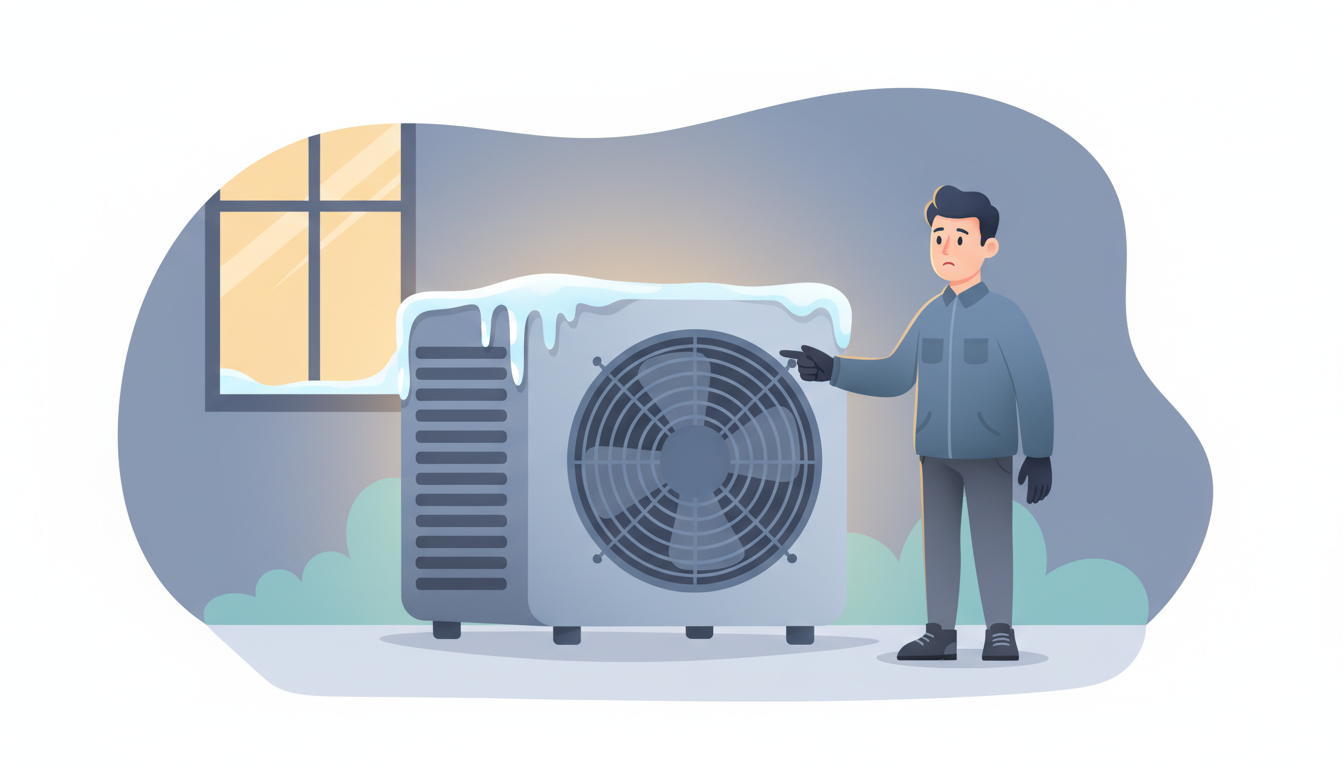
Never continue running a heat pump that's frozen solid. While a light layer of frost on the outdoor unit is completely normal during cold weather, heavy ice buildup signals something's wrong. When you keep running your system in this condition, you're forcing the compressor to work against restricted airflow and improper pressure levels. This can lead to:
- Compressor failure ($2,000-$5,000 to replace)
- Reversing valve damage ($500-$1,500 repair)
- Fan motor burnout ($400-$1,200 repair)
- Refrigerant line damage from ice expansion
- Complete system replacement ($5,000-$15,000 in severe cases)
The damage doesn't happen slowly—it can occur within hours of continued operation. Every minute your frozen heat pump runs increases the risk of catastrophic failure.
Understanding Normal Frost vs. Problem Ice
Not all ice on your heat pump means disaster. Learning to distinguish between normal operation and serious problems will help you respond appropriately.
When Frost Is Normal
Your heat pump naturally attracts moisture from the air during heating mode. In cold weather (typically below 40°F), you'll often see:
- Light frost on the outdoor coils
- Thin ice forming on the top or sides
- Temporary buildup that disappears within 30-90 minutes
This is completely expected. Your heat pump has a built-in defrost cycle that automatically reverses to cooling mode for 5-15 minutes to melt this frost. You might notice the outdoor fan stops, hear a slight hissing sound, and see steam rising as the ice melts.
When Ice Is a Problem
You have a serious issue requiring immediate attention if you see:
- Solid ice covering the entire outdoor unit
- Ice blocking the fan from spinning
- Ice buildup lasting more than 2 hours
- Ice extending onto refrigerant lines or surrounding ground
- Heavy frost that never clears between cycles
These signs indicate your defrost cycle isn't working properly, or there's an underlying issue preventing normal operation. This is when you need to shut down your system.
What Happens When You Keep Running a Frozen Heat Pump
Understanding the damage progression helps you appreciate why immediate action matters. Here's what happens inside your system when you ignore a freeze-up:
Immediate Effects (0-2 Hours)
Your heat pump struggles with restricted airflow through ice-blocked coils. The system can't absorb enough heat from the outdoor air, causing:
- Reduced heating output to your home
- Compressor working harder than designed
- Rising internal pressure levels
- Increasing energy consumption
You might notice your home isn't warming up properly, even though the system runs constantly.
Short-Term Damage (2-8 Hours)
As ice continues building, your system faces dangerous operating conditions:
- Liquid refrigerant entering the compressor (normally only vapor should enter)
- Slugging damage to compressor valves and pistons
- Bearing stress in the compressor motor
- Electrical strain as the motor draws excessive amperage
The compressor is the heart of your heat pump, and it's designed to compress refrigerant vapor—not liquid. When liquid refrigerant reaches the compressor, it's like trying to compress water. Since liquids don't compress, the force can crack internal components.
Long-Term Failure (8+ Hours)
Continued operation leads to catastrophic failure:
- Compressor burnout from overheating and mechanical stress
- Motor winding damage from excessive current draw
- Refrigerant contamination from metal particles
- System-wide damage requiring complete replacement
At this point, you're looking at major repair bills or full system replacement. A problem that might have cost $200-$300 to fix early can now cost $5,000 or more.
Why Heat Pumps Freeze Up: Common Causes
Before you can prevent future freeze-ups, you need to understand what causes them. Here are the most common culprits:
1. Malfunctioning Defrost Cycle
Your heat pump's defrost cycle should activate automatically every 30-90 minutes in cold weather. When the defrost control board, sensors, or timer fails, ice accumulates without being cleared.
Signs of defrost problems:
- Ice never melts between heating cycles
- System runs constantly without defrosting
- No steam or hissing sounds during defrost
- Outdoor fan never stops running
This usually requires a professional HVAC repair technician to diagnose and replace the faulty component.
2. Low Refrigerant Levels
Refrigerant leaks cause pressure drops that lead to abnormally cold coil temperatures, promoting excessive frost formation. Low refrigerant also reduces heating capacity and efficiency.
Warning signs:
- Ice forming quickly even in moderate temperatures
- System running constantly but home stays cold
- Hissing or bubbling sounds from refrigerant lines
- Visible oil stains near pipe connections
Refrigerant issues require professional attention—handling refrigerant without EPA certification is illegal and dangerous.
3. Restricted Airflow
When air can't flow freely across the coils, temperatures drop below freezing even when they shouldn't. Common airflow restrictions include:
- Dirty air filters (change every 1-3 months)
- Blocked outdoor unit (snow, leaves, debris)
- Clogged coils (dirt, cottonwood seeds, dust)
- Collapsed ductwork or closed vents indoors
Many airflow problems you can fix yourself, making this a good starting point for troubleshooting.
4. Drainage Issues
During defrost, melted ice needs somewhere to drain. If the drain pan or drainage holes freeze or clog, water accumulates and refreezes, creating an ice dam effect.
Check for:
- Ice pooling under the unit
- Water stains on the ground
- Blocked drainage channels
- Standing water in the base pan
5. Extreme Weather Conditions
When outdoor temperatures drop below 25°F for extended periods, especially with high humidity or precipitation, even properly functioning heat pumps struggle. The combination of cold air and moisture creates ideal conditions for ice formation.
In these conditions, your heat pump may need to defrost more frequently, or you might need to rely on backup heat sources.
6. Faulty Reversing Valve
The reversing valve controls whether your heat pump heats or cools by directing refrigerant flow. A stuck or failing valve can prevent proper defrost cycles or cause the system to operate in the wrong mode.
Symptoms include:
- Unit blowing cold air when set to heat
- Loud clicking or hissing from the outdoor unit
- System switching randomly between heating and cooling
7. Failed Temperature Sensors
Your heat pump uses multiple sensors to monitor coil temperature and trigger defrost cycles. When sensors fail or drift out of calibration, the system can't detect when defrosting is needed.
These electronic issues require professional heat pump repair with specialized diagnostic equipment.
Immediate Steps to Take When Your Heat Pump Freezes
When you discover your heat pump frozen, follow these steps in order to minimize damage and safely thaw the system:
Step 1: Turn Off the Heat Pump
Switch your thermostat to "Off" or "Emergency Heat" if available. Do not leave it running in normal heating mode. Emergency heat typically uses electric resistance heating or a backup furnace, bypassing the frozen outdoor unit entirely.
This stops the compressor from operating against dangerous conditions and prevents further damage.
Step 2: Switch to Fan Mode (After Turning Off Heating)
Once you've disabled heating mode, set the system to "Fan Only" to circulate indoor air. This helps distribute whatever heat remains in your home without running the outdoor unit.
Do not attempt to manually defrost the outdoor unit while it's still running in heating mode.
Step 3: Check and Replace the Air Filter
A clogged filter is one of the easiest problems to fix. Remove your indoor air filter and hold it up to light. If you can't see through it, replace it immediately.
This simple $15-$30 fix might resolve your entire problem by restoring proper airflow.
Step 4: Clear Outdoor Unit Obstructions
Go outside and check your heat pump's outdoor unit:
- Remove any leaves, grass clippings, or debris from around the unit
- Clear snow from at least 2 feet around all sides
- Remove ice buildup from the base (but not from the coils themselves)
- Check that the fan can spin freely when you gently push it
Never use sharp objects or excessive force, as you can damage delicate aluminum fins.
Step 5: Gently Thaw the Unit (Optional)
If you need heating restored quickly and temperatures are above freezing during the day, you can help the thawing process:
- Use a garden hose with lukewarm water (never hot water—thermal shock can crack components)
- Spray gently from top to bottom
- Allow natural airflow to complete the process
- Never use a torch, heat gun, or high-pressure washer
Better approach: Simply wait. Most units will thaw naturally within 2-6 hours once turned off. Be patient.
Step 6: Wait for Complete Thawing
Do not restart your heat pump until all ice has completely melted. Even small amounts of residual ice can refreeze quickly once the unit restarts, putting you back at square one.
Check that:
- Coils are completely clear
- Fan spins freely
- No ice remains on refrigerant lines
- Drainage pathways are clear
Step 7: Test Run and Monitor
Once fully thawed, turn your heat pump back on and monitor it for 2-3 hours:
- Does frost form again?
- Does the defrost cycle activate and clear frost?
- Is heating performance restored?
- Are there any unusual sounds?
If ice forms again within an hour, you have an underlying problem requiring professional diagnosis.
When to Call an HVAC Professional
While some freeze-up causes you can address yourself, many require professional expertise. Call a qualified HVAC technician immediately if:
- Ice reforms quickly after thawing (within 1-2 hours)
- You see refrigerant leaks (oily residue, hissing sounds)
- The compressor won't start after thawing
- You notice unusual sounds (grinding, squealing, banging)
- The defrost cycle never activates
- The system is more than 10 years old and freezing regularly
- Emergency heat isn't working and it's dangerously cold
- You're uncomfortable working around electrical equipment
Attempting complex repairs yourself can void warranties, violate local codes, and create safety hazards. Professional diagnosis typically costs $100-$200 but can save you thousands in prevented damage.
Preventing Future Heat Pump Freeze-Ups
Prevention is always cheaper than repair. Follow these maintenance practices to keep your heat pump running smoothly through winter:
Regular Maintenance Schedule
- Change air filters every 1-3 months (monthly during heavy use)
- Schedule professional maintenance twice yearly (spring and fall)
- Keep outdoor unit clear of debris, plants, and snow
- Inspect drainage before winter begins
- Test defrost cycle by observing operation during first cold snap
Seasonal Preparation
Before winter arrives:
- Have a professional inspect the defrost system
- Clean outdoor coils to remove summer dirt buildup
- Check refrigerant levels and pressure
- Test emergency heat to ensure backup works
- Clear vegetation within 2 feet of the unit
Operating Tips for Cold Weather
During freezing conditions:
- Keep your thermostat at a consistent temperature (avoid frequent adjustments)
- Don't set the temperature more than 5°F above current room temperature
- Use emergency heat when temperatures drop below your heat pump's rated capacity
- Monitor your system during the coldest nights
- Keep snow cleared from around the outdoor unit
Consider Upgrades for Extreme Climates
If you live in an area with harsh winters and frequent freezing:
- Cold-climate heat pumps operate efficiently down to -15°F or lower
- Backup heating systems provide redundancy during extreme cold
- Smart thermostats can automatically switch to emergency heat when needed
- Heat pump covers (used properly) can protect from snow and ice
For more comprehensive guidance on keeping your heat pump running smoothly, check out our detailed heat pump freezing troubleshooting guide.
Understanding Emergency Heat Mode
Your thermostat likely has an "Emergency Heat" or "EM Heat" setting. This bypasses the heat pump entirely and uses backup heating:
When to use Emergency Heat:
- Your heat pump is frozen and won't thaw
- Outdoor temperatures are below your heat pump's capacity
- You've confirmed a mechanical failure in the heat pump
- You're waiting for repair service during cold weather
Important notes:
- Emergency heat is expensive to run (often electric resistance heating)
- Use it only when necessary—not as a regular heating mode
- Remember to switch back to normal heat once your heat pump is repaired
- Some systems will automatically switch during extreme cold
Emergency heat keeps you safe and comfortable while protecting your frozen heat pump from further damage.
Cost Considerations: Prevention vs. Repair
Understanding the financial impact helps motivate preventive maintenance:
Prevention Costs (Annual)
- Air filters: $50-$120/year
- Professional maintenance: $150-$300 per visit
- Seasonal cleaning: $100-$200
- Total preventive cost: $300-$600/year
Repair Costs (When Problems Occur)
- Defrost control board: $300-$600
- Temperature sensor: $150-$400
- Reversing valve: $500-$1,500
- Fan motor: $400-$1,200
- Compressor replacement: $2,000-$5,000
- Full system replacement: $5,000-$15,000
The math is simple: Spending $300-$600 yearly on prevention beats spending $2,000-$5,000 on emergency repairs. Plus, regular maintenance extends your heat pump's lifespan from 10-15 years to 15-20 years.
Frequently Asked Questions
How long can a heat pump stay frozen before damage occurs?
Typically, 2-4 hours of continuous operation while frozen begins causing internal damage. Compressor damage can occur even faster if ice completely blocks airflow. The exact timeline depends on ice severity, outdoor temperature, and your specific unit. Don't risk it—shut down immediately when you notice heavy ice buildup.
Can I use hot water to melt ice off my heat pump?
No, never use hot water. The extreme temperature difference causes thermal shock that can crack coils, damage seals, and warp metal components. Use lukewarm water at most, or better yet, simply turn off the system and let it thaw naturally. Patience prevents expensive damage.
Is some frost on my heat pump normal in winter?
Yes, light frost is completely normal. In cold, humid conditions, especially between 25°F and 40°F, you'll regularly see frost forming on outdoor coils. Your heat pump should automatically defrost every 30-90 minutes. Only worry when frost becomes heavy ice that doesn't clear, blocks the fan, or covers the entire unit.
Why does my heat pump freeze up only at night?
Nighttime brings lower temperatures and higher humidity—perfect conditions for frost formation. Your heat pump works harder when it's coldest, and increased humidity provides more moisture to freeze on the coils. If your defrost cycle is marginally functional, it might keep up during warmer daylight hours but fail overnight when conditions are more challenging.
Will a frozen heat pump still blow some heat?
Initially, yes—but with significantly reduced capacity. As ice blocks more airflow, heating output drops further. You'll notice your home getting colder despite the system running constantly. Eventually, the unit may provide almost no heating while consuming maximum electricity. This is when the most damage occurs, as the compressor works hardest while ice restricts proper operation.
Conclusion: Protect Your Investment
Your heat pump represents a significant investment in your home's comfort and energy efficiency. When you discover it frozen, the single most important action is turning it off immediately. Those few minutes of decision-making can save you thousands of dollars in repair costs.
Remember these key points:
- Never keep running a frozen heat pump—damage escalates quickly
- Distinguish between normal frost and problematic ice buildup
- Follow proper thawing procedures—no hot water, no chipping ice
- Address underlying causes—check filters, clear debris, monitor defrost
- Call professionals when ice reforms or you suspect mechanical failure
- Invest in prevention—annual maintenance is far cheaper than repairs
If you're currently dealing with a frozen heat pump, follow the steps in this guide carefully. Start with the simple fixes—new air filter, cleared debris—before assuming you need expensive repairs. But if the problem persists, don't hesitate to contact a qualified HVAC technician. Your safety and comfort are worth the service call.
Need help with other HVAC issues? Visit our comprehensive HVAC repair guide for troubleshooting tips and solutions.