Why Is My Mini-Split Blowing Warm Air in Cool Mode? (And How to Fix It)
Why Is My Mini-Split Blowing Warm Air in Cool Mode? (And How to Fix It)
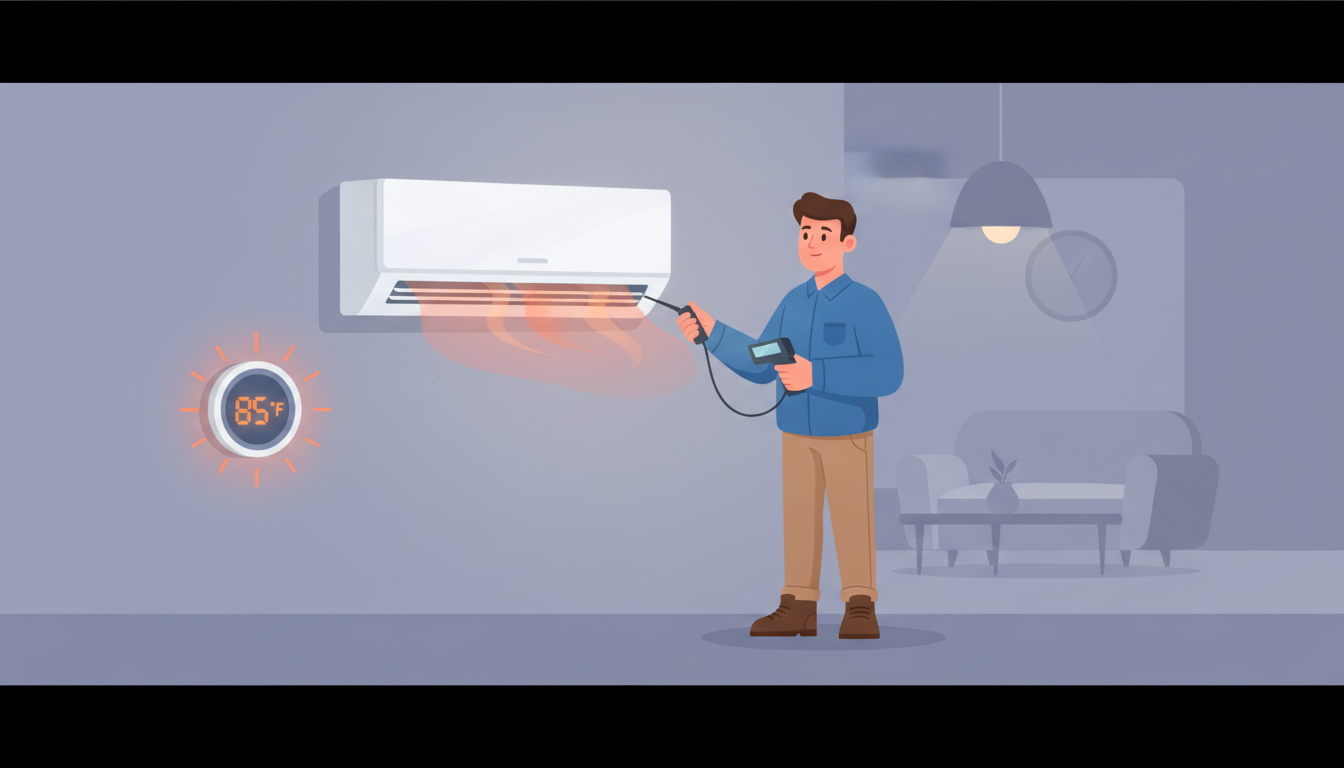
Nothing's more frustrating than cranking your mini-split to cool mode on a hot day, only to feel warm air blowing from the vents. If your ductless AC is blowing warm air instead of cold, you're dealing with a specific problem that needs immediate attention. The good news? Many causes have simple DIY fixes you can try before calling a professional.
In this guide, we'll walk you through exactly why your mini split blowing warm air in cool mode happens and show you step-by-step solutions to get your system cooling again.
Understanding Why Your Mini-Split Blows Hot Air When Set to Cool
When your mini-split is set to cooling mode but delivers warm or hot air, something is preventing the system from removing heat from your indoor space. Unlike a mini-split that's simply not cooling enough, this issue means your system is actively blowing heated air—a clear sign that something's wrong with the cooling cycle.
Your mini-split heat pump works by moving heat from inside your home to the outdoors. When everything functions correctly, the indoor unit should blow cold air while the outdoor unit expels hot air. But when certain components fail or settings get mixed up, the system can get stuck in heat mode even when you've selected cooling.
The 7 Most Common Causes (And How to Fix Them)
1. Incorrect Thermostat or Remote Settings
The simplest explanation is often the right one. Your mini-split might be set to heat mode, fan mode, or auto mode instead of cool mode.
Quick Fix:
- Check your remote control display—look for a snowflake icon (cooling) versus a sun icon (heating)
- Verify the temperature setting is lower than your current room temperature
- Make sure you're not in "dry" or "fan only" mode, which won't activate cooling
- Try switching the mode off completely, waiting 5 minutes, then switching back to cool
Many homeowners accidentally hit the wrong button on their remote. If your mini-split blowing warm air when set to cool started suddenly, double-check your settings first.
2. Stuck or Failed Reversing Valve
Here's the most likely culprit for warm air in cool mode: a malfunctioning reversing valve. This critical component controls whether your heat pump is in heating or cooling mode by directing refrigerant flow.
What's Happening: When the reversing valve gets stuck or fails, your system stays in heating mode regardless of your thermostat setting. You'll set it to cool, but the system physically cannot switch to cooling mode.
Signs of Reversing Valve Problems:
- System blows warm air immediately when set to cool
- You hear a clicking or hissing sound when changing modes, but nothing happens
- The outdoor unit runs but produces the wrong temperature indoors
- System worked fine in one season but fails when you switch modes
The Fix: Unfortunately, reversing valve issues require professional repair. An HVAC technician can diagnose whether the valve is stuck (sometimes fixable) or failed completely (needs replacement). Reversing valve replacement typically costs $300-$800 depending on your system.
3. Dirty or Clogged Air Filters
Dirty air filters restrict airflow through your indoor unit, which can cause your mini-split not cooling blowing hot air. When air can't flow freely over the evaporator coil, the system can't absorb heat properly.
Quick Fix:
- Turn off your mini-split system
- Open the front panel of your indoor unit
- Remove the air filters (usually 2-3 filters that slide out)
- Wash filters with warm water and mild soap
- Let filters dry completely before reinstalling
- Check and clean filters every 2-4 weeks during heavy use
Clean filters are essential for proper mini-split operation. This five-minute task can solve many cooling problems and should be your first troubleshooting step.
4. Low Refrigerant or Refrigerant Leak
Refrigerant is the liquid that actually moves heat in your mini-split system. When refrigerant levels drop due to a leak, your system loses its ability to cool effectively. In some cases, low refrigerant causes the system to blow warm or room-temperature air.
Signs of Low Refrigerant:
- Ice buildup on the outdoor unit or refrigerant lines
- Hissing or bubbling sounds near the refrigerant lines
- System runs constantly but doesn't cool
- Higher than normal energy bills
- Warm air from vents even in cool mode
Important Note: Mini-splits are sealed systems—they don't "use up" refrigerant. If levels are low, you have a leak. Simply adding more refrigerant without fixing the leak is a temporary band-aid.
The Fix: Refrigerant work requires an EPA-certified HVAC professional. They'll locate the leak, repair it, evacuate the system, and recharge it with the correct amount of refrigerant. Expect to pay $200-$600 for leak repair and recharge.
5. Blocked or Dirty Outdoor Unit
Your outdoor condenser unit needs free airflow to expel heat from your home. When the outdoor unit gets blocked by debris, leaves, or dirt, it can't release heat properly. This forces warm air back into your home through the indoor unit.
Quick Fix:
- Turn off power to the mini-split at the circuit breaker
- Clear away leaves, grass clippings, and debris around the outdoor unit
- Maintain at least 2 feet of clearance on all sides
- Gently spray the outdoor coil fins with a garden hose (low pressure)
- Use a soft brush to remove stubborn dirt from the fins
- Straighten any bent fins with a fin comb
- Remove any plants or objects blocking airflow
A clean outdoor unit is crucial for efficient operation. This maintenance task takes 15-20 minutes and can restore cooling function if debris is the problem.
6. Malfunctioning Temperature Sensor
Your mini-split's indoor unit contains a temperature sensor that tells the system when to cool. If this sensor fails or gets knocked out of position, it may give false readings that prevent proper cooling.
Signs of Sensor Problems:
- System shuts off before reaching the set temperature
- Mini-split blows warm air briefly, then stops
- Inconsistent cooling performance
- System seems to ignore temperature setting
Quick Fix:
- Open your indoor unit's front panel
- Locate the sensor (small probe near the evaporator coil)
- Make sure it's properly positioned and not touching the coil
- Gently clean the sensor with a soft cloth
If repositioning doesn't help, the sensor may need replacement by a professional ($150-$300).
7. Frozen Evaporator Coil
When the evaporator coil inside your indoor unit freezes, it can't absorb heat. The system may blow warm air because the frozen coil blocks proper heat exchange.
Causes of Frozen Coils:
- Dirty air filters restricting airflow
- Low refrigerant levels
- Blocked return air
- Running the system when outdoor temperatures are too low
Quick Fix:
- Turn off the mini-split completely
- Switch to fan-only mode to help the coil thaw (takes 2-4 hours)
- Check and clean your air filters
- Ensure all vents and returns have clear airflow
- Once thawed, try running in cool mode again
If the coil freezes again, you likely have a refrigerant issue that needs professional diagnosis.
Step-by-Step Troubleshooting Process
Follow this sequence to diagnose your mini split blowing warm air in cool mode:
Step 1: Verify Settings (2 minutes)
- Confirm cool mode is selected (snowflake icon)
- Set temperature 5-10 degrees below room temp
- Check remote batteries
Step 2: Clean Air Filters (10 minutes)
- Remove, wash, dry, and reinstall filters
- This fixes 30-40% of cooling complaints
Step 3: Check Outdoor Unit (15 minutes)
- Clear debris and obstructions
- Ensure fan is spinning when system runs
- Clean condenser coils if dirty
Step 4: Inspect for Ice or Frost (5 minutes)
- Look for ice on refrigerant lines or outdoor unit
- If present, turn system off and let it thaw
Step 5: Power Cycle the System (10 minutes)
- Turn off at thermostat
- Flip circuit breaker off
- Wait 5 minutes
- Turn everything back on and test
Step 6: Call a Professional
- If none of the above works, you likely need expert diagnosis
- Problems requiring professional help: reversing valve, refrigerant leak, compressor failure, electrical issues
When DIY Fixes Aren't Enough: Professional Repair Scenarios
Some mini-split issues simply can't be fixed without professional tools and expertise. Call an HVAC technician if you experience:
- Reversing valve failure - Requires specialized tools and refrigerant recovery
- Refrigerant leak - EPA certification required for refrigerant work
- Compressor problems - Major repair often costing $800-$2,000
- Electrical issues - Safety hazard requiring licensed electrician
- Persistent freezing - May indicate multiple system problems
Don't attempt to add refrigerant yourself or open refrigerant lines. These tasks require certification and can damage your system or harm you if done incorrectly. For comprehensive guidance on when to call a pro, check out our complete mini-split repair guide.
Preventing Future Warm Air Problems
Regular maintenance prevents most mini-split cooling failures:
Monthly Tasks:
- Clean or replace air filters
- Check outdoor unit for debris
- Ensure indoor vents aren't blocked by furniture
Seasonal Tasks:
- Professional tune-up before cooling season starts
- Coil cleaning (indoor and outdoor)
- Refrigerant level check
- Electrical connection inspection
Annual Tasks:
- Complete system inspection by certified technician
- Condensate drain cleaning
- Fan motor lubrication
- Thermostat calibration
Most mini-split manufacturers recommend professional maintenance once per year. This typically costs $100-$200 but can prevent expensive repairs and extend your system's lifespan by 5-10 years.
Understanding When Warm Air Is Normal (Defrost Cycle)
Here's an important distinction: if you have a heat pump mini-split and it blows warm air for 5-10 minutes every few hours in cold weather, that's likely the normal defrost cycle.
During defrost, the system temporarily switches to heating mode to melt ice that's formed on the outdoor coil. This is completely normal when outdoor temperatures drop below 40°F.
Normal Defrost Cycle:
- Happens in cold weather (below 40°F)
- Lasts 5-15 minutes
- Occurs every 90-120 minutes
- System returns to normal cooling afterward
Problem Requiring Repair:
- Happens in warm weather
- Continuous warm air, not temporary
- Never returns to cooling
- Accompanied by error codes or unusual noises
If you're unsure whether you're experiencing normal defrost or a malfunction, the key indicator is whether cooling resumes after the warm air stops.
Common Error Codes Related to Cooling Problems
Many mini-splits display error codes when problems occur. While codes vary by manufacturer, these commonly indicate cooling issues:
- E1 or E2 - Temperature sensor malfunction
- E3 - High pressure switch error (refrigerant issue)
- E4 - Low pressure switch error (refrigerant leak)
- E5 - Compressor overload
- F0 or F3 - Refrigerant leak detection
- P0 or P3 - Outdoor unit malfunction
Check your owner's manual for your specific model's error codes. Many modern mini-splits also have diagnostic modes that technicians use for troubleshooting.
FAQ: Mini-Split Blowing Warm Air in Cool Mode
Why is my mini-split blowing warm air but the outdoor unit is running?
This typically indicates a reversing valve stuck in heat mode, low refrigerant, or a failed compressor. The outdoor unit runs, but it's not properly switching to cooling mode. Check your thermostat settings first, then call a professional if settings are correct.
Can a dirty filter cause my mini-split to blow hot air instead of cold?
Yes, extremely dirty filters can restrict airflow so severely that the system can't cool properly. While dirty filters usually cause weak cooling rather than warm air, they should be your first troubleshooting step. Clean filters take 10 minutes and solve many mini-split cooling problems.
How much does it cost to fix a mini-split blowing warm air?
Costs vary widely by cause:
- DIY filter cleaning: Free
- Professional cleaning: $100-$200
- Refrigerant leak repair and recharge: $200-$600
- Reversing valve replacement: $300-$800
- Compressor replacement: $800-$2,000
Simple fixes like cleaning and settings adjustments cost nothing, while major component failures can be expensive.
Will resetting my mini-split fix the warm air problem?
Sometimes. A system reset can clear software glitches or sensor errors. To reset: turn off the unit, flip the circuit breaker off, wait 5 minutes, then turn everything back on. If the problem is mechanical (like a stuck reversing valve), a reset won't help.
How do I know if my mini-split's reversing valve is bad?
Key signs include: the system blows warm air immediately when set to cool, you hear clicking when changing modes but temperature doesn't change, or the system works fine in one mode but not the other. Reversing valve diagnosis requires a professional with pressure gauges and electrical testing equipment.
Conclusion: Get Your Mini-Split Cooling Again
A mini split blowing warm air in cool mode is frustrating, but now you know the seven most common causes and how to fix them. Start with the simple solutions—check your settings, clean your filters, and clear debris from the outdoor unit. These three steps alone resolve most cooling complaints.
If DIY troubleshooting doesn't restore cooling within an hour, it's time to call a professional. Problems like reversing valve failures, refrigerant leaks, and compressor issues require specialized expertise and tools.
Remember, regular maintenance prevents most of these problems. Clean your filters monthly, schedule annual professional tune-ups, and keep your outdoor unit clear of debris. These simple habits will keep your ductless system running efficiently for 15-20 years.
Need expert help with your mini-split? Don't let warm air ruin your comfort. Contact a certified HVAC technician today for fast, professional diagnosis and repair.