
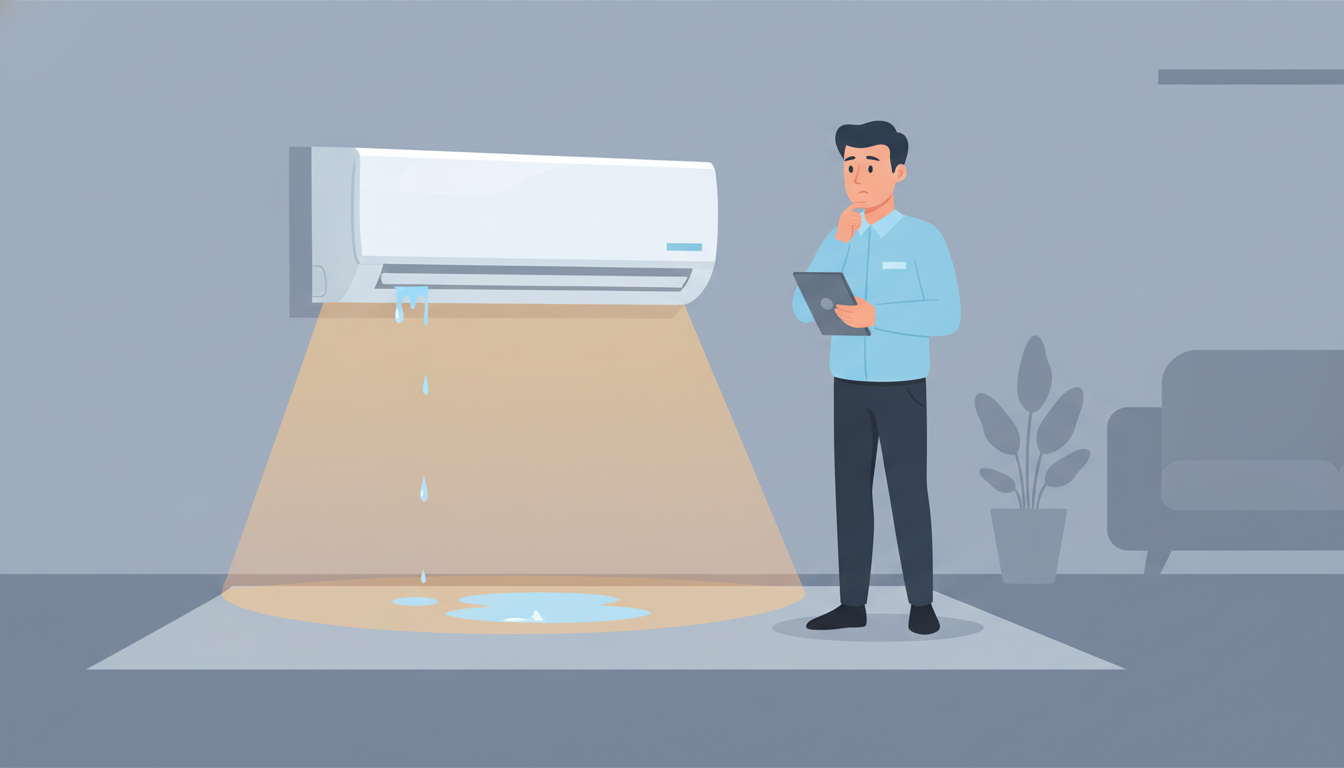
Mini-Split Leaking Water Indoors? 7 Common Causes & Fixes
Mini-Split Leaking Water Indoors? 7 Common Causes & Fixes
Is your mini split leaking water indoors and leaving puddles on your floor? You're not alone. Water leaks are one of the most common problems homeowners face with ductless mini split systems. The good news is that most mini split water leak causes are relatively simple to diagnose and fix. In this guide, we'll walk you through the seven most common reasons why your mini split is dripping water inside your home and show you exactly how to stop it.
Understanding Why Mini Splits Produce Water
Before we dive into the specific causes, let's quickly cover why your mini split creates water in the first place. Your ductless mini split system works by cooling the air in your home. During this process, warm air passes over the cold evaporator coils inside your indoor unit. This causes moisture in the air to condense into water droplets—the same way a cold glass of water "sweats" on a hot day.
This condensation is completely normal. In fact, your mini split can produce several gallons of water per day during peak cooling season. The key is that this water should drain away properly through your system's condensate drain line, not leak into your living space.
When you see your mini split leaking water indoors, it means something is preventing that condensation from draining correctly. Let's look at the most common culprits.
1. Clogged Condensate Drain Line (The #1 Cause)
This is by far the most common reason for mini split water leaks. Your condensate drain line carries water away from your indoor unit to the outside of your home. Over time, this narrow pipe can become clogged with dirt, dust, algae, mold, or even pest nests.
When the drain line gets blocked, water backs up inside your unit. Eventually, the drain pan overflows and water starts dripping from your mini split.
Signs Your Drain Line Is Clogged:
- Water dripping steadily from the indoor unit
- Visible water pooling around the base of the unit
- Musty odors coming from the system
- Gurgling sounds from the drain line
How to Fix It:
- Turn off your mini split at the thermostat and breaker
- Locate the drain line (usually a small PVC pipe exiting near your indoor unit)
- Check the outdoor exit point for visible blockages
- Use a wet/dry vacuum to suction out debris from the drain line
- Flush with a mixture of 1/4 cup bleach and 1 cup water to kill algae
- Pour the solution slowly into the drain pan and let it sit for 30 minutes
- Flush with clean water to ensure the line is clear
If your drain line has a significant blockage, you may need a professional HVAC technician to use specialized tools to clear it completely. Regular HVAC maintenance can prevent these clogs from forming in the first place.
2. Dirty or Clogged Air Filter
Your air filter keeps dust and debris out of your mini split's internal components. When the filter becomes too dirty, it restricts airflow over the evaporator coils. This reduced airflow causes the coils to get too cold, leading to excessive condensation and even freezing.
A dirty air filter doesn't just cause water leaks—it also makes your system work harder, increasing your energy bills and reducing cooling efficiency.
Signs Your Air Filter Is the Problem:
- Reduced cooling performance
- Ice forming on the indoor unit
- Higher than normal energy bills
- Water dripping after the ice melts
How to Fix It:
- Open the front panel of your indoor unit
- Remove the air filters (most units have two)
- Vacuum off loose dust and debris
- Wash filters with warm, soapy water
- Rinse thoroughly and let air dry completely
- Reinstall once fully dry (usually 2-4 hours)
Pro tip: Clean your filters every 2-4 weeks during heavy use seasons. Set a phone reminder so you don't forget. This simple maintenance task can prevent most mini split condensation problems before they start.
3. Frozen Evaporator Coils
When your evaporator coils freeze over, ice builds up inside your indoor unit. Once the system shuts off or the ice starts to thaw, all that melted ice has to go somewhere—and if your drain system can't handle the sudden rush of water, you'll end up with a leak.
Frozen coils are usually caused by one of three issues:
- Restricted airflow (dirty filters, blocked vents)
- Low refrigerant levels (leak in the system)
- Running the system when it's too cold outside
Signs Your Coils Are Frozen:
- Visible ice on the indoor unit
- Warm air blowing instead of cold
- Water leaking after the system has been off
- Hissing or bubbling sounds from the refrigerant lines
How to Fix It:
- Turn off your mini split immediately
- Let the ice thaw naturally (can take 2-8 hours)
- Check and clean your air filters
- Make sure all supply vents are open and unblocked
- Once thawed, check refrigerant levels (requires a professional)
If your coils freeze repeatedly even with clean filters, you likely have a refrigerant leak. This requires professional mini split repair because handling refrigerant requires EPA certification.
4. Improper Installation or Unit Not Level
Your mini split's indoor unit must be installed perfectly level—or slightly tilted back toward the drain connection. If the unit is tilted forward or not level, water can't flow properly to the drain pan. Instead, it pools inside the unit and eventually overflows.
This is especially common with DIY installations or if the mounting bracket has loosened over time.
Signs of Installation Problems:
- Water leaking from one side of the unit
- The unit visibly looks crooked or tilted
- Leaking started soon after installation
- The mounting bracket feels loose
How to Fix It:
- Check the unit level with a bubble level
- Look for loose mounting screws on the back plate
- Tighten the mounting bracket if it has shifted
- Adjust the tilt slightly back toward the wall (about 5 degrees)
If the mounting bracket itself is damaged or installed incorrectly, you'll need to remount the entire unit properly. This is one situation where it's worth calling a professional to ensure it's done correctly and safely.
5. Damaged or Corroded Drain Pan
The drain pan sits under your evaporator coils and catches condensation before it flows to the drain line. Over time, drain pans can develop cracks, rust, or corrosion—especially in older units or systems exposed to acidic condensation.
A damaged drain pan allows water to leak directly into your home instead of directing it to the drain line.
Signs of Drain Pan Damage:
- Leaking even when the drain line is clear
- Visible rust or corrosion on the indoor unit
- Water dripping from unusual locations on the unit
- The unit is more than 7-10 years old
How to Fix It:
For minor cracks, you can use waterproof HVAC sealant as a temporary fix:
- Turn off and drain the unit
- Clean and dry the cracked area thoroughly
- Apply waterproof epoxy or HVAC sealant
- Let cure for 24 hours before restarting
However, a cracked drain pan is usually a sign that your indoor unit is aging. If your unit is over 10 years old and you're dealing with drain pan issues, it may be time to consider replacement rather than repair.
6. Low Refrigerant Levels
Low refrigerant in your mini split causes the evaporator coils to become extremely cold—cold enough to freeze. When frozen coils thaw, the resulting water leak can be substantial.
Refrigerant doesn't get "used up" like fuel. If your levels are low, it means you have a leak somewhere in the system. This needs professional attention because:
- Refrigerant is hazardous to handle
- EPA regulations require certification to work with it
- The leak itself needs to be found and repaired
Signs of Low Refrigerant:
- Ice on the indoor or outdoor unit
- The system runs constantly but doesn't cool well
- Hissing or bubbling sounds from the refrigerant lines
- Higher electric bills with less cooling
How to Fix It:
You cannot fix this yourself. Contact a licensed HVAC technician who can:
- Locate and repair the refrigerant leak
- Properly evacuate the system
- Recharge to the correct refrigerant level
- Test for proper operation
Attempting to add refrigerant yourself without finding the leak is wasteful and potentially dangerous. Plus, you'll just end up with the same problem again in a few weeks.
7. Excess Humidity and Condensation Buildup
In extremely humid climates or during peak summer months, your mini split may produce more condensation than usual. If your drainage system is borderline adequate, this excess water production can overwhelm it and cause occasional leaking.
This is less about something being "broken" and more about your system being pushed beyond its designed capacity.
Signs of Humidity-Related Leaking:
- Leaking only on the most humid days
- Leaking stops when humidity drops
- Multiple units in your home are affected
- Your home feels excessively humid
How to Fix It:
- Use a dehumidifier in addition to your mini split
- Improve ventilation with exhaust fans in bathrooms and kitchens
- Upgrade your drain line to a larger diameter pipe
- Consider adding a condensate pump if gravity drainage is insufficient
- Keep windows and doors closed when running AC
You might also want to read our guide on mini split water leaks for more detailed troubleshooting steps specific to different scenarios.
What to Do Immediately When You Notice a Leak
When you first discover your mini split dripping water inside your home, take these immediate steps to minimize damage:
- Place towels or a bucket under the leak to protect your floors
- Turn off the unit to prevent more water accumulation
- Move furniture and valuables away from the affected area
- Check for signs of mold if the leak has been going on for a while
- Document the damage with photos (helpful for warranty claims)
- Call a professional if the leak is severe or you can't identify the cause
Don't ignore a water leak. Even small, slow leaks can cause significant water damage, mold growth, and structural issues over time. The longer you wait, the more expensive the repairs become.
When to DIY vs. When to Call a Professional
Some mini split water leak causes are simple enough for DIY fixes:
Safe for DIY:
- Cleaning air filters
- Clearing visible drain line blockages
- Basic drain line flushing
- Checking if the unit is level
- Minor drain pan cracks (temporary fix only)
Requires a Professional:
- Refrigerant issues or leaks
- Complex drain line clogs requiring special tools
- Remounting or reinstalling the indoor unit
- Electrical problems
- Recurring leaks without an obvious cause
- Any work involving refrigerant lines
If you've tried the basic fixes and your mini split is still leaking, it's time to call in an expert. A licensed HVAC technician has the tools, training, and experience to diagnose and fix problems that aren't obvious to homeowners.
How Much Does It Cost to Fix a Leaking Mini Split?
Repair costs vary widely depending on what's causing the leak:
- DIY drain line cleaning: $5-20 (materials only)
- Professional drain line service: $75-200
- Air filter replacement: $15-40
- Drain pan replacement: $150-350
- Refrigerant leak repair: $300-1,500 (depending on location and severity)
- Complete remounting/reinstallation: $200-600
Most water leak issues fall in the $75-300 range for professional repair. That's far less expensive than dealing with water damage, mold remediation, or replacing damaged flooring.
Prevention: Stop Leaks Before They Start
The best way to deal with mini split water leaks is to prevent them in the first place. Here's your seasonal maintenance checklist:
Monthly Tasks:
- Clean or inspect air filters
- Check for water around the indoor unit
- Listen for unusual sounds
Quarterly Tasks:
- Flush the condensate drain line
- Check that the unit is still level
- Inspect the drain pan for damage
Annual Professional Maintenance:
- Complete system inspection
- Refrigerant level check
- Deep cleaning of evaporator coils
- Drain line deep cleaning and treatment
- Electrical connections check
Regular professional maintenance typically costs $100-200 per year but can prevent repair bills that are 5-10 times higher. Plus, most manufacturers require proof of annual maintenance to keep your warranty valid.
Understanding the Long-Term Risks of Water Leaks
A leaking mini split isn't just an inconvenience—it poses several serious risks to your home:
Mold and Mildew Growth: Constant moisture creates the perfect environment for mold, which can trigger allergies and respiratory problems. Mold remediation can cost thousands of dollars.
Structural Damage: Water seeping into walls, ceilings, or floors can weaken structural components, damage insulation, and rot wood framing.
Electrical Hazards: Water near electrical components creates shock and fire risks, especially if it reaches outlets or wiring.
Property Damage: Ruined flooring, damaged furniture, peeling paint, and warped drywall can result from even small, slow leaks over time.
Higher Energy Bills: A malfunctioning mini split works harder and less efficiently, driving up your electric costs.
Taking action at the first sign of a leak protects your home, your health, and your wallet.
Frequently Asked Questions About Mini Split Water Leaks
Why is my mini split leaking water only when it's humid outside?
Your system produces more condensation in humid conditions. If your drainage system is barely adequate, high humidity can overwhelm it. Consider adding a dehumidifier or upgrading your drain line capacity.
Can I run my mini split if it's leaking water?
No. Continuing to run a leaking unit can cause water damage, mold growth, and may damage the system further. Turn it off and address the problem before running it again.
How often should I clean my mini split drain line?
At minimum, flush your drain line quarterly. In humid climates or during heavy use seasons, monthly cleaning is better. Use a bleach solution to prevent algae and mold growth.
Is a leaking mini split covered by warranty?
It depends on your warranty terms and what's causing the leak. Installation errors and lack of maintenance typically aren't covered. Refrigerant leaks or component failures may be covered if within the warranty period. Check your specific warranty documentation.
Why does my mini split only leak at night?
Temperature drops at night can cause additional condensation. If your drain line is partially clogged, the increased water production overnight might overwhelm it. Clean your drain line and filters.
Get Your Mini Split Fixed Today
A mini split leaking water indoors is frustrating, but it's usually fixable with the right approach. Start with the simple stuff—clean filters, check the drain line, and make sure the unit is level. If those don't solve the problem, it's time to call in a professional.
Remember, ignoring a water leak will only make things worse and more expensive. Whether you tackle it yourself or hire an expert, addressing the issue quickly protects your home and keeps your mini split running efficiently for years to come.
Need professional help with your leaking mini split? Quick HVAC Fix specializes in diagnosing and repairing all types of mini split issues. Our experienced technicians can identify the problem quickly and get your system back to leak-free operation. Contact us today for fast, reliable service.