
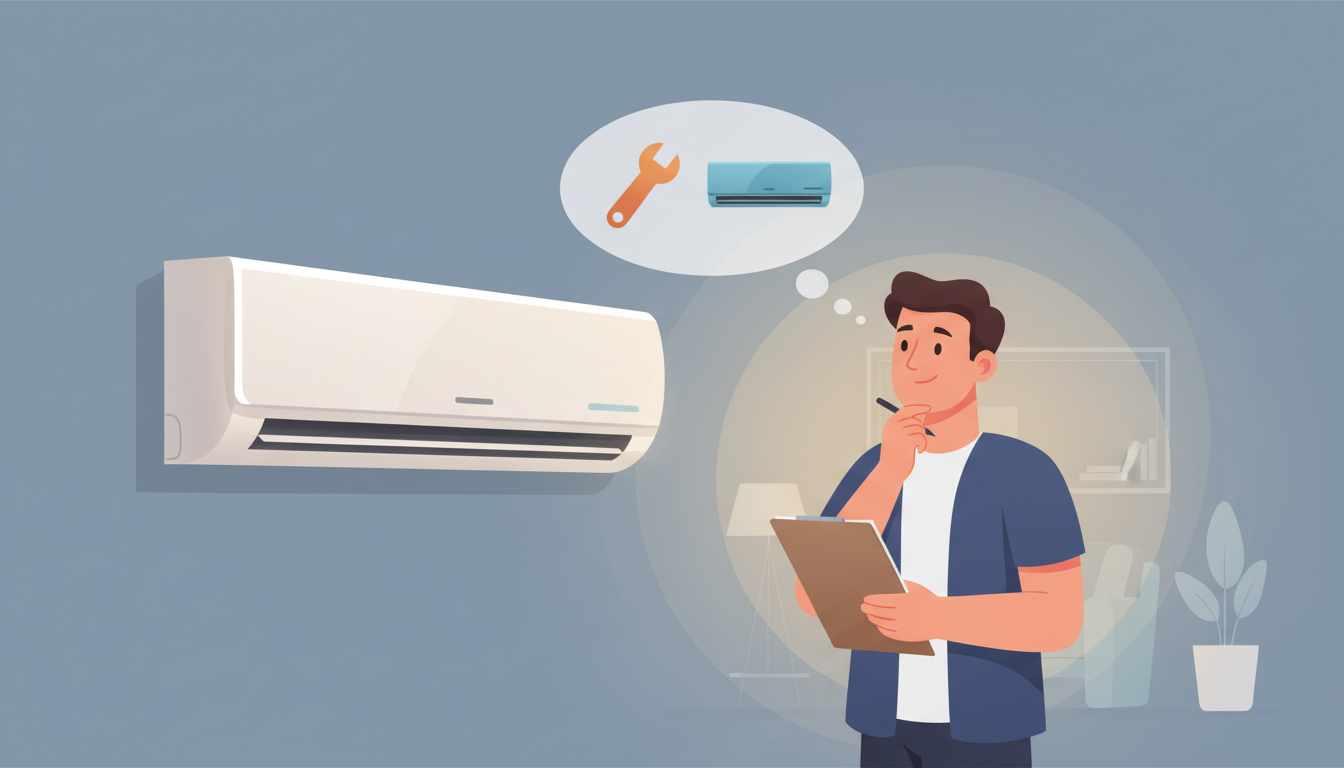
Mini-Split Repair vs Replacement: What Makes Sense for Your Home?
Mini-Split Repair vs Replacement: What Makes Sense for Your Home?
Your mini-split system just broke down, and now you're facing a tough decision: should you repair it or replace it entirely? This question keeps many homeowners up at night, especially when an HVAC contractor quotes you a hefty repair bill.
The truth is, making the wrong choice could cost you thousands of dollars and years of discomfort. But don't worry—by the end of this guide, you'll know exactly how to make the smartest financial decision for your situation.
Understanding the True Cost of Mini Split Repair vs Replacement
Before you commit to any decision, you need to understand what you're really paying for. Mini split repair costs vary wildly depending on the problem, while replacement costs depend on your system size and features.
Average Mini Split Repair Costs
Here's what you can expect to pay for common repairs:
- Refrigerant leak repair: $200-$1,500
- Compressor replacement: $1,000-$2,500
- Fan motor replacement: $300-$800
- Circuit board replacement: $400-$1,200
- Drain line cleaning: $100-$300
- Sensor or thermostat issues: $150-$500
These numbers might seem reasonable at first glance, but there's a critical factor most homeowners overlook: repair frequency. If you're calling for repairs every few months, those costs add up fast.
Mini Split Replacement Cost Breakdown
A new mini-split system typically costs between $3,000 and $8,000, depending on:
- Number of zones (single-zone vs multi-zone)
- BTU capacity needed for your space
- Brand and efficiency rating (SEER)
- Installation complexity
- Additional features (smart controls, air purification)
Now that you know the numbers, let's talk about when each option makes sense.
The 50% Rule: Your First Decision-Making Tool
The HVAC industry uses a simple guideline called the "50% rule" to help homeowners make repair vs replacement decisions. Here's how it works:
If your mini split repair cost exceeds 50% of a new system's price, replacement usually makes more financial sense.
For example, if a new system costs $5,000 and your repair estimate is $2,800, you've crossed that threshold. At that point, you're better off investing in a brand-new system with a full warranty.
But the 50% rule is just the starting point. Several other factors can tip the scales one way or another.
When Mini Split Repair Makes Perfect Sense
Repair is often your best option in these situations:
Your System is Relatively New (Under 7 Years Old)
If your mini-split is less than 7 years old, it likely still has plenty of life left. Most quality systems last 15-20 years with proper maintenance. A single repair on a newer system is usually a smart investment.
Plus, newer systems probably still have warranty coverage. Many manufacturers offer 5-10 year warranties on parts, which can dramatically reduce your repair costs.
The Problem is Minor and Isolated
Some issues are simple fixes that don't indicate larger system problems:
- Clogged drain lines
- Dirty filters or coils
- Faulty sensors
- Remote control issues
- Minor refrigerant top-offs
These repairs typically cost under $500 and can give you several more years of reliable service. For guidance on troubleshooting common issues, check out our mini-split repair guide.
You've Had Excellent Performance Until Now
If your mini-split has been trouble-free for years and this is your first repair, that's a good sign. It suggests the overall system integrity is solid, and this repair should hold up well.
Your Budget is Tight Right Now
Sometimes the decision comes down to cash flow. If you can't afford a $5,000 replacement but can manage a $800 repair, that repair might buy you valuable time to save up for a replacement when you're financially ready.
When Mini Split Replacement is the Smarter Investment
On the flip side, replacement often makes more sense in these scenarios:
Your System is Over 12 Years Old
Even if a repair seems affordable, age matters. Mini-splits typically last 15-20 years, but components start failing more frequently after year 12. At this age, you're likely to face:
- Multiple repairs over the next few years
- Decreased energy efficiency
- Difficulty finding replacement parts
- Higher operating costs
Think of it like an aging car—at some point, you're throwing good money after bad.
You're Facing a Major Component Failure
When critical components fail, replacement often beats repair:
Compressor Failure: The compressor is your system's heart. Replacement costs $1,000-$2,500 on older units, often approaching 50% of a new system. If your compressor dies and your system is over 8 years old, replace the entire unit.
Refrigerant System Problems: Multiple leaks or contaminated refrigerant lines indicate serious issues. Extensive refrigerant work is expensive and may not solve underlying problems.
Multiple Component Failures: When several parts fail simultaneously or within months of each other, your system is telling you it's time to move on.
Your System Uses R-22 Refrigerant
If your mini-split uses R-22 refrigerant (common in systems installed before 2010), pay close attention. R-22 was phased out in 2020 due to environmental concerns, making it:
- Extremely expensive (prices have skyrocketed)
- Increasingly difficult to find
- A liability for future repairs
If you need significant refrigerant service on an R-22 system, replacement is almost always the better choice. Modern systems use eco-friendly R-410A refrigerant that's cheaper and readily available.
Your Energy Bills Keep Climbing
Older mini-splits typically have SEER ratings between 12-16. Modern high-efficiency systems boast SEER ratings of 20-30+, meaning they use 30-50% less energy for the same cooling output.
Let's do the math: if you're spending $1,200 annually to run an old inefficient system, a new system could cut that to $700-$800. That's $400-$500 in annual savings, meaning a $5,000 system pays for itself in energy savings over 10-12 years—plus you get better comfort and reliability.
You're Experiencing Frequent Breakdowns
Have you called for mini-split repairs three times in the past year? That's a red flag. Frequent breakdowns signal systemic problems that repairs won't fix. Each service call costs you money, time, and frustration.
Calculate your total repair costs over the past 2-3 years. If they exceed $1,500-$2,000, you've already invested significantly in a failing system. Cut your losses and upgrade.
You Want to Add Capacity or Zones
If your current system doesn't adequately heat or cool your space, or you want to add zones to new areas, replacement makes sense. You can't easily expand most existing systems, so this is the perfect opportunity to right-size your new installation.
Beyond the Numbers: Other Factors That Matter
The repair vs replacement decision isn't purely financial. Consider these quality-of-life factors:
Warranty Protection and Peace of Mind
New mini-split systems come with comprehensive warranties:
- 5-10 years on parts
- 1-2 years on labor (depending on installer)
- Extended warranties available for purchase
Compare this to repairing an old system that's out of warranty. If your $1,500 repair fails in six months, you'll pay again. A new system gives you years of worry-free operation.
Modern Technology and Features
Today's mini-splits offer features that didn't exist 10 years ago:
- Smart home integration: Control your system from your phone, create schedules, and integrate with Alexa or Google Home
- Advanced air filtration: Modern systems filter out allergens, bacteria, and even viruses
- Quieter operation: New compressors and fans run significantly quieter than older models
- Improved humidity control: Better dehumidification for increased comfort
- Zone optimization: Smarter sensors and controls for perfect temperature in every room
These features dramatically improve your comfort and convenience—benefits that repair can't deliver.
Environmental Impact
Replacing an old, inefficient system isn't just good for your wallet—it's good for the planet. Modern mini-splits:
- Use eco-friendly refrigerants that don't harm the ozone layer
- Consume significantly less electricity, reducing your carbon footprint
- Often qualify for energy efficiency rebates and tax credits
Check with your local utility company and tax professional about available incentives. These can reduce your replacement cost by $500-$1,500 or more.
Making Your Decision: A Step-by-Step Framework
Follow this process to make a confident decision:
Step 1: Get Multiple Repair Estimates
Don't rely on a single quote. Get at least 2-3 estimates from licensed HVAC contractors. This helps you:
- Verify the diagnosis is accurate
- Ensure pricing is competitive
- Understand all your options
For tips on working with HVAC contractors, visit our comprehensive HVAC repair guide.
Step 2: Calculate Your System's Age and Repair History
Write down:
- Your system's age
- Total repair costs over the past 2-3 years
- How many service calls you've made
- When major components were last replaced
This historical perspective helps you spot patterns that indicate replacement makes sense.
Step 3: Apply the 50% Rule
Compare your repair estimate to replacement costs:
- Repair cost ÷ New system cost = X
- If X > 0.5, lean toward replacement
- If X < 0.3, repair is likely better
- If X is 0.3-0.5, consider other factors
Step 4: Calculate Long-Term Costs
Think beyond the immediate repair:
Repair scenario: Current repair cost + likely repairs over next 3-5 years + higher energy bills
Replacement scenario: New system cost - energy savings - rebates/tax credits + warranty protection
Often, the 5-year cost of limping along with an aging system exceeds replacement cost.
Step 5: Factor in Comfort and Convenience
Ask yourself:
- How important is smart home integration to you?
- Do you want better air quality and filtration?
- Are you tired of dealing with breakdowns?
- Would quieter operation improve your quality of life?
Sometimes these intangible benefits justify replacement even when repair costs seem reasonable.
Step 6: Consider Your Timeline
Need immediate relief? A repair might get you through the season, buying time to research and plan a replacement during the off-season when contractors offer better pricing.
Can wait a few weeks? Replacement might be doable, especially during spring or fall when HVAC companies are less busy.
How to Extend Your Mini Split's Lifespan
Whether you repair or replace, maximize your investment with proper maintenance:
Essential Maintenance Tasks
Monthly:
- Clean or replace air filters
- Check for unusual noises or odors
- Ensure vents aren't blocked
Quarterly:
- Inspect outdoor unit for debris
- Check drain lines for clogs
- Test remote control functions (if your mini-split remote isn't working, we have troubleshooting tips)
Annually:
- Schedule professional maintenance
- Clean coils thoroughly
- Check refrigerant levels
- Inspect electrical connections
- Test safety controls
Regular maintenance can extend your system's life by 3-5 years and prevent 80% of common breakdowns. It's the best investment you can make regardless of your system's age.
Common Mistakes to Avoid
Don't Ignore Warning Signs
Small problems become expensive repairs when ignored. Address these issues immediately:
- Strange noises (grinding, squealing, banging)
- Weak airflow or warm air from indoor units
- Ice buildup on outdoor unit
- Water leaking inside your home
- Unusual smells (burning, musty, chemical)
Don't Choose Based on Price Alone
The cheapest repair estimate might use low-quality parts or cut corners. The cheapest replacement might be undersized or improperly installed. Focus on value, reputation, and quality.
Don't Skip the Math
Many homeowners emotionally commit to repair or replacement without doing the calculations. Take 30 minutes to crunch the numbers—it could save you thousands.
Don't Forget About Efficiency Incentives
Before replacing your system, research:
- Local utility rebates for high-efficiency systems
- Federal tax credits for energy-efficient HVAC
- Manufacturer promotions and rebates
- Financing options with 0% APR
These incentives can reduce your net cost significantly, making replacement more attractive than it initially appears.
FAQ: Your Mini Split Repair vs Replacement Questions Answered
How long do mini splits typically last?
Quality mini-split systems last 15-20 years with proper maintenance. However, efficiency and reliability typically decline after 12 years. Systems in harsh climates or with poor maintenance may only last 10-12 years.
Can I install a mini split myself to save money?
While tempting, DIY installation isn't recommended. Mini-splits require specialized tools, refrigerant handling certification, and expertise to ensure proper sizing, installation, and performance. Improper installation voids warranties and can cost more to fix than professional installation would have cost initially.
What's the most common reason mini splits fail?
Lack of maintenance is the #1 reason. Dirty filters and coils force the system to work harder, leading to compressor failure, frozen coils, and other expensive problems. Annual professional maintenance prevents most failures.
Should I repair or replace if my system is 10 years old?
At 10 years, it depends on the repair cost and your system's overall condition. For minor repairs under $500, repair makes sense. For major repairs over $1,000, seriously consider replacement—you're likely 2-3 years from needing more repairs anyway.
Do new mini splits really save that much energy?
Yes! A modern system with a SEER rating of 25 uses about 40% less energy than an older system rated SEER 15. For a home spending $1,000 annually on cooling, that's $400 in annual savings—enough to offset replacement costs over the system's lifetime.
Take Action: Make Your Decision with Confidence
You now have everything you need to make an informed mini split repair vs replacement decision. Remember:
- Apply the 50% rule as your starting point
- Consider your system's age and repair history
- Calculate long-term costs, not just immediate expenses
- Factor in energy savings and modern features
- Get multiple estimates from qualified contractors
Whether you repair or replace, you're investing in your home's comfort. Choose the option that makes sense for your situation, budget, and long-term goals.
Ready to get started? Contact a licensed HVAC contractor today for a thorough system evaluation and accurate estimates. The sooner you address your mini-split issues, the sooner you'll enjoy reliable, efficient heating and cooling again.
Don't let a broken mini-split compromise your comfort for another day. Make your decision and take action—your future self will thank you.