
Are Mini-Split Repairs Different From Central AC Repairs?
Are Mini-Split Repairs Different From Central AC Repairs?
If you're weighing the pros and cons of mini-split systems versus traditional central air conditioning, you've probably wondered about repair differences. The short answer? Yes, mini-split repairs are significantly different from central AC repairs—and understanding these differences can save you money, time, and frustration.
Whether you're planning a new HVAC installation or dealing with an existing system that needs attention, knowing what to expect when repairs arise is crucial for budgeting and maintenance planning. Let's break down exactly how these two cooling systems differ when things go wrong.
Understanding the Core System Differences
Before diving into repairs, it's important to understand why mini-split repairs vs central AC repairs are fundamentally different.
How Central AC Systems Work
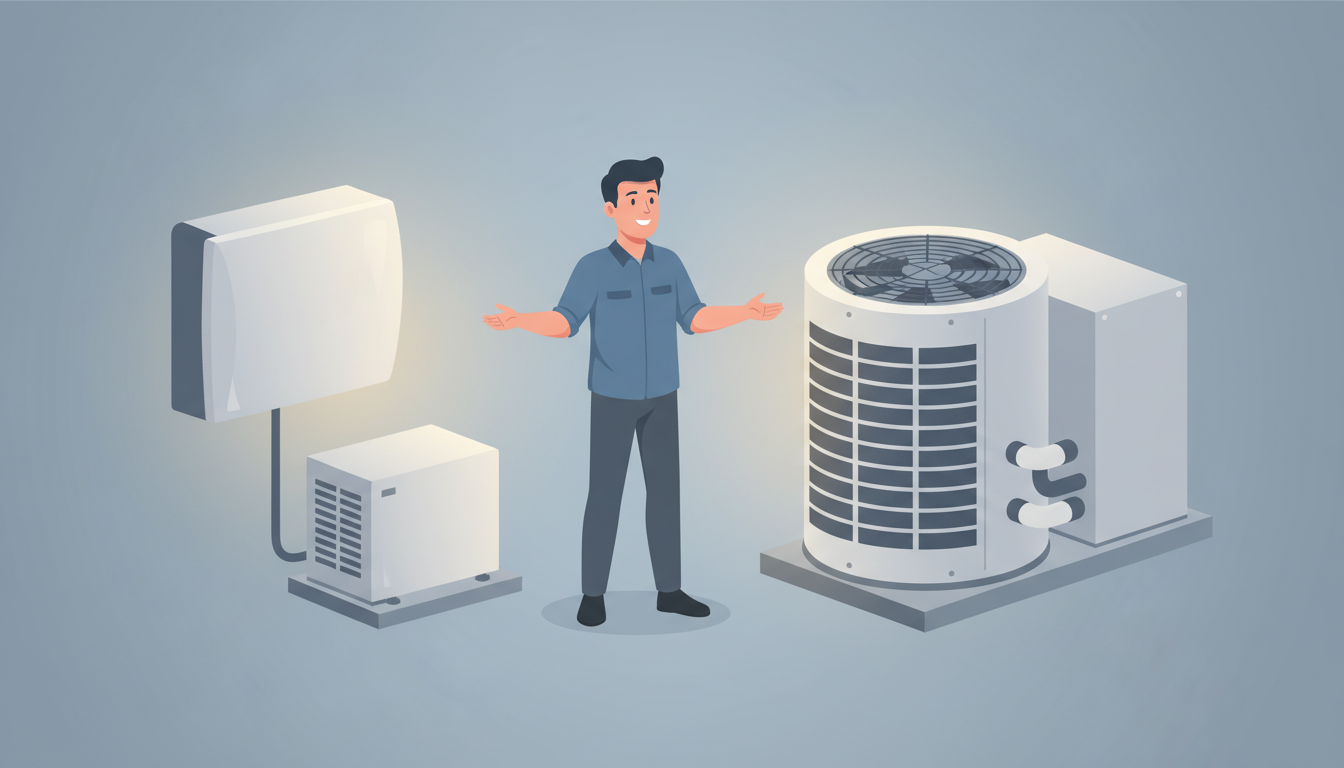
Central air conditioning relies on a network of components working together. You have an outdoor condenser unit, an indoor air handler or furnace with an evaporator coil, and extensive ductwork running throughout your home. When your central AC needs repair, the problem could be anywhere in this complex system—from the outdoor unit to duct leaks hidden in your attic or walls.
How Mini-Split Systems Work
Mini-split systems (also called ductless systems) take a different approach. They consist of an outdoor condenser unit connected to one or more indoor wall-mounted units via refrigerant lines. There's no ductwork involved. Each indoor unit operates independently, creating zones throughout your home that you can control separately.
This fundamental difference in design means that when repairs are needed, you're dealing with completely different components, access points, and potential problems.
The Biggest Repair Difference: No Ductwork Issues
The single most significant difference between mini-split and central AC repairs is the absence of ductwork in mini-split systems.
Central AC Ductwork Repairs
If you have central air, you're potentially facing ductwork problems that can be expensive and time-consuming:
- Duct leaks: Studies show that central air systems lose 20-30% of conditioned air through duct leaks. Sealing these leaks costs $300-$1,000.
- Duct cleaning: Necessary every 3-5 years to remove dust, mold, and debris buildup
- Damaged ducts: Crushed or disconnected ductwork in crawl spaces or attics
- Poor insulation: Ducts running through hot attics lose efficiency and may need insulation repairs
- Access challenges: Many duct repairs require cutting into walls or ceilings
These ductwork issues simply don't exist with mini-splits. You eliminate an entire category of potential repairs—which is why many homeowners find mini-split systems easier to maintain over the long term.
Mini-Split Line Set Maintenance
While mini-splits don't have ducts, they do have refrigerant lines (called line sets) connecting indoor and outdoor units. However, these line sets:
- Are much simpler than extensive ductwork
- Run through a small 3-inch hole in your wall
- Rarely develop problems if properly installed
- Are easier and cheaper to access for repairs
Common Repair Issues: What Goes Wrong With Each System
Typical Central AC Repairs
Central air conditioning systems tend to experience these common problems:
- Blower motor failure: The large blower motor that pushes air through your ducts can burn out, typically costing $400-$600 to replace
- Evaporator coil leaks: Located inside your air handler, these repairs often require significant disassembly
- Thermostat issues: Wiring problems or faulty thermostats affect your entire home's cooling
- Compressor failure: Expensive repairs ($1,200-$2,500) that affect your whole house
- Ductwork problems: As mentioned above, leaks, blockages, and damage
- Capacitor failure: Common issue costing $100-$300 to fix
- Refrigerant leaks: Can occur anywhere in the system, including hidden ductwork sections
When your central AC breaks down, your entire home loses cooling until repairs are complete.
Typical Mini-Split Repairs
Mini-split systems have their own set of common issues:
- Remote control sensor problems: Each unit has sensors that can malfunction, but they're inexpensive to replace
- Refrigerant leaks in line sets: Less common than with central AC, but possible at connection points
- Wall unit fan motor issues: Individual units can fail without affecting other zones
- Condensate drain clogs: Each indoor unit has its own drain that may need clearing
- Control board failures: Electronic issues specific to individual units
- Filter clogging: More frequent filter maintenance needed (every 2-4 weeks)
- Inverter compressor issues: Modern inverter technology is reliable but requires specialized knowledge to repair
The key advantage? If one mini-split indoor unit fails, you still have cooling in other rooms. Compare this to central AC, where one failure means no cooling anywhere.
Repair Costs: Which System Is Cheaper to Fix?
Mini-split repair costs versus central AC repair costs vary depending on the specific problem, but here's what you can generally expect:
Central AC Repair Cost Ranges
- Minor repairs (capacitor, contactor): $100-$300
- Thermostat replacement: $150-$400
- Blower motor replacement: $400-$600
- Evaporator coil repair: $600-$1,200
- Compressor replacement: $1,200-$2,500
- Duct sealing/repair: $300-$1,000
- Duct cleaning: $300-$500
Mini-Split Repair Cost Ranges
- Filter cleaning (DIY): $0
- Remote control replacement: $50-$150
- Condensate pump replacement: $150-$350
- Indoor unit fan motor: $200-$500
- Control board replacement: $300-$600
- Outdoor unit repairs: $400-$1,000
- Refrigerant leak repair: $300-$800
- Inverter compressor replacement: $1,000-$2,000
The bottom line: Individual mini-split repairs are often comparable to or slightly lower than central AC repairs. However, if you have multiple mini-split zones, you may eventually need repairs on several units over time—though not all at once.
The major cost advantage of mini-splits comes from avoiding all ductwork-related repairs and the energy savings from eliminating duct losses.
Technician Requirements: Who Can Fix Your System?
Here's something many homeowners don't realize: not all HVAC technicians are equally experienced with mini-split systems.
Central AC Technician Requirements
Most HVAC technicians in the United States have extensive experience with central air conditioning. These systems have been the standard for decades, and training programs focus heavily on them. Finding a qualified technician for central AC repair is rarely a challenge.
Mini-Split Technician Requirements
Mini-split systems require:
- Specific training on inverter compressor technology
- Experience with refrigerant line installation and repair
- Knowledge of zone control systems and electronics
- Familiarity with various manufacturers (Mitsubishi, Fujitsu, LG, Daikin, etc.)
- Understanding of ductless system diagnostics
Before hiring someone for mini-split repair, verify they have specific experience with your system type. A technician who's only worked with central AC might struggle with the electronics and controls in modern ductless systems.
When searching for help with HVAC repairs, always ask about their experience level with your specific system type.
Maintenance Requirements: Prevention Is Different Too
Regular maintenance significantly impacts future repair needs for both systems—but the maintenance tasks themselves differ.
Central AC Maintenance Schedule
Your central air system needs:
- Annual professional tune-ups (before cooling season)
- Monthly air filter changes during use (1-3 months depending on filter type)
- Duct inspection every 3-5 years
- Outdoor unit cleaning (removing debris, vegetation)
- Drain line clearing as needed
Most of this maintenance focuses on the single air handler and outdoor unit, plus the ductwork network.
Mini-Split Maintenance Schedule
Mini-split systems require:
- Biannual professional tune-ups (many manufacturers recommend twice yearly)
- Filter cleaning every 2-4 weeks (simple DIY task taking 5 minutes)
- Individual condensate drain monitoring for each unit
- Outdoor unit maintenance (same as central AC)
- Remote control battery replacement
While mini-splits need more frequent filter attention, this is a simple task you can do yourself. The filters slide out easily from the indoor units—no tools required. This frequent cleaning actually prevents many repair issues before they start.
DIY Troubleshooting: What Can You Fix Yourself?
Your ability to troubleshoot and handle minor issues varies significantly between these systems.
Central AC DIY Options
Homeowners can typically handle:
- Changing air filters (very important)
- Cleaning outdoor condenser coils
- Clearing condensate drain lines
- Replacing thermostat batteries
- Resetting circuit breakers
Most other repairs require professional help due to the complexity of the system and the difficulty of accessing components inside walls or ductwork.
Mini-Split DIY Options
With mini-splits, you can often:
- Clean filters in all indoor units (required frequently)
- Clean indoor unit housings
- Replace remote control batteries
- Clear individual condensate drains
- Adjust louvers and airflow direction
- Reset individual units
- Clean outdoor unit exterior
The accessibility of mini-split indoor units makes routine maintenance much easier for homeowners. You can literally see and reach most of the components that need regular attention.
For issues beyond basic maintenance, though, you'll still need professional help—and this is where finding an experienced mini-split technician becomes important.
Emergency Repair Considerations
When your cooling system fails on the hottest day of summer, response time and urgency differ between systems.
Central AC Emergency Repairs
When central air fails:
- Your entire home loses cooling
- You typically need immediate emergency service
- Overnight or weekend repairs cost 50-100% more
- Everyone in the house is affected equally
- You may need temporary solutions like portable AC units for the whole house
Mini-Split Emergency Repairs
When a mini-split fails:
- Only one zone loses cooling (in most cases)
- Other areas of your home remain comfortable
- You can often wait for regular business hours, avoiding emergency fees
- You can relocate to rooms with working units temporarily
- True emergencies are less common
If your bedroom mini-split stops working, you can sleep in another room while scheduling non-emergency repairs. This flexibility often saves hundreds in after-hours service fees.
Lifespan and Long-Term Repair Outlook
Understanding the expected lifespan and long-term repair trajectory helps with planning.
Central AC Lifespan
- Average lifespan: 15-20 years
- Ductwork can last 25-30 years but may need repairs
- Major components (compressor, blower) often need replacement once during system life
- Repair frequency typically increases after year 10
- When the system ages, you're looking at replacing the entire system at once—a major expense
Mini-Split Lifespan
- Average lifespan: 15-20 years (comparable to central AC)
- Individual indoor units may need replacement at different times
- Inverter compressors often last longer than traditional compressors
- You can replace individual zone units without replacing the entire system
- More flexibility in spreading replacement costs over time
The modular nature of mini-splits means you're not facing a single massive replacement cost when the system ages—you can replace or upgrade individual zones as needed.
Warranty Coverage Differences
Warranty terms affect your out-of-pocket repair costs significantly.
Central AC Warranties
- Standard parts warranty: 5-10 years
- Labor typically not covered
- Compressor may have extended warranty (up to 10 years)
- Ductwork often not covered by HVAC warranty
- Registration required within specific timeframe
Mini-Split Warranties
- Standard parts warranty: 5-12 years (often longer than central AC)
- Some manufacturers offer extended warranties on inverter compressors
- Each indoor unit may have separate warranty coverage
- Labor typically not covered
- Some manufacturers require professional installation for warranty validity
Always register your system and keep installation documentation. For mini-splits especially, having proof of professional installation protects your warranty coverage.
Common Questions About Mini-Split vs Central AC Repairs
Are Mini-Split Repairs More Expensive Than Central AC?
Individual repair costs are comparable, but mini-splits save money by eliminating all ductwork-related repairs. Over the system's lifetime, mini-splits often cost less to maintain due to their simpler design and the absence of duct issues.
Can Any HVAC Technician Repair a Mini-Split?
No. While basic HVAC knowledge transfers, mini-splits require specific training on inverter technology, ductless systems, and electronic controls. Always verify your technician has experience with mini-split systems before hiring them.
Do Mini-Splits Break Down More Often?
Not necessarily. Mini-splits generally have fewer mechanical parts and no ductwork, which can mean fewer overall problems. However, they do require more frequent filter maintenance. The modular design means you're maintaining multiple indoor units instead of one central air handler.
What Repairs Are Unique to Mini-Splits?
Mini-splits have unique components like wall-mounted indoor units, remote control sensors, individual condensate pumps, and inverter compressors. These require specialized knowledge to diagnose and repair properly. If you're experiencing issues like your mini-split not cooling, a technician familiar with ductless systems will diagnose the problem much faster.
Which System Is Cheaper to Repair Long-Term?
Mini-splits typically cost less over time because they avoid ductwork repairs entirely. Duct leaks, cleaning, and sealing can add hundreds to thousands in maintenance costs over a central AC system's lifespan. The energy savings from eliminating duct losses (20-30% efficiency gain) also offset repair costs.
Making the Right Choice for Your Home
When evaluating mini-split repairs versus central AC repairs, consider these factors:
Choose mini-splits if you:
- Want to eliminate ductwork repair costs
- Prefer zone control with independent operation
- Live in a home without existing ductwork
- Value energy efficiency and lower operating costs
- Can handle more frequent filter maintenance
- Want flexibility in system upgrades and replacements
Stick with central AC if you:
- Already have quality ductwork in good condition
- Prefer a single thermostat for whole-home control
- Want a system most technicians are familiar with
- Don't mind potential ductwork maintenance
- Have a tight budget for initial installation
Final Thoughts
Yes, mini-split repairs are different from central AC repairs—often in ways that benefit homeowners. The absence of ductwork eliminates a major source of problems and costs. The modular design means one failure doesn't shut down your entire cooling system. And the accessibility of components makes routine maintenance simpler.
However, mini-splits do require finding a qualified technician with specific experience, and you'll need to maintain filters more frequently across multiple indoor units.
Understanding these differences helps you make an informed decision about which system works best for your home—and what to expect when repairs become necessary. Whether you're installing a new system or maintaining an existing one, knowing the repair landscape means you can budget appropriately and keep your home comfortable year-round.
Need professional help with your HVAC system? Whether you have a mini-split or central AC, finding a qualified technician who understands your specific system is the first step to reliable, cost-effective repairs.